
YES, crockpots are safe when the appliance is undamaged, food starts fully thawed, and the meal reaches a safe internal temperature. Poultry must reach 165°F (74°C), while hot food should stay at 140°F (60°C) or above.
Are crockpots safe for everyday meals, overnight cooking, or while you are at work? Yes, modern slow cookers are designed for long, low-temperature cooking, usually over 4 to 10 hours. Their steady heat, tight lid, and moist environment can safely cook soups, stews, chicken, beans, and tougher cuts of meat.
The biggest catch is that low heat does not correct unsafe preparation. Frozen meat, an overfilled insert, a cracked ceramic pot, delayed-start timers, damaged cords, or a recalled model can create food-safety, burn, or electrical risks. A crockpot also cannot prove food is done by appearance alone.
This guide explains the main crock pot safety concerns, reliable slow cooker safety facts, correct temperature targets, safe settings, overnight use, leftovers, power outages, and common mistakes. You will also learn how 2026 smart features can help without replacing a food thermometer.
Why Crock Pot Safety Concerns Matter at Home
Slow cookers feel simple: add ingredients, cover, switch on, and return later. That convenience is why safe setup matters. You may leave the kitchen, go to work, sleep overnight, or prepare dinner while caring for children. A small mistake can continue for hours without being noticed.
Food bacteria multiply fastest between 40°F and 140°F (4°C to 60°C), often called the danger zone. A working crockpot moves food through that range and then keeps it hot, but frozen meat, a delayed start, or too much food can slow heating. That is why one of the most important slow cooker safety facts is to thaw meat first and start cooking immediately after filling the pot.
Use a food thermometer instead of judging by tenderness, steam, or bubbling. Chicken and turkey need 165°F (74°C). Ground meat and egg dishes need 160°F (71°C). Whole cuts of beef, pork, veal, and lamb need at least 145°F (63°C), followed by a three-minute rest.
Electrical condition matters too. An old cooker with a frayed cord, loose plug, damaged control panel, or cracked insert should not run unattended. Check the model against product-recall databases, especially if it came from a garage sale, inherited kitchen, or second-hand marketplace.
In 2026, programmable crockpots may include app alerts, temperature probes, automatic Warm modes, and energy tracking. AI kitchen tools can calculate finish times, but they cannot inspect a cord, detect a hairline crack, or confirm that chicken has reached 165°F.
How to Use Crockpots Safely Every Time
Low and High can both cook food safely when the cooker works correctly and the meal reaches its required internal temperature. Warm is only for holding food that is already fully cooked.
| Setting or Stage | Typical Use | Key Safety Target | Recommended? |
|---|---|---|---|
| LOW | Roasts, stews, beans; often 6–10 hours | Reach the ingredient-specific safe temperature | Yes, for tested recipes |
| HIGH | Faster cooking; often 3–5 hours | Check the thickest part with a thermometer | Yes, when the recipe allows |
| WARM | Holding cooked food | Keep food at 140°F (60°C) or above | Yes, for holding only |
| Delayed Start | Raw food sits before heating | Food may remain in the danger zone | No |
| Reheating Leftovers | Slowly warming cold food | Reheat rapidly to 165°F (74°C) first | No, not from cold |
| Power Off | Cooling after cooking | Refrigerate within 2 hours | Only briefly |
Note: Heating rates and Warm temperatures vary by brand, size, age, and model. Follow the manual and verify temperatures with a calibrated thermometer.
Fill the insert between one-half and two-thirds full unless the manual says otherwise. Put firm vegetables near the bottom, add thawed meat, then add the measured liquid. Keep the lid closed because repeated opening releases heat and steam.
For more detail on heat transfer, moisture, and watery slow-cooked dishes, use the tested explanations from Serious Eats’ kitchen technique experts alongside your appliance manual.
Step-by-Step Guide
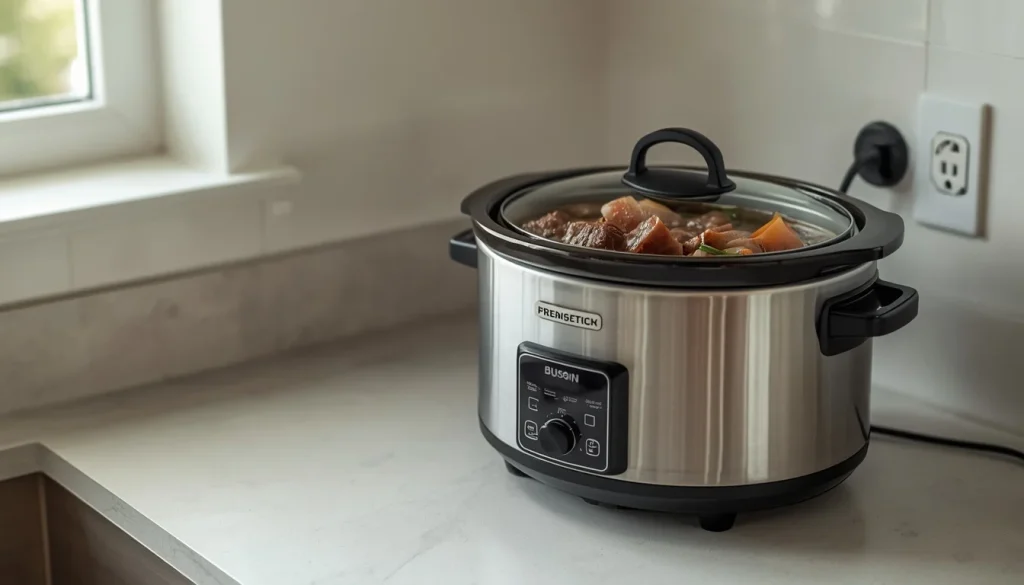
- Inspect the appliance. Check the cord, plug, handles, lid, insert, and controls. Stop if you see cracks, exposed wire, scorching, or melted plastic.
- Thaw meat safely. Defrost chicken, beef, pork, or seafood in the refrigerator. Do not add a solid frozen roast unless the manufacturer specifically permits it.
- Prepare cleanly. Wash hands with soap for 20 seconds. Use separate boards and utensils for raw meat and ready-to-eat garnishes.
- Load it correctly. Keep the insert one-half to two-thirds full. Place dense vegetables below the thawed meat and measured liquid.
Pro tip: Cut large roasts into smaller pieces if your manual limits meat size. - Start immediately. Select Low or High as soon as the ingredients are loaded. Never delay raw food for hours with a timer or smart plug.
- Keep the lid closed. Open only when the recipe requires stirring or testing. Repeated lifting cools the upper layer and extends cooking.
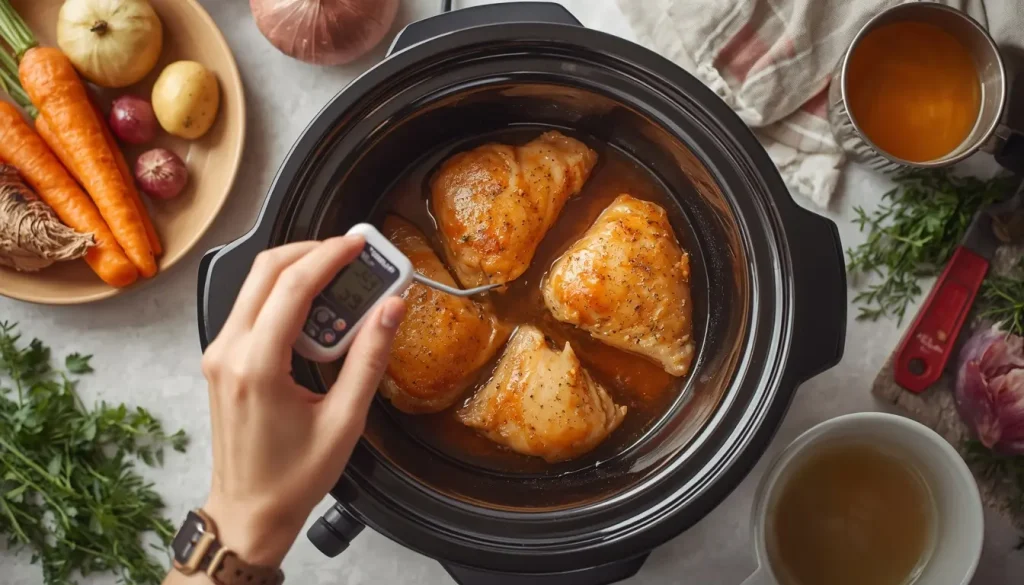
- Check the center. Insert a thermometer into the thickest part without touching bone. Confirm 165°F (74°C) for poultry.
Pro tip: Test two large pieces when the pot is crowded. - Chill leftovers. Transfer food into shallow containers and refrigerate within 2 hours. Reheat to 165°F (74°C) before moving leftovers to Warm.
Expert Tips & Common Mistakes
Pro Tips
- Test an unfamiliar cooker with water. Fill it halfway, run it on Low for 8 hours, then check the temperature promptly and compare the result with the manual.
- Use a wall outlet. Avoid an overloaded extension lead or power strip, especially during overnight cooking.
- Leave ventilation space. Keep at least 6 inches clear around the cooker and move towels, curtains, packaging, and wooden boards away.
- Match recipe and pot size. A very small batch in a large cooker may overcook, while an overfilled pot can heat too slowly.
- Check Warm with a thermometer. Confirm held food stays at or above 140°F (60°C), rather than trusting the label alone.
Common Mistakes
- Starting with frozen meat: The center may remain cold while the outside spends too long in the danger zone.
- Overfilling the insert: Crowded food heats unevenly, so meat in the center may miss its safe temperature.
- Reheating leftovers from cold: Slow warming lets food linger between 40°F and 140°F. Reheat rapidly to 165°F first.
- Ignoring damage or recalls: A cracked insert can leak, while faulty wiring or controls can create shock, burn, or fire risks.
“Slow cookers are a gateway to get people to cook from scratch again.” — Hugh Acheson, James Beard Award-winning chef and cookbook author
FAQs — Are Crockpots Safe?
Is it safe to leave a crockpot on while at work?
Yes, when the cooker is undamaged, placed on a clear heat-resistant counter, plugged into a reliable wall outlet, and used according to its manual. Start with fully thawed ingredients and the correct amount of food. Do not leave an old, recalled, damaged, or unfamiliar appliance running unattended. A programmable model that switches to Warm after cooking can reduce overcooking.
Are crockpots safe to leave on overnight?
Yes, many crockpots are designed for long cooking cycles, so overnight use can be safe. Inspect the cord and insert first, keep flammable items at least 6 inches away, and use a tested recipe with enough liquid. Do not cook overnight with a cracked crock, loose plug, extension lead, or unverified second-hand appliance. Check the food with a thermometer in the morning.
Can you put frozen chicken in a crockpot safely?
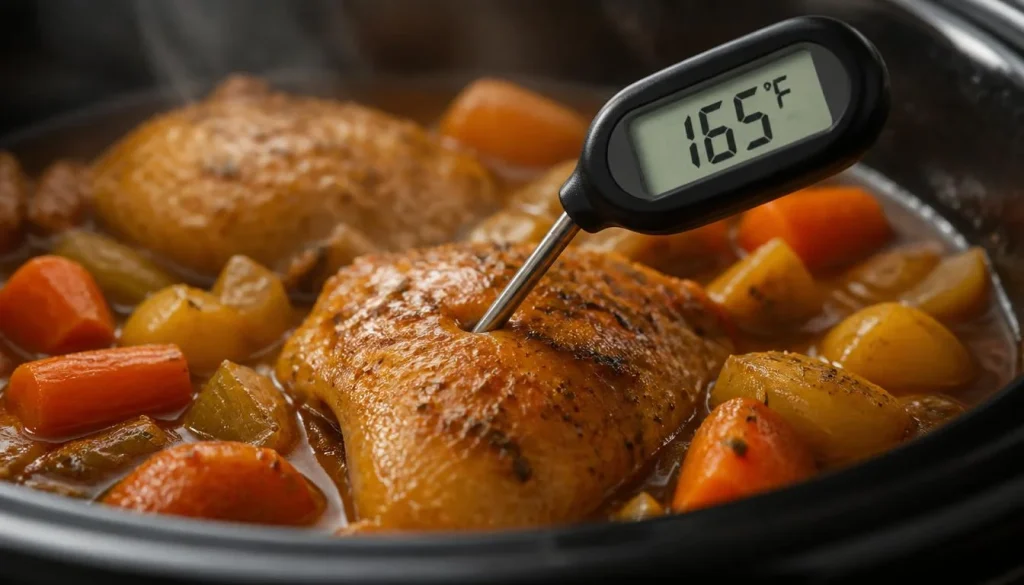
No, not in a standard slow cooker unless the manufacturer gives specific instructions for frozen chicken. Frozen poultry can heat too slowly and stay in the danger zone longer than intended. Thaw it in the refrigerator, cook it immediately, and confirm the thickest piece reaches 165°F (74°C). Never rely only on colour, clear juices, or meat falling from the bone.
Why is my crock pot not boiling water?
A crockpot may simmer gently rather than produce a rolling boil, especially on Low. That alone does not mean it is unsafe because slow cookers use steady heat. However, water should become very hot over time. If the cooker remains lukewarm after several hours, its control, heating element, or electrical connection may be failing. Stop using it and follow the manufacturer’s testing instructions.
Can you reheat leftovers in a crockpot?
Do not use a crockpot to reheat cold leftovers from refrigerator temperature. Slow warming may keep food between 40°F and 140°F too long. Reheat leftovers quickly on the stove, in the oven, or in a microwave until they reach 165°F (74°C). You can then transfer the hot food to a preheated slow cooker and use Warm to maintain at least 140°F (60°C).
How long can food stay on Warm in a crockpot?
The safe holding time depends on whether Warm consistently keeps food at 140°F (60°C) or higher. Check with a thermometer. Quality often declines after 2 to 4 hours as meat dries and vegetables soften. If food falls below 140°F for 2 hours, discard it. Follow stricter manufacturer instructions, especially for dairy-heavy dishes or seafood.
Conclusion
Are crockpots safe? Yes, when you combine a sound appliance with fully thawed ingredients, immediate cooking, correct fill levels, and thermometer checks. The most important rule is simple: long cooking time does not guarantee food safety. The center must reach the correct temperature, including 165°F (74°C) for poultry, while food held on Warm should remain at 140°F (60°C) or above.
Most crock pot safety concerns come from avoidable problems such as frozen meat, overfilling, delayed starts, damaged cords, cracked inserts, poor reheating, and ignored recalls. Smart controls, probes, alerts, and AI recipe planning can make cooking easier in 2026, but they do not replace a visual inspection or a reliable food thermometer.
Safe slow cooking begins before the lid closes and ends only after leftovers are chilled.
Inspect your crockpot, thaw tonight’s ingredients in the refrigerator, and place a food thermometer beside the appliance now.
“I believe great cooking starts with the right tools, trusted advice, and a little confidence in the kitchen.”
Hi, I’m Emma Carter. My love for cooking began in my grandmother’s kitchen, where I learned that every great meal starts with simple ingredients and the right cookware. Over the years, I’ve spent countless hours researching, testing, and comparing kitchen appliances, cookware, coffee makers, air fryers, and other everyday kitchen essentials.
Here at KiCook, my goal is to make your buying decisions easier with honest product reviews, practical buying guides, and easy-to-follow cooking tips. Whether you’re upgrading your kitchen or searching for the best appliance for your home, I focus on providing clear, reliable, and research-backed information you can trust.
When I’m not testing new kitchen gadgets or writing in-depth guides, you’ll usually find me trying new recipes, visiting local farmers’ markets, or enjoying a quiet cup of coffee while planning my next kitchen project.