If you’ve ever stood in the small appliance aisle wondering whether a slow cooker will change your dinner routine or just gather dust in a cabinet, you’re asking the right question. Slow cookers have a loyal fan base who swear by them, but like any kitchen tool, they come with real trade-offs.
This guide breaks down the honest pros and cons of using a slow cooker, compares it to other popular appliances, and helps you decide whether it deserves a permanent spot on your countertop.
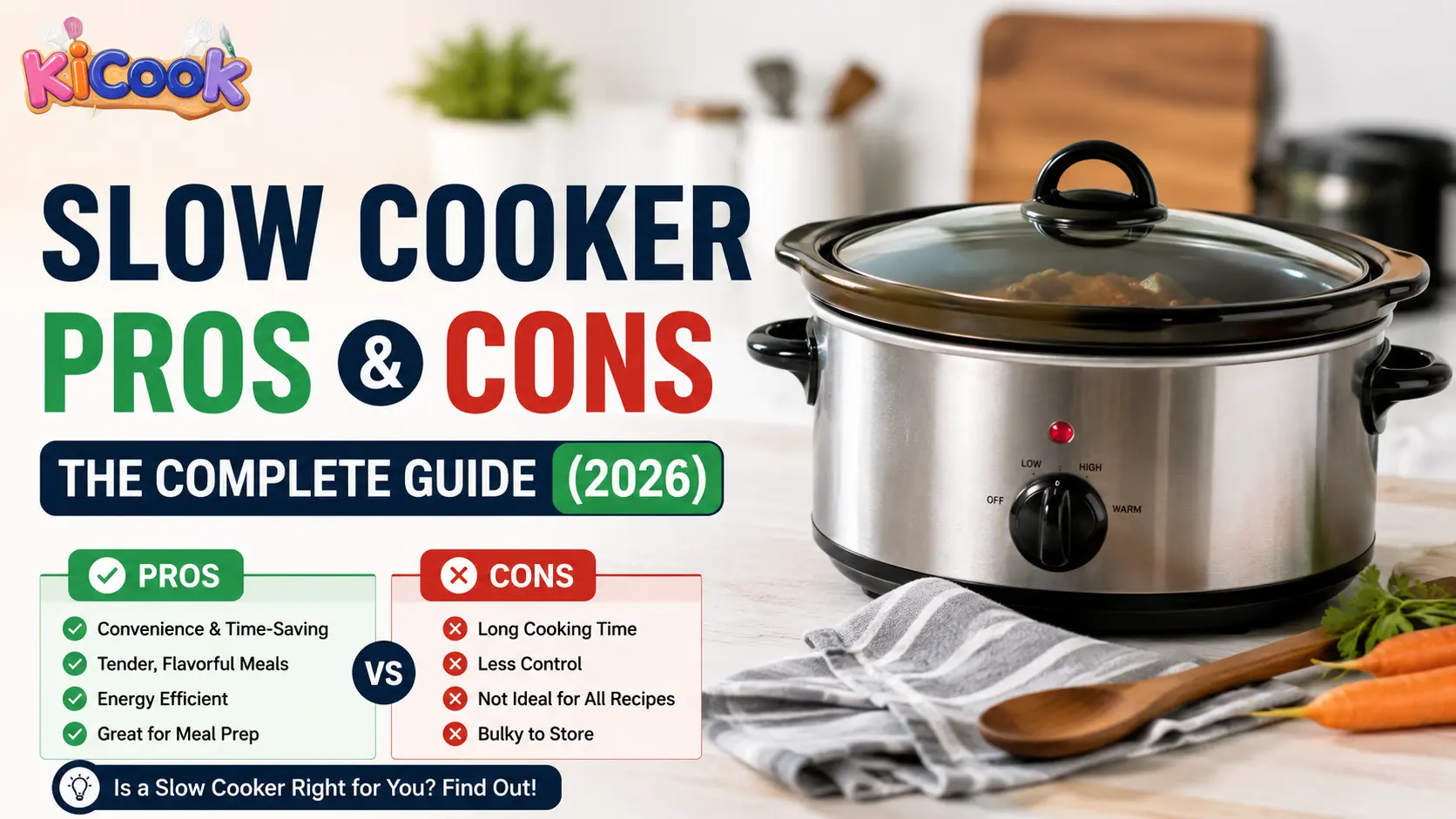
Quick Answer: A slow cooker is worth buying if you value hands-off cooking, want to save money on tougher cuts of meat, and can plan meals a few hours ahead. It’s not ideal if you need fast dinners, crave crispy or browned textures, or rarely plan your meals in advance.
What Is a Slow Cooker?
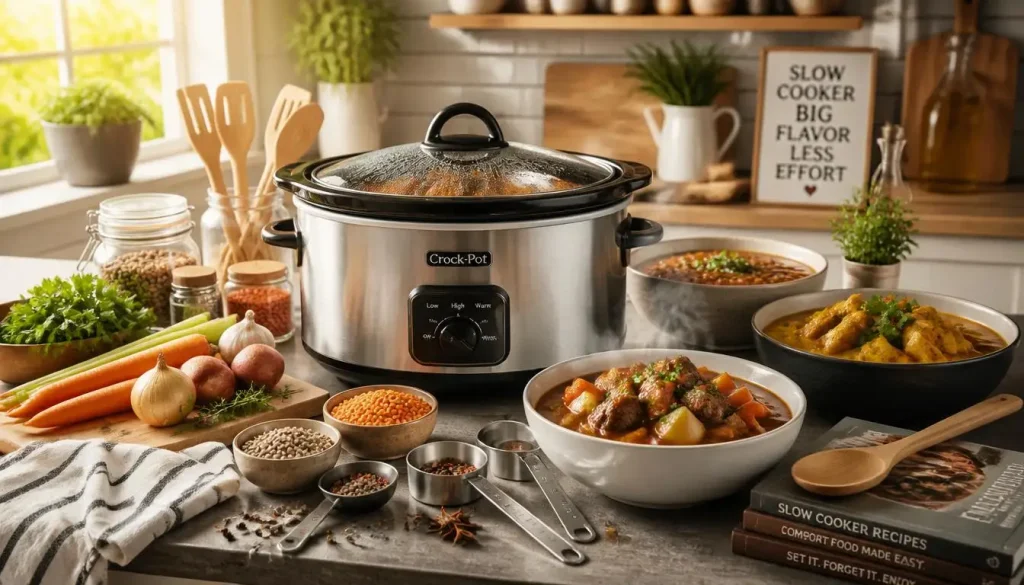
A slow cooker, often called a crockpot, is a countertop electric appliance that cooks food slowly over several hours at a low, steady temperature. A heating element in the base warms the sides of a removable pot, usually made of ceramic or metal, while a tight-fitting lid traps heat and moisture inside. This gentle, extended cooking process is what makes tough, inexpensive cuts of meat fall-apart tender and turns simple ingredients into rich stews, soups, and casseroles.
Modern versions have moved well beyond the basic manual dial. Today you can find digital and programmable models, multi-cookers that combine slow cooking with pressure cooking, and even versions with built-in searing functions.
Pros of Using a Slow Cooker
1. Saves Time and Mental Effort
Once ingredients go into the pot, there’s no need to hover over the stove. You can prep breakfast, head to work, run errands, or handle other chores while dinner quietly cooks itself in the background.
2. Energy Efficient Compared to an Oven
A slow cooker draws a small, steady amount of electricity, roughly comparable to a light bulb, which is far less than running a full-size oven for several hours. This also means it won’t heat up your kitchen the way an oven does, which is a real plus during hot summer months.
3. Tenderizes Tough, Budget-Friendly Cuts of Meat
Cheaper cuts like beef chuck, pork shoulder, and chicken thighs contain more connective tissue than premium cuts. Long, low-temperature cooking breaks that tissue down slowly, producing tender, flavorful meat without needing an expensive cut.
4. Forgiving for Mistakes and Beginners
Slightly uneven chopping, eyeballed spice measurements, or a bit too much liquid rarely ruins a slow-cooked dish the way it might on a stovetop. This forgiving nature makes it an excellent entry point for people who are new to cooking.
5. One-Pot Meals Mean Less Cleanup
Most recipes call for everything to go into a single pot, which cuts down significantly on the number of dishes and pans you need to wash afterward.
6. Reaches Safe Cooking Temperatures
Despite the low, gentle heat, most slow cookers operate between roughly 170°F and 300°F, comfortably above the 140°F threshold generally considered necessary to kill harmful bacteria in food. As long as a dish reaches proper doneness, the extended cook time doesn’t compromise food safety.
7. No Cooking Odors or Smoke
Because the lid stays closed for most of the cooking process, there’s little to no smoke or burnt smell filling your kitchen. Instead, you’re greeted with a warm, savory aroma when the lid finally comes off.
8. Great for Batch Cooking and Meal Prep
Slow cookers naturally lend themselves to larger portions, making them ideal for meal preppers who want to cook once and eat for several days, or freeze individual portions for later.
Cons of Using a Slow Cooker
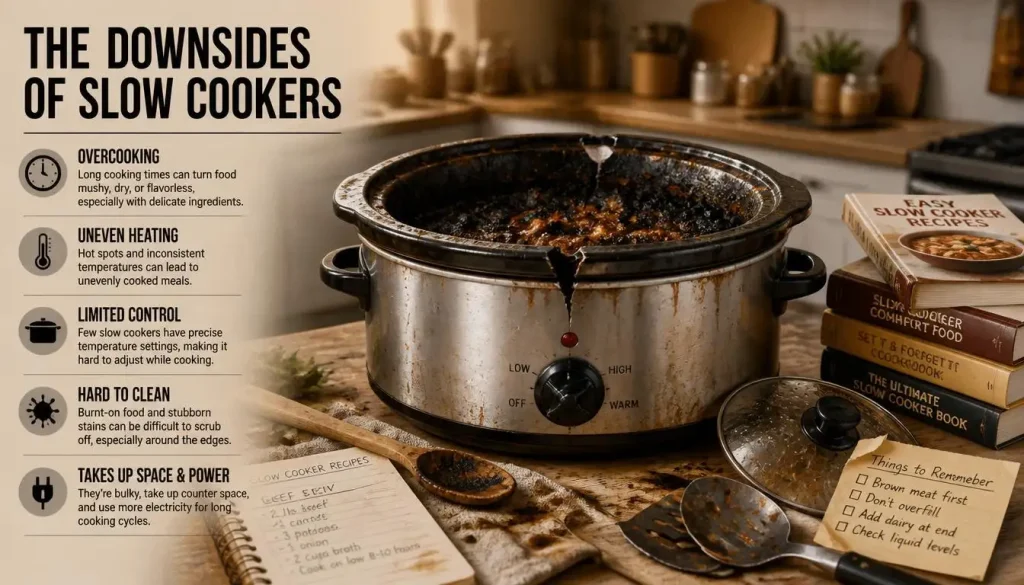
1. Long Cooking Times Aren’t Suited to Last-Minute Meals
Most recipes take anywhere from 4 to 12 hours. If you decide at 6 p.m. that you want dinner in 30 minutes, a slow cooker simply can’t help you.
2. Limited Texture: No Browning or Crisping
The moist, enclosed cooking environment is excellent for tenderizing but terrible for creating crispy skin, seared crusts, or caramelized edges. Foods that rely on texture contrast, like crispy chicken skin or a good sear on a steak, won’t work well here.
3. Condensation Can Dilute Flavor
Because the lid traps steam throughout cooking, that moisture condenses and drips back into the pot, often making dishes wetter and blander than intended, even ones that weren’t meant to be soupy. A simple fix is to reduce the liquid in a recipe by about a quarter to half a cup compared to what’s listed.
4. Spices Can Turn Overpowering
Fresh, potent spices like thyme, cinnamon, or bay leaves can become overwhelming after simmering for many hours. It’s generally better to use slightly less than a recipe calls for, or add strong spices toward the end of cooking instead of at the start.
5. Uneven Cooking Between Ingredients
Vegetables, particularly dense ones like potatoes and carrots, often take longer to soften than meat does. Without adjusting how ingredients are layered or pre-cooking the vegetables slightly, you can end up with meat that’s perfectly done while the vegetables are still firm.
6. Canned or Soft Vegetables Can Turn Mushy
Fresh produce holds its structure reasonably well during long cooking, but canned vegetables often break down into an unappealing, mushy texture since they’re already partially cooked before they go in.
7. Certain Foods Require Extra Precaution
Raw kidney beans and several other legumes contain a natural toxin that needs high boiling temperatures to break down safely. A slow cooker’s low heat isn’t hot enough to neutralize this, so dried beans should always be boiled on the stovetop first before finishing in a slow cooker.
8. No Built-In Sautéing or Searing
Most standard slow cookers lack a setting for browning meat or sautéing onions and garlic before the long cook begins, even though this step often improves flavor significantly. That usually means dirtying a separate pan, which works against the one-pot convenience the appliance is known for. Some newer, higher-end models now include a sauté function to solve this.
9. Takes Up Counter Space
A slow cooker is a bulky appliance that needs a permanent home somewhere in your kitchen, which can be a drawback in smaller kitchens already tight on counter or storage space.
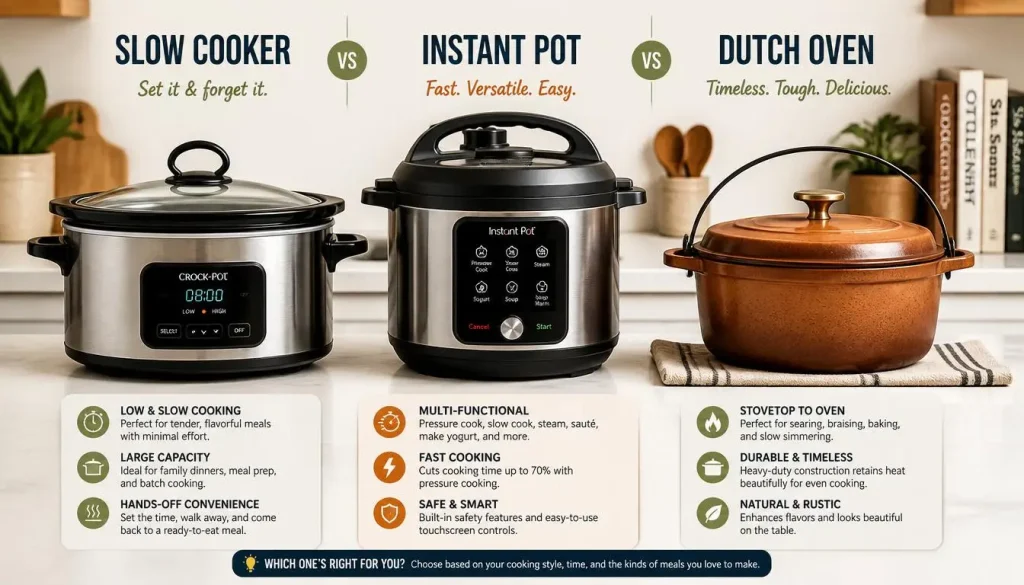
Slow Cooker vs Instant Pot vs Dutch Oven
| Feature | Slow Cooker | Instant Pot / Pressure Cooker | Dutch Oven |
|---|---|---|---|
| Cooking Time | 4–12 hours | 20–60 minutes | 1–4 hours (stovetop/oven) |
| Browning/Searing | Rarely built-in | Often built-in | Yes, excellent |
| Unattended Cooking | Yes | Limited | No, needs monitoring |
| Energy Use | Very low | Low to moderate | Higher (oven-based) |
| Texture Control | Limited | Moderate | Excellent |
| Best For | Hands-off, all-day meals | Fast weeknight meals | Rich, restaurant-style dishes |
| Price Range | $15–$150 | $60–$200 | $50–$400+ |
Types of Slow Cookers
- Ceramic/Stoneware Insert: The classic style, great at retaining heat evenly, but heavier and can crack if exposed to sudden temperature changes.
- Metal Insert (Searing-Capable): Allows browning directly in the same pot on a stovetop-style setting before switching to slow-cook mode.
- Digital/Programmable Models: Let you set exact cook times and automatically switch to a “keep warm” mode once done.
- Multi-Cookers with Slow-Cook Mode: Combination appliances like electric pressure cookers that include a slow-cook setting alongside other functions.
How to Choose the Right Slow Cooker
- Size: A 3 to 4-quart model suits one or two people, while a 6-quart or larger is better for families or batch cooking.
- Material: Ceramic inserts distribute heat evenly but are heavier; metal inserts are lighter and often dishwasher-safe.
- Features: Look for a “keep warm” setting and a built-in timer so food doesn’t overcook if you’re running late.
- Budget: Basic manual models start around $15–$20, while programmable or searing-capable versions can run $100–$150 or more.
Who Should Use a Slow Cooker?
A slow cooker is a strong fit if you:
- Plan meals a few hours or a day in advance
- Are out of the house for long stretches during the day
- Love hearty dishes like stews, curries, chili, and braised meats
- Want to stretch a grocery budget using cheaper cuts of meat and dried legumes
- Are new to cooking and want a forgiving, low-effort appliance
It’s probably not the right fit if you:
- Frequently decide on dinner at the last minute
- Prefer crispy, seared, or browned textures
- Have very limited kitchen counter or storage space
- Mainly cook quick, simple meals for one
Tips to Get the Most Out of Your Slow Cooker
- Brown meat and sauté aromatics like onions and garlic in a separate pan first when possible, it noticeably improves flavor.
- Reduce liquid slightly compared to stovetop recipes, since little moisture evaporates during slow cooking.
- Add delicate ingredients like dairy, fresh herbs, or seafood near the end of cooking rather than at the start.
- Always boil raw kidney beans and similar dried legumes separately before adding them.
- Resist opening the lid during cooking, each peek adds extra cooking time as heat escapes.
- Cut vegetables into similar sizes and place denser ones like potatoes near the bottom, closer to the heat source.
Frequently Asked Questions on Slow Cooker Pros and Cons
Is a slow cooker worth buying in 2026?
For most home cooks who value convenience and want budget-friendly, hands-off meals, yes. It’s less useful if you consistently need fast, last-minute dinners.
Does a slow cooker use a lot of electricity?
No. It typically uses a small, steady amount of power, comparable to running a light bulb for the same number of hours, making it far cheaper to run than an oven.
Can you put raw meat directly in a slow cooker?
Yes, raw meat can go straight in, as long as it reaches a safe internal temperature by the end of cooking. Browning it first is optional but improves flavor.
Why does my slow cooker food taste watery or bland?
This is usually caused by condensation dripping back into the pot throughout cooking. Reducing the recipe’s liquid slightly and being more generous with seasoning near the end of cooking helps fix this.
What size slow cooker do I need for a family of four?
A 5 to 6-quart slow cooker is generally the sweet spot for a family of four, with enough room for leftovers.
Do professional chefs use slow cookers?
Some do, for specific tasks like stocks, braises, or large-batch entertaining, though most treat it as one tool among many rather than a full replacement for stovetop and oven techniques.
Final Verdict: Is a Slow Cooker Right for You?
A slow cooker isn’t a miracle appliance, but it earns its keep for the right kind of cook. If you’re someone who plans ahead, enjoys comforting one-pot meals, and wants to save both time and money during a busy week, the pros clearly outweigh the cons. If your lifestyle depends on quick, spontaneous meals or you’re chasing crispy, restaurant-style textures, you may be better served by a pressure cooker or a good Dutch oven instead.
Understanding both sides before you buy means you’ll actually use the appliance, rather than letting it collect dust in a cabinet.

“I believe great cooking starts with the right tools, trusted advice, and a little confidence in the kitchen.”
Hi, I’m Emma Carter. My love for cooking began in my grandmother’s kitchen, where I learned that every great meal starts with simple ingredients and the right cookware. Over the years, I’ve spent countless hours researching, testing, and comparing kitchen appliances, cookware, coffee makers, air fryers, and other everyday kitchen essentials.
Here at KiCook, my goal is to make your buying decisions easier with honest product reviews, practical buying guides, and easy-to-follow cooking tips. Whether you’re upgrading your kitchen or searching for the best appliance for your home, I focus on providing clear, reliable, and research-backed information you can trust.
When I’m not testing new kitchen gadgets or writing in-depth guides, you’ll usually find me trying new recipes, visiting local farmers’ markets, or enjoying a quiet cup of coffee while planning my next kitchen project.