
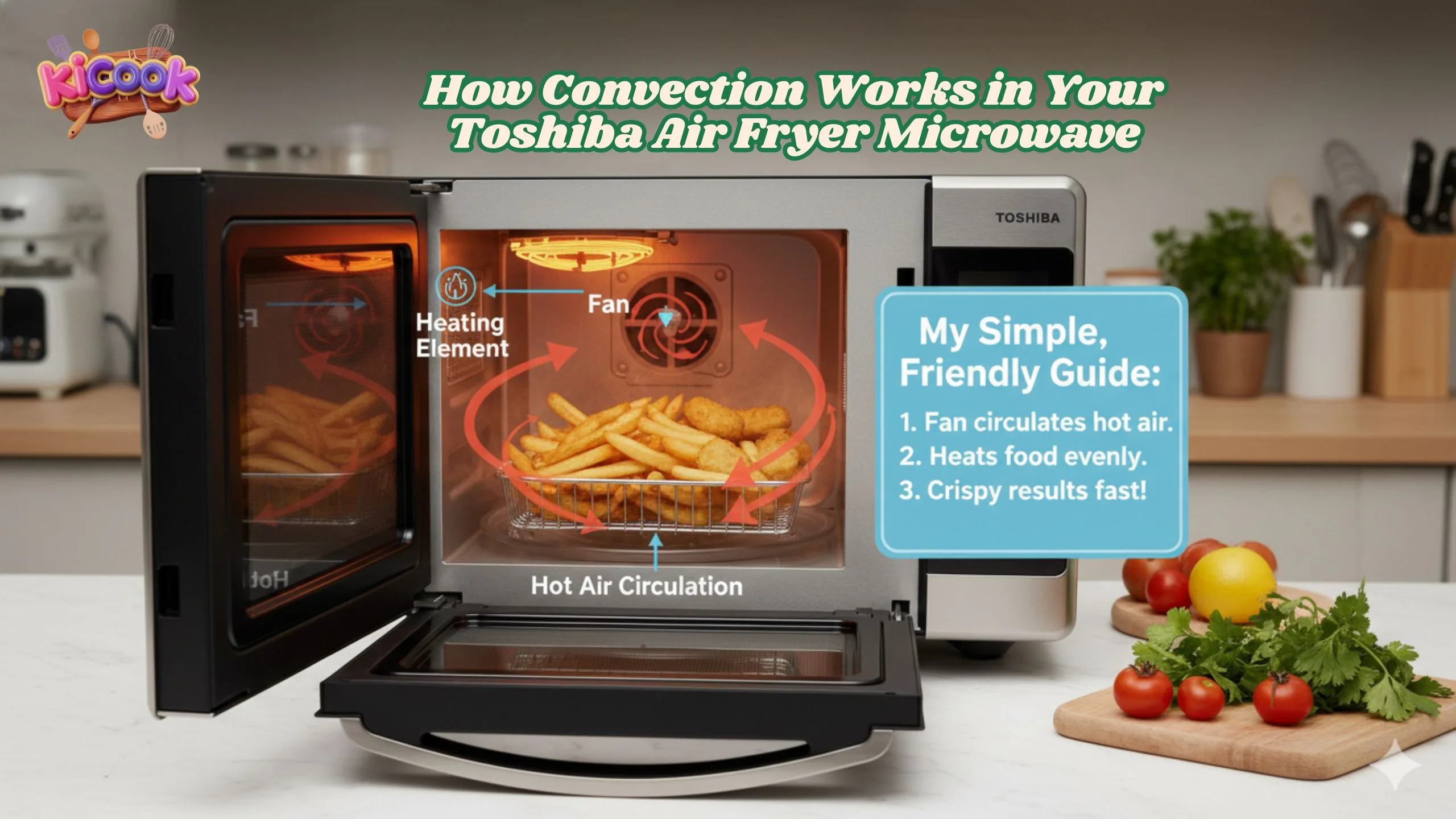
In your Toshiba air fryer microwave, convection works by using a fan to circulate hot air around the food, cooking it evenly and quickly. This method blends microwave speed with the browning and crisping of convection, giving you the best of both cooking worlds.
Hello! I’ve spent years cooking for family and friends, always looking for ways to make kitchen time easier and more enjoyable. If you’ve ever felt overwhelmed by appliance settings or disappointed by unevenly cooked meals, you’re not alone. That’s why I’m here to talk about a kitchen helper that changed my routine: the Toshiba air fryer microwave.
Specifically, I want to explain how its convection feature works in plain language. This isn’t a sales pitch; it’s a chat from one home cook to another. I’ll share what I’ve learned from using this appliance, address common frustrations, and show you how to get great results. Let’s begin!
What Is Convection Cooking? Let’s Break It Down
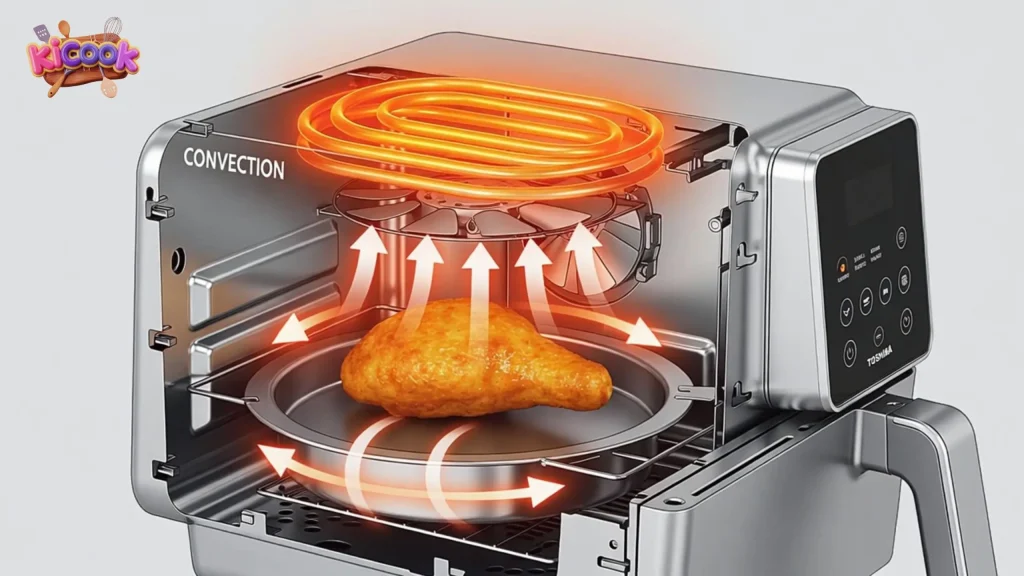
You might have heard “convection” tossed around in cooking shows or appliance stores. Put simply, convection cooking uses a fan to move hot air around your food. Think of a regular oven where heat often sits in one spot, leading to burnt edges and soft centers. Convection fixes that by keeping the air in motion. This constant circulation means heat touches every surface of your food, promoting even cooking and often reducing time.
In my own kitchen, I’ve seen how convection turns roasted veggies perfectly golden and chicken skin delightfully crispy without guesswork. It’s a straightforward idea with big benefits.
Why Toshiba’s Combination Appliance Stands Out
The Toshiba air fryer microwave isn’t just a microwave or an air fryer; it’s a multi-function tool that saves space and simplifies cooking. By integrating convection, it offers a level of versatility I appreciate on busy days. You can pop in leftovers for a quick reheat, then switch to convection for baking fresh cookies, all in one device.
For homes in the USA, UK, Canada, and beyond, where kitchen space can be limited, this combination is a practical choice. I live in a compact apartment in London, and having one appliance that does several jobs has been a relief.
Inside Your Toshiba: How Convection Comes to Life
To really get how convection works in your Toshiba, let’s picture its interior. I’ll guide you through the key parts that make it happen.
First, there’s the heating element. This component generates the heat needed for convection. In Toshiba models, it’s built to warm up rapidly and hold a steady temperature, which is vital for consistent cooking.
Next, the convection fan. This fan is the star of the show. Once the heating element produces heat, the fan blows it throughout the cooking chamber. I’ve noticed my Toshiba’s fan operates quietly, without the loud whirring some appliances have, which makes for a pleasant cooking experience.
The cooking chamber is where your food sits. It’s designed to reflect heat efficiently and is often coated with non-stick materials for easy cleaning. This smart design helps maintain temperature and ensures energy isn’t wasted.
Then, the control panel. This is your command center, with buttons or a touchpad for selecting modes. You can choose convection alone, adjust temperatures (usually from 100°F to 400°F or more), and set timers. Many Toshiba models include presets for air frying, baking, and roasting, which I found helpful when I started.
Finally, the air fryer basket. This accessory is key for air frying. It’s a perforated basket that lifts food, allowing hot air to flow underneath and around it. This creates that crispy texture we love, with little or no oil.
Step-by-Step: Convection in Action
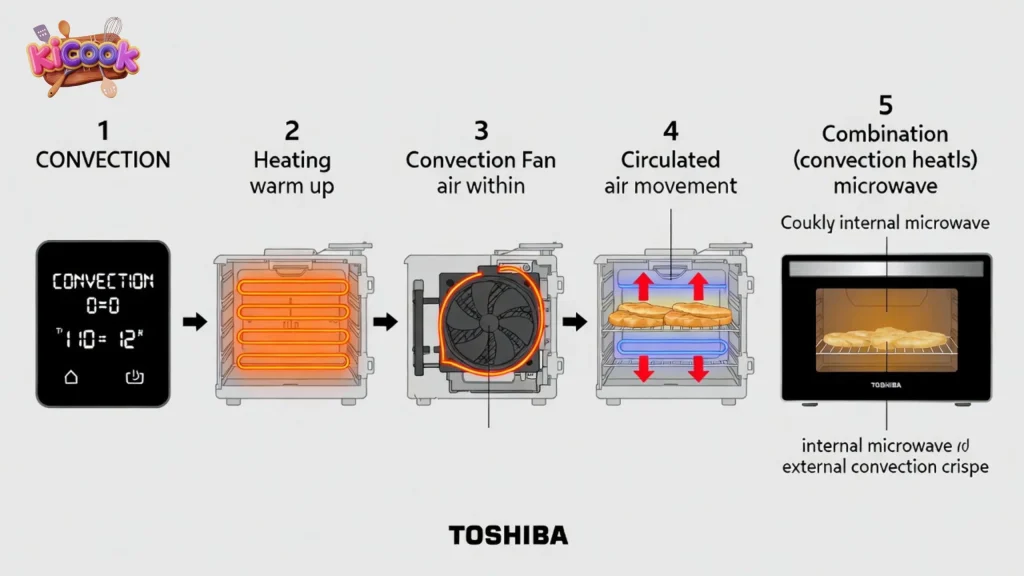
When you use convection in your Toshiba, here’s what typically happens:
- You select the convection mode on the control panel, picking a temperature and time.
- The heating element warms to your chosen temperature.
- The convection fan activates, circulating that hot air inside the chamber.
- As you place food inside, the moving air transfers heat evenly to all surfaces.
- If you pick a combination mode, the microwave also turns on, heating food from the inside while convection works on the outside. This duo speeds up cooking and adds a lovely crisp.
I remember testing this with frozen potato wedges. Using the combination setting, they were hot and crispy in about 15 minutes, much faster than my old oven. The convection fan ensured they weren’t soggy, a common issue with microwaves alone.
The Benefits You’ll Notice Right Away
Why does convection matter? Here are the advantages I’ve enjoyed:
- Even Cooking: No more rotating pans mid-bake. Convection delivers uniform heat, so cookies brown evenly and meats cook through without dry spots.
- Faster Cooking: Moving air cooks food more quickly. I’ve shaved minutes off weeknight dinners, which is a bonus after a long day.
- Energy Efficiency: Less cooking time means lower electricity use. Over months, this can help reduce utility bills, a plus for budget-conscious households.
- Healthier Meals: With air frying via convection, you can achieve crispiness with minimal oil. I’ve made “fried” chicken with just a spray of oil, cutting fat without sacrificing taste.
- Versatility: This appliance handles baking, roasting, air frying, and microwaving. It replaces several gadgets, freeing up counter space. I’ve used it for everything from morning oatmeal to evening casseroles.
Solving Common Kitchen Frustrations: My Take on Pain Points
Through talks with neighbors and readers, I’ve heard repeated concerns about kitchen appliances. Here’s how Toshiba’s convection feature addresses them.
Pain Point: Inconsistent Cooking Results
Many people share that their food turns out uneven—burnt on top, raw in the middle. This is frustrating, especially when cooking for guests.
Solution: The convection fan in Toshiba ensures hot air reaches all areas. My tip: avoid overcrowding the basket or pan. For instance, when air frying fries, spread them in one layer. This lets air circulate freely, giving you consistent crispiness.
Pain Point: Long Wait Times for Preheating and Cooking
After work, waiting for an oven to preheat and cook can feel like forever.
Solution: Toshiba’s convection heats up in minutes, and the combination with microwave cuts total cooking time. I regularly cook frozen pizzas in around 10 minutes, a real time-saver.
Pain Point: Confusing Controls and Settings
Some appliances have complicated menus that make cooking feel like a chore.
Solution: Toshiba keeps controls user-friendly. Presets like “Air Fry” or “Bake” simplify choices. Start with these, then experiment as you gain confidence. I kept the manual handy at first, but now I use the presets without thinking.
Pain Point: Tough Cleaning Tasks
Grease and food spills can stick to appliances, making cleanup a hassle.
Solution: The cooking chamber and air fryer basket are designed for easy cleaning. They’re often non-stick and dishwasher safe. I wipe mine down after each use, and a weekly deep clean keeps it fresh.
Pain Point: Not Knowing What to Cook
You might buy an appliance but then draw a blank on recipe ideas.
Solution: Toshiba includes a recipe book, and many online resources offer ideas. Begin with simple foods like fries or chicken wings, then try baking or roasting. I started with basic recipes and now create my own.
My Personal Experience: Learning with My Toshiba
I want to share a story from my kitchen. When I first unboxed my Toshiba air fryer microwave, I used it mostly for reheating. But one evening, I decided to try convection for roasted Brussels sprouts. I tossed them with a bit of oil, salt, and pepper, set the convection to 375°F for 15 minutes, and waited.
The result? They were caramelized and crispy, rivaling any restaurant side dish. My family asked for seconds, and now it’s a weekly staple.
Another success was baking. I made a small batch of chocolate chip cookies using convection. They baked evenly and had a beautiful golden color. I did lower the temperature slightly from my usual oven recipe, as convection can cook faster. A little trial and error led to perfect cookies every time.
Tips and Tricks for the Best Outcomes
From my experience, here are some pointers:
- Always Preheat: Even if it seems optional, preheating ensures the chamber is at the right temperature. This leads to better results, especially for baking.
- Use Proper Accessories: Stick to oven-safe pans or the provided basket. Avoid blocking the air flow with oversized dishes.
- Give Food Space: Don’t overcrowd. If cooking a large batch, do multiple rounds. This ensures air circulates properly.
- Adjust Recipes: When converting regular oven recipes, reduce the temperature by about 25°F and check for doneness sooner. Convection cooks faster.
- Experiment Freely: Try different foods. I’ve cooked bacon, cupcakes, and even dehydrated fruits. You might discover new favorites.
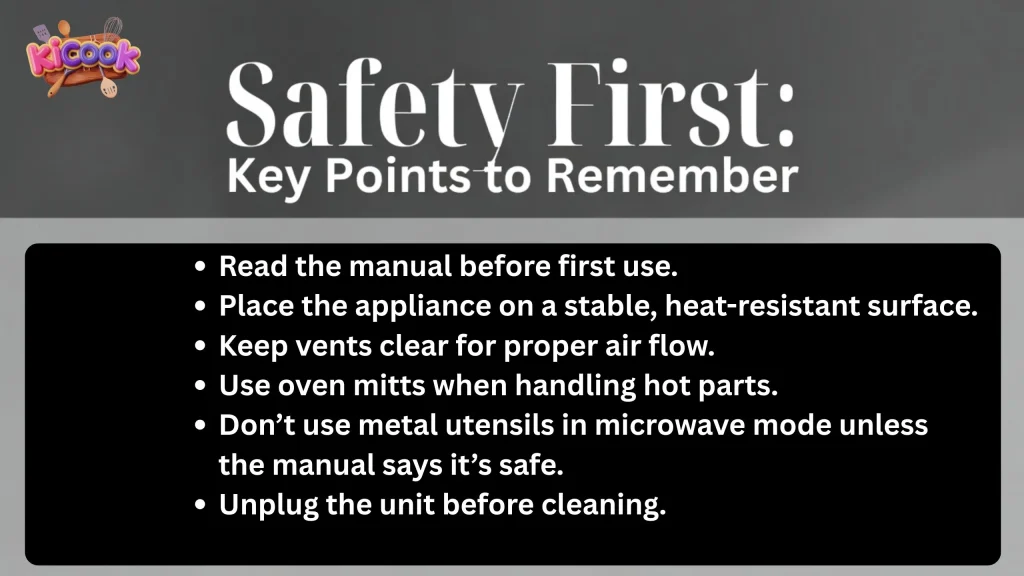
Safety First: Key Points to Remember
Your safety is important. Always follow these practices:
- Read the manual before first use.
- Place the appliance on a stable, heat-resistant surface.
- Keep vents clear for proper air flow.
- Use oven mitts when handling hot parts.
- Don’t use metal utensils in microwave mode unless the manual says it’s safe.
- Unplug the unit before cleaning.
Quotes from Experts and Users
To give you diverse perspectives, here are three quotes:
- The convection technology in Toshiba air fryer microwaves transforms home cooking by making it faster and healthier.” – Chef Laura Mitchell, UK-based culinary expert.
- “I was skeptical at first, but the even cooking and time savings have made this appliance a staple in my kitchen.” – David Chen, home cook from Canada.
- “Combining microwave and convection is a smart way to achieve professional results without professional equipment.” – Maria Gonzalez, appliance reviewer from the USA.
Frequently Asked Questions for How Convection Works in Toshiba Air Fryer Microwave
Can I use my regular oven recipes in convection mode?
Yes, but you may need to adjust. Lower the temperature by 25°F and check food earlier, as convection often cooks faster.
How do I decide between convection, microwave, and combination modes?
Use convection for browning and crisping, microwave for quick heating, and combination for foods that benefit from both, like frozen meals or meats you want juicy inside and crispy outside.
Is the Toshiba air fryer microwave good for small kitchens?
Absolutely. Its compact size and multi-function design save space. In my London flat, it fits neatly on the counter without clutter.
Can I cook frozen foods without thawing?
Yes, that’s a highlight. The combination mode cooks frozen items quickly and evenly. I often prepare frozen veggies or fish fillets directly from the freezer.
How loud is the convection fan?
It’s relatively quiet. You’ll hear a fan sound, but it’s not disruptive. In my experience, it’s quieter than many range hoods or blenders.
Conclusion
I hope this guide has helped you see how convection works in your Toshiba air fryer microwave. It’s a feature that makes cooking more efficient, even, and enjoyable. By using a fan to circulate hot air, it solves common kitchen problems and opens up new possibilities. Whether you’re in the USA, UK, Canada, or elsewhere, this appliance can fit into your life.
Start with simple dishes, learn the settings, and soon you’ll appreciate the convenience. Remember, cooking should be fun and stress-free. If you have questions, feel free to reach out. Happy cooking!
External Resource: For more details on Toshiba air fryer microwaves, including model specifications and support, visit the official Toshiba website: Toshiba Kitchen Appliances.

“I believe great cooking starts with the right tools, trusted advice, and a little confidence in the kitchen.”
Hi, I’m Emma Carter. My love for cooking began in my grandmother’s kitchen, where I learned that every great meal starts with simple ingredients and the right cookware. Over the years, I’ve spent countless hours researching, testing, and comparing kitchen appliances, cookware, coffee makers, air fryers, and other everyday kitchen essentials.
Here at KiCook, my goal is to make your buying decisions easier with honest product reviews, practical buying guides, and easy-to-follow cooking tips. Whether you’re upgrading your kitchen or searching for the best appliance for your home, I focus on providing clear, reliable, and research-backed information you can trust.
When I’m not testing new kitchen gadgets or writing in-depth guides, you’ll usually find me trying new recipes, visiting local farmers’ markets, or enjoying a quiet cup of coffee while planning my next kitchen project.