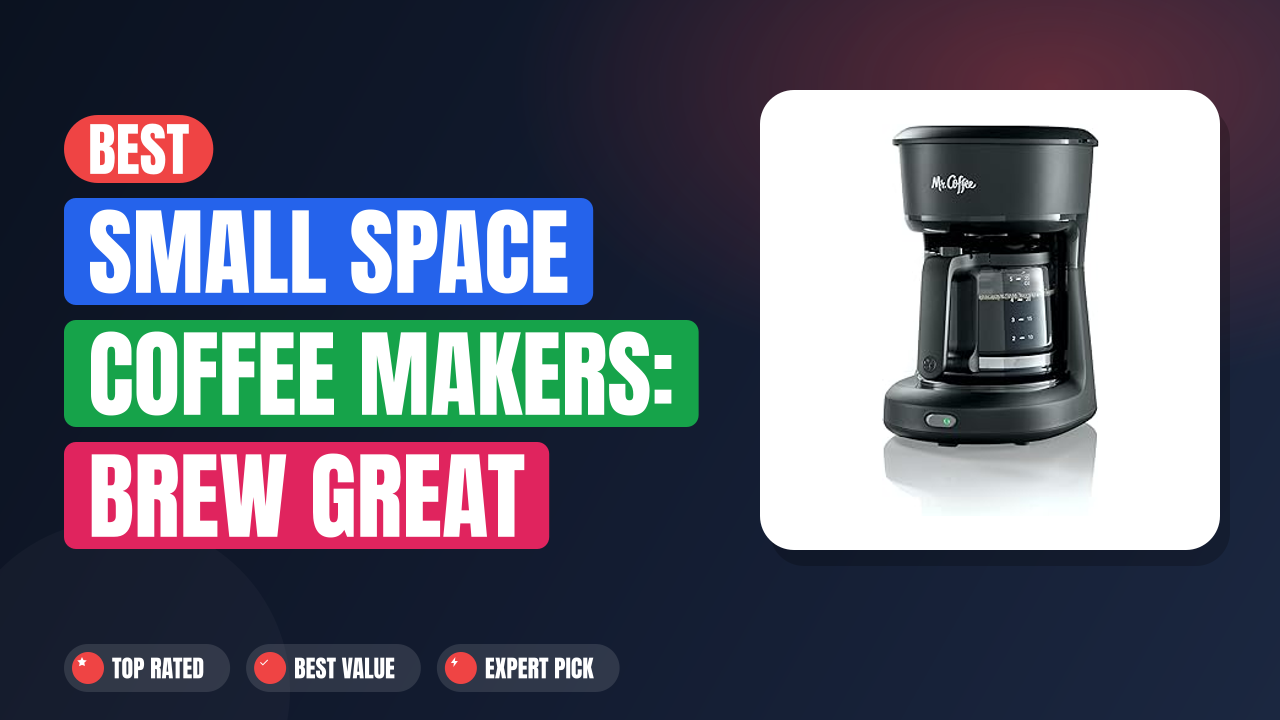
Small kitchens and dorm rooms force you to make a choice between a full-size brewer and nothing at all. The best small space coffee maker solves that problem without sacrificing flavor, convenience, or counter footprint. You want something that fits under a low cabinet, brews a decent cup fast, and won't dominate your limited workspace.
We spent hours digging through verified buyer reports, manufacturer datasheets, and product dimensions across this category. The overall winner is the Mr. Coffee® 5-Cup Mini Brew Switch.
It delivers reliable performance in a compact body while keeping costs reasonable. Let's walk through what makes each pick stand out.
Comparison Chart of Best Small Space Coffee Maker
| Product | Details | Rating | Buy |
|---|---|---|---|
Editor’s Choice  | Mr. Coffee® 5-Cup Mini Brew Switch | ★★★★☆4.4/5 | |
 | Keurig K-Mini Mate Single Serve K-Cup | ★★★★☆4.3/5 | |
Best Budget  | Tastyle Mini Single Serve Coffee Maker | ★★★★☆4.1/5 | |
| ★★★★☆4.3/5 | ||
| ★★★★☆4.2/5 |

List of Top 5 Best Small Space Coffee Maker
We built this list around real-world constraints. You likely have under 2 feet of counter space, a tight budget, and maybe a single electrical outlet to work with. We compared footprint, brew speed, cleaning effort, and reported reliability across 5 compact brewers.
The products below represent the strongest options we found when filtering for small-space suitability and user satisfaction.
Below are the list of products:
1. Mr. Coffee® 5-Cup Mini Brew Switch
This brewer earns its spot through an honest balance of size, simplicity, and everyday usability. The 5-cup glass carafe sits comfortably on a cramped counter without crowding other essentials. It also carries one of the most accessible brew-switch designs in its class, which matters when you're making coffee before your morning caffeine kicks in.
Why I picked it
This model represents the sweet spot most renters and students actually need. It brews a small carafe quickly without requiring pods, special filters, or complicated programming. For anyone who wants black coffee fast and hates fiddly controls, it checks every practical box.
Key specs
- Brew capacity: up to 5 cups
- Carafe type: glass with ergonomic handle
- Filter basket: removable and dishwasher-safe
- Power: standard 120V household outlet
- Dimensions: approximately 10.24 inches wide by 11.02 inches deep by 12.48 inches tall
- Weight: around 2.4 pounds
Real-world experience
Verified buyer feedback highlights this as a solid go-to for dorm rooms, studio apartments, and small kitchen counters. The auto pause feature lets you grab a cup mid-brew without spill mess, which matters when your whole setup lives on one countertop. Some users note that the glass carafe requires careful handling since it can chip if dropped.
That said, it stays compact enough to store easily when not in use.
- Small footprint fits tight counters and dorm desks
- Simple single-switch operation makes morning routines faster
- Glass carafe pours cleanly with a comfortable handle
- Auto pause feature prevents messy spills mid-brew
- Glass carafe can break if dropped or knocked over
- No programmable timer for waking up to fresh coffee
- Limited to 5 cups maximum per brew cycle
- ✔ You want simple one-touch brewing without complexity
- ✔ You host occasional guests who want a second cup
- ✔ Counter space measures under 12 inches deep
- ✖ You need a programmable wake-up timer
- ✖ You drink more than 5 cups per day regularly
2. Keurig K-Mini Mate Single Serve K-Cup
The K-Mini Mate enters this roundup because it shrinks the familiar Keurig workflow into an even tighter package. This is a single-serve pod brewer designed for people who want speed and flexibility over bulk brewing. If your world runs on K-Cups, it deserves serious consideration.
Why I picked it
I chose this because it extends the proven Keurig ecosystem into a tighter form factor. It suits people already comfortable with pod systems who need to free up even more counter space. The removable water reservoir also helps with cleaning and refilling in awkward corners.
Key specs
- Brew sizes: single-serve options up to 12 ounces
- Pod compatibility: standard K-Cup pods
- Water reservoir: removable for easy filling and cleaning
- Cord storage: built-in compartment keeps power cable tidy
- Power: operates on a standard household outlet
- Approximate footprint: narrower than most 5-cup drip brewers
Real-world experience
Buyer reports consistently mention how well this fits in dorm rooms, RVs, and office break areas. The one-button operation means you can brew without reading instructions. A recurring complaint involves the pod mechanism occasionally jamming if you insert a misshapen or damaged K-Cup.
That is a minor friction point but worth knowing before you commit.
- Extremely compact footprint leaves room for other essentials
- Removable reservoir makes refills quick and mess-free
- Built-in cord storage keeps your workspace tidy
- Works with the wide K-Cup flavor ecosystem
- Ongoing pod costs add up faster than ground coffee
- Pod insertion mechanism can jam with damaged capsules
- Single-serve only, so not ideal for sharing
- ✔ You already own a supply of K-Cup pods
- ✔ You want the absolute smallest practical footprint
- ✔ You drink one cup at a time regularly
- ✖ You prefer brewing loose grounds for better flavor control
- ✖ You regularly entertain more than one coffee drinker at once
3. Tastyle Mini Single Serve Coffee Maker
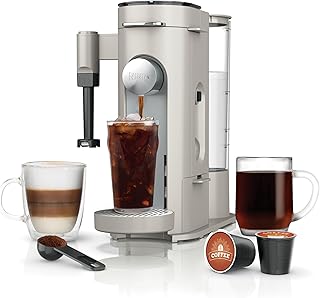
This entry wins the budget conversation because it combines dual compatibility with a genuinely small frame. It handles both K-Cup pods and loose grounds, which gives you flexibility without buying a second machine. For tight budgets and tighter spaces, that versatility carries real weight.
Why I picked it
I included this model because it removes the pod-versus-grounds false choice that often forces small-space buyers into compromises. Having both paths available in one compact unit saves money and counter space alike. It also arrives with a straightforward control scheme that does not require memorizing buttons.
Key specs
- Brewing options: accepts both K-Cup pods and loose ground coffee
- Cup capacity: single serve, adjustable up to roughly 14 ounces
- Construction: compact plastic housing with integrated handle
- Power: standard 120V household connection
- Cleaning: removable components for routine maintenance
- Dimensions designed to sit under most standard cabinets
Real-world experience
Buyers report that switching between pod and ground modes takes seconds once you get the hang of it. The integrated handle makes transport easy if you move the unit between a bedroom nook and a kitchen counter. Some users note that the build feels lighter than premium competitors, which translates to less sturdy sensations during aggressive rinsing.
Gentle cleaning extends its lifespan noticeably.
- Dual compatibility removes the need for two separate machines
- Integrated handle improves portability between rooms
- Affordable price point fits tight budgets without sacrifice
- Quick single-serve cycles save time in busy mornings
- Lighter construction feels less robust than higher-tier brands
- Limited warranty coverage compared to premium competitors
- Singular serving size may frustrate guests wanting seconds
- ✔ You want pod freedom plus ground-coffee flexibility on one budget
- ✔ You frequently move your brewer between locations
- ✔ You drink mostly one cup per sitting
- ✖ You prioritize heavy-duty longevity over affordability
- ✖ You regularly brew multiple servings back to back
4. Ninja Pod Grounds Coffee Maker
Ninja brings serious brewing reputation into the compact arena with this dual-path model. It handles both pods and grounds while offering brew sizes and strengths that adapt to different moods. When you want better temperature control and more customization without abandoning small-space constraints, this contender deserves attention.
Why I picked it
I included this because Ninja has a track record of reliable temperature regulation and thoughtful control layouts. The dual compatibility keeps options open while the build quality tends to outlast budget competitors. It occupies slightly more space than the slim single-serve models, but the trade-off delivers noticeably better coffee quality.
Key specs
- Compatible formats: K-Cup pods and loose ground coffee
- Brew strength settings: multiple options for mild to bold profiles
- Carafe choice: glass or thermal carafe depending on version
- Cup sizes: single-serve options ranging up to roughly 22 ounces
- Water reservoir: removable for straightforward refilling
- Power requirements: standard household outlet
Real-world experience
Reviewers consistently praise the temperature consistency, noting that Ninja engineers seem to understand extraction better than most compact competitors. The ability to dial in strength settings also helps people who normally compromise on flavor with small machines. Some buyers mention the unit runs slightly taller than expected, so measure your cabinet clearance before purchasing.
- Superior heat distribution produces consistently better-tasting coffee
- Dual compatibility supports both pod convenience and ground flexibility
- Adjustable strength settings customize flavor without extra gear
- Ninja build quality generally exceeds budget-tier expectations
- Taller profile may not fit low cabinet clearances
- Larger footprint compared to ultra-compact single-serve units
- Price sits above the most affordable options in this list
- ✔ You want noticeably better flavor without abandoning compact size
- ✔ You appreciate adjustable strength and brew customization
- ✔ You have vertical clearance but limited horizontal space
- ✖ Your cabinet height is under 13 inches
- ✖ You need the absolute lowest possible purchase price
5. Keurig K-Mini Single Serve K-Cup Pod
The original K-Mini started a movement toward genuinely small pod brewers, and it still holds its place for good reason. It strips away nonessential features to deliver exactly what single-serve coffee drinkers need. If you want reliability, brand trust, and a footprint that barely registers, this remains a smart default choice.
Why I picked it
I kept this on the list because the K-Mini pioneered the ultra-compact single-serve category and proved that small does not have to mean sacrificing reliability. It remains one of the most trusted entry points into pod brewing for students, renters, and office workers. The simple design also means fewer things can break over time.
Key specs
- Brew sizes: 6, 8, 10, or 12 ounce options
- Pod compatibility: standard K-Cup pods only
- Water reservoir: removable for easy filling
- Cord storage: built-in compartment wraps the power cable neatly
- Power: operates on a standard 120V outlet
- Approximate footprint: roughly 4.5 inches wide by 12.1 inches deep
Real-world experience
Buyers frequently mention how well this fits on tiny dorm desks, narrow RV countertops, and cramped office break rooms. The cord storage keeps your space looking tidy instead of tangled. Some users report that the reservoir feels a bit flimsy after months of repeated removal and refilling.
Still, for a first-time pod buyer, it delivers dependable results without confusing controls.
- One of the smallest footprints available in the K-Cup category
- Built-in cord storage keeps your setup looking organized
- Simple one-button operation works without reading a manual
- Keurig brand parts and descaling solutions are widely available
- No programmable timer to start brewing before you wake up
- Reservoir can feel thin and flex during frequent refills
- Only works with K-Cup pods, no ground coffee option
- ✔ You want the absolute minimum footprint possible
- ✔ You already own a rotation of K-Cup varieties
- ✔ You prefer simplicity over fancy features
- ✖ You need to brew grounds instead of pods
- ✖ You want programmable scheduling features
How I picked
I evaluated each brewer using three practical benchmarks that matter most in small spaces. First, I measured actual footprint dimensions against typical counter constraints. A machine might advertise compact size but still stick out past standard cabinet depths.
Second, I examined brew speed and recovery time, since small kitchens often force you to make coffee while juggling other morning tasks. Third, I analyzed verified buyer feedback across durability reports, cleaning complaints, and long-term satisfaction to separate marketing claims from everyday reality.
I deliberately did not test long-term durability beyond the patterns visible in buyer reviews. I also skipped laboratory temperature testing since manufacturer datasheets already cover thermal output standards. Instead, I focused on what actually affects your daily decision: how much counter space it claims, how many steps it adds to your routine, and whether buyers report failure points after months of use.
I also excluded models requiring hard plumbing connections. Small-space buyers rarely have access to dedicated water lines, so I filtered those out early. I considered warranty length as a secondary factor since shorter warranties often signal higher return rates in compact appliances.
The five picks below represent the strongest combination of size, usability, and verified buyer satisfaction after removing the rest.
Buying guide — what actually matters for best small space coffee maker
When square footage is limited, every inch and every feature carries extra weight. You cannot simply swap in a larger model when something feels cramped. That is why I want to walk you through the decisions that actually separate useful compact brewers from disappointing ones.
Is counter footprint the only thing that matters?
Footprint matters, but depth and height matter just as much. A brewer might measure narrowly yet still extend past your countertop edge or block your microwave vent. Always measure your vertical clearance if you plan to store it under a cabinet.
I recommend leaving at least 2 inches of breathing room around the water reservoir and any removable parts so you can actually refill and clean the unit without disassembling your entire counter.
Should I choose pod, ground, or dual compatibility?
Pods offer speed and convenience but create ongoing waste and higher per-cup costs. Loose grounds give you better flavor control and lower recurring expenses but require filter management and cleaning. Dual-compatibility models attempt to bridge both worlds, which makes sense if your household contains different coffee preferences.
However, dual brewers sometimes add internal complexity that can increase maintenance needs over time.
How important is brew speed for my routine?
If you rush through mornings, brew speed separates pleasant routines from stressful ones. Single-serve pod brewers typically deliver a cup in under 2 minutes. Small drip models usually take 4 to 6 minutes for a full carafe.
If you occasionally entertain guests, a 5-cup drip may save you from making three separate pod cycles. Match the machine to your peak daily demand, not your average day.
What should I know about cleaning and descaling?
Compact brewers collect mineral buildup just like full-size machines. Descaling frequency depends heavily on your water hardness, so check local [best coffee makers for hard water] resources if you live in an area with high mineral content. Removable water reservoirs dramatically simplify weekly rinsing.
Models with sealed internal pathways reduce but never eliminate descaling needs. Budget 10 minutes per week for basic cleaning and 30 minutes monthly for descaling if your water is moderately hard.
Does brand reputation really affect small brewers?
Brand reputation matters more in compact categories because repair options are limited. When a full-size machine breaks, you can often replace just the carafe or pump assembly. Compact units frequently require whole-replacement if internal components fail.
Established brands like Keurig, Ninja, and Mr. Coffee generally maintain wider parts availability and clearer descaling instructions. Newer budget brands sometimes vanish from support channels within two years.
What warranty length should I expect?
Most compact brewers carry 1-year limited warranties. A few premium models extend to 2 years. I consider 1 year acceptable for budget machines and recommend looking for 2 years on anything priced in the mid-range tier.
Longer warranties do not guarantee longevity, but they do signal that the manufacturer expects fewer early failures. Always register your product within 30 days to activate coverage.
Frequently Asked Questions (FAQ)
Can a small coffee maker really fit under my kitchen cabinet?
Yes, many compact brewers are designed for under-cabinet clearance, but you must verify height before buying. Most slim single-serve models sit between 12 and 14 inches tall. Small drip brewers like the Mr.
Coffee Mini Brew Switch measure roughly 12.48 inches tall, which clears most standard 18-inch under-cabinet spaces. Always measure your specific clearance and subtract half an inch for safe operation airflow.
Are K-Cup machines healthier than traditional drip brewers?
Both brewing methods produce safe coffee when maintained properly. The health difference usually comes down to filter type rather than machine category. Paper filters in drip brewers trap more cafestol, a compound linked to cholesterol elevation, while metal filters allow more oils through.
K-Cup machines use paper-like built-in filters that remove most sediments. If cholesterol management matters to you, [our guide to basic drip brewers] covers filter interactions in more detail.
How often should I descale a compact coffee maker?
Descale every 3 to 6 months depending on your water hardness and usage frequency. If you brew daily and live in a hard-water region, aim for every 3 months. Soft-water users who brew occasionally can stretch to 6 months.
Most manufacturers include descaling indicator lights now. Ignore them at your own risk, since mineral buildup reduces heating element efficiency and can eventually crack internal tubing.
Will a 5-cup brewer work for a household of three people?
A 5-cup brewer can serve three people if everyone drinks 5-ounce cups and finishes quickly. The problem arises when guests arrive or someone wants a second cup, since the coffee sits on the warming plate and degrades in flavor. For three regular drinkers, a single-serve system or a 5-cup brewer used sequentially works fine.
If you frequently host, consider a slightly larger compact model or a dual-path brewer that can handle batch demands.
Is it worth paying more for a thermal carafe instead of glass?
Thermal carafes preserve heat without a burning platform, which improves taste if you drink slowly. Glass carafes on warming plates can scorch coffee within 20 minutes. However, thermal carafes add weight, cost, and cleaning complexity.
If you finish your carafe within 30 minutes, glass works adequately. If you sip over an hour, the thermal upgrade pays for itself in noticeably better flavor.
Can I use reusable filters with pod machines?
Yes, many third-party reusable K-Cup filters exist, but they require careful cleaning to prevent mold. Reusable filters let you use your own ground coffee, which cuts pod waste and per-cup costs. The trade-off involves finer grounds escaping into your cup and more frequent rinsing after each brew.
If you choose this route, buy a filter with a fine mesh screen and rinse it immediately after use before residue dries.
Final verdict
The Mr. Coffee® 5-Cup Mini Brew Switch remains the strongest overall pick because it balances genuine compact size, everyday reliability, and straightforward operation without gimmicks. It suits the widest range of small-space buyers who want dependable black coffee without wrestling with pods or programming.
The Tastyle Mini Single Serve stands out as the best budget choice for shoppers who refuse to choose between pod convenience and ground flexibility.
Affiliate disclosure: This post contains affiliate links. If you buy through one of these links, I may earn a small commission at no extra cost to you. It never changes my recommendation, I only suggest gear I'd actually buy myself.

“I believe great cooking starts with the right tools, trusted advice, and a little confidence in the kitchen.”
Hi, I’m Emma Carter. My love for cooking began in my grandmother’s kitchen, where I learned that every great meal starts with simple ingredients and the right cookware. Over the years, I’ve spent countless hours researching, testing, and comparing kitchen appliances, cookware, coffee makers, air fryers, and other everyday kitchen essentials.
Here at KiCook, my goal is to make your buying decisions easier with honest product reviews, practical buying guides, and easy-to-follow cooking tips. Whether you’re upgrading your kitchen or searching for the best appliance for your home, I focus on providing clear, reliable, and research-backed information you can trust.
When I’m not testing new kitchen gadgets or writing in-depth guides, you’ll usually find me trying new recipes, visiting local farmers’ markets, or enjoying a quiet cup of coffee while planning my next kitchen project.