
You brew a fresh pot, take the first sip, and instead of getting a smooth, balanced cup, you get a harsh bitterness that lingers on your tongue. It is frustrating, especially when you are using the same coffee maker that seemed to work perfectly before.
So, why does my coffee maker make bitter coffee?
In most cases, the coffee maker itself is not broken. Bitter coffee usually comes from over-extraction, coffee grounds that are too fine, a slow brewing cycle, incorrect coffee-to-water measurements, excessive heat, old coffee residue, mineral buildup, or coffee that sits on a warming plate for too long.
The good news is that most of these problems are easy to diagnose and fix at home. You do not need to replace your machine before checking a few simple things.
This guide walks you through the most likely causes, starting with the fixes that are easiest to test.
Quick Answer: Why Is My Coffee Maker Making Bitter Coffee?
Your coffee maker may produce bitter coffee when the water extracts too much from the grounds or when something inside the brewing system changes the taste.
Start with these clues:
| What You Notice | Most Likely Cause | What to Try First |
|---|---|---|
| Coffee is bitter, dry, and harsh | Grind is too fine | Use a slightly coarser grind |
| Brewing suddenly takes longer | Scale or restricted water flow | Clean and descale the machine |
| Coffee becomes bitter after sitting | Warming plate | Drink sooner or use a thermal carafe |
| Bitterness started with new beans | Roast or bean choice | Try a medium or lighter roast |
| Every coffee tastes bitter | Machine, water, or cleaning problem | Clean the brewer and check your water |
| Coffee tastes bitter after descaling | Cleaning solution remains inside | Run additional fresh-water cycles |
| Strong/Bold mode tastes harsh | Longer or more aggressive extraction | Return to the regular brew setting |
If you change only one thing at a time, you can usually identify the problem within two or three brews.
First, Is Your Coffee Bitter, Sour, Burnt, or Just Too Strong?
Before changing your machine settings, make sure bitterness is actually the problem.
People often describe several unpleasant coffee flavors as “bitter,” even though they have different causes.
| Taste | What It Usually Feels Like | Common Cause |
|---|---|---|
| Bitter | Harsh, dry, lingering taste | Over-extraction, dark roast, old residue |
| Sour | Sharp, tart, sometimes thin | Under-extraction |
| Burnt | Smoky, ashy, scorched | Very dark roast or prolonged heating |
| Too strong | Heavy and intense but not always unpleasant | High coffee-to-water concentration |
A bitter cup often leaves a dry sensation in your mouth and an unpleasant aftertaste. Sour coffee is more likely to taste sharp or acidic.
That distinction matters. Making your grind coarser can help an over-extracted bitter brew, but the same change could make an under-extracted sour brew even worse.
Why Bitter Coffee Often Points to Over-Extraction
Coffee brewing is essentially an extraction process. Hot water passes through ground coffee and dissolves flavor compounds.
You want enough extraction to produce sweetness, aroma, acidity, and body without pulling too many harsh-tasting compounds into the cup.
Several brewing variables influence that balance, including grind size, contact time, water temperature, and the amount of coffee and water used. Philips also identifies grind size, brewing time, temperature, ratio, dirty equipment, and bean quality as common factors behind unpleasant bitterness. Read Philips’ guide to bitter coffee
The useful part is that you do not need to understand coffee chemistry in detail to fix your morning cup. You simply need to work through the variables one at a time.
11 Reasons Your Coffee Maker Makes Bitter Coffee
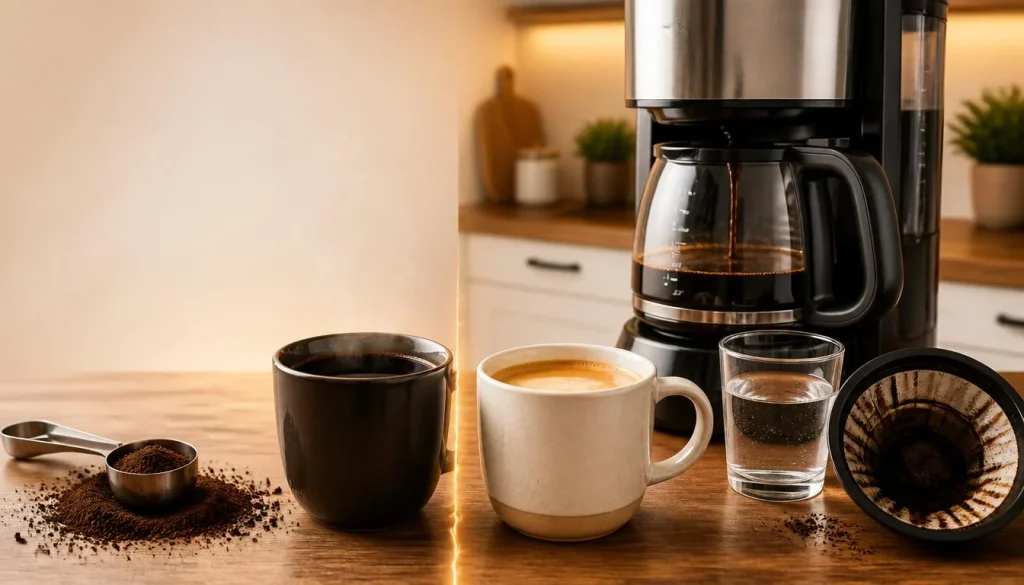
1. Your Coffee Grind Is Too Fine
This is one of the first things to check.
Smaller coffee particles expose more surface area to water. In a drip coffee maker, grounds that are much finer than the brewer was designed for can slow water movement through the coffee bed and increase extraction.
The result may be a cup that tastes dry, harsh, or bitter.
If you grind your beans at home, move your grinder one or two steps coarser and brew another pot. Avoid making a dramatic adjustment immediately.
If you use pre-ground coffee, make sure it is intended for a standard drip or filter coffee maker rather than espresso.
Grind consistency matters as well. A grinder that produces large chunks mixed with powdery fines can extract unevenly. The tiny particles may contribute harsh flavors even while the larger pieces remain under-extracted.
If you are considering a grinder for everyday drip coffee, KiCook’s discussion of blade-grinder consistency in its Amazon Basics Electric Coffee Grinder review explains why uniform particle size can make brewing easier.
Try this: Keep everything else exactly the same and brew your next pot with a slightly coarser grind. If the bitterness noticeably decreases, you have found an important part of the problem.
2. Your Coffee Is Brewing for Too Long
Grind size and brewing time are closely connected.
If water stays in contact with the coffee grounds for too long, extraction continues. That can move the flavor away from balanced and toward dry, harsh bitterness.
Pay attention to your coffee maker’s normal behavior.
Has a pot that used to finish relatively quickly started taking noticeably longer? Does water sit in the filter basket instead of draining normally?
If so, the issue may not be the beans at all. A clogged filter, coffee fines, or mineral scale may be restricting the flow.
The National Coffee Association has also highlighted brewing time, grind, water, freshness, and cleanliness as important parts of coffee quality. See the NCA’s coffee-quality guidance
Do not obsess over matching one universal brewing time because coffee makers vary in size and design. What matters most for troubleshooting is a change from your machine’s normal brewing speed.
3. Your Coffee-to-Water Ratio Is Off
More coffee does not automatically mean better coffee.
If you keep adding grounds because the coffee tastes weak, you can eventually create a cup that is overly concentrated or difficult for your brewer to extract evenly.
On the other hand, dramatically reducing the water without changing the dose can create similar problems.
A commonly used starting point for drip coffee is roughly one to two tablespoons of ground coffee for every 6 US fluid ounces, or about 177 mL, of water. Treat that as a starting range rather than an unbreakable rule. Your beans, brewer, grind, and personal taste all matter.
For more consistent results, use a digital kitchen scale if you have one.
Once you find a ratio you enjoy, write it down. That prevents accidental changes from one morning to the next.
The most important troubleshooting rule is simple: do not change the grind, dose, and water amount at the same time. You will not know which adjustment actually improved the coffee.
4. The Brewing Water Is Too Hot
Temperature changes how quickly compounds are extracted from coffee.
For hot coffee brewing, a frequently cited range is around 195–205°F (90.5–96°C). Philips and National Coffee Association guidance both discuss temperature as an important brewing variable.
Most basic automatic drip coffee makers do not let you set the water temperature manually. If yours does, check whether the temperature setting was changed.
If your machine has no temperature control and your coffee suddenly became unpleasant despite using the same beans, grind, and ratio, temperature regulation could be one factor to investigate.
Do not immediately assume the heating element is faulty, though. Cleaning and flow problems are much more common and much easier to test.
5. Your Coffee Maker Has Old Coffee Oils and Residue
A coffee maker can look clean from the outside while still affecting the flavor of every cup.
Coffee oils stick to filter baskets, reusable filters, carafes, lids, and other surfaces that come in contact with brewed coffee. Over time, those oils oxidize and create stale, unpleasant flavors.
Cuisinart specifically notes that coffee oils, residue, and hard-water deposits can affect both flavor and machine performance. See Cuisinart’s coffee-maker cleaning guide
Wash removable parts according to the instructions for your machine. Give extra attention to:
- The filter basket
- Reusable mesh filters
- The carafe and its lid
- Areas where brewed coffee regularly splashes or collects
Do not automatically run vinegar, baking soda, or another cleaner through every coffee machine. Manufacturers use different materials and cleaning systems, so check the manual for your specific model before putting anything into the water reservoir.
6. Mineral Scale Is Slowing Down the Coffee Maker
If your coffee maker is brewing more slowly than it used to, mineral scale deserves attention.
Tap water naturally contains dissolved minerals. The amount varies considerably by location. When water is repeatedly heated, mineral deposits can accumulate inside the brewer.
Over time, buildup may restrict water movement and change how the machine performs.
Possible signs include slower brewing, unusual noises, inconsistent water flow, visible chalky deposits, or a descale indicator on machines that have one.
Keurig explains that calcium deposits can build up inside a brewer and interfere with performance when they are not removed. See Keurig’s descaling guidance
If hard water is a constant problem where you live, KiCook also has a guide to choosing a coffee maker for hard water, with features such as filtration and easier descaling in mind.
Always follow the manufacturer’s descaling procedure for your machine.
7. Your Filter or Brew Basket Is Clogged
A partially blocked filter can easily be overlooked.
Very fine grounds can pack together and restrict water flow. Reusable filters can also accumulate coffee oils and fine particles if they are only rinsed quickly after brewing.
Paper filters cause their own occasional problems. A filter that folds over, collapses, or sits incorrectly in the basket may interfere with normal drainage.
Check the basket immediately after brewing. If it contains an unusual amount of standing water or drains much more slowly than you remember, clean the basket and reusable filter thoroughly.
Also make sure you are not grinding so finely that the coffee bed becomes dense and muddy.
A clogged filter does not always make coffee bitter by itself. The problem is that restricted flow can increase contact time, which changes extraction.
8. Your Coffee Maker Is Set to Strong or Bold Brew
Modern coffee makers sometimes include settings labelled Strong, Bold, Rich, Intense, or something similar.
Those settings are useful if you enjoy fuller coffee, but they can also change the brewing process. Depending on the machine, the brewer may slow water delivery or otherwise increase extraction.
If your coffee suddenly tastes bitter, check the control panel before changing anything else.
Someone in the house may have selected a different brew-strength setting, or you may have changed it and forgotten.
Return the brewer to its normal setting and make another pot using the same coffee and water.
If the bitterness disappears, the problem was not the beans or a dirty machine. You simply prefer the standard brewing profile.
9. Your Coffee Is Sitting on the Warming Plate Too Long
Here is an easy experiment.
Taste your coffee within a few minutes of brewing. Then taste coffee from the same pot after it has been sitting on the warming plate for a while.
If the first cup tastes balanced but the later cup tastes increasingly harsh, the brewer may be doing its job correctly. The problem is happening after brewing.
Continued heating changes brewed coffee over time. Aromas fade, water evaporates, and the flavor can become increasingly stale or harsh.
If you regularly drink a pot over several hours, consider transferring it to an insulated thermal carafe instead of leaving it on direct heat.
If your current drip brewer is difficult to control or reaching the end of its life, KiCook’s guide to basic drip coffee makers can help you compare simpler replacement options.
10. Your Beans Are Too Dark, Stale, or Simply Not to Your Taste
Sometimes the coffee maker gets blamed for something that starts in the bag.
A very dark roast can naturally deliver stronger roasted, smoky, or bitter notes than a lighter roast. That does not necessarily mean the coffee is defective.
If the bitterness started immediately after opening a different bag, brew the old beans again if you still have some. If the old coffee tastes normal, your machine probably did not suddenly develop a fault.
Freshness matters too.
The National Coffee Association recommends protecting roasted coffee from air, moisture, heat, and light and suggests storing it in an airtight, opaque container in a cool location. Read the National Coffee Association’s coffee-storage advice
For the cleanest comparison, try a fresh medium-roast coffee while keeping your grind, water, and brewing settings unchanged.
11. Your Water Quality or Water Filter Is Affecting the Flavor
Most of a cup of filter coffee is water, so water that tastes unpleasant before brewing is unlikely to produce excellent coffee afterward.
Strong chlorine odors, unusual mineral flavors, or very hard water can all change the final cup.
If your coffee maker has a replaceable water filter, check when it was last changed. Follow the replacement interval in the manufacturer’s instructions rather than waiting until the coffee tastes bad.
As a simple test, brew one pot using the water you normally use and another with fresh filtered water.
Do not change the coffee dose or grind.
If the difference is obvious, water quality is contributing to the problem.
Why Did My Coffee Suddenly Start Tasting Bitter?
A sudden change is useful because it narrows the possibilities.
If your coffee tasted good last week and tastes bitter today, think about what changed.
Did you open a new bag of beans? Change the grind setting? Switch from Regular to Bold mode? Install a different water filter? Start using a new brand of pre-ground coffee?
If nothing obvious changed, look at the brewer.
A machine that has gradually become slower may have mineral buildup. A reusable filter may be clogged with fines. Coffee oil may have accumulated in the basket or carafe.
Use this order:
First: Brew with your normal recipe and note how long the machine takes.
Second: Inspect and clean the filter basket and filter.
Third: Confirm the grind and strength settings.
Fourth: Clean or descale the machine if maintenance is due.
Fifth: Test with fresh coffee and fresh water.
Changing one variable at a time is slower than changing everything at once, but it is much more useful. Once the taste improves, you will know what caused the problem.
How to Fix Bitter Coffee From a Coffee Maker in 5 Steps
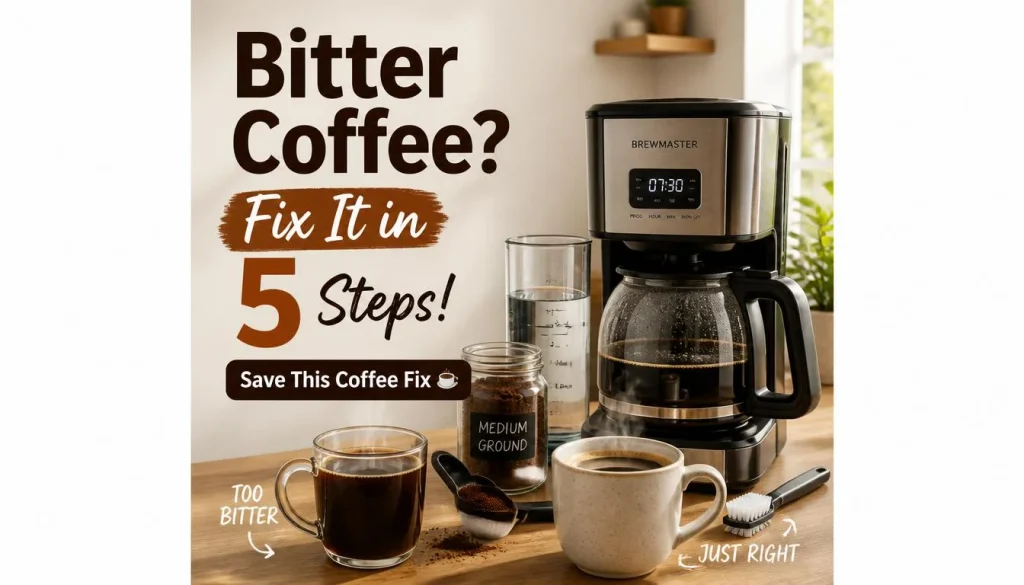
If you do not want to investigate every possible cause individually, use this simple troubleshooting sequence.
Step 1: Taste the Coffee Immediately After Brewing
Do not leave the first test batch on the warming plate.
Pour a cup as soon as brewing finishes.
If it tastes fine at first but bitter later, you can focus on holding temperature rather than extraction.
Step 2: Use a Slightly Coarser Grind
Keep the same beans, coffee dose, and amount of water.
Move only the grind slightly coarser.
If you use pre-ground coffee, try another bag intended specifically for drip or filter brewing.
Step 3: Check Brew Time and Water Flow
Watch the brewer during a complete cycle.
Look for slow dripping, water pooling in the basket, unusually long pauses, or reduced output.
Clean the filter and basket if the flow appears restricted.
Step 4: Check Your Measurements and Settings
Measure the coffee and water instead of estimating.
Make sure Strong, Bold, Rich, or another enhanced-strength mode is not accidentally enabled.
Then brew another test batch.
Step 5: Clean and Descale When Needed
If the flavor problem remains, clean the parts that contact coffee and descale the internal water system according to your machine’s manual.
Single-serve machines often have additional areas that need maintenance. For example, KiCook’s step-by-step Keurig cleaning guide covers the reservoir, needles, descaling, and rinsing process in more detail.
After cleaning or descaling, run the required fresh-water rinse cycles before brewing coffee again.
Why Does My Coffee Taste Bitter After Cleaning or Descaling?
If your coffee tasted normal before cleaning but unpleasant immediately afterward, do not assume you damaged the machine.
Cleaning or descaling solution may still be present in the internal water path.
Run additional fresh-water cycles according to your manufacturer’s directions. Make sure the reservoir, carafe, and removable components have also been rinsed thoroughly.
Do not keep adding coffee during your tests. Run plain water until there is no unusual chemical, acidic, or cleaning-product smell or taste.
If the flavor remains after thorough rinsing, check that all removable parts were reinstalled correctly and that the water filter, if your machine uses one, is positioned properly.
When Is the Coffee Maker Itself the Problem?
Most bitter-coffee problems come from maintenance, beans, water, grind, or brewing variables rather than a failed coffee maker.
Still, machines do develop problems.
Start considering a mechanical issue when several of these things happen together:
- Different coffees all develop the same unpleasant taste.
- The machine has been fully cleaned and descaled.
- Brew time remains unusually slow or inconsistent.
- Water delivery is visibly irregular.
- The brewer produces much less water than expected.
- The machine displays repeated errors.
- Temperature appears abnormal.
- Performance changes dramatically from one brew to the next.
Check the manufacturer’s troubleshooting information before opening the machine or attempting internal repairs, especially while it is still under warranty.
When Repair or Replacement Makes Sense
Replacement becomes more reasonable when an older coffee maker repeatedly clogs, fails to heat consistently, leaks, produces unreliable brew volumes, or costs nearly as much to repair as a new machine.
Do not replace a working brewer simply because one bag of coffee tastes bitter.
Confirm the problem with different beans, correct measurements, clean equipment, and normal water flow first.
Troubleshooting Bitter Coffee by Coffee Maker Type
Different machines can create bitterness for different reasons.
Drip Coffee Maker
For a standard drip machine, check the grind first.
A medium grind generally works better than espresso-fine coffee. Then inspect the filter basket, measure your coffee and water, and check whether the machine is brewing more slowly than usual.
If the first cup tastes good and later cups taste harsh, focus on the warming plate.
Single-Serve or Pod Coffee Maker
With pod machines, you have less control over grind and dose because they are already determined by the pod.
Focus instead on:
- Pod freshness
- Brew-size selection
- Strong-brew settings
- Water quality
- Needle or outlet blockages
- Descaling
Using a very small cup setting with an intense or dark-roast pod may also create a flavor you simply find too concentrated.
Grind-and-Brew Coffee Maker
A grind-and-brew machine adds another variable: the grinder.
Check whether the grind setting changed and whether oily coffee residue or fine particles have collected around the grinder or chute.
A setting that is too fine for the machine’s brewing system can increase extraction and slow water movement through the coffee bed.
Bean-to-Cup Coffee Machine
Bean-to-cup machines allow adjustments to several variables, including grinder setting, coffee strength, beverage volume, and sometimes temperature.
Do not adjust all of them at once.
If a drink is bitter, start with a slightly coarser grind or a lower strength setting. Then make another cup before changing something else.
Also remember that grinder adjustments on some automatic machines should only be made while the grinder is operating. Follow the instructions for your specific model.
How to Prevent Your Coffee Maker From Making Bitter Coffee Again
Once you have fixed the problem, consistency matters more than constant adjustment.
Use the same measuring method each morning. Keep your coffee stored properly. Clean removable brewing parts before old oils have time to accumulate.
Pay attention to your brewer’s normal speed as well. If brewing gradually becomes slower, deal with the cause before the flavor becomes noticeably worse.
It also helps to avoid treating every bad cup as a reason to change your recipe.
Coffee beans change from one bag to another. Roast level changes flavor. Water changes with location and filtration. Even a small accidental change to a grinder can alter extraction.
When something tastes wrong, adjust one variable, brew again, and taste before making another change.
That simple habit is one of the easiest ways to make consistently better coffee.
Frequently Asked Questions
Why does my coffee suddenly taste bitter?
If the bitterness appeared suddenly, look for a recent change first. New beans, a finer grind setting, a Strong/Bold brewing mode, a clogged filter, old coffee residue, or slower water flow can all alter the taste. If nothing in your recipe changed, clean the filter basket and check whether the machine is due for descaling.
Can a dirty coffee maker make coffee bitter?
Yes. Old coffee oils and residue can collect on brewing components and transfer stale or harsh flavors to fresh coffee. Mineral deposits may also affect how the brewer performs. Cuisinart specifically notes that coffee oils, residue, and hard-water deposits can affect flavor and function.
Does grinding coffee too fine make it bitter?
It can. A finer grind increases the surface area exposed to water and may slow the flow through a drip coffee bed. Both can increase extraction. Try moving slightly coarser while keeping your dose and water amount unchanged.
Does brewing coffee too long make it bitter?
Excessive contact between water and coffee can contribute to over-extraction and harsh flavors. If your automatic coffee maker suddenly takes much longer than it used to, investigate mineral scale, a clogged filter, or coffee grounds that are too fine.
Can a clogged coffee filter make coffee bitter?
Indirectly, yes. A clogged filter can slow drainage and increase the amount of time water remains in contact with the grounds. Clean reusable filters thoroughly and make sure paper filters are sitting correctly in the basket.
Does too much coffee make coffee bitter?
Using an excessive dose can make the cup overly concentrated and may change how water moves through the coffee bed. Instead of adding coffee randomly, measure the dose and water consistently and adjust in small steps.
Can hard water make coffee taste bitter?
Water chemistry affects coffee flavor, and hard water can also create mineral scale inside a coffee maker. If you suspect water is part of the problem, compare a batch made with your normal tap water with one made using fresh filtered water.
Why does my coffee taste bitter after descaling?
The machine may need additional rinsing. Run fresh-water cycles according to the manufacturer’s instructions until the water has no residual cleaning-solution taste or odor.
Why does my drip coffee maker make bitter coffee?
Common causes include a grind that is too fine, slow brewing, incorrect coffee-to-water measurements, a dirty filter basket, mineral buildup, very dark beans, and leaving brewed coffee on the hot plate for too long.
Why is my coffee bitter even after cleaning the coffee maker?
Cleaning solves residue problems, but it does not fix every cause of bitterness. Check grind size, beans, water, brew strength, coffee-to-water ratio, brewing speed, and warming-plate time. If you recently descaled the brewer, also make sure it was rinsed thoroughly.
Why does my coffee taste bitter but not strong?
Bitterness and strength are not the same thing. Strength describes concentration, while bitterness is a flavor characteristic. A relatively weak cup can still taste bitter if extraction is uneven or if stale residue, very dark beans, or prolonged heating affects the flavor.
How do I make coffee less bitter without adding sugar?
Start by changing the brewing process rather than covering the flavor. Use a slightly coarser grind, avoid excessively long brewing, measure your coffee and water consistently, clean the brewer, and try fresher or less-darkly roasted beans. Fixing the source of the bitterness usually gives you a better cup than masking it with sweetener.
Final Thoughts
If your coffee maker makes bitter coffee, do not assume the machine needs to be replaced.
Start with the simplest possibilities: taste the coffee immediately after brewing, use a slightly coarser grind, measure the coffee and water, check the brew-strength setting, and make sure the filter drains normally.
If your brewer has become slower over time, clean it and descale it according to the manufacturer’s instructions. If only one particular bag of coffee tastes bitter, the beans or roast may be the issue rather than the machine.
Most importantly, change one thing at a time.
That turns bitter-coffee troubleshooting from guesswork into a simple process. Once you find the variable causing the problem, you can correct it and get back to the smooth, balanced cup you expected in the first place.

“I believe great cooking starts with the right tools, trusted advice, and a little confidence in the kitchen.”
Hi, I’m Emma Carter. My love for cooking began in my grandmother’s kitchen, where I learned that every great meal starts with simple ingredients and the right cookware. Over the years, I’ve spent countless hours researching, testing, and comparing kitchen appliances, cookware, coffee makers, air fryers, and other everyday kitchen essentials.
Here at KiCook, my goal is to make your buying decisions easier with honest product reviews, practical buying guides, and easy-to-follow cooking tips. Whether you’re upgrading your kitchen or searching for the best appliance for your home, I focus on providing clear, reliable, and research-backed information you can trust.
When I’m not testing new kitchen gadgets or writing in-depth guides, you’ll usually find me trying new recipes, visiting local farmers’ markets, or enjoying a quiet cup of coffee while planning my next kitchen project.