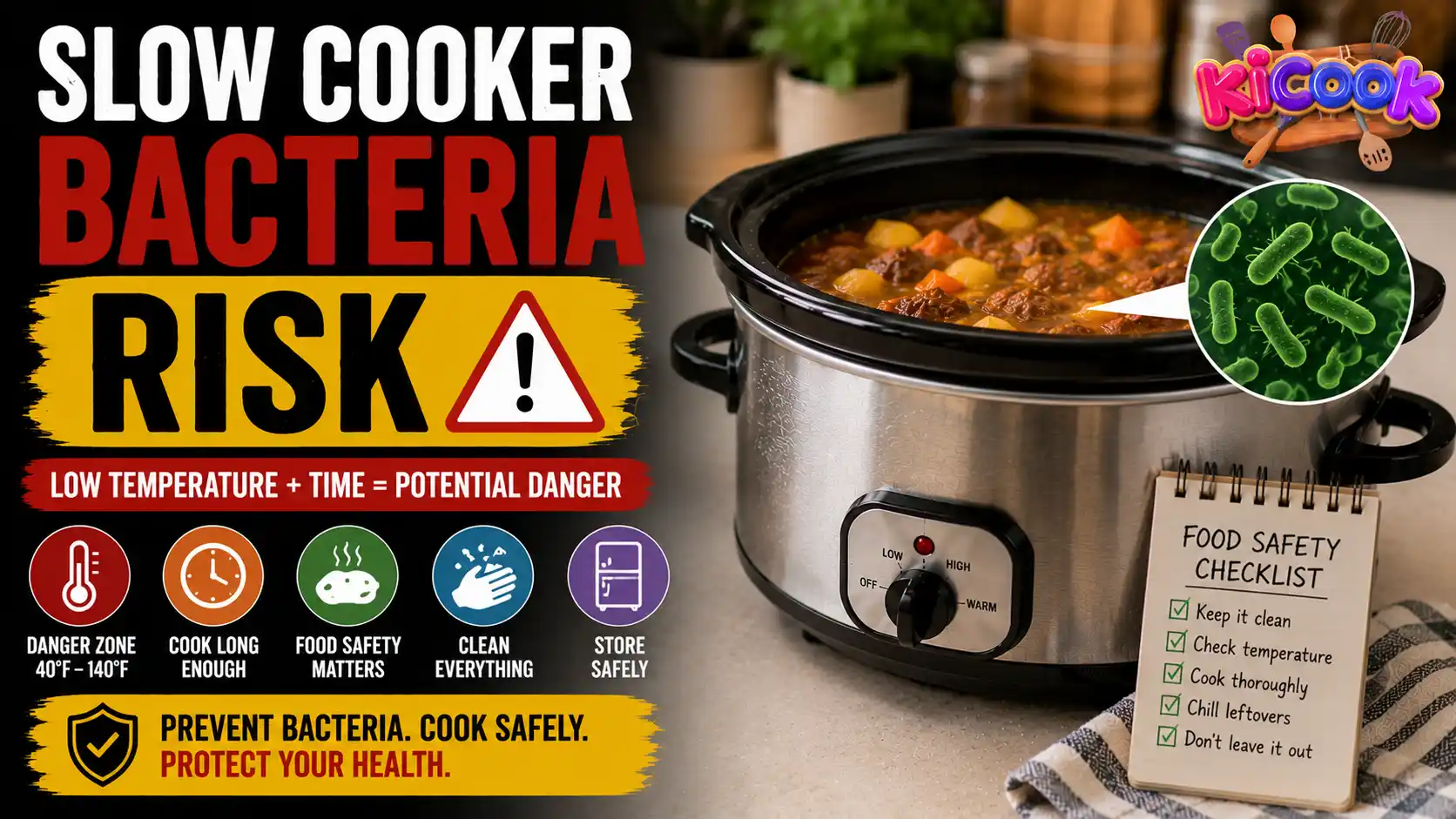
Slow cookers are generally safe when used correctly, but bacteria can grow if food stays too long in the “danger zone” between 40°F and 140°F (4°C to 60°C). Using the right temperature setting, thawing meat first, and storing leftovers properly greatly reduce slow cooker bacteria risk.
I use my slow cooker several times a week, especially during busy workdays when I want dinner ready without standing in the kitchen for hours. A few years ago, I left partially frozen chicken in the cooker on a low setting and noticed it took much longer to heat than expected. That experience pushed me to learn more about food safety, temperature control, and how bacteria can develop in slow-cooked meals.
Since then, I’ve adjusted how I prep ingredients and store leftovers, and my meals have been safer and more consistent.
Real User Pain Points
1. Fear of Food Poisoning
Many people worry that meat, dairy, or leftovers might become unsafe during long cooking times.
2. Using Frozen Meat in a Slow Cooker
Busy households often place frozen meat directly into the cooker without knowing the risks.
3. Leaving Food on “Warm” for Too Long
People frequently keep soups or stews warm for hours during gatherings or workdays.
4. Uncertainty About Safe Cooking Temperatures
Users may not know whether “Low” heat is hot enough to kill bacteria.
5. Storing Leftovers Incorrectly
Large batches cool slowly, which can allow bacterial growth before refrigeration.
6. Cross-Contamination During Prep
Raw meat juices touching vegetables or countertops remain a common problem in home kitchens.
How Each Pain Point Is Solved
Fear of Food Poisoning
Why It Happens
Bacteria like Salmonella, E. coli, and Clostridium perfringens grow quickly in food held at unsafe temperatures. Slow cooking naturally takes longer to heat food compared to stovetop cooking, which worries many home cooks.
What Works in Practice
Modern slow cookers are built to gradually reach safe cooking temperatures. According to the USDA, properly functioning slow cookers heat food above 140°F safely over time.
I now preheat my slow cooker for about 15–20 minutes before adding ingredients. That small step helps the cooking process begin faster and reduces the amount of time food spends at lower temperatures.
For soups and stews, I also make sure the liquid is already warm before pouring it into the cooker.
Using Frozen Meat in a Slow Cooker
Why It Happens
Frozen meat stays cold for too long during slow cooking, allowing bacteria to multiply before the center becomes fully heated.
What Works in Practice
I always thaw meat in the refrigerator overnight before adding it to the cooker. Since making this change, cooking times have become more predictable, and the texture of meat has improved too.
A large frozen roast may remain below safe temperature levels for several hours inside a slow cooker, especially on the low setting.
If I forget to thaw meat ahead of time, I cook it another way instead of taking the risk.
Leaving Food on “Warm” for Too Long
Why It Happens
The “Warm” setting maintains temperature, but extended holding times can still affect food quality and safety if the cooker cycles unevenly.
What Works in Practice
I try not to leave food on Warm for more than 2–4 hours. During family gatherings, I stir soups and chili occasionally so heat stays evenly distributed.
I also check the food temperature with a kitchen thermometer if it has been sitting for a long time.
This became especially important during holiday meals where the slow cooker stayed plugged in nearly all afternoon.
Uncertainty About Safe Cooking Temperatures
Why It Happens
Many people assume “Low” means unsafe, while others assume slow cooking kills all bacteria instantly.
What Works in Practice
Most slow cookers on Low still reach simmering temperatures after several hours. I tested mine with a food thermometer and found it consistently reached over 185°F.
That simple test gave me confidence that the cooker was working properly.
The USDA recommends keeping cooked foods above 140°F and cooking poultry to at least 165°F internally.
Storing Leftovers Incorrectly
Why It Happens
Large slow cooker meals cool slowly, especially thick soups and stews. Warm food left out too long creates ideal conditions for bacteria growth.
What Works in Practice
I divide leftovers into smaller containers before refrigerating. This helps food cool faster and more evenly.
I used to place the entire ceramic insert directly into the refrigerator, but the center stayed warm too long. Smaller containers solved that issue immediately.
I also label leftovers and try to eat them within 3–4 days.
Cross-Contamination During Prep
Why It Happens
Raw meat juices can spread bacteria onto vegetables, utensils, and kitchen surfaces.
What Works in Practice
I now use separate cutting boards for meat and vegetables whenever possible. Washing hands and wiping surfaces immediately after handling raw chicken or beef also makes a noticeable difference.
Even small habits, like replacing used dishcloths regularly, help reduce contamination risks in busy kitchens.
Country-Specific Context
USA
Slow cookers are widely used for meal prep and large family dinners. Long workdays often lead people to leave food cooking unattended for many hours. Safe storage and proper reheating are especially important because meals are often cooked in large portions.
UK
Smaller kitchens and compact appliances are common. Energy costs have increased in recent years, so many households rely on slow cookers for affordable cooking. People may use the “Warm” setting longer to save reheating costs, making temperature monitoring important.
Canada
Cold winters make slow cookers popular for soups and stews. During winter months, many Canadians batch cook meals for several days, so safe cooling and refrigeration practices matter even more.
Australia
Warm weather increases the risk of food spoiling quickly if left out after cooking. Slow cooker leftovers should be refrigerated promptly, especially during summer months when kitchens stay hot longer.
Experience-Based Benefits
After changing how I use my slow cooker, I noticed several practical improvements:
- Meals cooked more evenly because ingredients started at safer temperatures.
- Leftovers stayed fresher for longer in the refrigerator.
- I worried less about food safety during long cooking sessions.
- Batch cooking became easier because I developed a consistent routine for cooling and storage.
Most importantly, I felt more confident serving slow-cooked meals to family and guests.
Supporting Quotes
“Slow cookers are safe for cooking foods when basic food safety steps are followed correctly.” – Dr. Sandra Eskin, Food Safety Advocate
“Frozen meat can remain in unsafe temperature ranges too long inside a slow cooker.” – Lisa McManus, Test Kitchen Expert
“Dividing leftovers into smaller containers helps foods cool quickly and safely.” – Brian Nummer, Food Safety Specialist
Practical Tips
- Thaw meat completely before slow cooking.
- Preheat the cooker for 15–20 minutes if possible.
- Keep lids closed during cooking to maintain heat.
- Use a food thermometer to confirm safe internal temperatures.
- Refrigerate leftovers within 2 hours.
- Divide large meals into shallow containers for faster cooling.
- Wash cutting boards and utensils immediately after handling raw meat.
- Avoid overfilling the cooker beyond recommended levels.
- Reheat leftovers thoroughly before eating again.
FAQ on Slow Cooker Bacteria Risk
Can bacteria survive in a slow cooker?
Yes, bacteria can survive if food does not reach safe temperatures quickly enough or if it stays too long in the danger zone.
Is it safe to leave a slow cooker on all day?
Generally yes, if the cooker is functioning properly and used according to instructions.
Can I put frozen chicken in a slow cooker?
Food safety experts generally recommend thawing chicken first to reduce bacterial risk.
How hot should a slow cooker get?
Most slow cookers eventually reach temperatures above 170°F to 200°F during cooking.
How long can food stay on the Warm setting?
Keeping food on Warm for 2–4 hours is usually acceptable if temperatures remain above 140°F.
Are leftovers from a slow cooker safe?
Yes, if refrigerated promptly and reheated properly.
What foods carry the highest bacteria risk in slow cookers?
Raw poultry, ground meat, seafood, dairy-heavy dishes, and improperly stored leftovers carry higher risks.
Conclusion
Slow cooker bacteria risk becomes much lower when food is prepared, cooked, and stored correctly. Simple habits like thawing meat, checking temperatures, and cooling leftovers properly make a major difference in food safety.
Slow cookers remain one of the most practical tools for busy households, especially when you follow safe cooking routines consistently. With a few adjustments, you can enjoy convenient meals while reducing the risk of foodborne illness.
For detailed slow cooker food safety guidance, visit the USDA’s official resource: USDA Slow Cooker and Food Safety Guide
“I believe great cooking starts with the right tools, trusted advice, and a little confidence in the kitchen.”
Hi, I’m Emma Carter. My love for cooking began in my grandmother’s kitchen, where I learned that every great meal starts with simple ingredients and the right cookware. Over the years, I’ve spent countless hours researching, testing, and comparing kitchen appliances, cookware, coffee makers, air fryers, and other everyday kitchen essentials.
Here at KiCook, my goal is to make your buying decisions easier with honest product reviews, practical buying guides, and easy-to-follow cooking tips. Whether you’re upgrading your kitchen or searching for the best appliance for your home, I focus on providing clear, reliable, and research-backed information you can trust.
When I’m not testing new kitchen gadgets or writing in-depth guides, you’ll usually find me trying new recipes, visiting local farmers’ markets, or enjoying a quiet cup of coffee while planning my next kitchen project.