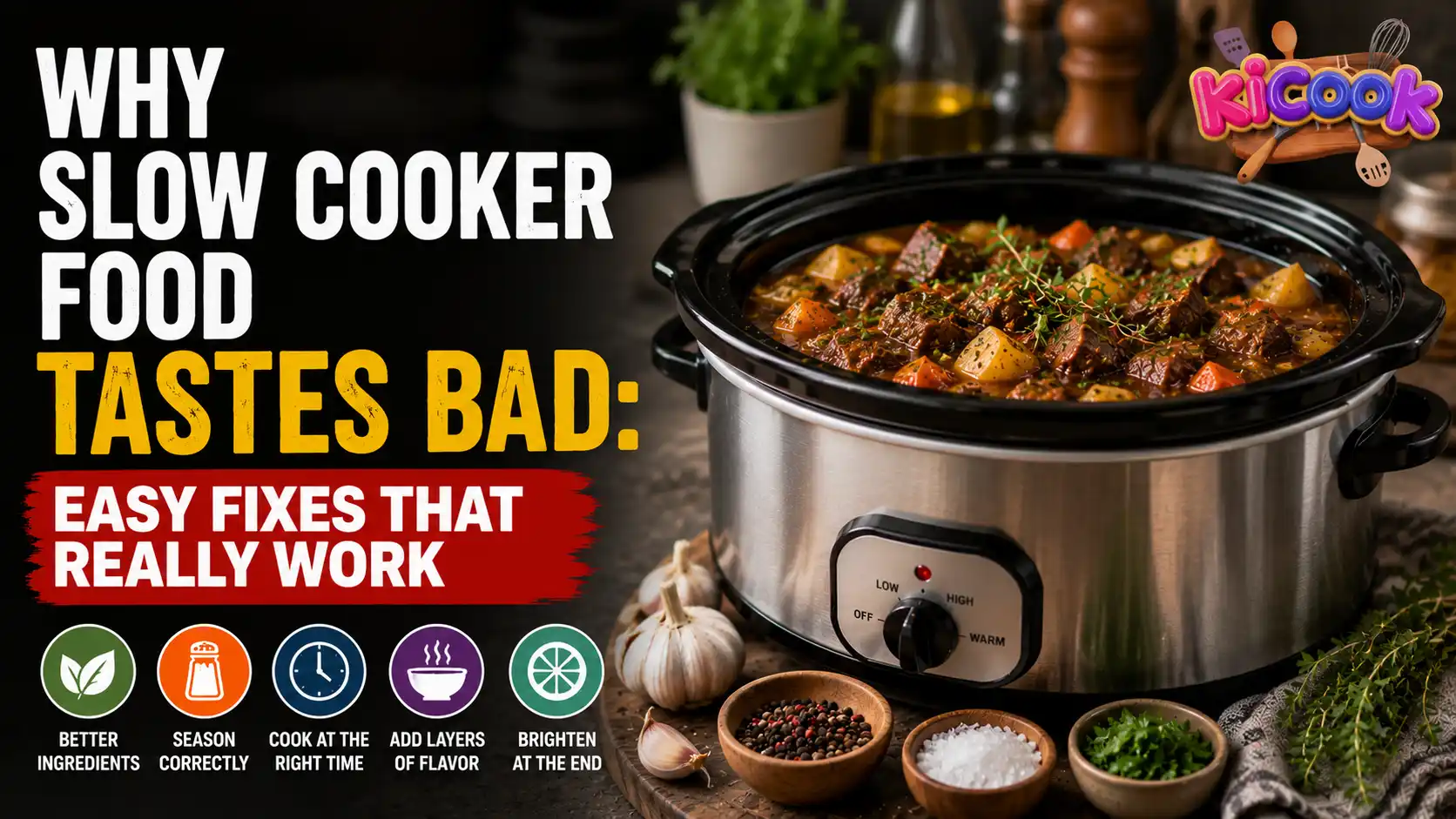
Slow cooker food tastes bad most of the time because of weak seasoning, too much liquid, overcooking, low-quality ingredients, or poor cooking methods. I learned that a few small changes can completely improve flavor, texture, and smell without buying a new cooker.
Why Does Slow Cooker Food Taste Bad?
I used to think slow cookers made every meal taste amazing automatically. But after a few bland stews, watery soups, and dry meats, I realized slow cooking still needs proper technique.
Many people in the USA, UK, London, and Canada face the same problem. Food comes out dull, flat, mushy, or strange-smelling. The good news is that most slow cooker flavor problems are easy to fix.
In this guide, I’ll explain:
- Why slow cooker meals lose flavor
- Common mistakes people make
- How to improve seasoning
- Ways to keep meat juicy
- Tips for better texture
- How to avoid watery meals
- Smart cooking tricks I personally use
The Most Common Reasons Slow Cooker Food Tastes Bad
1. Too Much Liquid
This is one of the biggest mistakes I made.
Unlike stovetop cooking, slow cookers trap steam inside. Very little moisture escapes during cooking. If you add too much broth, water, milk, or sauce, the food becomes diluted.
That weakens flavor fast.
Signs of Too Much Liquid
- Watery soup
- Bland sauce
- Thin chili
- Mushy vegetables
- Weak smell
What I Do Instead
Now I reduce liquids by about 30–50% compared to regular recipes.
For example:
- Use 2 cups broth instead of 4
- Add cream near the end
- Let the lid stay closed
Removing the lid too often releases heat and changes cooking balance.
2. Weak Seasoning
Slow cookers soften strong flavors during long cooking times.
Spices that taste bold on the stovetop may disappear after 6–8 hours.
Common Seasoning Problems
- Not enough salt
- Old spices
- Adding herbs too early
- Forgetting acidity
My Simple Flavor Fix
I season in layers:
- Before cooking
- Midway if needed
- Final taste adjustment at the end
I also add:
- Fresh herbs
- Lemon juice
- Apple cider vinegar
- Black pepper
These brighten flavor instantly.
“Salt is the difference between tasting food and enjoying food.” — Samin Nosrat
3. Overcooking the Food
Many people think longer cooking always means better flavor.
That is not true.
Overcooked food becomes:
- Dry
- Stringy
- Bitter
- Mushy
- Greasy
Foods That Overcook Easily
| Food | Risk |
|---|---|
| Chicken breast | Dry texture |
| Seafood | Rubbery |
| Dairy | Curdling |
| Vegetables | Mushy |
| Lean beef | Tough texture |
My Cooking Rule
I use LOW heat for most recipes.
- 6–8 hours on LOW
- 3–4 hours on HIGH
For chicken breast, I check early to avoid dryness.
4. Cheap Ingredients Affect Flavor
Slow cookers cannot magically improve poor ingredients.
Low-quality meat, canned vegetables with little flavor, or weak broth create disappointing meals.
I noticed a huge difference after upgrading simple ingredients.
Ingredients Worth Spending More On
- Broth or stock
- Meat cuts
- Fresh garlic
- Onion
- Spices
You do not need luxury products. Just avoid the cheapest options available.
5. Browning Meat Matters
This changed my cooking completely.
At first, I threw raw meat directly into the slow cooker. The result was pale, greasy, and bland.
Then I started browning meat first.
The flavor difference was huge.
Why Browning Helps
Browning creates caramelization. That gives food deeper flavor and better color.
I Brown These Foods First
- Beef
- Chicken thighs
- Sausage
- Ground meat
- Pork
Even 5 minutes in a skillet helps.
According to USDA Food Safety and Inspection Service, proper meat handling and cooking also improve food quality and safety.
6. Using Too Many Frozen Ingredients
Frozen foods release extra water while cooking.
That often causes:
- Thin sauce
- Weak flavor
- Mushy vegetables
I try to thaw meat first whenever possible.
If I use frozen vegetables, I add them later in the cooking process.
How I Make Slow Cooker Meals Taste Better
Build Flavor in Layers
Good slow cooker meals need layers of flavor.
I use this simple method:
Before Cooking
- Salt
- Pepper
- Garlic
- Onion
- Paprika
Mid Cooking
- Taste if possible
- Adjust seasoning
Final Step
- Fresh herbs
- Citrus juice
- Cheese
- Cream
- Vinegar
This keeps flavor fresh instead of flat.
Use Better Herbs and Spices
Herbs That Work Well Early
- Thyme
- Bay leaves
- Rosemary
Herbs I Add at the End
- Parsley
- Cilantro
- Basil
Fresh herbs lose flavor during long cooking.
Adding them near the end works much better.
Add Acid for Balance
Many slow cooker dishes taste heavy.
A small acidic ingredient can fix that immediately.
My Favorite Options
- Lemon juice
- Lime juice
- Red wine vinegar
- Apple cider vinegar
Even one teaspoon can help.
“Cooking is about balance, texture, and flavor.” — Gordon Ramsay
Why Slow Cooker Chicken Tastes Dry
Chicken breast dries out easily in slow cookers.
I learned this after ruining several batches.
Best Fixes
Use Chicken Thighs
Thighs stay juicy longer.
Cook on LOW
High heat dries chicken quickly.
Avoid Overcooking
Check internal temperature early.
Safe chicken temperature is 165°F (74°C).
Why Slow Cooker Beef Becomes Tough
Many people think tough beef needs more cooking.
Sometimes it actually needs less.
Tough Beef Causes
- Lean cuts
- Too little liquid
- Wrong temperature
- Overcooking
Best Beef Cuts for Slow Cooking
| Beef Cut | Result |
|---|---|
| Chuck roast | Tender |
| Brisket | Rich flavor |
| Short ribs | Soft texture |
| Stew meat | Good for soups |
How to Stop Vegetables from Becoming Mushy
This problem is very common.
Soft vegetables can ruin texture fast.
Vegetables That Cook Quickly
- Peas
- Spinach
- Zucchini
- Mushrooms
I add these during the last 30–60 minutes.
Vegetables That Handle Long Cooking
- Potatoes
- Carrots
- Onions
- Sweet potatoes
These work well from the beginning.
The Lid Problem Most People Ignore
I used to open the lid constantly.
That slows cooking and affects texture.
Every time you remove the lid, heat escapes.
My Rule
I only check food near the end unless necessary.
This keeps cooking temperature stable.
Why Slow Cooker Food Sometimes Smells Strange
Bad smell can come from:
- Burned dairy
- Spoiled ingredients
- Too much grease
- Old spices
- Food left too long on warm setting
How I Prevent Bad Smells
- Use fresh ingredients
- Trim excess fat
- Avoid too much cream early
- Store leftovers properly
The Best Slow Cooker Flavor Boosters
These simple additions improve flavor quickly.
| Ingredient | Why It Helps |
|---|---|
| Tomato paste | Adds richness |
| Worcestershire sauce | Deep savory flavor |
| Soy sauce | Salt and umami |
| Garlic | Strong aroma |
| Onion | Sweetness |
| Fresh herbs | Fresh finish |
| Cheese | Creamy texture |
Common Slow Cooker Mistakes
Filling the Cooker Too Full
Slow cookers work best when filled halfway to two-thirds full.
Too much food causes uneven cooking.
Using Low Fat Ingredients Only
Fat carries flavor.
Very lean recipes can taste dull.
I use moderate-fat ingredients for better taste and texture.
Adding Dairy Too Early
Milk, cream, and cheese can separate after hours of heat.
I add dairy near the end whenever possible.
Ignoring Texture
Good meals need texture balance.
I sometimes add:
- Crispy onions
- Fresh herbs
- Toasted bread
- Cheese topping
That makes meals feel fresher.
Easy Ways I Fix Bland Slow Cooker Meals
If food already tastes bad, I use quick fixes.
Quick Flavor Rescue Tips
Too Bland
Add:
- Salt
- Vinegar
- Garlic powder
- Soy sauce
Too Watery
- Remove lid briefly
- Add cornstarch slurry
- Simmer separately
Too Greasy
- Skim excess fat
- Chill and remove hardened fat
Too Bitter
- Add small sugar amount
- Add cream or butter
Slow Cooker Safety Tips
Food safety matters a lot with long cooking times.
Important Tips
- Do not leave raw meat at room temperature
- Keep lid closed
- Cook meat fully
- Refrigerate leftovers quickly
The Centers for Disease Control and Prevention recommends safe food handling to reduce foodborne illness risks.
Best Foods for Slow Cooking
Some foods naturally work better in slow cookers.
My Favorite Slow Cooker Foods
- Beef stew
- Pulled pork
- Chili
- Chicken curry
- Lentil soup
- Pot roast
- Bean dishes
These recipes develop strong flavor over time.
Foods I Avoid in Slow Cookers
Some ingredients simply do not perform well.
Foods That Often Turn Out Bad
| Food | Problem |
|---|---|
| Seafood | Overcooks fast |
| Pasta | Mushy |
| Rice | Uneven texture |
| Lean chicken breast | Dry |
| Delicate herbs | Lose flavor |
My Personal Slow Cooker Routine
After years of testing recipes, this routine works best for me.
Step 1: Prep Ingredients
I chop vegetables evenly.
Step 2: Brown Meat
This improves flavor dramatically.
Step 3: Layer Ingredients Properly
Hard vegetables go on the bottom.
Step 4: Use Less Liquid
Steam stays trapped inside.
Step 5: Season Again at the End
Final seasoning matters most.
Slow Cooker Tips for USA, UK, and Canadian Kitchens
Cooking styles vary by country.
USA
American recipes often use more cheese, barbecue sauce, and creamy ingredients.
I reduce sugar slightly for balance.
UK and London
Many UK slow cooker meals use stews and root vegetables.
I find adding fresh herbs at the end improves traditional recipes nicely.
Canada
Canadian slow cooker meals often use hearty winter ingredients.
Maple-based sauces work especially well with pork and chicken.
How to Choose a Better Slow Cooker
Sometimes the cooker itself causes problems.
Older models may heat unevenly.
Features I Like
- Programmable timer
- Warm setting
- Removable insert
- Even heating
- Locking lid
Signs Your Slow Cooker May Be Bad
Uneven Cooking
Food burns on one side.
Weak Heating
Meals stay undercooked after hours.
Cracked Insert
Unsafe and poor heat retention.
Burning Smell
Possible electrical problem.
If your appliance shows these signs, replacement may help.
“People who love to eat are always the best people.” — Julia Child
Frequently Asked Questions on Why Slow Cooker Food Tastes Bad
Why does my slow cooker food taste bland?
Slow cooker meals often taste bland because flavors weaken during long cooking. Adding seasoning in layers and using fresh herbs at the end helps a lot.
Why is my slow cooker meat tough?
Tough meat usually comes from overcooking or using lean cuts. Chuck roast and chicken thighs stay tender better.
Why does slow cooker food become watery?
Slow cookers trap steam inside. Too much broth or frozen ingredients can create excess liquid.
Should I brown meat before slow cooking?
Yes. Browning adds deeper flavor, better texture, and richer color.
Why do vegetables turn mushy in slow cookers?
Soft vegetables cook too long. Add delicate vegetables near the end.
Can I put raw chicken in a slow cooker?
Yes, but it must cook fully to a safe internal temperature of 165°F (74°C).
Why does my slow cooker smell bad?
Old ingredients, burned dairy, or trapped grease can create unpleasant smells.
Is LOW or HIGH better for slow cooking?
LOW heat usually gives better texture and flavor for most recipes.
Final Thoughts
If your slow cooker food tastes bad, you are definitely not alone. I struggled with bland soups, dry chicken, mushy vegetables, and watery sauces for years before learning the small changes that truly matter.
The biggest improvements came from using less liquid, seasoning properly, browning meat first, and avoiding overcooking. Once I started building flavor in layers, my meals became richer, fresher, and far more enjoyable.
Slow cooking should make life easier, not disappointing. With the right ingredients and a few simple habits, you can turn ordinary slow cooker meals into comforting dishes your family actually looks forward to eating.

“I believe great cooking starts with the right tools, trusted advice, and a little confidence in the kitchen.”
Hi, I’m Emma Carter. My love for cooking began in my grandmother’s kitchen, where I learned that every great meal starts with simple ingredients and the right cookware. Over the years, I’ve spent countless hours researching, testing, and comparing kitchen appliances, cookware, coffee makers, air fryers, and other everyday kitchen essentials.
Here at KiCook, my goal is to make your buying decisions easier with honest product reviews, practical buying guides, and easy-to-follow cooking tips. Whether you’re upgrading your kitchen or searching for the best appliance for your home, I focus on providing clear, reliable, and research-backed information you can trust.
When I’m not testing new kitchen gadgets or writing in-depth guides, you’ll usually find me trying new recipes, visiting local farmers’ markets, or enjoying a quiet cup of coffee while planning my next kitchen project.