
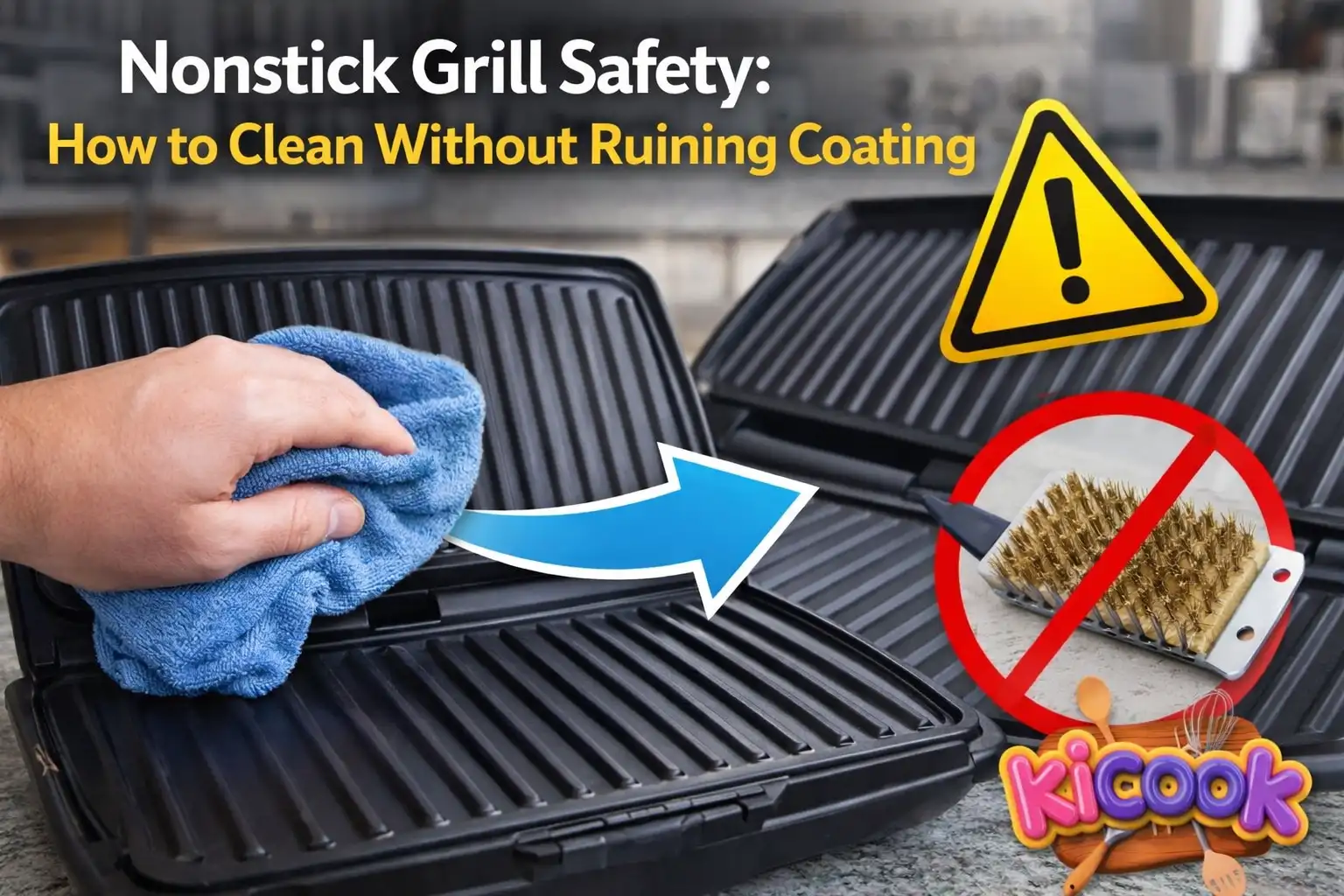
Nonstick grill safety means cleaning your grill gently so the coating stays intact and safe for cooking. Using soft tools, mild cleaners, and the right timing helps prevent damage and keeps your food healthy.
Ever cleaned your grill and noticed scratches or peeling afterward? That sinking feeling is real. I’ve been there toothinking I was doing the right thing, only to ruin the nonstick surface.
After years of cooking with grill makers and testing different cleaning methods, I’ve learned what works and what damages the coating fast. In this guide, I’ll show you simple, safe ways to clean your nonstick grill without ruining it and how to make it last for years.
Common Pain Points (And How to Fix Them)
1. Scratched Coating After Cleaning
Why it happens:
Many people use metal spatulas, steel wool, or hard brushes. These tools scratch the delicate nonstick layer.
Quick fix you can use today:
- Switch to soft sponges or microfiber cloths
- Use silicone or wooden utensils only
- Avoid anything labeled “abrasive”
Real-life example:
In the US and Canada, heavy-duty scrub pads are popular for BBQ grills but they’re too harsh for nonstick plates. I made this mistake once and saw visible scratches after just one clean.
2. Grease That Won’t Come Off
Why it happens:
Letting grease sit too long makes it hard and sticky. Cold cleaning makes it worse.
Simple solution:
- Clean while the grill is slightly warm (not hot)
- Use warm water with mild dish soap
- Let it soak for 5–10 minutes if needed
Tip: In the UK and Australia, many homes use eco-friendly dish soaps. These work well, but you may need a bit more soaking time.
3. Peeling or Flaking Coating
Why it happens:
Harsh chemicals, dishwasher use, or overheating can break down the coating.
Fix:
- Never use oven cleaner or bleach
- Hand wash only unless manual says otherwise
- Avoid preheating an empty grill
Important: Once coating starts peeling, it’s safer to replace the grill plate.
What Makes Nonstick Coating Sensitive?
Nonstick surfaces (often PTFE-based) are smooth and thin. That’s why food doesn’t stick but it also means they can get damaged easily.
“Nonstick coatings are durable under normal use but can degrade with high heat and abrasive cleaning.” — Lisa McManus, Executive Editor, America’s Test Kitchen
Key things that damage coating:
- High heat without food
- Sharp or metal tools
- Strong chemical cleaners
- Rough scrubbing
Takeaway: Treat your grill like a nonstick pan—not a cast iron skillet.
Step-by-Step: Safe Cleaning Method
Step 1: Let It Cool Slightly
Don’t clean when it’s too hot or fully cold.
- Too hot = burns or warping
- Too cold = grease sticks harder
Best timing: Warm to the touch
Step 2: Wipe Off Excess Grease
Use paper towels or a soft cloth.
- This reduces scrubbing later
- Prevents grease spreading
Step 3: Use Warm Soapy Water
Mix mild dish soap with warm water.
- Dip a sponge or cloth
- Gently wipe the surface
Avoid soaking electrical parts.
Step 4: Handle Stubborn Spots
If grease remains:
- Place a damp cloth over the area
- Leave it for 5–10 minutes
- Wipe again gently
Step 5: Dry Properly
Use a dry cloth or let it air dry.
Important: Never store your grill wet—this can damage internal parts.
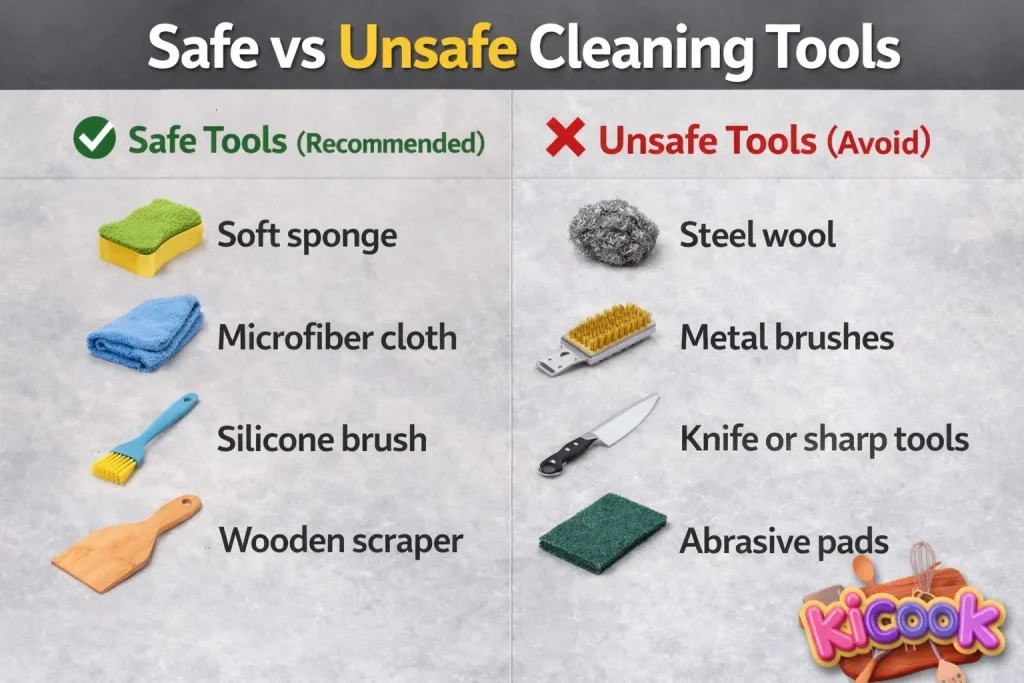
Safe vs Unsafe Cleaning Tools
Safe Tools (Recommended)
- Soft sponge
- Microfiber cloth
- Silicone brush
- Wooden scraper
Unsafe Tools (Avoid)
- Steel wool
- Metal brushes
- Knife or sharp tools
- Abrasive pads
“Using non-abrasive tools is key to maintaining the integrity of nonstick cookware.” — Dr. Lisa Young, Nutritionist and Food Safety Expert
Cleaning Products: What You Should Use
Best Options
- Mild dish soap
- Baking soda (light use only)
- Warm water
What to Avoid
- Bleach
- Oven cleaners
- Strong degreasers
- Alcohol-based cleaners
For safety guidance, I often refer to the U.S. Environmental Protection Agency, which explains safe chemical use in kitchens: safechoice
How Often Should You Clean Your Grill?
After Every Use (Light Clean)
- Wipe grease
- Quick wash
Weekly (Deep Clean)
- Full wash with soap
- Check for buildup
Real-life example:
In busy households in Australia or the UK, skipping daily cleaning often leads to sticky buildup within a week. I’ve seen grills become almost unusable just from neglect.
Smart Habits That Protect Your Nonstick Coating
1. Use Oil Properly
- Apply a light coat before cooking
- Avoid spray oils that leave residue
2. Don’t Overheat
- Medium heat is enough for most foods
- High heat can break down coating
3. Store Carefully
- Don’t stack heavy items on top
- Use a soft cloth between plates if stacking
4. Read the Manual
Each grill is slightly different.
Signs Your Nonstick Grill Is No Longer Safe
Watch for these warning signs:
- Peeling coating
- Deep scratches
- Food sticking badly
- Uneven cooking
“If the coating is visibly damaged, it’s time to stop using it for safety reasons.” — Dr. Donald Schaffner, Food Microbiologist, Rutgers University
Key takeaway: A damaged nonstick surface can affect both safety and taste.
Common Mistakes I See All the Time
- Cleaning too late (grease hardens)
- Using dishwashers without checking manual
- Scrubbing too hard
- Using metal utensils
- Ignoring early damage
Frequently Asked Questions on Nonstick Grill Safety: How to Clean Without Ruining Coating
Is it safe to use a scratched nonstick grill?
Light scratches are usually okay, but deep scratches can expose the base material. If food starts sticking or coating peels, replace it.
Can I use baking soda on nonstick grills?
Yes, but only gently. Mix with water to form a paste and apply softly—don’t scrub hard.
Should I put my grill plates in the dishwasher?
Only if the manufacturer allows it. In many cases, hand washing is safer and helps the coating last longer.
Why is my nonstick grill sticky after cleaning?
This often happens due to leftover oil residue or harsh cleaners. Rinse well and avoid spray oils.
How long does a nonstick grill coating last?
With proper care, it can last 2–5 years. Poor cleaning habits can shorten this to less than a year.
Final Thoughts
Taking care of your grill doesn’t need to be hard. From my experience, three simple habits make the biggest difference:
- Use soft tools and gentle cleaning methods
- Clean while the grill is slightly warm
- Avoid harsh chemicals and high heat misuse
Stick to these, and your nonstick grill will stay safe, smooth, and easy to use for years. A little care after each meal saves you money and keeps your food tasting just right.

“I believe great cooking starts with the right tools, trusted advice, and a little confidence in the kitchen.”
Hi, I’m Emma Carter. My love for cooking began in my grandmother’s kitchen, where I learned that every great meal starts with simple ingredients and the right cookware. Over the years, I’ve spent countless hours researching, testing, and comparing kitchen appliances, cookware, coffee makers, air fryers, and other everyday kitchen essentials.
Here at KiCook, my goal is to make your buying decisions easier with honest product reviews, practical buying guides, and easy-to-follow cooking tips. Whether you’re upgrading your kitchen or searching for the best appliance for your home, I focus on providing clear, reliable, and research-backed information you can trust.
When I’m not testing new kitchen gadgets or writing in-depth guides, you’ll usually find me trying new recipes, visiting local farmers’ markets, or enjoying a quiet cup of coffee while planning my next kitchen project.