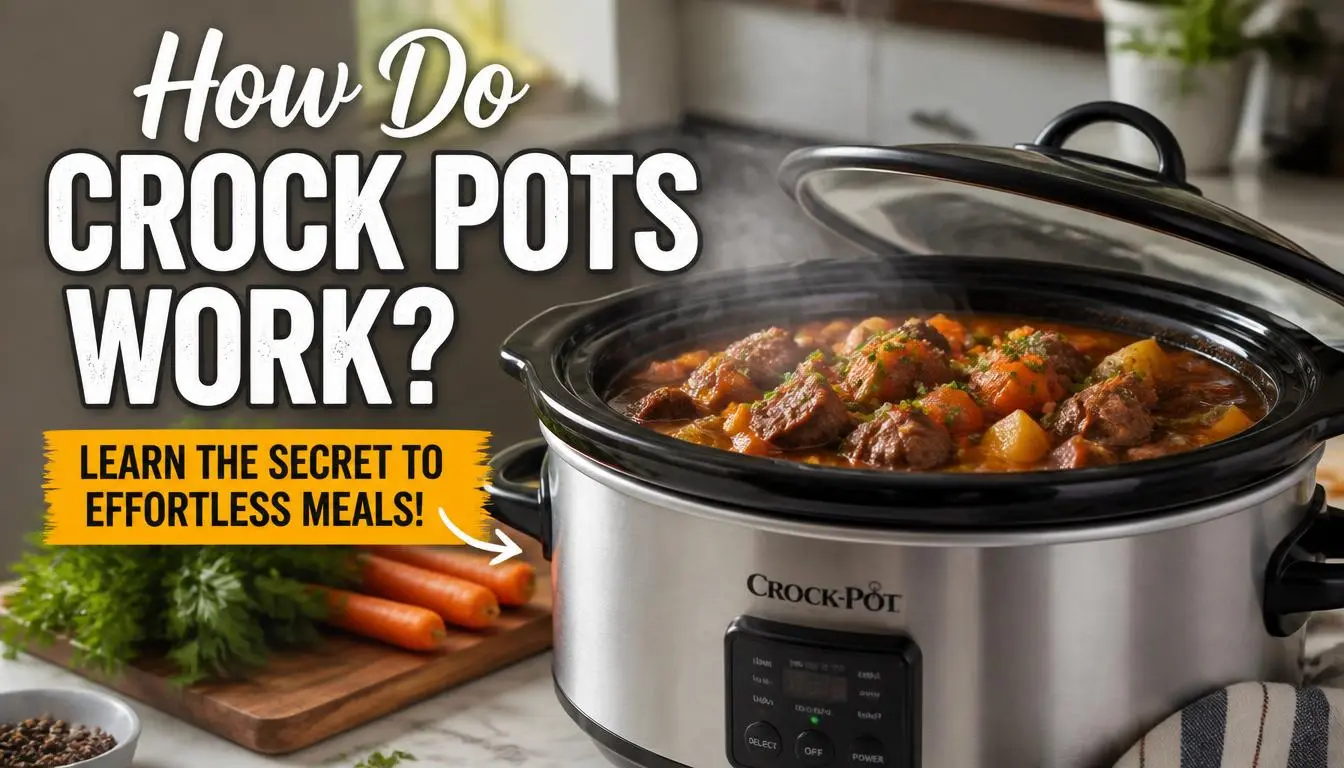
A crock pot works by using low, steady heat over a long period to cook food slowly. The heating element warms the ceramic insert, which transfers heat to the ingredients, allowing flavors to develop while keeping food moist and tender.
If you’ve ever wondered how do crock pots work, you’re not alone. I remember asking the same question when I first started using one. At first, it seemed almost too simple put ingredients in, turn it on, and come back hours later to a fully cooked meal. After years of using slow cookers for soups, stews, roasts, and even desserts, I’ve learned that there’s a lot of smart science behind these convenient kitchen appliances.
In this guide, I’ll explain how does a crock pot work, cover crock pot cooking basics, and share practical tips for cooking in a slow cooker successfully.
What Is a Crock Pot?
A crock pot is a type of slow cooker that cooks food at a low temperature for several hours. The name “Crock-Pot” originally referred to a specific brand, but many people now use it as a general term for all slow cookers.
The appliance typically includes:
- A ceramic or stoneware cooking insert
- A heating element surrounding the insert
- A lid, usually made of glass
- Temperature settings such as Low, High, and Warm
Unlike ovens or stovetops that use intense heat, a crock pot cooks food gradually. This slow process helps break down tough cuts of meat and allows flavors to blend naturally.
How Do Crock Pots Work?
The basic principle is surprisingly simple.
When you turn on the crock pot, electricity flows through a heating element located around the sides and sometimes the bottom of the appliance. This heating element warms the ceramic insert.
The insert then transfers heat to the food inside.
Here’s the process step by step:
- Electricity powers the heating element.
- The heating element warms the crock.
- The crock transfers heat to the ingredients.
- Moisture builds inside the covered pot.
- Heat circulates throughout the food.
- Food cooks slowly and evenly over several hours.
Because the lid remains closed, steam stays trapped inside. This creates a moist cooking environment that helps prevent food from drying out.
The Science Behind Slow Cooking
The secret to slow cooking lies in consistent temperatures.
Most crock pots operate between approximately 170°F and 300°F (77°C to 149°C), depending on the setting.
During cooking:
- Proteins gradually break down.
- Connective tissues soften.
- Flavors combine over time.
- Moisture remains trapped inside the pot.
This is why tougher cuts of beef, pork, and lamb often become incredibly tender after several hours in a slow cooker.
According to the USDA Food Safety and Inspection Service, modern slow cookers are designed to reach safe cooking temperatures while maintaining food safety.
How Does a Crock Pot Work on Low and High Settings?
One common misconception is that the High setting gets much hotter than Low.
In reality, both settings usually reach similar final temperatures.
The difference is how quickly they get there.
Low Setting
The Low setting heats food gradually.
Benefits include:
- Better flavor development
- Tender meat
- Reduced risk of overcooking
- Ideal for all-day cooking
Typical cooking times:
- 6 to 10 hours
High Setting
The High setting reaches cooking temperature faster.
Benefits include:
- Shorter cooking time
- Convenient for busy afternoons
- Useful when starting meals later in the day
Typical cooking times:
- 3 to 6 hours
Warm Setting
The Warm setting is intended for maintaining temperature after cooking.
It’s not designed for cooking raw food from the beginning.
Crock Pot Cooking Basics
Learning a few basic rules can make a huge difference.
Choose the Right Size
A crock pot works best when it’s between half full and three-quarters full.
Too little food may cook too quickly.
Too much food may cook unevenly.
Keep the Lid Closed
Every time you lift the lid, heat escapes.
In many cases, opening the lid can add 15 to 30 minutes to cooking time.
I try to resist the temptation to check on food constantly.
Use Enough Liquid
Although slow cookers need less liquid than stovetop cooking, some moisture is still necessary.
Good liquid options include:
- Broth
- Stock
- Water
- Tomato sauce
- Coconut milk
Layer Ingredients Correctly
Dense vegetables should go near the bottom.
Examples:
- Potatoes
- Carrots
- Onions
These foods take longer to cook and benefit from direct heat.
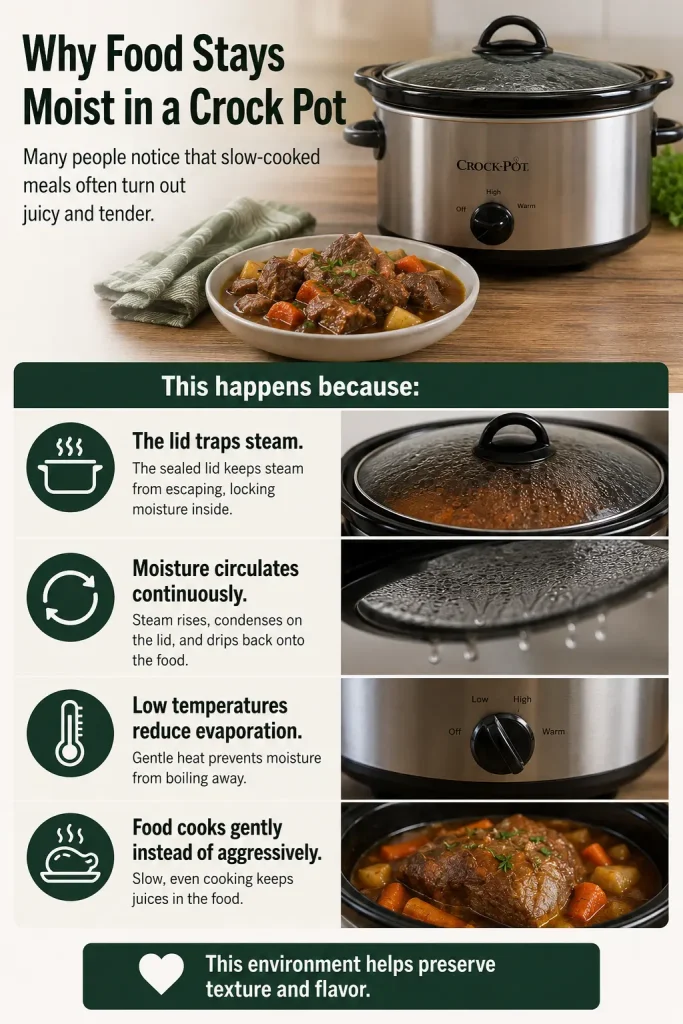
Why Food Stays Moist in a Crock Pot
Many people notice that slow-cooked meals often turn out juicy and tender.
This happens because:
- The lid traps steam.
- Moisture circulates continuously.
- Low temperatures reduce evaporation.
- Food cooks gently instead of aggressively.
This environment helps preserve texture and flavor.
Best Foods for Cooking in a Slow Cooker
Some foods are especially well-suited for slow cooking.
Meat
Excellent options include:
- Beef chuck roast
- Brisket
- Pork shoulder
- Short ribs
- Chicken thighs
These cuts contain connective tissue that softens during long cooking periods.
Soups and Stews
Slow cookers are ideal for:
- Vegetable soup
- Chicken soup
- Beef stew
- Chili
Beans and Legumes
Many dried beans cook beautifully in a crock pot after proper preparation.
Casseroles
Slow cooker casseroles can be convenient for busy families.
Desserts
Many people are surprised to learn that crock pots can make:
- Bread pudding
- Apple crisp
- Chocolate cake
- Rice pudding
Common Mistakes Beginners Make
Adding Too Much Liquid
Since moisture stays trapped, recipes usually require less liquid than stovetop versions.
Using Lean Meat Only
Lean cuts can become dry.
Moderately fatty cuts often produce better results.
Overfilling the Pot
Food needs room for heat circulation.
Cooking Delicate Vegetables Too Long
Vegetables like peas and zucchini may become mushy if added too early.
Using Frozen Meat
Many food safety experts recommend thawing meat before placing it in a slow cooker.
Benefits of Cooking in a Slow Cooker
Over the years, I’ve found many advantages to using a crock pot.
Convenience
Prepare ingredients in the morning and return to a ready meal.
Energy Efficiency
Slow cookers generally use less electricity than large ovens.
Better Flavor
Long cooking times allow ingredients to blend naturally.
Tender Meat
Even affordable cuts often become fork-tender.
Less Kitchen Heat
This is especially helpful during summer.
Are Crock Pots Safe?
Modern crock pots are generally very safe when used properly.
Important safety tips include:
- Place the appliance on a stable surface.
- Avoid damaged cords.
- Follow manufacturer instructions.
- Cook food to safe internal temperatures.
- Refrigerate leftovers promptly.
For detailed food safety guidance, the USDA Slow Cooker and Food Safety Guide provides excellent information.
Understanding Heat Distribution in a Crock Pot
One interesting feature of a crock pot is how heat spreads throughout the food.
Unlike a stovetop burner that applies intense heat from the bottom, a crock pot surrounds the insert with gentle heat.
Benefits include:
- Fewer hot spots
- Reduced burning
- More even cooking
- Consistent temperatures
This design is one reason slow cookers are beginner-friendly.
Can You Cook Everything in a Crock Pot?
Not every food is ideal for slow cooking.
Foods that perform well:
- Soups
- Stews
- Roasts
- Pulled pork
- Curries
- Beans
Foods that may not perform well:
- Fried foods
- Crispy foods
- Quick-cooking seafood
- Delicate pasta cooked for long periods
Understanding these limits helps achieve better results.
My Favorite Crock Pot Tips
After years of cooking with slow cookers, these are the tips I use most often:
Brown Meat First
While not always required, browning meat adds extra flavor.
Use Fresh Herbs Carefully
Fresh herbs can lose flavor during long cooking times.
I often add them near the end.
Cut Vegetables Evenly
Uniform pieces cook more consistently.
Avoid Frequent Stirring
Most slow cooker recipes don’t require stirring.
Let Food Rest
A short resting period after cooking often improves texture.
Expert Quotes About Slow Cooking
“No one is born a great cook; one learns by doing.” — Julia Child
This quote reminds me that successful slow cooking comes from practice and experience.
“Cooking is at once child’s play and adult joy.” — Craig Claiborne
A crock pot makes cooking simple while still producing satisfying meals.
“The secret of good cooking is, first, having a love of it.” — James Beard
Patience and care often produce the best slow-cooked meals.
Frequently Asked Questions
How do crock pots work without burning food?
They use low, controlled heat over several hours. The ceramic insert distributes heat evenly, helping prevent burning.
How does a crock pot work differently from an oven?
A crock pot uses lower temperatures and traps moisture, while an oven uses drier heat and typically higher temperatures.
Can I leave a crock pot on all day?
Yes, many recipes are specifically designed for all-day cooking on the Low setting.
Is cooking in a slow cooker healthy?
It can be. Slow cooking often requires less added fat and helps retain moisture naturally.
Do crock pots use a lot of electricity?
No. Most crock pots consume relatively little electricity compared to a full-size oven.
Why does food taste better in a crock pot?
Long cooking times allow flavors to blend and develop more fully.
Can I cook raw meat in a crock pot?
Yes, as long as the appliance reaches safe cooking temperatures and food is handled properly.
What foods should not go into a crock pot?
Foods that rely on crisp textures, such as fried items, generally don’t perform well.
Conclusion
So, how do crock pots work? They use gentle, steady heat to cook food over several hours while trapping moisture inside the pot. This simple process transforms ingredients into flavorful, tender meals with very little effort.
From my experience, learning how does a crock pot work and mastering a few crock pot cooking basics can completely change the way you prepare meals. Whether you’re interested in cooking in a slow cooker for convenience, better flavor, or easier meal planning, a crock pot remains one of the most useful kitchen appliances for busy households across the USA, UK, Canada, and Australia. Once you understand how it works, creating delicious slow-cooked meals becomes surprisingly simple.
“I believe great cooking starts with the right tools, trusted advice, and a little confidence in the kitchen.”
Hi, I’m Emma Carter. My love for cooking began in my grandmother’s kitchen, where I learned that every great meal starts with simple ingredients and the right cookware. Over the years, I’ve spent countless hours researching, testing, and comparing kitchen appliances, cookware, coffee makers, air fryers, and other everyday kitchen essentials.
Here at KiCook, my goal is to make your buying decisions easier with honest product reviews, practical buying guides, and easy-to-follow cooking tips. Whether you’re upgrading your kitchen or searching for the best appliance for your home, I focus on providing clear, reliable, and research-backed information you can trust.
When I’m not testing new kitchen gadgets or writing in-depth guides, you’ll usually find me trying new recipes, visiting local farmers’ markets, or enjoying a quiet cup of coffee while planning my next kitchen project.