
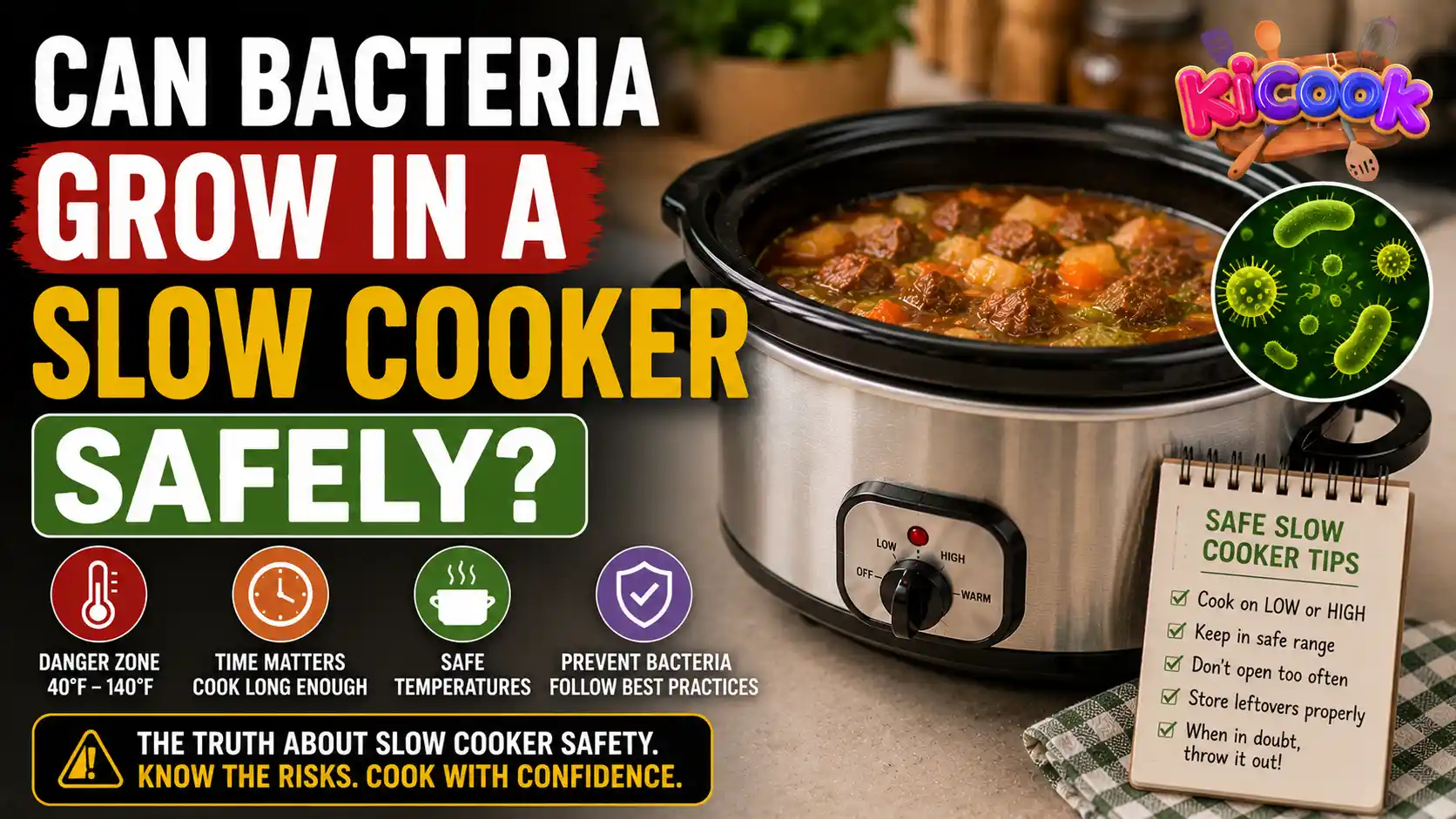
Slow cookers make dinner easy. You can add ingredients in the morning and come home to a hot meal at night. But many home cooks still ask one important question: can bacteria grow in a slow cooker? The answer is yes—if the cooker is used the wrong way. Food can stay in the “danger zone” temperature long enough for harmful bacteria to multiply.
The good news is that modern slow cookers are designed to cook food safely when used properly. According to the USDA Food Safety and Inspection Service, slow cookers can safely cook foods because they heat gradually and maintain safe cooking temperatures. Problems usually happen when people overload the cooker, thaw food incorrectly, or leave cooked food sitting too long.
If you use a slow cooker often, this guide will help you avoid food safety mistakes. You’ll learn why bacteria can grow in slow cookers, how to prevent it, the safest cooking habits, and smart kitchen tips for safer meals in 2026.
Why Can Bacteria Grow in a Slow Cooker?
Many people think slow cooking automatically kills all germs. That is mostly true—but timing matters. Bacteria grow fastest between 40°F and 140°F. Food safety experts call this the “danger zone.”


A slow cooker heats food slowly. If ingredients stay in the danger zone too long, bacteria may multiply before the food reaches a safe temperature.
Common causes include:
- Adding frozen meat directly into the cooker
- Using too much food at once
- Opening the lid too often
- Using an old or damaged cooker
- Leaving cooked food at room temperature
According to the Centers for Disease Control and Prevention (CDC), bacteria like Salmonella, E. coli, and Clostridium perfringens can grow in improperly handled foods.
Here is a real kitchen example many families face:
You place frozen chicken into a packed slow cooker before work. The cooker takes several hours to heat the center of the chicken. During that time, bacteria may multiply rapidly. By dinner, the food may smell fine but still be unsafe.
Modern kitchens in 2026 focus more on safe cooking habits and smart appliances. Many newer slow cookers now include:
- Temperature sensors
- Automatic warm settings
- Smart monitoring apps
- Safer ceramic inserts
- Programmable timers
Still, no appliance replaces safe food handling.
Best Ways to Prevent Bacteria in a Slow Cooker
Keeping food safe in a slow cooker is easier than most people think. A few simple kitchen habits can reduce food safety risks dramatically.
Top Slow Cooker Safety Tips
- Always thaw meat before cooking
- Prevents uneven heating
- Helps food reach safe temperatures faster
- Reduces bacteria growth risk
- Preheat the slow cooker
- Speeds up cooking time
- Helps ingredients leave the danger zone quickly
- Useful for soups and meat dishes
- Fill the cooker correctly
- Best fill level: half to two-thirds full
- Overfilling slows heating
- Underfilling may dry out food
- Use a food thermometer
- Chicken should reach 165°F
- Beef and pork should reach safe USDA temperatures
- Important for large cuts of meat
- Keep the lid closed
- Each lid opening drops heat significantly
- Cooking time may increase by 20–30 minutes
- Store leftovers quickly
- Refrigerate within 2 hours
- Use shallow containers for faster cooling
- Clean the cooker properly
- Wash lid, insert, and seals thoroughly
- Prevents bacteria buildup from old residue
These simple kitchen essentials improve both food quality and food safety.
Per the USDA Slow Cooker and Food Safety Guide, slow cookers are safe when food reaches proper internal temperatures.
Step-by-Step Guide
- Wash your hands before handling food.
- Thaw all meat completely in the refrigerator.
- Preheat the slow cooker for a few minutes.
- Add room-temperature liquids first.
- Place vegetables at the bottom because they cook slower.
- Put meat on top of vegetables for even heating.
- Cook on HIGH for the first hour if possible.
- Check final food temperature with a thermometer before serving.
These cooking hacks improve both safety and flavor in home kitchens.
Expert Tips & Common Mistakes
Professional cooks and food safety experts follow strict slow cooker habits because small mistakes can create big problems.


Pro Tips
- Use smaller meat cuts for faster, safer heating.
- Brown meat first for better flavor and reduced bacteria risk.
- Keep dairy ingredients for later to avoid spoilage.
- Use modern programmable slow cookers with automatic warm modes.
- Choose sustainable ceramic inserts that resist cracking and heat loss.
Common Mistakes to Avoid
- Opening the lid repeatedly during cooking
- Putting frozen meat directly into the cooker
- Leaving cooked food overnight on the “warm” setting
- Ignoring strange smells or cracked inserts
One major mistake many beginners make is trusting cooking time alone. Different slow cookers heat differently. Older units may cook at lower temperatures than newer smart models.
According to research from KitchenAid and the National Sanitation Foundation (NSF), appliance maintenance plays a major role in kitchen food safety.
Another important point: bacteria are invisible. Food may look and smell normal while still being unsafe. That is why temperature matters more than appearance.
FAQs
Can bacteria survive in a slow cooker?
Most bacteria die once food reaches safe temperatures. However, bacteria can grow before the food becomes hot enough if the cooker is overloaded or ingredients are added frozen.
Is it safe to leave food in a slow cooker all day?
Yes, if the slow cooker is functioning properly and the food reaches safe internal temperatures. Avoid leaving food on warm settings for extremely long periods.
Can I put frozen meat in a slow cooker?
Food safety experts do not recommend it. Frozen meat warms too slowly and may stay in the danger zone long enough for bacteria growth.
What temperature kills bacteria in slow cooking?
Most harmful bacteria die at temperatures above 165°F. Use a food thermometer to confirm safe cooking temperatures.
Why does my slow cooker food spoil quickly?
Possible causes include improper storage, low cooking temperatures, overfilling, or leaving leftovers out too long after cooking.
Are modern smart slow cookers safer?
Many newer slow cookers include automatic temperature controls and timers that improve safety and cooking consistency.
How often should I clean my slow cooker?
Clean it thoroughly after every use. Food residue and moisture can encourage bacterial growth over time.
Conclusion
So, can bacteria grow in a slow cooker? Yes—but mainly when food safety rules are ignored. Slow cookers are generally safe kitchen appliances when used correctly. Thawing meat properly, avoiding overfilling, using a thermometer, and storing leftovers quickly can dramatically reduce the risk of foodborne illness.
Today’s smart kitchen trends make slow cooking safer than ever. Modern appliances now include better temperature control, energy efficiency, and programmable safety features. Still, good cooking habits matter most.
If you want safer, healthier slow cooker meals, focus on proper preparation and smart kitchen organization. Small changes can protect your family while helping you enjoy easy home-cooked meals with confidence.
Try these slow cooker safety tips today and make your kitchen both safer and more efficient.
For more kitchen safety and cooking guides, visit Kicook.

“I believe great cooking starts with the right tools, trusted advice, and a little confidence in the kitchen.”
Hi, I’m Emma Carter. My love for cooking began in my grandmother’s kitchen, where I learned that every great meal starts with simple ingredients and the right cookware. Over the years, I’ve spent countless hours researching, testing, and comparing kitchen appliances, cookware, coffee makers, air fryers, and other everyday kitchen essentials.
Here at KiCook, my goal is to make your buying decisions easier with honest product reviews, practical buying guides, and easy-to-follow cooking tips. Whether you’re upgrading your kitchen or searching for the best appliance for your home, I focus on providing clear, reliable, and research-backed information you can trust.
When I’m not testing new kitchen gadgets or writing in-depth guides, you’ll usually find me trying new recipes, visiting local farmers’ markets, or enjoying a quiet cup of coffee while planning my next kitchen project.