
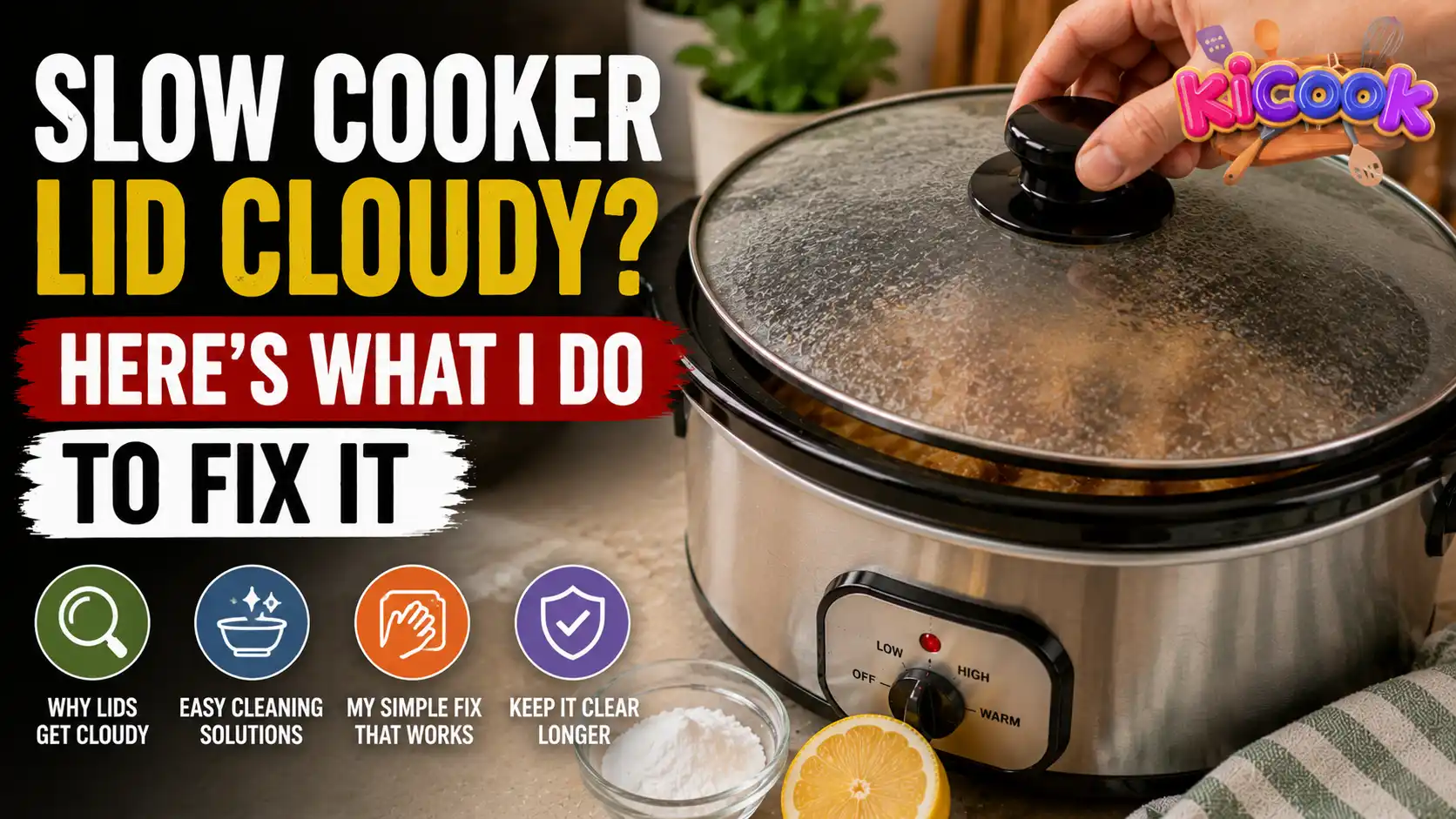
A cloudy slow cooker lid is usually caused by mineral buildup, grease, hard water stains, or tiny scratches on the glass. I’ve fixed this problem many times with simple cleaning methods using vinegar, baking soda, and proper care habits that keep the lid clear and safe to use.
If your slow cooker glass lid looks foggy, white, or dull, don’t worry. In most cases, the problem is easy to solve at home without buying a new cooker.
Why Does My Slow Cooker Lid Look Cloudy?
The first time I noticed my slow cooker lid cloudy after washing, I thought the glass was damaged forever. The lid looked dull, foggy, and full of white marks. After some testing, I found that most cloudy lids come from normal kitchen use.
Here are the most common causes:
- Hard water stains
- Grease buildup
- Soap residue
- Heat stains from cooking
- Dishwasher damage
- Tiny scratches on the glass
- Mineral deposits from steam
- Food splatter that dries on the lid
In homes across the USA, UK, Canada, and London areas with hard water, mineral buildup is very common. If you wash your lid often in the dishwasher, cloudy glass may appear faster.
Signs Your Slow Cooker Lid Has Cloudiness Problems
Here’s what I usually notice when my crock pot lid starts getting cloudy:
- White film on the glass lid
- Foggy appearance after washing
- Water spots that will not wipe away
- Greasy haze on the surface
- Dull-looking transparent lid
- Stains around the steam vent
- Glass that looks old even after cleaning
Sometimes the problem is only surface buildup. Other times, the glass may have permanent etching from harsh detergents.
Common Customer Pain Points I See Often
Many people feel frustrated because:
The Lid Still Looks Dirty After Washing
I understand this problem well. You wash the lid carefully, but the cloudy layer stays there. This usually means mineral deposits or detergent residue remain on the glass.
Dishwasher Cleaning Makes It Worse
Some dishwasher detergents are very strong. Over time, they can damage the glass finish and create permanent cloudiness.
The Slow Cooker Looks Old
Even if the appliance works perfectly, a foggy lid makes the entire slow cooker appear worn out.
Hard Water Leaves White Spots Everywhere
In many homes in Canada, parts of the UK, and several US states, hard water creates chalky stains quickly.
Fear of Cracked or Unsafe Glass
Many users wonder if cloudy glass means the lid is unsafe. In most cases, it is still safe unless you see cracks or deep damage.
Is a Cloudy Slow Cooker Lid Dangerous?
Usually, no.
A cloudy lid is often a cosmetic problem caused by minerals, grease, or soap film. The lid is normally safe if:
- There are no cracks
- The glass is not chipped
- The lid fits properly
- The cloudiness is only on the surface
However, if the glass feels rough, scratched deeply, or has damaged edges, I recommend replacing it for safety.
“Good kitchen care helps appliances last longer and work better.” — Martha Stewart
Best Ways I Clean a Cloudy Slow Cooker Lid
These methods have worked well for me over the years.
1. Vinegar Soak Method
This is my favorite solution for cloudy glass lids.
What I Use
- White vinegar
- Warm water
- Soft microfiber cloth
Steps
- Mix equal parts warm water and vinegar.
- Soak the lid for 15–20 minutes.
- Wipe gently with a soft cloth.
- Rinse well.
- Dry completely.
Vinegar helps break down mineral deposits and hard water stains.
Why It Works
The mild acid dissolves calcium buildup that creates the cloudy appearance.
2. Baking Soda Paste
When vinegar alone doesn’t remove the haze, I use baking soda.
What I Do
- Mix baking soda with a little water.
- Create a soft paste.
- Rub gently onto the cloudy areas.
- Leave for 10 minutes.
- Rinse and dry.
This method removes grease buildup and stuck residue.
3. Lemon Juice Cleaning
Lemon juice works similarly to vinegar.
I sometimes use fresh lemon slices directly on the glass. The natural acid helps remove dull spots and leaves a fresh smell.
4. Dish Soap and Warm Water
For light cloudiness, simple cleaning may be enough.
My Routine
- Use mild dish soap
- Avoid rough scrubbers
- Wash immediately after cooking
- Dry with a soft towel
This prevents grease film from building up over time.
5. Deep Cleaning for Heavy Cloudiness
Sometimes the lid needs extra care.
My Deep-Clean Process
- Fill sink with hot water
- Add vinegar and dish soap
- Soak for 30 minutes
- Use baking soda paste
- Rinse thoroughly
- Dry with microfiber cloth
This usually restores most glass lids very well.
What Causes Permanent Cloudy Glass?
Sadly, some cloudiness cannot be removed.
Permanent Etching Happens From:
- Harsh dishwasher detergent
- Very hot dishwasher cycles
- Hard water exposure over years
- Abrasive cleaning pads
- Cheap glass quality
If the glass feels rough even after cleaning, the damage may be permanent.
How I Prevent My Slow Cooker Lid From Becoming Cloudy Again
Prevention matters more than heavy cleaning.
Here’s what helps me most:
Hand Wash Instead of Dishwasher
I now hand wash my lids whenever possible.
Dry Immediately
Water spots form when water dries naturally on glass.
Use Soft Cloths
Avoid steel wool or rough scrub pads.
Clean After Every Use
Grease becomes harder to remove later.
Use Filtered Water
This helps reduce hard water stains in some homes.
Avoid Strong Chemicals
Harsh cleaners may damage the glass surface.
“Simple kitchen habits often protect cookware better than expensive cleaners.” — Ina Garten
Can Dishwasher Detergent Damage Glass Lids?
Yes, it can.
Many modern detergents contain strong cleaning agents. Over time, they may slowly wear down the glass surface.
This issue is common in:
- USA homes with hard water
- Canadian regions with mineral-rich water
- Older UK plumbing systems
- London apartments with heavy mineral deposits
If your lid became cloudy after repeated dishwasher use, detergent damage may be the reason.
How Hard Water Affects Slow Cooker Glass Lids
Hard water contains minerals like calcium and magnesium.
When steam dries on the lid, these minerals stay behind and create:
- White film
- Chalky spots
- Cloudy appearance
- Streak marks
I noticed this problem more after moving to an area with harder water.
Signs of Hard Water
- White buildup on faucets
- Spots on dishes
- Soap that doesn’t rinse clean
- Mineral stains inside kettles
Best Cleaning Products for Cloudy Slow Cooker Lids
I prefer simple household items first.
Products That Work Well
- White vinegar
- Baking soda
- Mild dish soap
- Microfiber cloth
- Lemon juice
- Non-scratch sponge
Products I Avoid
- Bleach
- Steel wool
- Strong oven cleaner
- Abrasive powders
- Harsh chemical sprays
Should You Replace a Cloudy Slow Cooker Lid?
Sometimes replacement makes sense.
I Replace the Lid When:
- The glass has cracks
- Cloudiness will not improve at all
- Steam leaks during cooking
- The lid no longer fits properly
- The glass has deep scratches
Many brands sell replacement lids online.
Before ordering, check:
- Cooker model number
- Lid size
- Shape compatibility
My Experience Fixing a Foggy Crock Pot Lid
One winter, my slow cooker lid became extremely cloudy after months of soups and stews. The dishwasher made it worse every week.
I soaked the lid in warm vinegar water for half an hour. After that, I used baking soda gently with a microfiber cloth.
The result surprised me. Most of the white haze disappeared, and the glass looked much clearer.
Since then, I mostly hand wash my slow cooker parts.
Mistakes I Avoid Now
I learned several lessons the hard way.
Using Rough Scrubbers
They scratched the glass surface badly.
Leaving Food Residue Overnight
Dried grease became harder to clean.
Washing Hot Glass in Cold Water
Sudden temperature changes may weaken glass.
Overusing Dishwasher Cycles
Repeated exposure increased the foggy appearance.
Can Steam Cause Cloudiness?
Yes.
Steam carries minerals and grease upward during cooking. As the moisture dries, residue stays on the lid surface.
This is especially common when cooking:
- Chili
- Stews
- Pulled pork
- Cream soups
- Curry dishes
Frequent slow cooking naturally creates buildup over time.
How I Keep My Slow Cooker Looking New
These habits help a lot:
- Clean immediately after use
- Dry all parts fully
- Store with lid slightly open
- Avoid stacking heavy cookware on top
- Polish glass with vinegar monthly
A little care keeps the appliance looking fresh for years.
Cloudy Lid vs Damaged Lid
Many people confuse these problems.
| Problem | Usually Safe? | Fixable? |
|---|---|---|
| Hard water stains | Yes | Usually |
| Grease haze | Yes | Yes |
| Soap residue | Yes | Yes |
| Permanent etching | Usually | Rarely |
| Cracked glass | No | Replace |
| Chipped edges | No | Replace |
Best Homemade Cleaner for Cloudy Glass Lids
This is my favorite mix:
DIY Cleaner Recipe
- 1 cup white vinegar
- 1 tablespoon baking soda
- Warm water
How I Use It
- Spray or soak the lid
- Wait 15 minutes
- Wipe gently
- Rinse completely
It’s cheap, simple, and works very well.
Slow Cooker Maintenance Tips
A clean lid is part of overall appliance care.
I Also Recommend:
- Checking the rubber seal area
- Cleaning the steam vent
- Wiping the cooker rim
- Avoiding burnt food buildup
- Storing properly
These small habits help the slow cooker last longer.
Eco-Friendly Cleaning Options
I try to avoid strong chemicals whenever possible.
Good natural cleaning choices include:
- Vinegar
- Lemon juice
- Baking soda
- Warm water
- Plant-based dish soap
These methods are safer for homes with kids and pets.
Expert Advice About Glass Cookware Care
Kitchen experts often recommend gentle cleaning for tempered glass cookware.
According to the consumer care guidance from the U.S. Consumer Product Safety Commission, sudden temperature changes and rough handling may weaken glass cookware over time.
I always let my slow cooker lid cool slightly before washing.
“Kitchen tools last longer when cleaned gently and stored properly.” — Gordon Ramsay
Frequently Asked Questions
Why is my slow cooker lid cloudy after dishwasher cleaning?
Dishwasher detergent, hard water minerals, and high heat can leave a white film or cause permanent glass etching.
Can vinegar remove cloudy stains from a crock pot lid?
Yes. White vinegar often removes mineral deposits and hard water stains very effectively.
Is cloudy glass dangerous for cooking?
Usually no. If the lid has no cracks or chips, it is generally safe to continue using.
Can I use steel wool on my slow cooker lid?
I do not recommend it. Steel wool may scratch the glass and make the cloudiness worse.
Why does my lid still look foggy after cleaning?
The glass may have permanent etching from dishwasher damage or years of hard water exposure.
How often should I clean my slow cooker lid?
I clean mine after every use to prevent grease and mineral buildup.
Can baking soda scratch glass?
Baking soda is usually safe when used gently with a soft cloth or sponge.
Should I replace a permanently cloudy lid?
If the lid still works safely, replacement is optional. Replace it if you notice cracks, chips, or poor fitting.
Does hard water permanently damage glass lids?
Over time, yes. Mineral deposits and repeated dishwasher exposure may create permanent cloudiness.
What is the safest way to clean a glass slow cooker lid?
I recommend warm water, mild dish soap, vinegar, and a microfiber cloth.
Final Thoughts on Slow Cooker Lid Cloudy Problems
A cloudy slow cooker lid can look frustrating, but most of the time the fix is simple. I’ve found that vinegar, baking soda, gentle cleaning, and avoiding harsh dishwasher cycles make a huge difference.
With regular care, your slow cooker glass lid can stay cleaner, clearer, and safer for years. If the cloudiness becomes permanent, at least you’ll know whether it’s just cosmetic or time for a replacement. Small cleaning habits truly help protect your kitchen appliances and save money in the long run.

“I believe great cooking starts with the right tools, trusted advice, and a little confidence in the kitchen.”
Hi, I’m Emma Carter. My love for cooking began in my grandmother’s kitchen, where I learned that every great meal starts with simple ingredients and the right cookware. Over the years, I’ve spent countless hours researching, testing, and comparing kitchen appliances, cookware, coffee makers, air fryers, and other everyday kitchen essentials.
Here at KiCook, my goal is to make your buying decisions easier with honest product reviews, practical buying guides, and easy-to-follow cooking tips. Whether you’re upgrading your kitchen or searching for the best appliance for your home, I focus on providing clear, reliable, and research-backed information you can trust.
When I’m not testing new kitchen gadgets or writing in-depth guides, you’ll usually find me trying new recipes, visiting local farmers’ markets, or enjoying a quiet cup of coffee while planning my next kitchen project.