
When your electric skillet’s surface becomes scratched or starts bubbling, it’s usually a sign that the nonstick coating is failing or the pan has been overheated. In most cases, replacement is safer and more effective than repair, especially when food safety and cooking performance are priorities.
Why Scratches and Bubbles Happen
Electric skillet surfaces can get damaged over time due to normal wear but scratches and bubbling often mean something more.
Here’s what typically causes it:
Scratches
- Metal utensils
- Abrasive cleaning
- Dragging cookware or heavy tools across the surface
Bubbling or Peeling
- Overheating the pan
- Thermal shock (heating and cooling too quickly)
- Aging nonstick coating
Even if the damage looks minor at first, it can get worse quickly.

Is It Safe to Cook on a Scratched Surface?
Minor Scratches
If the scratches are light and shallow, the skillet may still work—but cooking performance will be reduced.
Deep Scratches or Bubbling
Bubbling is a red flag.
It usually means the nonstick coating is separating from the metal underneath.
This can lead to:
- Food sticking badly
- Uneven heating
- Potential ingestion of coating fragments
- Reduced control over cooking temperatures
Cooking on a bubbled or deeply scratched surface may still work, but it’s not ideal—and it may be unsafe in the long run.
Can You Repair a Scratched or Bubbling Skillet?
In most cases—no.
Here’s why:
Repairing Nonstick Coating Isn’t Practical
- You can’t simply recoat a skillet at home like you would a cast‑iron pan.
- Professional recoating is expensive and often costs more than buying a new skillet.
DIY Fixes Are Temporary
Some people try tricks like:
- Seasoning the surface
- Baking oil into scratches
- Using surface repair sprays
These may help briefly, but they won’t restore the original coating integrity or safety.
When Replacement Makes Sense
If your electric skillet has:
- Bubbling surface
- Deep scratches
- Flaking or peeling coating
- Persistent sticking
- Uneven heating
Then replacement is the best choice.
A new skillet will give you:
- Better nonstick performance
- Safer cooking conditions
- Longer appliance life
- More even heat distribution
Safety Considerations You Should Know
Before deciding, think about safety.
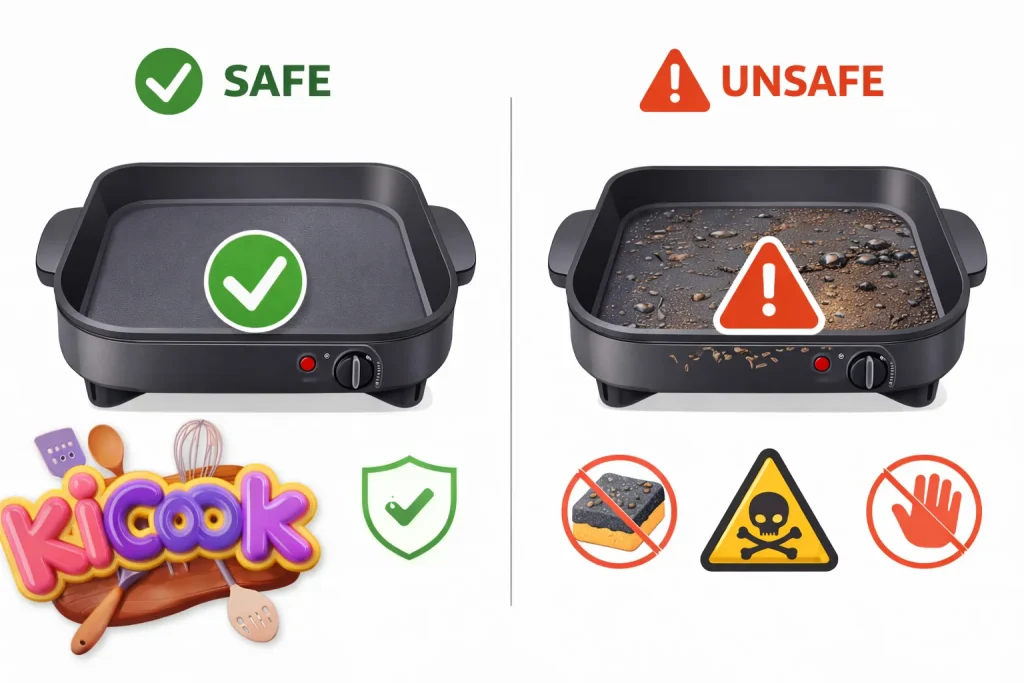
Scratched or bubbled coatings can:
- Contaminate food with flakes
- Compromise heat distribution
- Increase the chance of burns or fires if overheated
For more on safety concerns and long‑term electric skillet use, check out the detailed guidance on electric skillet safety issues from industry resources. Proper maintenance and safe temperature use are key to preventing problems before they start.
How to Prevent Future Damage
Once you have a new or repaired skillet, follow these habits:
1. Use the Right Tools
- Silicone, wood, or heat‑safe plastic utensils
- Avoid metal tools that scratch coatings
2. Gentle Cleaning
- Soft sponges
- Non‑abrasive cleaners
- Avoid dishwashers unless the manufacturer allows them
3. Proper Heat Control
- Avoid overheating
- Preheat gradually
- Don’t leave the skillet on high heat without food
Proper care prevents many common problems before they happen.
Pros and Cons: Repair vs Replace
Repair (Not Usually Recommended)
Pros
- Lower upfront cost (tiny fixes)
- Temporarily improves performance
Cons
- Not durable
- Doesn’t restore full safety
- Can be false economy
Replace
Pros
- Better cooking performance
- Safer and longer lasting
- Often more affordable than expected
Cons
- Higher upfront cost
Expert Opinion
By Alex Turner, Kitchen Appliance Specialist
“Electric skillets with serious scratches or bubbling are simply past their prime. Trying to patch them up is like putting a band‑aid on a leaky pipe. In most cases, you’ll save time, money, and stress by replacing the unit. Improved temperature controls and better coatings on modern models make the investment worth it.”
Frequently Asked Questions on Scratched or Bubbling Electric Skillet Surface
Can I still use my skillet if it’s scratched?
Light surface scratches may be okay temporarily, but deeper damage reduces performance and safety.
Is bubbling nonstick coating dangerous?
Bubbling means the coating is separating and should be replaced as soon as possible.
Can I get my skillet recoated professionally?
You can, but it’s usually cost‑prohibitive compared to buying a new one.
Do all nonstick coatings scratch easily?
No. Ceramic and reinforced coatings resist scratches better, but all coatings can fail with abuse.
How often should I replace an electric skillet?
With regular use, plan to replace every 3–5 years—or sooner if performance drops.
Conclusion
When your electric skillet’s surface is scratched or bubbling, it’s more than cosmetic—it’s a sign of structural failure. While minor scratches might be tolerated for a short time, serious damage warrants replacement. Trying to repair or patch a failed nonstick coating rarely restores performance or safety. Investing in a new skillet not only improves your cooking experience but protects your health and peace of mind.
Related Helpful Articles
- If you’re seeing surface issues and other quirks, this comprehensive list of common electric skillet problems can help you identify what’s going on
- When your electric skillet stops working properly, this guide covers potential electric, heating, and control issues
- For safety tips and hazards to watch out for, this article on electric skillet safety issues explains how to protect yourself and your kitchen
- To decide if replacement is worth the cost, read this insight on whether electric skillets are worth it in the long run
- And for step‑by‑step fixes before you replace, this electric skillet troubleshooting guide offers helpful solutions

“I believe great cooking starts with the right tools, trusted advice, and a little confidence in the kitchen.”
Hi, I’m Emma Carter. My love for cooking began in my grandmother’s kitchen, where I learned that every great meal starts with simple ingredients and the right cookware. Over the years, I’ve spent countless hours researching, testing, and comparing kitchen appliances, cookware, coffee makers, air fryers, and other everyday kitchen essentials.
Here at KiCook, my goal is to make your buying decisions easier with honest product reviews, practical buying guides, and easy-to-follow cooking tips. Whether you’re upgrading your kitchen or searching for the best appliance for your home, I focus on providing clear, reliable, and research-backed information you can trust.
When I’m not testing new kitchen gadgets or writing in-depth guides, you’ll usually find me trying new recipes, visiting local farmers’ markets, or enjoying a quiet cup of coffee while planning my next kitchen project.