

Dishwasher not cleaning properly: Most cleaning problems come from poor loading, blocked spray arms, low water temperature, or skipped maintenance. Fixing these basics usually restores normal cleaning without replacing the machine.
I’ve used different dishwashers over the years in homes and small shared kitchens. I’ve seen the same issue again and again plates look clean at first, but grease, white marks, or food bits remain. Once I paid attention to how the dishwasher was loaded, cleaned, and supplied with hot water, the results improved fast.

Real User Pain Points
Food stuck on plates after a full cycle
Many users open the door and find dried rice, sauce, or eggs still on dishes.
Glasses look cloudy or feel gritty
Even when dishes look clean, glasses may have white film or rough spots.
Bottom rack cleans better than the top
Cups and bowls on the upper rack often come out dirty.
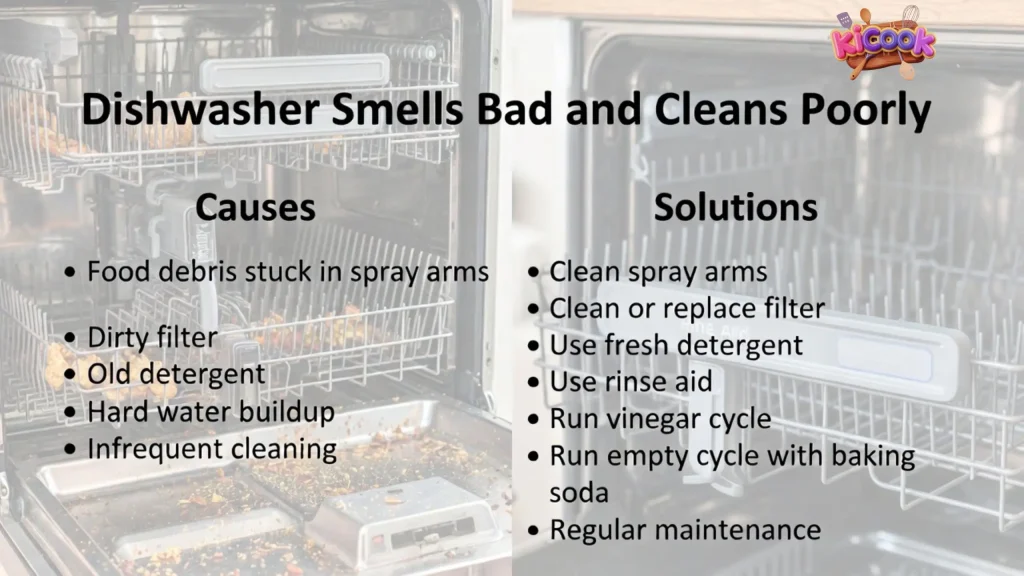
Dishwasher smells bad and cleans poorly
A bad smell often comes with weak cleaning performance.
Dishwasher works, but results change every load
Some days dishes are clean, other days they are not, with no clear reason.
How Each Pain Point Is Solved
Food stuck on plates after a full cycle
Why it happens
This is usually caused by blocked spray arms, poor loading, or old detergent. Large items can stop water from reaching other dishes.
How the solution works
I fixed this by spacing dishes better and checking the spray arms. I also stopped pre-rinsing heavily. Modern machines use sensors, and too-clean water can shorten the cycle.
In smaller kitchens, people using compact machines often see this issue. If you use a countertop unit, learning how a countertop dishwasher works helps explain why loading matters so much.
Glasses look cloudy or feel gritty
Why it happens
Cloudiness often comes from hard water or too much detergent. Rinse aid is missing in many homes.
How the solution works
I reduced detergent and added rinse aid. I also cleaned the filter and ran a hot empty cycle once a month. The difference on glassware was clear after one week.
If water quality is a concern, energy-saving models can still perform well. I noticed this after reading about what an energy efficient dishwasher really means.
Bottom rack cleans better than the top
Why it happens
Water pressure is weaker at the top if spray holes are blocked or tall items block the flow.
How the solution works
I stopped placing baking trays near the spray arm path. I also cleaned the upper spray arm with a toothpick. After that, cups came out clean again.
This problem is common in slim or portable units. If space is tight, understanding dishwasher capacity explained helps avoid overload.
Dishwasher smells bad and cleans poorly
Why it happens
Food debris builds up in filters and door seals. This blocks water flow and spreads odor.
How the solution works
I removed and washed the filter weekly. I wiped the door gasket with warm water. For compact units, following a guide on how to clean a countertop dishwasher keeps smells away and improves cleaning.
Dishwasher works, but results change every load
Why it happens
Water temperature changes, mixed detergents, or half-loaded cycles confuse sensors.
How the solution works
I made sure hot water runs at the sink before starting the cycle. I also used the same detergent type each time. Results became consistent.
Energy use also plays a role. I learned more by checking dishwasher electricity consumption.
Country-Specific Context
USA
Many homes have hard water and large dishwashers. Using too much detergent is common. Water costs are lower, so people pre-rinse more, which can reduce cleaning quality. Comparing dishwasher vs hand washing water usage helps users trust the machine.
UK
Smaller kitchens mean slim or integrated units. Overloading is a big issue. Noise also matters in flats, so users often run short cycles. Understanding dishwasher noise levels explained helps choose better settings.
Canada
Cold inlet water in winter affects cleaning. I’ve seen better results when users run hot tap water first. Energy costs matter more, so efficient cycles are used often.
Australia
Water restrictions make dishwashers popular, but hard water causes scale. Regular cleaning and rinse aid are key. Portable units are also common, and knowing portable dishwasher advantages and disadvantages helps set expectations.
Experience-Based Benefits
After fixing these issues, my dishes came out clean every time. Glasses stayed clear. The smell disappeared. I stopped rewashing plates by hand, which saved time and water. The machine felt reliable again, even during busy weeks.
Supporting Quotes
“Most poor cleaning complaints come from blocked filters and incorrect loading, not from faulty machines.”
— Mark Lewis, Appliance Repair Technician
“Rinse aid and proper water temperature make a visible difference, especially with glassware.”
— Helen Carter, Home Economics Educator
“People often use more detergent than needed, which leads to residue and cloudy dishes.”
— James Patel, Consumer Appliance Tester
Practical Tips
- Run hot water at the sink before starting the cycle
- Clean the filter once a week
- Do not block spray arms with large pans
- Use rinse aid if glasses look dull
- Avoid mixing detergent types
- Follow simple dishwasher maintenance tips regularly
For small kitchens, learning what a countertop dishwasher is and whether countertop dishwashers are worth it helps avoid cleaning issues from day one.
FAQs
Why is my dishwasher not cleaning properly even with new detergent?
Detergent alone cannot fix blocked spray arms, cold water, or poor loading.
Should I pre-rinse dishes before loading?
Light scraping is enough. Heavy pre-rinsing can reduce cleaning quality.
How often should I clean the dishwasher filter?
Once a week is ideal for regular use.
Does water temperature really matter?
Yes. Most detergents need hot water to break down grease.
Can a portable dishwasher clean as well as a built-in one?
Yes, if loaded correctly and used as instructed. Guides like how to use a portable dishwasher help.
Why do my glasses smell after washing?
This usually means trapped food debris or skipped maintenance.
Conclusion
A dishwasher not cleaning properly is usually a setup or care issue, not a failure. Small changes in loading, cleaning, and water use make a real difference. Once these basics are fixed, most machines return to reliable, consistent cleaning.
According to the U.S. Department of Energy, proper dishwasher use and maintenance improve both cleaning results and efficiency, which supports these solutions in real homes.

“I believe great cooking starts with the right tools, trusted advice, and a little confidence in the kitchen.”
Hi, I’m Emma Carter. My love for cooking began in my grandmother’s kitchen, where I learned that every great meal starts with simple ingredients and the right cookware. Over the years, I’ve spent countless hours researching, testing, and comparing kitchen appliances, cookware, coffee makers, air fryers, and other everyday kitchen essentials.
Here at KiCook, my goal is to make your buying decisions easier with honest product reviews, practical buying guides, and easy-to-follow cooking tips. Whether you’re upgrading your kitchen or searching for the best appliance for your home, I focus on providing clear, reliable, and research-backed information you can trust.
When I’m not testing new kitchen gadgets or writing in-depth guides, you’ll usually find me trying new recipes, visiting local farmers’ markets, or enjoying a quiet cup of coffee while planning my next kitchen project.