
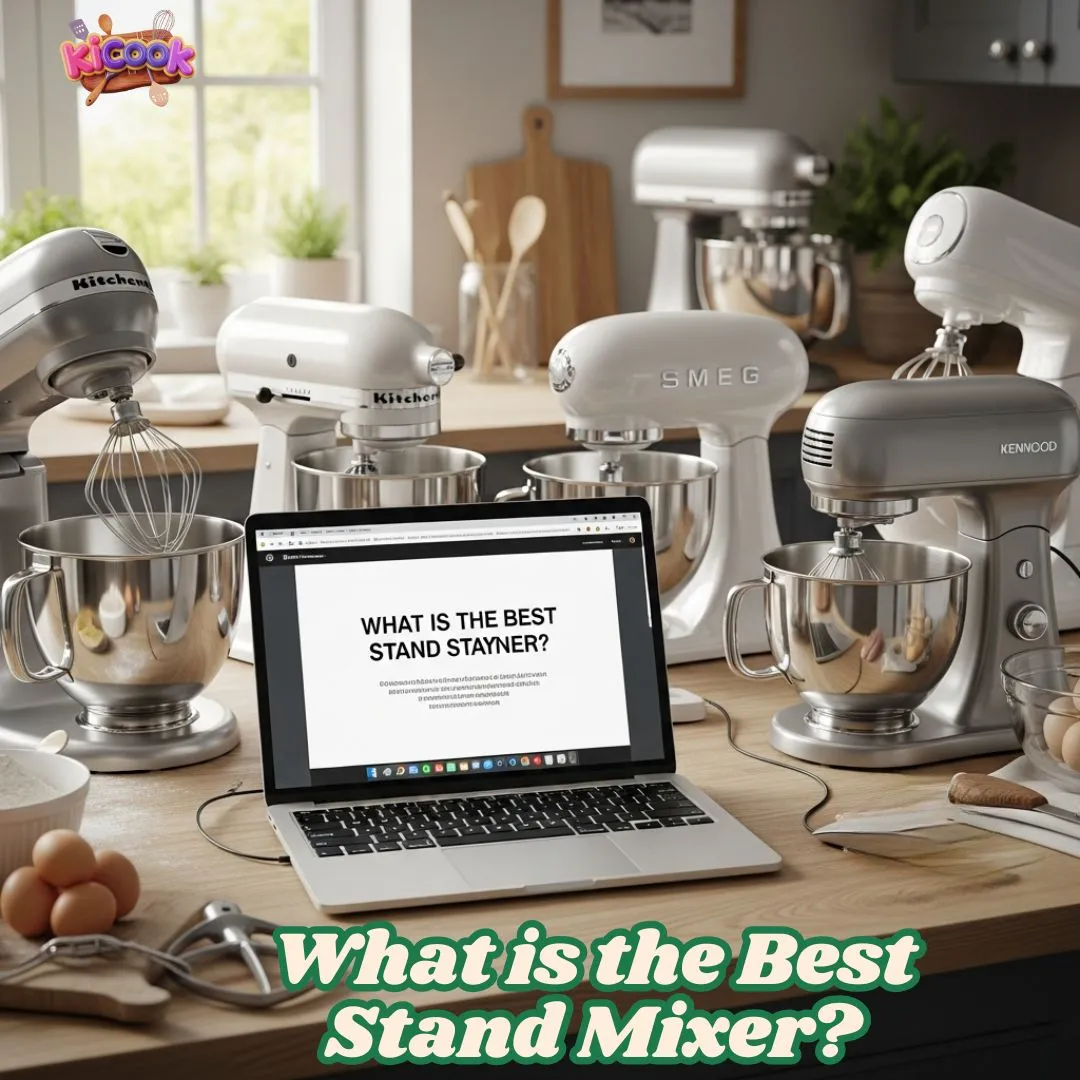
The best stand mixer is the one that fits your specific baking habits, kitchen space, and budget. For many, a KitchenAid Artisan is a great starting point, but other brands like Cuisinart and Breville offer fantastic features for different needs.
I’ve spent more hours than I can count covered in flour, with butter smudges on my apron and a genuine love for the hum of a good motor. My kitchen has been a testing ground for more stand mixers than my cabinets can comfortably hold. And over the years, the question I get asked more than any other is: “What is the best stand mixer?”
It’s a simple question with a not-so-simple answer. The truth is, the “best” one for a professional baker in London is different from the “best” for a new parent in Canada making their first birthday cake, or for a busy home cook in the USA who wants to make weekly bread. I’m here to share what I’ve learned from years of use, from the joy of a perfectly whipped meringue to the frustration of a machine that just can’t handle a stiff dough.
My goal is to help you cut through the noise and find the mixer that will feel like a trusted partner in your kitchen.
Understanding the Stand Mixer: Your Kitchen’s Powerhouse
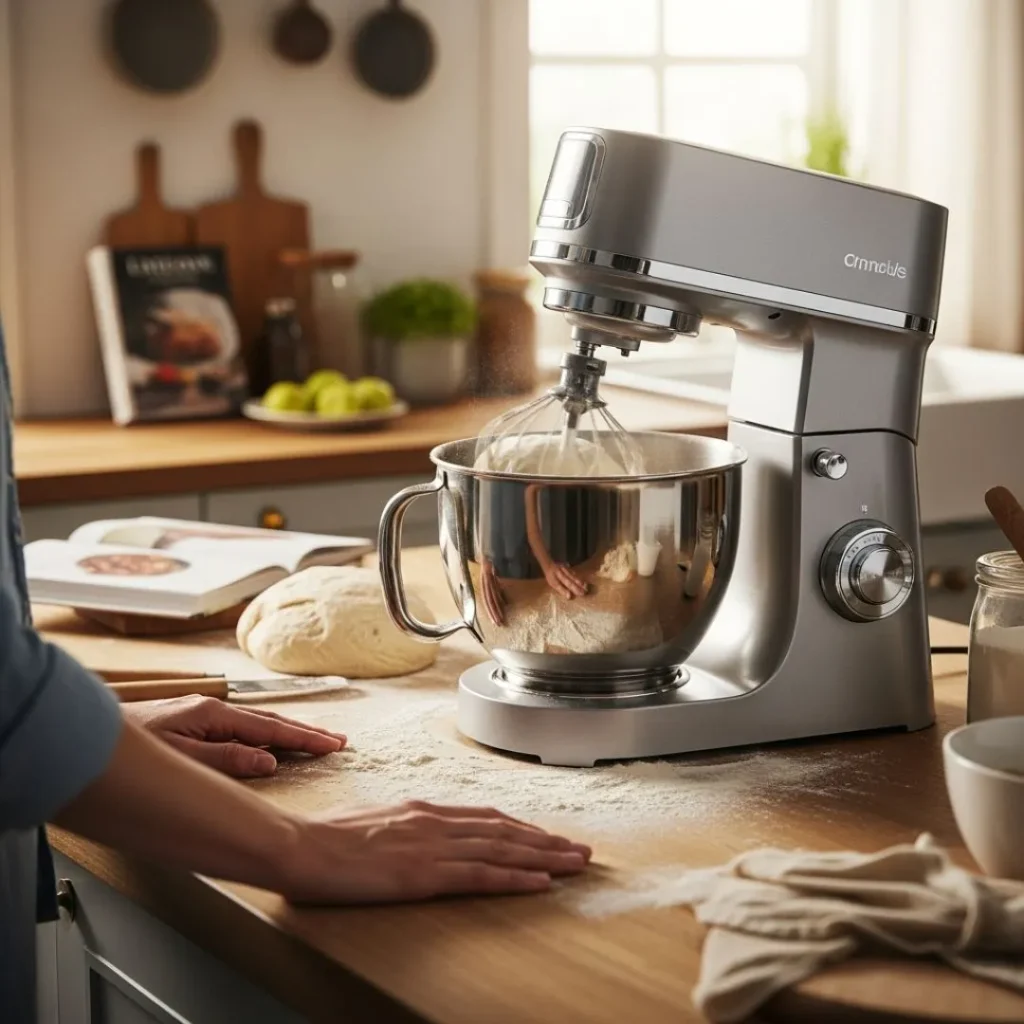
Before we look at brands, let’s talk about what a stand mixer actually does. Unlike a hand mixer, a stand mixer is a countertop appliance with a motor that drives a spinning head. You attach a bowl, and the mixer does the hard work for you kneading, whipping, creaming, and mixing. This frees up your hands, ensures consistent results, and opens up a world of baking possibilities that are often too difficult by hand.
For anyone who bakes regularly, it’s an investment that pays for itself in saved time and effort. The common pain point here is the sheer physical labor of mixing. My wrists still remember the ache of kneading bread dough for 15 minutes. A stand mixer eliminates that.
Key Factors to Consider Before You Buy
Choosing a mixer isn’t just about picking the prettiest color (though that is a fun part!). It’s about finding a machine that works for your life. Here are the main things to think about:
1. Your Baking Habits & Needs (The Most Important Question!)
Be honest with yourself. How often do you bake?
- The Occasional Baker: You make cookies for holidays, the occasional cake, or maybe some muffin batter. You don’t need a massive, professional-grade machine. A 4.5-quart model is likely perfect.
- The Regular Enthusiast: You bake weekly. You love trying new bread recipes, make your own pizza dough, and your family expects fresh treats. A 5- to 6-quart mixer is your sweet spot.
- The Serious Baker / Small Business Owner: You’re making multiple loaves of bread, large batches of cookie dough, or heavy cake batters regularly. You need power and capacity. Look at 6-quart and larger, heavy-duty models.
2. Power & Performance: The Motor’s Muscle
The motor is the heart of the mixer. Power is measured in watts. More watts generally mean the mixer can handle thicker doughs (like bread or bagels) without straining or overheating. A weak motor will struggle, sound stressed, and may even burn out.
- Light Duty (200-400 Watts): Good for cakes, frostings, and light cookie doughs.
- Medium Duty (400-600 Watts): Handles most home baking tasks, including some bread doughs.
- Heavy Duty (600+ Watts): Built for frequent use and the toughest doughs.
3. Capacity: Bowl Size Matters
Capacity is measured in quarts (in the USA and Canada) or liters (in the UK). Think about your typical batch sizes.
- 3.5-4.5 Quarts: Great for smaller families and everyday tasks like whipping cream or mixing a single cake batter.
- 5-6 Quarts: This is the most popular and versatile size for home bakers. It can handle standard recipes and most bread doughs.
- 7+ Quarts: Ideal for large families, entertaining, or serious bread bakers.
4. Tilt-Head vs. Bowl-Lift Design
This is a major design difference that affects how you use the machine.
- Tilt-Head: The head of the mixer tilts back to allow you to attach the bowl and accessories. These models are often lighter and easier to store. They are best for low- to medium-density tasks. This design is very user-friendly.
- Bowl-Lift: The bowl is locked into place on a lifting mechanism, and the head is fixed. These are typically more powerful, heavier, and built for high-volume, heavy-duty mixing. They are more stable when kneading stiff dough.
5. Attachments & Versatility
One of the best things about a stand mixer is its ability to do more than just mix. Many brands offer a range of attachments that can turn your mixer into a food grinder, pasta maker, vegetable slicer, and more. If you see yourself exploring these options, check what attachments are available for the model you’re considering.
A Close Look at the Top Contenders
Now, let’s get into the specific brands and models that you’re likely considering.
1. KitchenAid: The Icon
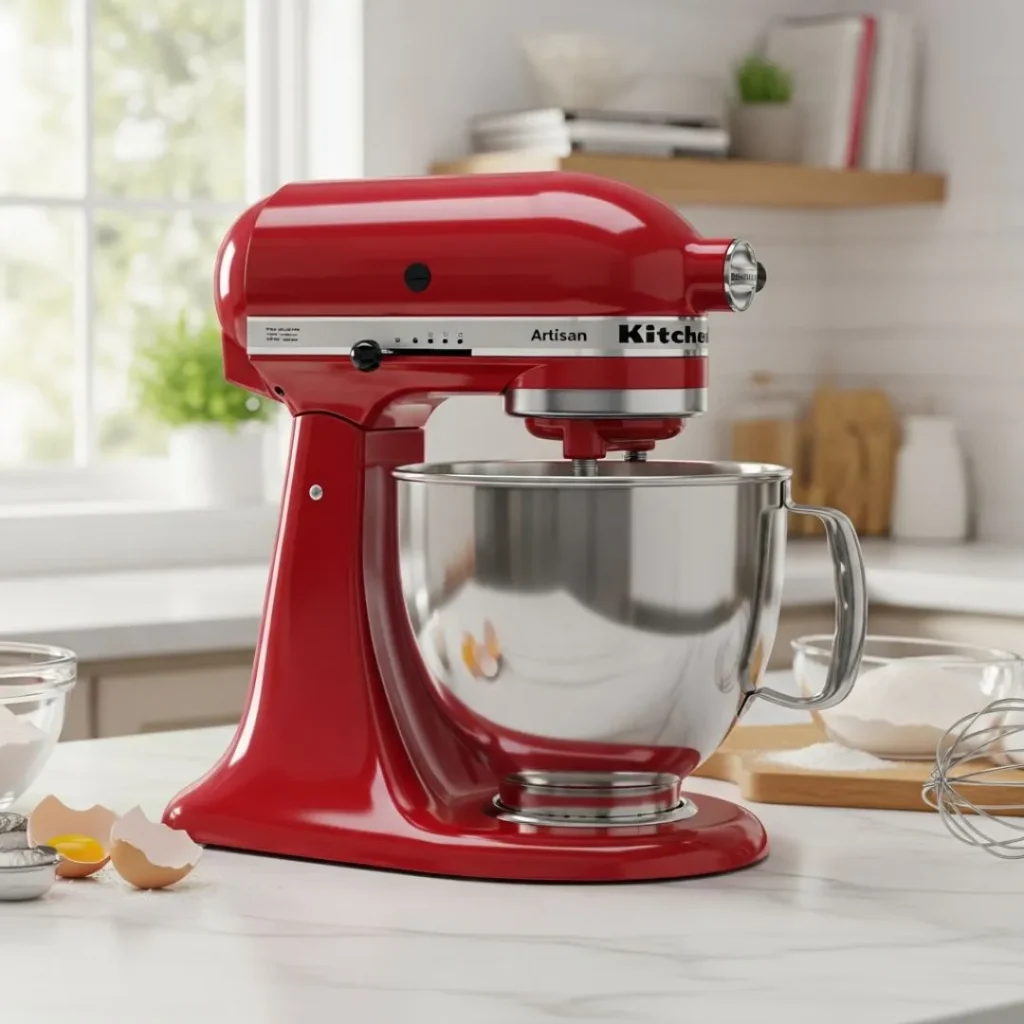
For many, a KitchenAid is the stand mixer. It’s the classic, beautiful machine you see in every kitchen magazine.
- Popular Models: Artisan Series (Tilt-Head, 5-Quart), Classic Series (Tilt-Head, 4.5-Quart), Pro Line Series (Bowl-Lift, 7-Quart).
- Pros: Huge variety of colors and finishes. Excellent brand recognition and resale value. A vast ecosystem of official and third-party attachments. Readily available in the USA, UK, and Canada.
- Cons: Can be pricey, especially for higher-end models. Some users find the motor on the classic tilt-head models can struggle with very dense bread dough over time.
- Best For: The baker who values aesthetics, brand reputation, and wants a versatile machine with endless accessory options. The Artisan is a fantastic all-arounder for most home bakers.
“A good stand mixer isn’t a luxury; it’s a co-pilot in the kitchen.” – Sarah Johnson, Pastry Chef
2. Cuisinart: The Smart Value
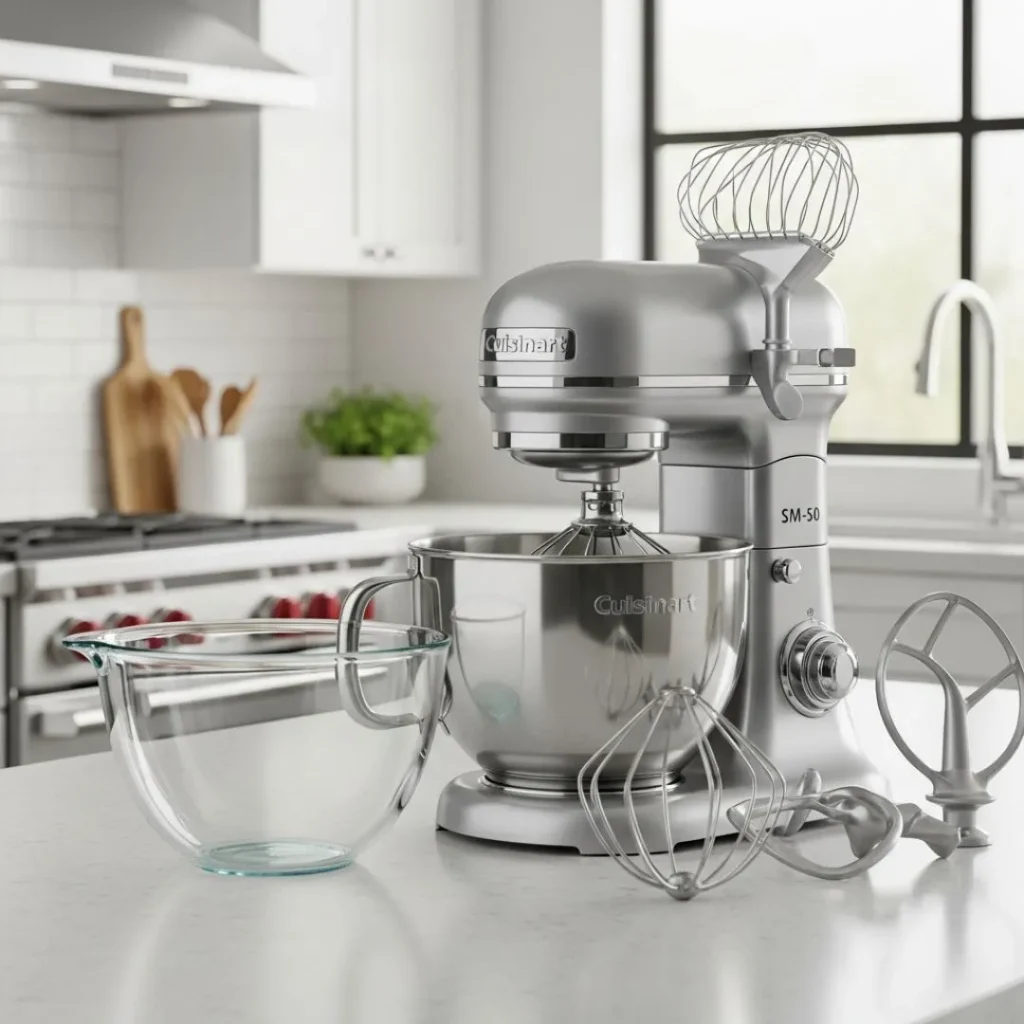
Cuisinart has made a name for itself by offering feature-rich appliances at a competitive price point.
- Popular Models: SM-50 (Bowl-Lift, 5.5-Quart).
- Pros: Often more affordable than comparable KitchenAid models. Many come with a stainless steel bowl and a glass bowl, which is a great bonus. They frequently include a scraper beater attachment that helps mix more efficiently.
- Cons: The brand doesn’t have the same long-standing history in this specific category as KitchenAid. The accessory ecosystem is not as extensive.
- Best For: The budget-conscious baker who still wants power and great features without the premium price tag.
3. Breville (Sage in the UK): The Innovative Powerhouse
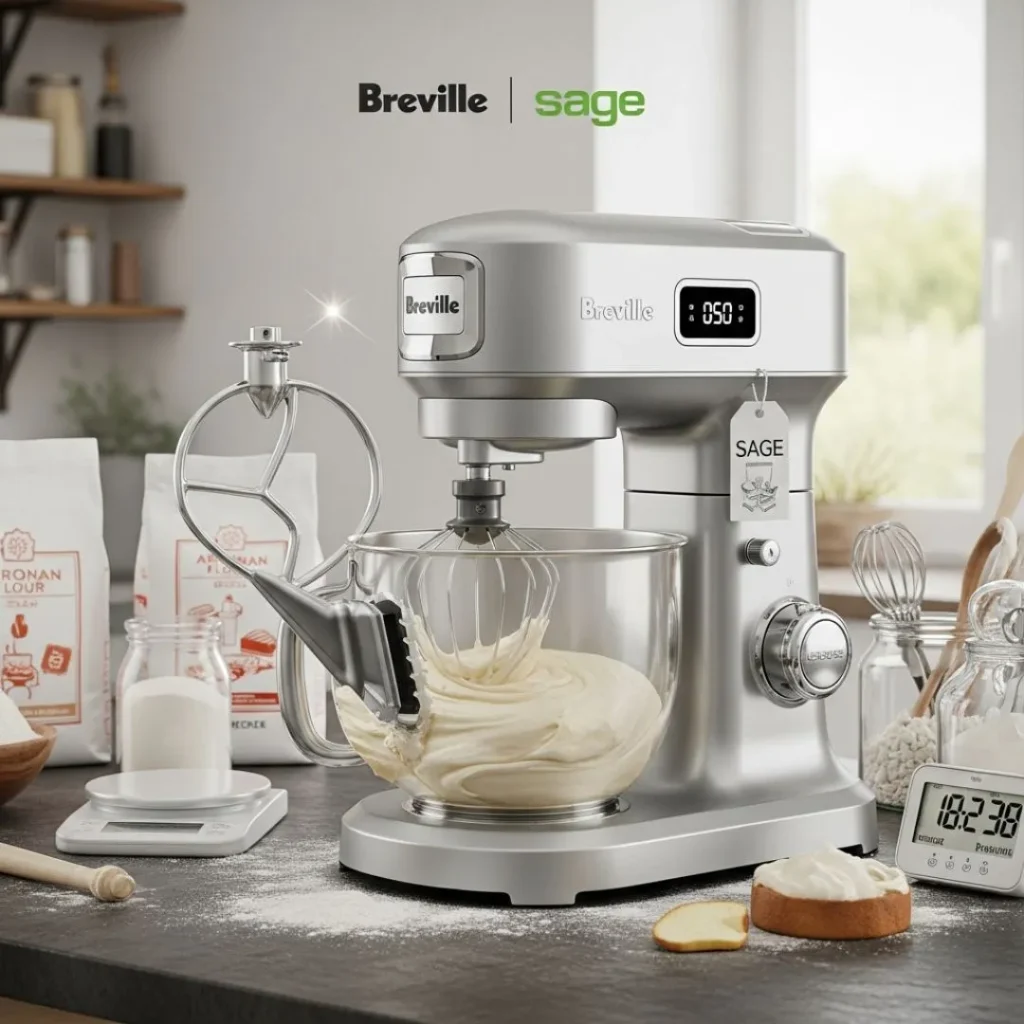
Known as Breville in North America and Sage in the UK and Europe, this brand brings serious engineering and smart technology to the table.
- Popular Models: The Bakery Chef (BM800).
- Pros: Powerful motors and thoughtful features, like a built-in timer and a “stir” setting for gentle folding. Their bowl-scraper attachments are often built-in and highly effective.
- Cons: Typically the most expensive option on the counter. Can be heavier and bulkier.
- Best For: The tech-savvy, serious baker who appreciates innovation and is willing to invest in top-tier performance and convenience.
4. Kenwood: The European Workhorse
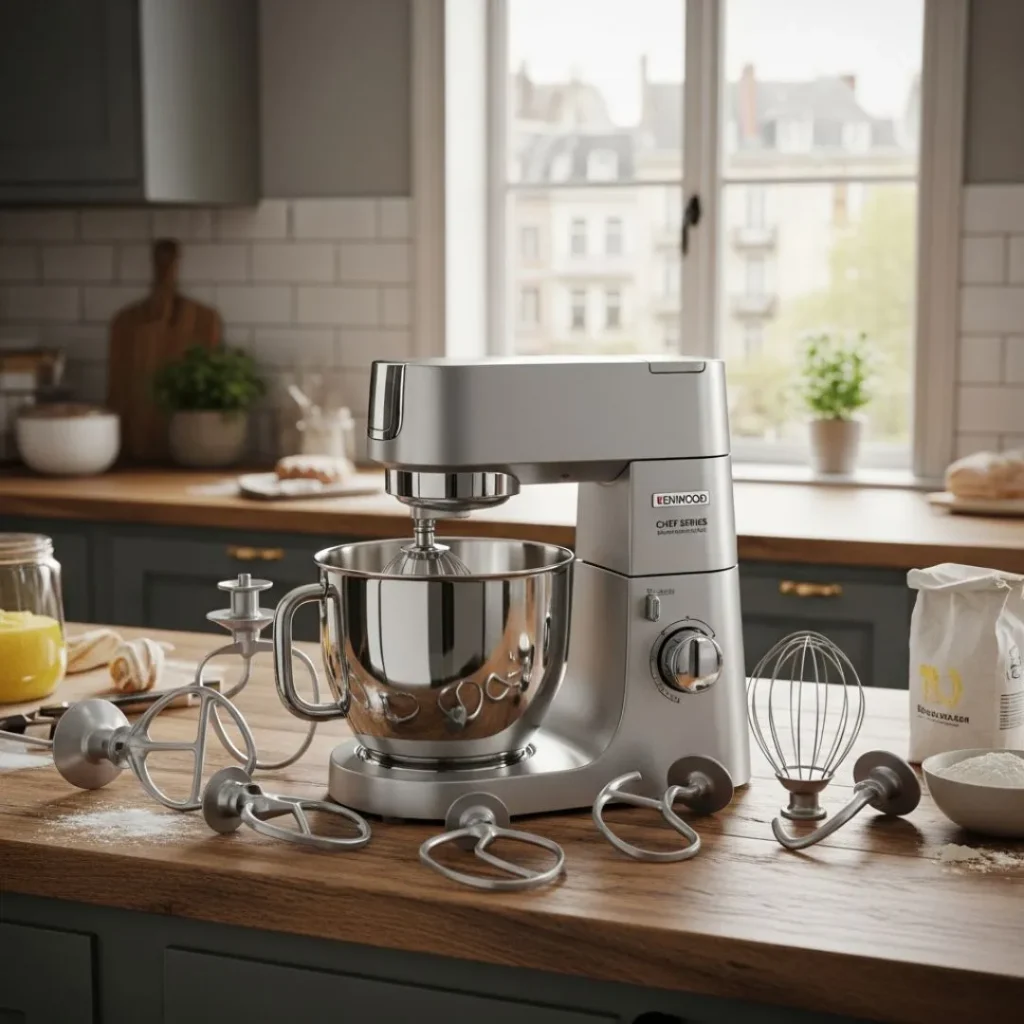
A hugely popular brand in the UK and Europe, Kenwood is known for its durable and powerful machines.
- Popular Models: Chef Series (e.g., KVC3100).
- Pros: Renowned for their strong motors and longevity. Often come with a wider range of included attachments than other brands.
- Cons: Less brand recognition and availability in North America, though they can be found. The design can be less “decorative” than a KitchenAid.
- Best For: The baker who prioritizes raw power and durability above all else, and who may want a machine that comes with many attachments right out of the box.
Solving Your Real Stand Mixer Problems (Pain Points)
Let’s address the common frustrations I hear from fellow bakers.
- Pain Point: “It’s too expensive!”
- Solution: You don’t need a top-of-the-line model to start. The KitchenAid Classic series or a Cuisinart model are more affordable entry points. Also, check for refurbished models directly from manufacturers like KitchenAid; they are tested and carry a warranty, offering significant savings. Sales around Black Friday and other holidays are also a great time to buy.
- Pain Point: “It’s too big for my small kitchen.”
- Solution: Measure your counter space and look at the machine’s footprint. Tilt-head models are often easier to store because you can lift the head to make them less tall. Also, remember that a stand mixer doesn’t have to live on your counter—a simple appliance lift shelf in a lower cabinet can be a great storage solution.
- Pain Point: “The motor smells funny or gets hot.”
- Solution: This usually means the motor is being overworked. For heavy doughs like bagels or pasta, use a machine rated for it (a bowl-lift model with higher wattage). Never exceed the recommended capacity for dough. If your current mixer does this, give it a break during long mixing sessions. As King Arthur Baking Company advises, pay attention to your mixer’s cues—if it’s rocking or sounds labored, the dough might be too much for it.
“Choose the mixer that respects your ingredients and your time.” – Michael Rodriguez, Food Writer
- Pain Point: “My batter isn’t mixing evenly.”
- Solution: This is a common issue! Look for a mixer that has a “planetary mixing action” (where the beater spins while also rotating around the bowl) or one that includes a bowl-scraper attachment. These features help ensure every part of the bowl gets mixed, preventing unmixed flour or butter at the bottom.
Frequently Asked Questions (FAQ) for What is the Best Stand Mixer?
Is a stand mixer really worth it?
If you bake as little as once a month, I believe it is. The time and effort it saves, along with the consistency it brings to your baking, make it a valuable kitchen tool.
Can I use my stand mixer for non-baking tasks?
Absolutely! With attachments, you can grind meat, make pasta, juice citrus, spiralize vegetables, and more. It’s a true multi-tasker.
What attachments should I get first?
Start with the three that usually come with it: the flat beater (for general mixing), the wire whip (for whipping), and the dough hook (for kneading). After that, a food grinder or a pasta roller attachment are popular and useful additions.
How do I clean my stand mixer?
Most bowls and attachments are dishwasher safe, but check your manual. The mixer head itself should be wiped clean with a damp cloth. Never submerge the motor body in water.
My stand mixer is wobbling and “walking” on the counter. What’s wrong?
This is a sign that the mixture is unbalanced, often from a very dense dough. Make sure your bowl and attachments are locked in correctly. Placing a non-slip mat or a damp kitchen towel under the base can help stabilize it.
Conclusion: Your Perfect Mixer is Waiting
So, after all this testing and talking, what is the best stand mixer? I’ll say it again: the one that works for you.
For its classic style, color options, and vast accessory range, the KitchenAid Artisan is hard to beat for the average home baker. For those seeking great value and smart features right out of the box, the Cuisinart SM-50 is a brilliant choice. If you’re a serious baker who sees this as a long-term investment in power and innovation, the Breville Bakery Chef is worth every penny. And for our friends in the UK, the Kenwood Chef remains a powerhouse of reliability.
Think about what you’ll really use it for, measure your space, set your budget, and choose the machine that will help you create delicious memories for years to come. Happy baking!
“The right tool doesn’t just make the job easier; it makes the result better.” – David Chen, Restaurant Owner