
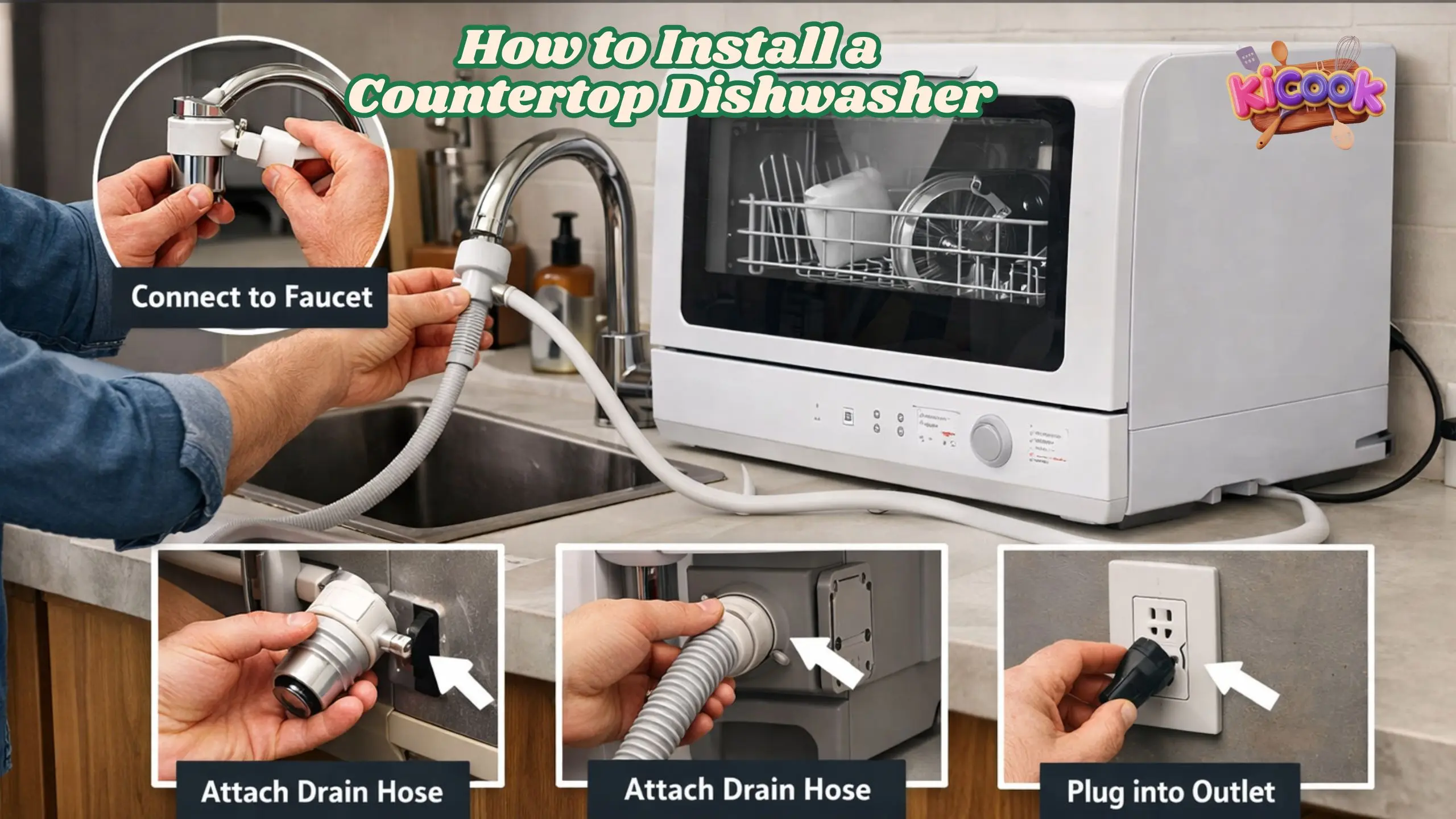
How to install a countertop dishwasher is simpler than most people expect, even if you rent or have limited kitchen space. I’ve installed mine myself, and with the right steps, you can do it safely, cleanly, and without stress.
I remember staring at the box of my countertop dishwasher and thinking about all the worries people usually have, Will it fit? Will it leak? Do I need a plumber? If you’re feeling the same, you’re not alone.
In this guide, I’ll walk you through how to install a countertop dishwasher in plain language, based on real experience, and solve the most common pain points people face in the USA, UK, London, and Canada.
This article is written for real homes, real kitchens, and real people who want clean dishes without the hassle.
What Is a Countertop Dishwasher?
Before installing anything, I always like to understand what I’m working with. A countertop dishwasher is a compact dishwasher that sits on your kitchen counter or a sturdy surface near the sink. It connects to your faucet or uses a built-in water tank, depending on the model.
If you want a deeper explanation, this guide on what a countertop dishwasher is explains it clearly and simply.
Why I Chose a Countertop Dishwasher (And You Might Too)
Many people I talk to share the same frustrations:
- No space for a full-size dishwasher
- Renting an apartment where permanent changes are not allowed
- Hand washing dishes every day hurts the wrists
- Water bills keep going up
- Small households where a big dishwasher feels wasteful
I felt all of these. A countertop dishwasher solved them without major changes to my kitchen.
If you’re still unsure, this honest breakdown on are countertop dishwashers worth it helped me make my decision.
“Simplicity is about removing the unnecessary.” — Jonathan Ive
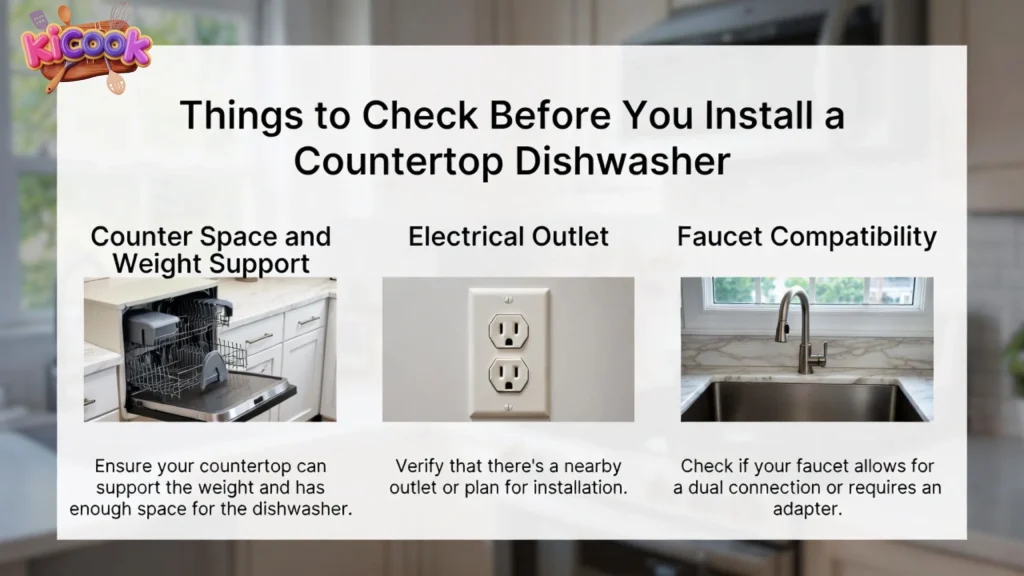
Things to Check Before You Install a Countertop Dishwasher
1. Counter Space and Weight Support
Make sure your counter can support the dishwasher’s weight when it’s full of water and dishes. Most units weigh between 40–60 lbs (18–27 kg).
2. Electrical Outlet
- USA & Canada: Standard 120V outlet
- UK & London: 220–240V outlet
Always plug directly into the wall, not an extension cord.
3. Faucet Compatibility
Most countertop dishwashers connect to a standard kitchen faucet. If your faucet is pull-out or sensor-based, you may need an adapter.
Tools You’ll Usually Need
I didn’t need anything fancy:
- Adjustable wrench
- Towel or small bucket
- Faucet adapter (often included)
- Measuring tape
That’s it.
Step-by-Step: How to Install a Countertop Dishwasher
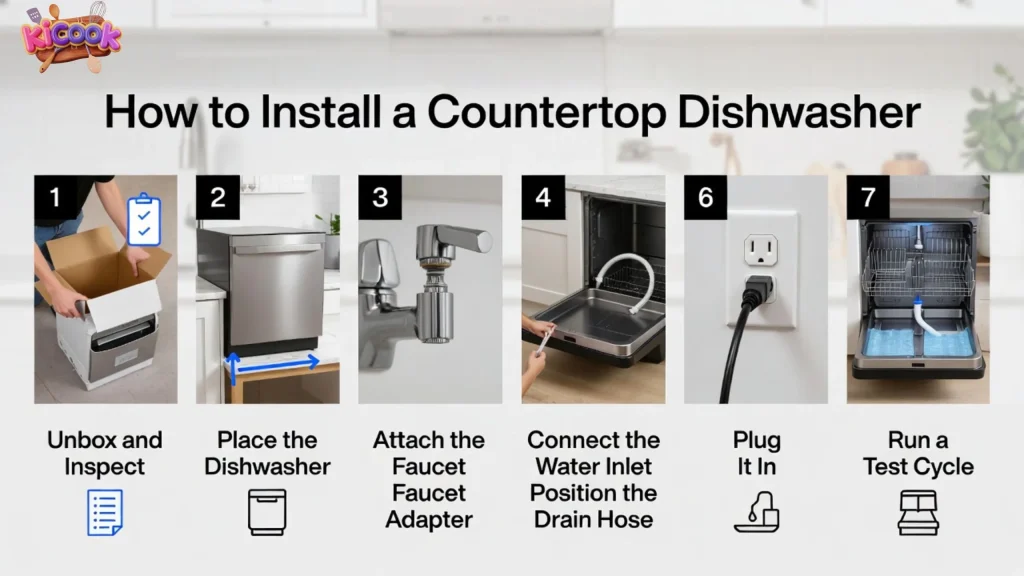
Step 1: Unbox and Inspect
I always check for shipping damage first. Look at the hoses, power cord, and connectors.
Step 2: Place the Dishwasher
Set the unit close to your sink so the inlet hose can reach easily. Leave a little space at the back for airflow.
Step 3: Attach the Faucet Adapter
Remove your faucet aerator and screw on the dishwasher adapter. Hand-tighten first, then gently secure with a wrench.
Step 4: Connect the Water Inlet Hose
Snap or screw the inlet hose onto the adapter. You should hear or feel it lock in place.
Step 5: Position the Drain Hose
Place the drain hose into the sink, making sure it stays secure during operation.
Step 6: Plug It In
Plug the dishwasher into a grounded outlet. Avoid power strips.
Step 7: Run a Test Cycle
I always run an empty cycle to check for leaks, drainage, and noise.
If you want to understand the internal process, this guide on how a countertop dishwasher works is very helpful.
Common Installation Pain Points
“My faucet doesn’t fit”
This is very common in UK and modern apartments. A universal faucet adapter usually solves it.
“It leaks a little”
Most leaks come from loose connections. A gentle re-tightening usually fixes it.
“The drain hose moves”
I use a simple suction clip to keep it in place.
“Technology should serve everyday life, not complicate it.” — Don Norman
Water and Energy Concerns
Many people worry about water and electricity use. From my experience, countertop dishwashers often use less water than hand washing.
You can compare water use here:
dishwasher vs hand washing water usage
They also use modest electricity, especially energy-efficient models:
Noise Levels: Will It Be Too Loud?
This was a big concern for me in a small apartment. Most countertop dishwashers operate between 50–60 dB, similar to quiet conversation.
This breakdown on dishwasher noise levels explained helped me set realistic expectations.
Capacity: What Really Fits Inside?
Countertop dishwashers are best for:
- 1–3 people
- Small families
- Apartments and studios
Understanding place settings helped me load smarter:
dishwasher capacity explained
Countertop vs Portable Dishwasher
Some people ask me if a portable dishwasher is better. Each has pros and cons.
This comparison helped me decide:
portable dishwasher advantages and disadvantages
A Quick Note on Brand Choice
While installing is similar across brands, build quality can vary. I personally looked into Bosch models before choosing, and this overview was useful:
bosch dishwasher guide
“Good design is making something understandable.” — Dieter Rams
Frequently Asked Questions
Can I install a countertop dishwasher in a rental?
Yes. Most models require no permanent changes, which makes them renter-friendly.
Do I need a plumber?
I didn’t. The setup is simple and reversible.
Can I use it without connecting to a faucet?
Some models include a built-in water tank, perfect for kitchens without standard sinks.
Is it safe to use daily?
Yes, as long as you follow the manufacturer’s instructions and don’t overload it.
Will it save time?
For me, absolutely. I gained time every evening and reduced hand strain.
Final Thoughts
Learning how to install a countertop dishwasher gave me more confidence in managing my kitchen without stress or expensive help. If you’re tired of hand washing, limited by space, or living in a rental, this small appliance can bring real relief.
I hope this guide helped you feel prepared, informed, and supported. Clean dishes should never feel like a burden and now, they don’t have to.

“I believe great cooking starts with the right tools, trusted advice, and a little confidence in the kitchen.”
Hi, I’m Emma Carter. My love for cooking began in my grandmother’s kitchen, where I learned that every great meal starts with simple ingredients and the right cookware. Over the years, I’ve spent countless hours researching, testing, and comparing kitchen appliances, cookware, coffee makers, air fryers, and other everyday kitchen essentials.
Here at KiCook, my goal is to make your buying decisions easier with honest product reviews, practical buying guides, and easy-to-follow cooking tips. Whether you’re upgrading your kitchen or searching for the best appliance for your home, I focus on providing clear, reliable, and research-backed information you can trust.
When I’m not testing new kitchen gadgets or writing in-depth guides, you’ll usually find me trying new recipes, visiting local farmers’ markets, or enjoying a quiet cup of coffee while planning my next kitchen project.