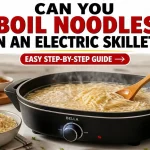
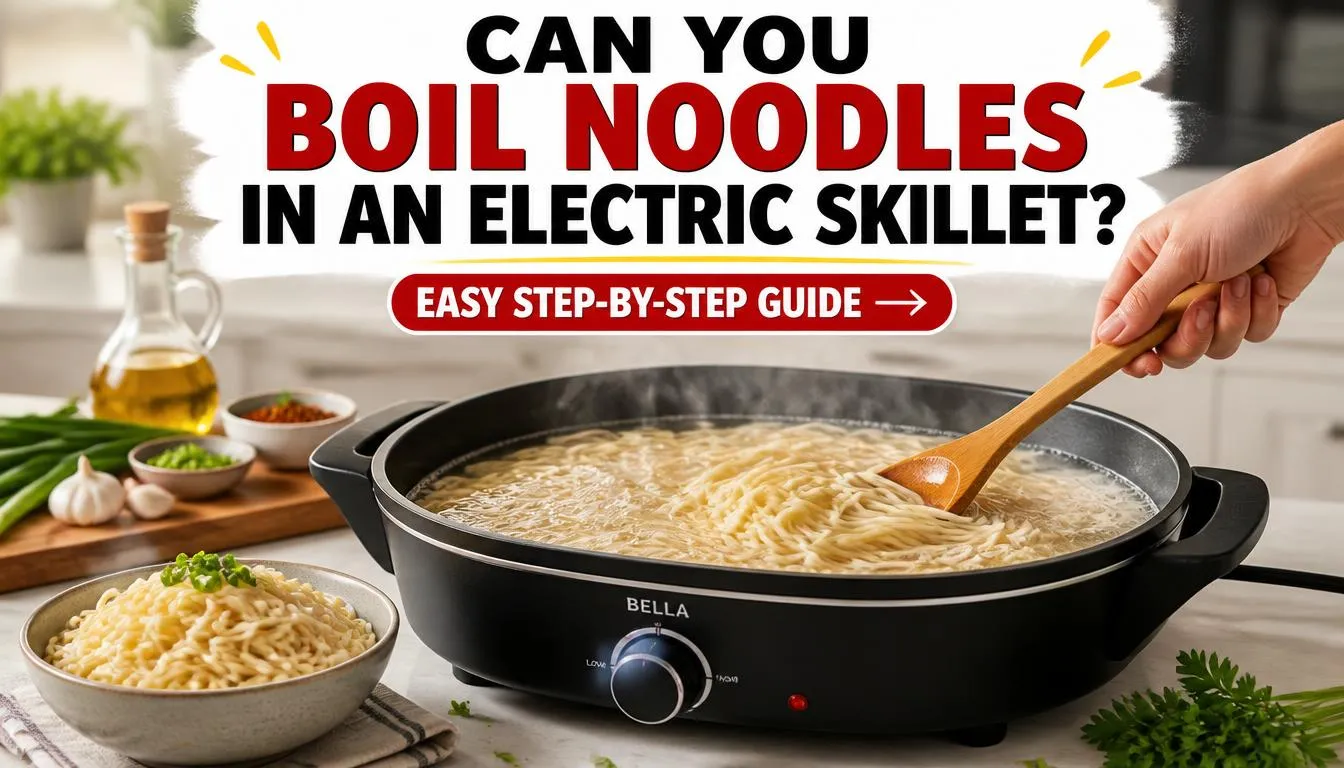
Yes, you can boil noodles in an electric skillet. A deep electric skillet can heat water, maintain a steady boil, and cook many types of noodles much like a shallow pot. The key is using enough water, leaving room for bubbling, controlling the temperature, and stirring the noodles so they do not stick.
For most electric skillets, a setting around 350°F (175–180°C) is a practical starting point for bringing water to a boil. Once the water is boiling and the noodles are added, you can reduce the setting as needed to maintain a controlled boil rather than letting the water foam over the sides.
This method works for instant noodles, ramen, egg noodles, macaroni, spaghetti, udon, and many other varieties. However, cooking time and the amount of water needed will depend on the type of noodle and the size of your skillet.
If you are wondering what else this appliance can handle, KiCook’s guide to what you can cook in an electric skillet covers everything from pasta and rice to meat, vegetables, and one-pan meals.
Can You Boil Noodles in an Electric Skillet?
Absolutely. An electric skillet is not limited to frying.
Because it has its own heating element and adjustable thermostat, a sufficiently deep model can also be used for simmering, steaming, cooking one-pan meals, and heating liquids. That makes boiling noodles possible even when you do not have an available stovetop burner.
An electric skillet can be particularly useful when you are:
- Cooking in a small kitchen
- Using an RV or camper
- Preparing food while the stovetop is occupied
- Making a one-pan meal
- Cooking for a group
- Looking for a portable cooking option
The important limitation is depth. A shallow skillet may hold enough water for ramen or a small serving of macaroni but may not be suitable for a large batch of spaghetti.
Always stay within the liquid capacity recommended for your particular appliance.
Can You Use an Electric Skillet Like a Pot?
For some cooking jobs, yes.
A deep-sided electric skillet can perform many of the jobs you would normally do in a saucepan or shallow pot, including simmering sauces, cooking rice, heating soup, and boiling noodles.
However, it is not a perfect replacement for a stockpot.
Electric skillets are usually wider and shallower. That means water can evaporate more quickly, long noodles may not fit immediately, and carrying or draining a skillet full of hot water can be more awkward.
Think of it as a shallow electric cooking pot rather than an exact substitute for every saucepan.
You may also see the appliance called an electric frying pan or electric frypan, especially in the UK and Australia. In everyday cooking, these terms usually describe the same general type of appliance.
Can You Boil Water in an Electric Skillet?
Yes, provided the skillet is designed to hold liquids.
Electric skillet manuals commonly include cooking methods involving water, broth, and other liquids. Some manufacturer guidance recommends heating food or liquid at approximately 350°F until it begins to boil and then reducing the setting for simmering.
One detail is easy to misunderstand: setting an electric skillet to 350°F does not mean the water itself becomes 350°F.
At sea level, water normally boils at about 212°F (100°C). The higher skillet setting simply gives the heating surface enough energy to bring the water to a boil efficiently.
Once you have a steady boil, there is usually no reason to leave the skillet unnecessarily hot.
What Temperature Do You Use to Boil Noodles in an Electric Skillet?
A good general starting point is about 350°F (175–180°C).
Use that setting to bring your water to a boil, preferably with the lid on if your manufacturer’s instructions allow it.
Once the water begins boiling and you add the noodles, watch what happens. If the water becomes excessively violent or begins foaming toward the rim, lower the temperature.
A simple guide is:
| Cooking Stage | Suggested Approach |
|---|---|
| Heating the water | Start around 350°F / 175–180°C |
| After adding noodles | Adjust downward as needed |
| Gentle cooking | Maintain a steady boil or simmer |
| Keeping noodles warm | Use a low or warm setting only when appropriate |
There is no universal temperature setting for every model. Thermostat calibration, wattage, skillet size, room temperature, water volume, and altitude can all affect performance.
If electric skillet temperature settings are confusing, this KiCook explanation of what medium heat means on an electric skillet can help you understand how the dial relates to actual cooking.
Do You Need to Preheat the Electric Skillet?
You do not need to preheat an empty skillet for boiling noodles.
Add the water first, then turn on the skillet.
Heating an empty nonstick skillet at a high temperature is unnecessary for this job and may not be recommended by your appliance manufacturer.
Once the water is in the skillet, set the temperature and allow it to heat gradually.
How Much Water Do You Need for Noodles in an Electric Skillet?
There is no single amount that works for every skillet or noodle.
For the traditional boil-and-drain method, use enough water for the noodles to move freely once they soften. Short noodles should be comfortably surrounded by water rather than packed tightly together.
The most important rule is to leave plenty of empty space at the top of the skillet.
Noodles release starch as they cook, which can create foam. Filling the skillet close to the rim makes boil-over much more likely.
For a safer setup:
- Keep the water well below the rim.
- Make sure the noodles have room to move.
- Allow extra space for bubbling and foam.
- Monitor the water level because a wide skillet can lose water through evaporation.
- Add a little more hot water if the level drops before the noodles are done.
Do not choose an exact water amount simply because a regular pasta recipe calls for it. Your skillet may have a much lower safe capacity than a stockpot.
Can You Cook Noodles With Less Water?
Yes.
You do not always need a large pot full of water to cook noodles. An electric skillet can work particularly well for a lower-water or one-pan method.
With this approach, you add enough water or broth for the noodles to cook while much of the liquid is gradually absorbed or evaporated.
The trade-off is that you need to stir more frequently.
Less water means the starch becomes more concentrated, so noodles can stick together or attach to the skillet if they are ignored.
What Happens If You Don’t Use Enough Water?
Too little water can cause several problems:
- Noodles may cook unevenly.
- Exposed sections may stay firm.
- Starch can become highly concentrated.
- Noodles may stick together.
- The bottom may begin to scorch.
- The skillet can eventually run too dry.
If the noodles are still firm but most of the liquid has disappeared, add a small amount of hot water and continue cooking.
How to Boil Noodles in an Electric Skillet Step by Step
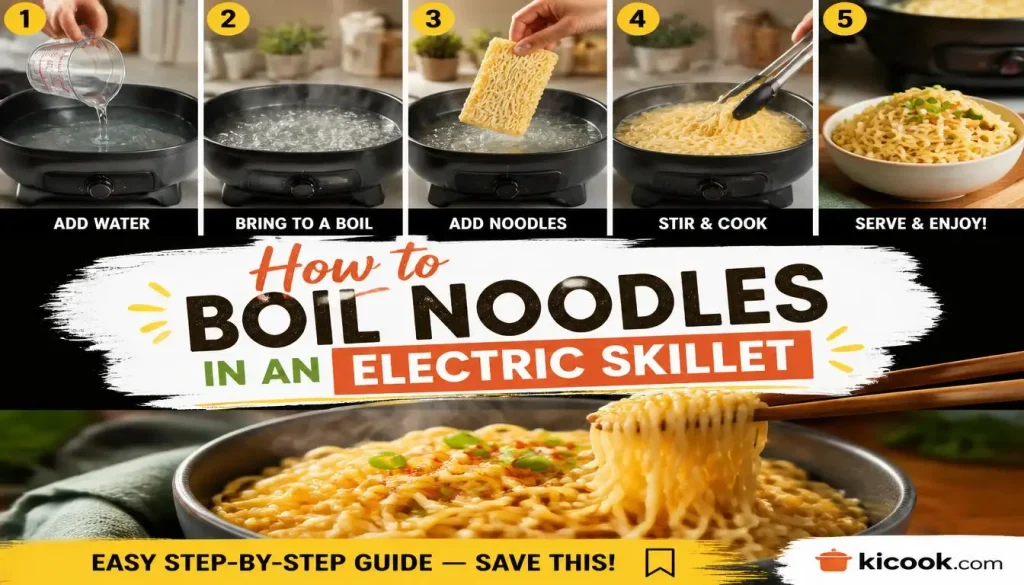
The basic process is straightforward.
Step 1: Place the Skillet on a Stable Surface
Set the electric skillet on a flat, dry, heat-resistant surface.
Keep the cord and temperature control away from water, sinks, and areas where they could be accidentally pulled.
Step 2: Add the Water
Pour enough water into the skillet to cook the amount of noodles you are preparing.
Do not fill the skillet close to the rim.
You need extra space for bubbling, noodles, foam, and stirring.
Step 3: Cover and Heat the Water
Attach the temperature control correctly and switch on the appliance.
Set it to approximately 350°F (175–180°C) as a starting point.
Place the lid on the skillet if your model allows covered heating. A lid reduces heat loss and can help the water reach a boil more efficiently.
Step 4: Add Salt If Desired
Once the water is hot, you can add salt if it suits the dish.
Salt is optional for instant noodles that already include a salty seasoning packet. For plain pasta or egg noodles, lightly salting the water can improve flavor.
Step 5: Add the Noodles Carefully
When the water is boiling, carefully add your noodles.
Do not drop them from a height because boiling water can splash.
For spaghetti or other long noodles, place them across the skillet and allow the submerged ends to soften. Then gently bend or turn the remaining noodles into the water.
If the skillet is very small, using a shorter pasta shape may be easier.
Step 6: Stir Immediately
Stir the noodles soon after adding them.
This is one of the simplest ways to prevent sticking and clumping.
Continue stirring occasionally while they cook.
Traditional pasta guidance also recommends frequent stirring because it helps prevent pasta from sticking to itself or to the cooking surface.
Step 7: Reduce the Temperature If Necessary
Once noodles are in the water, the boil may become stronger or the surface may begin to foam.
Reduce the heat enough to maintain a controlled boil.
You want movement in the water, but you do not need it splashing aggressively against the lid and sides.
Step 8: Cook Until the Noodles Are Tender
Use the package directions as your main guide.
Cooking times vary significantly between fresh noodles, dried noodles, ramen, rice noodles, spaghetti, and thick udon.
Start testing near the lower end of the recommended cooking time.
For pasta, stop when it reaches the texture you prefer. If you plan to finish the pasta in sauce, slightly firm or al dente pasta usually works well.
Step 9: Turn Off and Unplug the Skillet
Once the noodles are ready, turn the temperature control to OFF.
Unplug the skillet according to the manufacturer’s instructions before draining or handling it extensively.
Be careful when removing the lid. Electric skillet instructions warn that trapped steam and hot condensation can cause burns.
Lift the lid away from your face.
Step 10: Drain the Noodles Safely
Do not automatically pick up an entire electric skillet full of boiling water and carry it to the sink.
If your skillet has a removable pan specifically designed to be lifted from its heating base, follow the manufacturer’s draining instructions.
Otherwise, safer options may include:
- Removing noodles with tongs
- Using a pasta server
- Using a slotted spoon
- Removing smaller portions before dealing with the remaining water
If you do pour the water into a colander, make sure the appliance is unplugged, the removable component is intended to be handled that way, and electrical connections stay completely dry.
Should You Cover Noodles While Cooking in an Electric Skillet?
The lid is most useful while you are bringing the water to a boil.
After you add the noodles, keeping the skillet completely covered may cause foamy, starchy water to rise quickly.
For that reason, monitor the skillet closely.
You can cook with the lid partially open or remove it when necessary, provided doing so is suitable for your appliance and recipe.
The safest rule is simple: never leave a covered skillet full of boiling starchy water unattended.
How Long Does It Take to Cook Noodles in an Electric Skillet?
Once the water is boiling, cooking time is usually similar to cooking the same noodles in a regular pot.
Typical ranges may look like this:
| Noodle Type | Typical Cooking Range* |
|---|---|
| Instant ramen | About 2–5 minutes |
| Egg noodles | About 5–8 minutes |
| Dried spaghetti | About 8–12 minutes |
| Macaroni | About 7–10 minutes |
| Fresh udon | Often only a few minutes |
| Dried udon | Usually longer than fresh |
| Rice noodles | Varies widely; some are soaked rather than boiled |
*These are general ranges, not replacements for package instructions.
Different brands and noodle thicknesses can behave very differently. Always check the package first.
The time needed to heat the water will also vary depending on:
- Skillet wattage
- Amount of water
- Starting water temperature
- Skillet size
- Whether the lid is used
- Room temperature
- Altitude
What Types of Noodles Can You Cook in an Electric Skillet?
Most common noodles can be adapted to an electric skillet.
Instant Noodles
Instant noodles are one of the easiest options because they need relatively little water and cook quickly.
Bring the water to a boil, add the noodle block, soften it, separate the strands, and add the seasoning according to the package directions.
Ramen Noodles
Both instant and many dried ramen noodles work well.
You can cook them in plain water and drain them or prepare them directly in broth.
An electric skillet is particularly convenient when you want to add vegetables, eggs, mushrooms, sliced meat, or other ingredients in the same pan.
Egg Noodles
Egg noodles cook quickly and can become soft if left in the water too long.
Stir them gently and start checking the texture early.
Spaghetti
Yes, you can cook spaghetti in an electric skillet.
A wide skillet can actually provide plenty of horizontal room, although shallow sides mean the spaghetti may not be completely submerged at first.
As the submerged portion softens, gently bend the strands into the water.
Macaroni and Short Pasta
Macaroni, penne, rotini, shells, and other short pasta shapes are among the easiest choices.
They fit into a shallow skillet more naturally than long spaghetti and are easy to stir.
They also work well in pasta casseroles and one-pan dishes. If you enjoy this style of cooking, KiCook also explains how electric skillets can handle casserole-style dishes.
Udon Noodles
Udon can also be cooked in an electric skillet, but cooking time varies depending on whether the noodles are fresh, vacuum-packed, frozen, or dried.
Follow the product instructions.
Rice Noodles
Rice noodles require more attention because different varieties are prepared differently.
Some should be boiled briefly, while others are best softened by soaking in hot water.
Do not assume they should be cooked for the same length of time as wheat noodles.
Fresh vs. Dried Noodles
Fresh noodles generally cook faster than dried noodles.
Because fresh noodles can move from firm to overcooked quickly, check them frequently rather than relying entirely on a timer.
Can You Cook Long Noodles in a Small Electric Skillet?
Yes, but it may be less convenient.
Spaghetti, linguine, and other long noodles may extend beyond the water when you first add them.
You have three practical options:
- Let the submerged ends soften, then gently bend the rest into the water.
- Turn the noodles carefully as they soften.
- Use shorter pasta if your skillet is very small.
Breaking spaghetti is also possible if the final dish does not require full-length strands, although it is not necessary when your skillet is wide enough.
Do not force dry noodles beneath the water, as they can snap unpredictably and splash hot water.
Two Ways to Cook Noodles in an Electric Skillet
An electric skillet gives you two useful cooking options.
Method 1: Boil and Drain
This is the traditional method.
You:
- Bring water to a boil.
- Add noodles.
- Cook until tender.
- Drain the water.
- Add sauce, seasoning, or toppings.
Use this method when you want separate cooked noodles or when the recipe relies on a particular sauce.
Method 2: One-Pan Noodles Without Draining
This method is especially convenient in an electric skillet.
Instead of filling the pan with water, you cook the noodles in a smaller quantity of broth, sauce, or seasoned liquid.
The noodles absorb some of the liquid while the rest reduces.
This works well for dishes such as:
- Ramen
- Creamy noodles
- One-pan spaghetti
- Chicken noodles
- Vegetable noodles
- Broth-based noodle dishes
Stir regularly and add more liquid in small amounts if the noodles become dry before they are tender.
The final dish should be moist without having a large amount of water left to drain.
Can You Cook Noodles in Broth Instead of Water?
Yes, and this is one of the easiest ways to add more flavor.
Chicken broth, vegetable broth, beef broth, or a seasoned ramen broth can all replace some or all of the water when appropriate for the recipe.
Remember that packaged broth and seasoning mixes may already contain significant salt.
Taste before adding extra salt.
Cooking directly in broth is especially useful for one-pan meals because you can add ingredients such as:
- Mushrooms
- Green onions
- Spinach
- Carrots
- Peppers
- Cooked chicken
- Tofu
- Eggs
Just make sure any added ingredient is cooked appropriately and safely.
How to Keep Noodles From Sticking to an Electric Skillet
Sticking is usually caused by concentrated starch, too little water, overcrowding, or a lack of stirring.
To reduce sticking:
- Use enough cooking liquid.
- Wait until the water is hot before adding noodles.
- Stir immediately after adding them.
- Stir occasionally throughout cooking.
- Do not overcrowd the skillet.
- Keep enough liquid in the pan.
- Avoid overcooking.
If you are cooking pasta for sauce, reserve a small amount of the starchy cooking water before draining. It can help loosen and combine the final sauce.
Should You Add Oil to the Water?
Usually, you do not need to.
Oil floating on top of the water is not a substitute for stirring.
Regular stirring is more useful for separating noodles as they cook.
For pasta that will be served with sauce, coating the noodles heavily with oil may also make it harder for some sauces to cling well.
Should You Rinse Noodles After Cooking?
It depends on the noodle and the dish.
For traditional hot Italian pasta, rinsing is usually unnecessary because the surface starch helps sauce cling to the pasta. Barilla, for example, recommends draining pasta without rinsing when it will be finished with sauce.
Some Asian noodle dishes are different.
Rice noodles, soba, noodles for cold salads, or noodles that need their cooking stopped quickly may be rinsed depending on the recipe.
Follow the instructions for the specific noodle rather than applying one rule to every type.
How to Stop Noodles From Boiling Over
Boil-over is one of the main challenges when using a shallow electric skillet.
Noodle water contains starch, which encourages foam to build on the surface.
To prevent a mess:
- Leave generous space below the rim.
- Do not use more water than necessary.
- Lower the temperature after the water reaches a boil.
- Stir when foam begins rising.
- Watch the skillet closely.
- Adjust or remove the lid when necessary.
- Avoid cooking an oversized batch.
If the water repeatedly climbs toward the rim, the skillet is probably too full or the heat is too high.
Electric Skillet vs. Regular Pot for Cooking Noodles
Both can cook noodles successfully, but they have different advantages.
| Feature | Electric Skillet | Regular Pot |
|---|---|---|
| Temperature control | Built-in adjustable thermostat | Controlled by stovetop |
| Shape | Wide and relatively shallow | Usually deeper |
| Water capacity | Usually lower | Often higher |
| Long noodles | Can work well in a wide model | Easy in a deep pot |
| Evaporation | May be faster | Usually slower |
| One-pan meals | Excellent | Good |
| Portability | Does not require stovetop | Requires a compatible heat source |
| Draining | Can be awkward | Usually easier |
| Large pasta batches | Less ideal | Usually better |
An electric skillet is a better choice when convenience and one-pan cooking matter.
A regular pot is usually better when you need to boil a very large amount of water.
Also, do not confuse an electric skillet with an electric griddle. A griddle normally has little or no raised side wall and is not designed for holding several inches of boiling water. See KiCook’s electric skillet vs. electric griddle comparison if you are unsure which appliance you have.
Common Mistakes When Cooking Noodles in an Electric Skillet
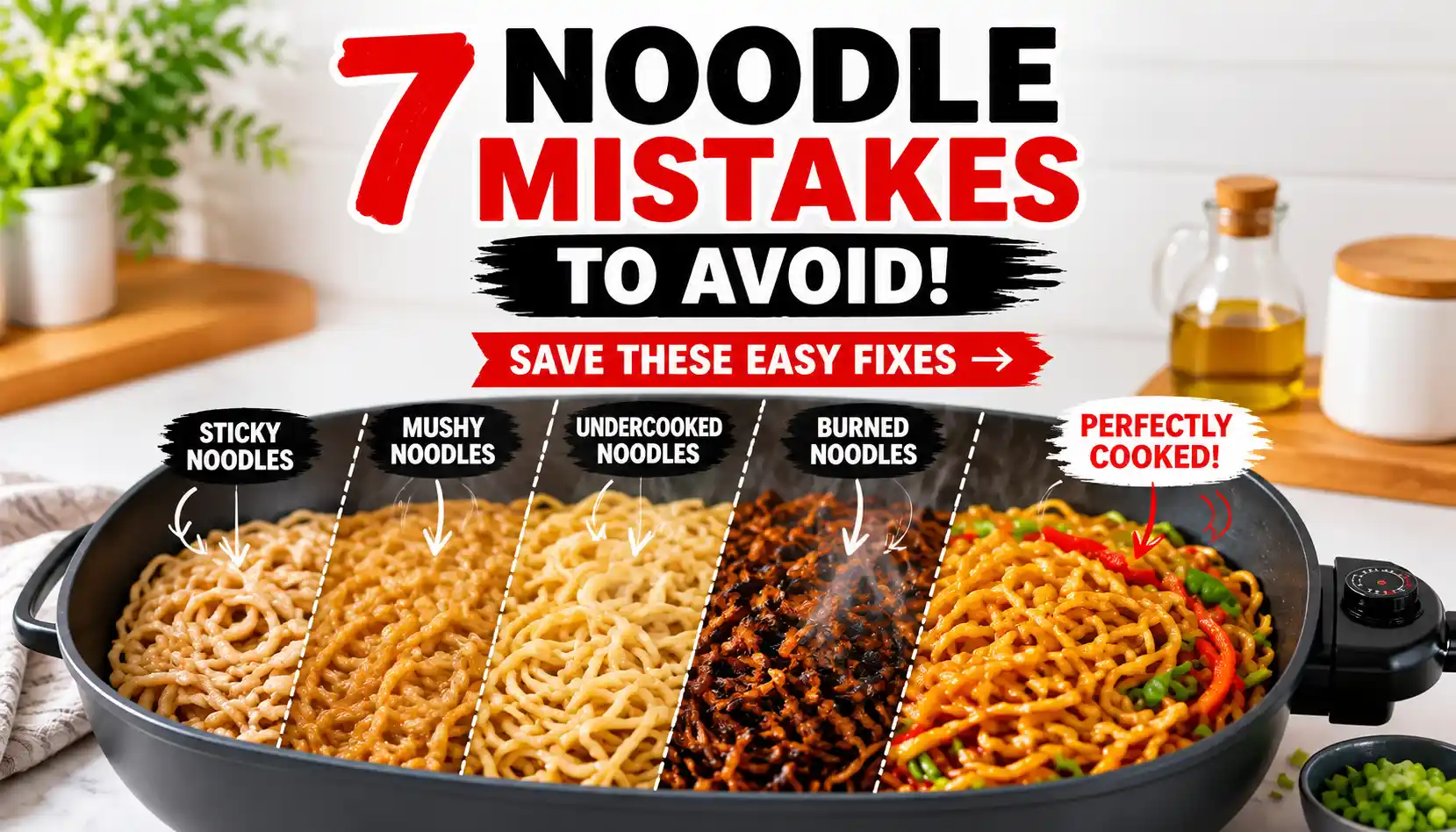
A few small mistakes can turn an easy meal into a sticky or watery one.
Using Too Little Water
Noodles may stick, cook unevenly, or dry out before they become tender.
Overfilling the Skillet
This increases the risk of boiling water and foam spilling near electrical components.
Keeping the Temperature Too High
Once the water is boiling, maximum heat is usually unnecessary.
Lower the temperature enough to keep the water under control.
Not Stirring Immediately
The first few minutes are when noodles are especially likely to stick together.
Overcrowding the Skillet
Too many noodles reduce movement and make even cooking difficult.
Cook in batches if necessary.
Overcooking
Do not assume more time makes noodles better.
Overcooked noodles can turn soft, swollen, or mushy.
Letting the Water Boil Dry
Never allow an electric skillet to run dry while noodles are still cooking.
Watch the liquid level and add more hot water when necessary.
Walking Away
A shallow skillet can boil over more quickly than a deep stockpot.
Stay nearby whenever you are cooking a significant amount of water.
Safety Tips for Boiling Noodles in an Electric Skillet
Boiling noodles is simple, but electricity, water, hot surfaces, and steam require some care.
Follow these basic precautions:
- Read the instructions for your specific skillet.
- Keep the temperature probe and electrical connector dry.
- Use the skillet on a stable, heat-resistant surface.
- Do not fill it close to the rim.
- Keep the power cord away from water and hot surfaces.
- Do not move the skillet unnecessarily while it contains boiling water.
- Lift the lid away from your face.
- Use dry oven mitts or heat-resistant handles when required.
- Turn the skillet off when cooking is complete.
- Unplug it before cleaning or handling electrical components.
- Never immerse parts that the manufacturer says must remain dry.
Manufacturer instructions for electric skillets specifically warn against immersing heating bases in water and caution users about hot steam and condensation.
How to Drain Noodles From an Electric Skillet Safely
Draining deserves more attention with an electric skillet than with a normal saucepan.
A regular pot has no temperature probe or electrical connection attached to it. An electric skillet may.
First, turn the appliance off.
Then unplug it according to the manufacturer’s instructions.
If the cooking pan safely detaches from the electrical base and the manufacturer allows it to be carried, you can carefully transfer the noodles to a colander.
If not, remove the noodles using tongs, a pasta spoon, or another suitable utensil.
Never pour water toward an electrical connector.
If you are unsure whether the pan can be removed or submerged, check the appliance manual rather than guessing.
How to Clean an Electric Skillet After Cooking Noodles
Allow the skillet to cool before cleaning.
Remove leftover noodles and starchy residue with a soft sponge or cloth rather than scraping a nonstick surface with metal utensils.
Some electric skillets have removable cooking pans or dishwasher-safe components, while others do not.
KiCook’s guide on whether electric skillets are dishwasher safe explains why you should check each removable part before putting it in a dishwasher.
The heating base, plug, cord, and other electrical components should never be submerged unless the manufacturer explicitly states that the particular component is immersible.
Is an Electric Skillet a Good Choice for Cooking Noodles?
For small to medium portions, yes.
An electric skillet is especially useful when you want a portable appliance or plan to turn the noodles into a complete one-pan meal.
Advantages
- No stovetop burner required
- Adjustable temperature control
- Large cooking surface
- Good for one-pan meals
- Works with many noodle types
- Convenient for small kitchens and RVs
- Easy to add vegetables, meat, broth, or sauce directly
Disadvantages
- Usually shallower than a pot
- Large quantities can boil over
- Long noodles can be awkward in small models
- Water can evaporate relatively quickly
- Draining can be less convenient
- Electrical components must be kept dry
If you already have a reasonably deep electric skillet, there is usually no need to buy another appliance simply to make a bowl of noodles.
Frequently Asked Questions
Can you boil water in an electric skillet?
Yes. A sufficiently deep electric skillet that is designed to hold liquids can boil water. A common approach is to start around 350°F (175–180°C), then reduce the temperature after boiling begins.
Can you cook noodles in an electric frying pan?
Yes. “Electric frying pan” and “electric skillet” commonly describe similar appliances. If the pan has enough depth, suitable temperature control, and the manufacturer permits cooking with water, you can use it for noodles.
Can you use an electric skillet like a pot?
For many tasks, yes. You can use a deep electric skillet for simmering, sauces, rice, broth, noodles, and one-pan dishes, although its shallow shape makes it less suitable than a stockpot for very large quantities of water.
What temperature do you cook noodles in an electric skillet?
Start around 350°F (175–180°C) to bring the water to a boil, then lower the setting as necessary to maintain a controlled boil. Your skillet’s manual should take priority over a general temperature recommendation.
How long do noodles take in an electric skillet?
Once the water is boiling, noodles generally take about as long as they would in a regular pot. Instant ramen may need only a few minutes, while dried pasta often needs roughly 7–12 minutes. Follow the package instructions for the most reliable timing.
How much water do you need for noodles in an electric skillet?
Use enough water for the noodles to cook and move freely, but leave generous space below the rim for bubbling and foam. The exact quantity depends on your skillet capacity, serving size, and noodle type.
Can you cook ramen noodles in an electric skillet?
Yes. Ramen is one of the easiest noodles to prepare in an electric skillet because it cooks quickly and can be prepared directly in broth.
Can you cook instant noodles in an electric skillet?
Yes. Bring the required amount of water to a boil, add the noodles, cook according to the packet directions, then add the seasoning as directed.
Can you cook spaghetti in an electric skillet?
Yes. A wide electric skillet can cook spaghetti effectively. Let the submerged ends soften and then gently guide the remaining strands into the water.
Can you cook egg noodles in an electric skillet?
Yes. Egg noodles cook well in an electric skillet but often cook quickly, so check their texture frequently and follow the package timing.
Can you cook noodles without draining them?
Yes. Use a one-pan or absorption method with a smaller amount of water, broth, or sauce. Stir regularly and add more liquid if the noodles become dry before they are tender.
Can you cook noodles in broth instead of water?
Yes. Broth adds flavor and works particularly well for ramen, chicken noodles, vegetable noodles, and one-pan meals.
Should you cover an electric skillet when boiling noodles?
Covering the skillet while heating the water can help it reach a boil faster. After adding noodles, watch carefully because starchy foam can rise and cause the water to boil over.
Should you add oil when boiling noodles?
Oil is usually unnecessary. Stirring the noodles shortly after they enter the water and occasionally during cooking is a more effective way to prevent sticking.
How do you keep noodles from sticking?
Use enough water or cooking liquid, stir immediately, avoid overcrowding, maintain a controlled temperature, and continue stirring occasionally until the noodles are done.
Can you reheat cooked noodles in an electric skillet?
Yes. Add the noodles with a small splash of water, broth, or sauce and warm them gently while stirring. If the noodles are leftovers from a meal containing perishable ingredients, refrigerate them promptly and follow appropriate food-safety guidance. USDA guidance recommends refrigerating perishable leftovers within two hours and generally using refrigerated leftovers within three to four days.
Final Thoughts
So, can you boil noodles in an electric skillet? Yes. A deep electric skillet can handle instant noodles, ramen, spaghetti, macaroni, egg noodles, udon, and many other varieties without requiring a regular stovetop pot.
For the simplest method, add enough water without overfilling the skillet, start around 350°F (175–180°C) to bring the water to a boil, add the noodles, stir immediately, reduce the heat when necessary, and cook according to the package directions.
The biggest differences from using a regular pot are the skillet’s shallow shape, faster evaporation, boil-over risk, and the need to keep electrical components away from water.
Once you understand those differences, an electric skillet becomes much more than a frying appliance. It can be a convenient way to make noodles and complete one-pan meals when you want simple cooking with fewer dishes.

“I believe great cooking starts with the right tools, trusted advice, and a little confidence in the kitchen.”
Hi, I’m Emma Carter. My love for cooking began in my grandmother’s kitchen, where I learned that every great meal starts with simple ingredients and the right cookware. Over the years, I’ve spent countless hours researching, testing, and comparing kitchen appliances, cookware, coffee makers, air fryers, and other everyday kitchen essentials.
Here at KiCook, my goal is to make your buying decisions easier with honest product reviews, practical buying guides, and easy-to-follow cooking tips. Whether you’re upgrading your kitchen or searching for the best appliance for your home, I focus on providing clear, reliable, and research-backed information you can trust.
When I’m not testing new kitchen gadgets or writing in-depth guides, you’ll usually find me trying new recipes, visiting local farmers’ markets, or enjoying a quiet cup of coffee while planning my next kitchen project.