
Yes — but you must be careful. Washing an electric skillet with water the right way keeps it clean and lasts longer, while doing it wrong can damage the heating element or electrical parts.
In this guide I walk you through safe washing steps, common mistakes to avoid, and how to keep your electric skillet looking and working great for years.
Can You Wash an Electric Skillet With Water?
Short answer: Yes — but never fully submerge the skillet in water.
Electric skillets have heating elements and electrical controls that must not get wet.
How Electric Skillets Are Built
Electric skillets typically have:
- A heating plate sealed inside the base
- Detachable or built-in temperature controls
- A non-stick cooking surface
These parts are sensitive to water if exposed directly.
That’s why the method you use matters a lot.
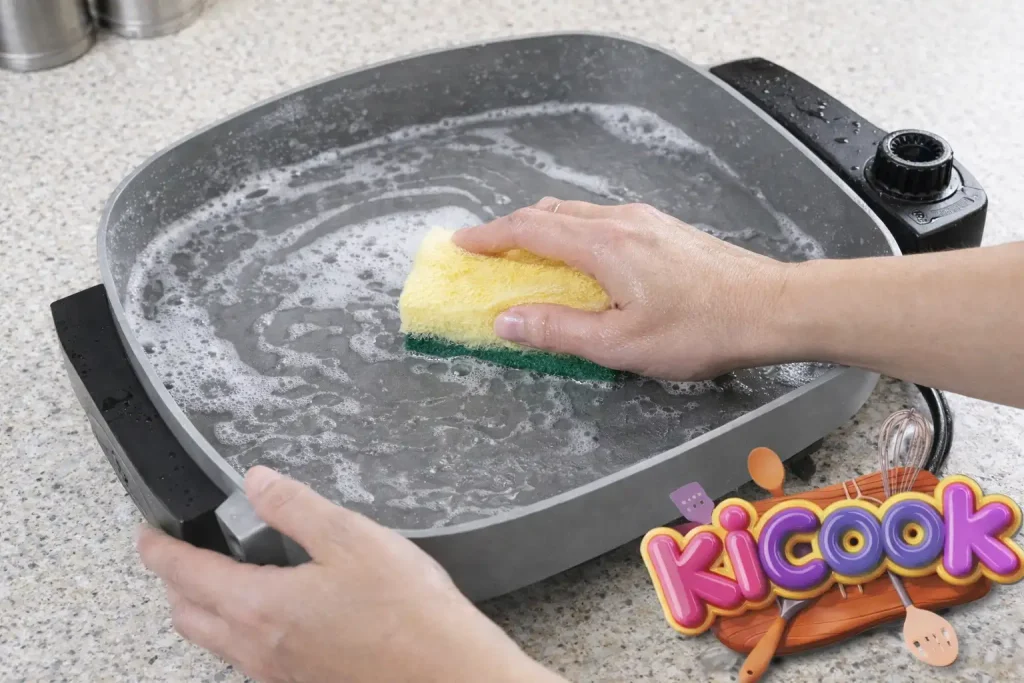
Safe Way to Wash an Electric Skillet
Follow these steps every time:
- Unplug the skillet and let it cool completely.
- Remove the temperature control cord (if detachable).
- Wipe out loose food with a paper towel.
- Soak stuck-on food
- Pour warm water and a little dish soap into the skillet.
- Let it sit 15–20 minutes.
- Wipe gently with a sponge — avoid abrasive scrubbers.
- Rinse and dry thoroughly
- Do not submerge the base in water.
- Use a damp cloth to wipe the outside if needed.
Tip: If your skillet has a removable cooking pan, you can usually wash that part more thoroughly in the sink.
Common Mistakes People Make
Here are the top errors that lead to damage:
1. Submerging the Entire Skillet
Water can enter the electrical parts and cause shorts or rust.
Always keep the base above water.
2. Using Abrasive Scrubbers
Steel wool or metal brushes scratch the non-stick coating.
This wears down the surface and reduces performance.
3. Rushing While Hot
Wiping a hot skillet with water can warp the metal and crack the coating.
4. Forgetting to Dry Properly
Moisture left inside the controls can cause malfunction later.
What If Food Is Burned On?
For stubborn burned bits:
- Baking soda soak: Sprinkle baking soda, add warm water, let sit 30 mins.
- Plastic scraper: Use a soft scraper designed for non-stick surfaces.
- Repeat gentle washing: Don’t force it with harsh tools.
These methods gently lift residue without harming your skillet.
Tips to Keep Your Electric Skillet Clean Longer
- Use silicone or wooden tools — metal dents and scratches food easily.
- Line with a reusable non-stick liner if your model supports it.
- Wipe spills right after cooling — easier than washing later.
Expert Opinion
As someone who uses electric skillets daily, I always treat them with care when cleaning. Water isn’t the enemy — it’s how you use it. With the right routine, your skillet stays spotless without risking damage.
— Jidan Lue, Kitchen Appliance Expert
Pros & Cons of Washing With Water
| Pros | Cons |
|---|---|
| Removes grease and food residue | Risky if electrical parts get wet |
| Easy and inexpensive | Can damage non-stick coating if done incorrectly |
| Makes cooking more hygienic | Needs caution and time to dry properly |
Helpful Note on Safety
Electric skillets are convenient, but you should always follow manufacturer care instructions. For general safety principles about electrical appliances and water exposure, you can refer to the U.S. Consumer Product Safety Commission guidance on kitchen appliance safety.
Frequently Asked Questions
Can I put my electric skillet in the dishwasher?
No. Most electric skillets are not dishwasher safe because of the electrical components.
Is it okay to use vinegar for cleaning?
Yes, a vinegar and water mix can help cut grease but avoid pouring liquid directly into controls. Use a damp cloth.
What if my skillet has a removable pan?
Remove it first and wash separately in warm soapy water this is usually safe.
Can I wash the heating plate area with a damp cloth?
Yes, but make sure it’s only a damp cloth, not running water.
Related Articles You May Find Helpful
- For troubleshooting tips when your electric skillet won’t heat or work properly, check out this guide on electric skillet not working issues: electric-skillet-not-working
- If you want to learn about the most common electric skillet problems and how to fix them, this article walks through them in detail.
- Curious whether electric skillets are worth the investment? Read this helpful evaluation

“I believe great cooking starts with the right tools, trusted advice, and a little confidence in the kitchen.”
Hi, I’m Emma Carter. My love for cooking began in my grandmother’s kitchen, where I learned that every great meal starts with simple ingredients and the right cookware. Over the years, I’ve spent countless hours researching, testing, and comparing kitchen appliances, cookware, coffee makers, air fryers, and other everyday kitchen essentials.
Here at KiCook, my goal is to make your buying decisions easier with honest product reviews, practical buying guides, and easy-to-follow cooking tips. Whether you’re upgrading your kitchen or searching for the best appliance for your home, I focus on providing clear, reliable, and research-backed information you can trust.
When I’m not testing new kitchen gadgets or writing in-depth guides, you’ll usually find me trying new recipes, visiting local farmers’ markets, or enjoying a quiet cup of coffee while planning my next kitchen project.



2 thoughts on “Can You Wash an Electric Skillet With Water? Common Mistakes (2026 Guide)”