The most common reason slow cooker meat turns tough is cooking it too quickly on high heat or using lean cuts that lack connective tissue. Toughness often comes from not letting the collagen slowly dissolve into gelatin, which requires low heat, enough time, and the right cut of meat.
Ever had that disappointing moment? You’ve waited all day, the smell of dinner filling your house, only to find your beef stew or pulled pork is chewy, dry, and tough. I’ve been there, too.
After years of trial and error in my own kitchen, I’ve learned that the “set it and forget it” magic of a slow cooker needs a little know-how to work perfectly. Let’s talk about why this happens and, more importantly, how you can fix it for good.
My Love Affair (and Frustration) with the Slow Cooker
I got my first slow cooker as a wedding gift. I imagined coming home to fall-apart tender meat every night. Sometimes it was incredible. Other times, it was like chewing on leather. I wondered, was it me or the machine?
Turns out, it was a bit of both. The slow cooker is a fantastic tool, but it doesn’t forgive some common mistakes. Understanding the “why” changed everything for me.
The Science of “Low and Slow”: It’s All About Collagen
To solve tough meat, we need to talk about protein and connective tissue. Muscles from hard-working parts of the animal like the shoulder (chuck roast) or the leg (pork butt)are full of a protein called collagen. This collagen is like nature’s glue; it’s tough and chewy when raw.
But when you cook it with moisture at a low temperature for a long time, something beautiful happens. That tough collagen slowly melts into rich, silky gelatin. This gelatin is what gives dishes like braised short ribs or pot roast their luxurious, juicy texture and mouthfeel.
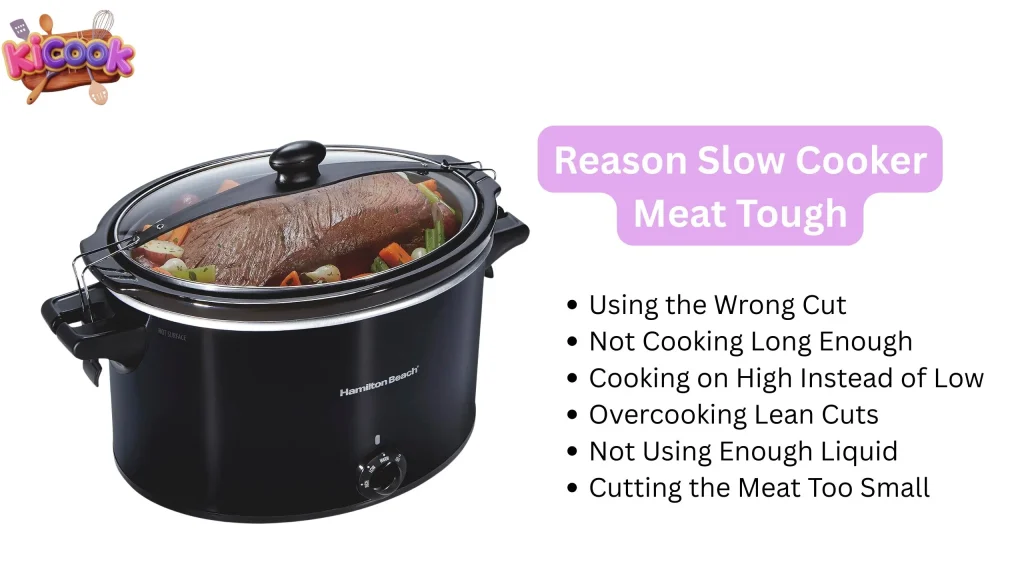
If your meat is tough, the collagen hasn’t melted. This is usually because of one or more of these reasons:
- Using the Wrong Cut: This is mistake number one. Lean cuts like chicken breast, pork loin, or sirloin steak have very little collagen. They are meant for quick, high-heat cooking. In a slow cooker, they just dry out and become rubbery because there’s no fat or connective tissue to break down and baste the meat from within.
- Not Cooking Long Enough: It sounds funny, but “slow” is the key word. If you’re using a high setting for only 4 hours on a big roast, the heat might be too aggressive to break down collagen gently. It cooks the muscle fibers quickly, making them squeeze out moisture and tighten up, before the collagen has had a chance to transform.
- Cooking on High Instead of Low: The high setting on most cookers is simply too hot for a proper braise. It can boil the liquid rather than maintain a gentle simmer. This boiling action causes the muscle fibers to contract severely and become dry and stringy. A good braise happens below 200°F (93°C).
- Overcooking Lean Cuts: Yes, you can overcook in a slow cooker! While collagen-rich cuts get better with more time, lean cuts hit a point of maximum doneness and then swiftly decline into a dry, tough state.
- Not Using Enough Liquid: While you don’t need to submerge the meat completely (the cooker creates its own sealed environment), you do need enough liquid to create steam and conduct heat evenly. Too little liquid can create hot spots and lead to uneven cooking.
- Cutting the Meat Too Small: For stews, browning larger chunks (about 2-inch pieces) is better. Very small pieces can easily overcook and become tough before the cooking time is up.
As food writer Harold McGee once said, “Good cooking is in many ways about the management of change.” Managing the change of collagen to gelatin is the heart of slow cooking.
Your Guide to Always-Tender Slow Cooker Meat
Here’s the good news: fixing tough meat is straightforward. Follow these steps, and you’ll see a huge difference.
1. Choose the Right Cut of Meat.
Forget “lean and mean.” You want “tough and fatty.” Look for cuts with lots of marbling and names that indicate they come from the shoulder, leg, or chest.
- Beef: Chuck roast, brisket, short ribs, bottom round.
- Pork: Pork shoulder (also called Boston butt), picnic roast.
- Lamb: Lamb shoulder, shanks.
- Chicken: Thighs and drumsticks (with skin and bone-in are even better for flavor).
2. Embrace the Low Setting.
Unless you’re in a genuine hurry, use the LOW setting. It gives the collagen time to dissolve without shocking the muscle fibers. For a large roast (3-5 lbs), plan on 8-10 hours on low. Trust the process.
3. The Browning Step is Worth It (Most of the Time).
I know, the appeal of the slow cooker is dumping everything in. But searing your meat in a hot skillet with a little oil first creates a flavorful crust (the Maillard reaction) and adds depth to the final dish. It also helps the meat hold its shape better. If I’m home, I always take these 10 minutes to brown.
4. Get the Liquid Right.
You only need enough liquid to come about one-third to halfway up the meat. The juices from the meat will add to this. Broth, stock, wine, or even just water with aromatics (onions, garlic, herbs) work perfectly. Avoid adding acidic ingredients like tomatoes or vinegar in large quantities at the beginning, as they can sometimes make meat firmer initially. Add them later in the cook time.
5. Leave the Lid On!
Every time you lift the lid, you let out a significant amount of heat and steam. It can take the cooker 20-30 minutes to recover. Set it, and leave it be. This is the “forget it” part.
6. Consider Timing for Vegetables.
If you add delicate veggies like zucchini or peas at the start, they’ll turn to mush. Add them in the last 30-60 minutes of cooking. Hard root vegetables like potatoes and carrots can go in at the beginning.
7. Rest and Shred/Chop Properly.
After cooking, let the meat rest in the juices for 15-20 minutes before shredding or cutting. Always cut or shred against the grain. This shortens the muscle fibers, making each bite much more tender.
8. A Note on Food Safety:
Always ensure your food reaches a safe internal temperature. For beef, pork, lamb, and veal, that’s 145°F (63°C) as a minimum, but for slow-cooked, shredded dishes, you’ll be going much higher to break down collagen (often 190-200°F or 88-93°C). Poultry should reach 165°F (74°C). For detailed guidelines, I often refer to the USDA’s Food Safety website, a great resource for cooks everywhere.
As my grandmother used to tell me, “Patience makes the pot roast perfect.” She was right.
Frequently Asked Questions
I already cooked my meat and it’s tough. Can I save it?
Often, yes! If it’s undercooked, add more liquid and continue cooking on low for another 1-2 hours. If it’s dry and overcooked (common with lean cuts), shred it and mix it back into the sauce or gravy. The sauce can help rehydrate it a little.
Should I put raw meat in my slow cooker?
Yes, that’s perfectly safe, as long as you cook it to a safe temperature. The slow cooker will bring it up to temperature effectively. However, browning first is recommended for flavor.
How full should I fill the slow cooker?
For best results, fill it between halfway and two-thirds full. This allows for proper heat circulation.
Can I cook frozen meat in the slow cooker?
I don’t recommend it. The meat can stay in the “danger zone” (40-140°F or 4-60°C) for too long as it thaws, which can allow bacteria to grow. Always thaw your meat in the fridge first.
Why is my meat dry even though it’s swimming in liquid?
The liquid isn’t actually inside the meat. Dryness happens when muscle fibers contract and squeeze out their natural juices. This is usually from too-high heat or using a lean cut. The liquid around it is sauce, but it can’t penetrate the hardened fibers.
Conclusion: Your Path to Perfectly Tender Meals
Slow cooker frustration is real, but it’s also completely avoidable.
Remember this simple formula: Tough Cut + Low Heat + Enough Time = Tender, Juicy Success.
It changed my cooking routine from a guessing game to a guaranteed win. Now, when I set my cooker in the morning, I have complete confidence that dinner will be something my whole family will love—moist, flavorful, and falling apart with just a fork.
So, next time you’re at the grocery store, reach for that chuck roast or pork shoulder, set your dial to LOW, and give it the time it deserves. Your patience will be rewarded with the most comforting, delicious meals imaginable. Happy slow cooking!
Julia Child once noted, “You don’t have to cook fancy or complicated masterpieces – just good food from fresh ingredients.”
The slow cooker is the ultimate tool for just that: simple, good food made extraordinary with a little knowledge.

“I believe great cooking starts with the right tools, trusted advice, and a little confidence in the kitchen.”
Hi, I’m Emma Carter. My love for cooking began in my grandmother’s kitchen, where I learned that every great meal starts with simple ingredients and the right cookware. Over the years, I’ve spent countless hours researching, testing, and comparing kitchen appliances, cookware, coffee makers, air fryers, and other everyday kitchen essentials.
Here at KiCook, my goal is to make your buying decisions easier with honest product reviews, practical buying guides, and easy-to-follow cooking tips. Whether you’re upgrading your kitchen or searching for the best appliance for your home, I focus on providing clear, reliable, and research-backed information you can trust.
When I’m not testing new kitchen gadgets or writing in-depth guides, you’ll usually find me trying new recipes, visiting local farmers’ markets, or enjoying a quiet cup of coffee while planning my next kitchen project.