
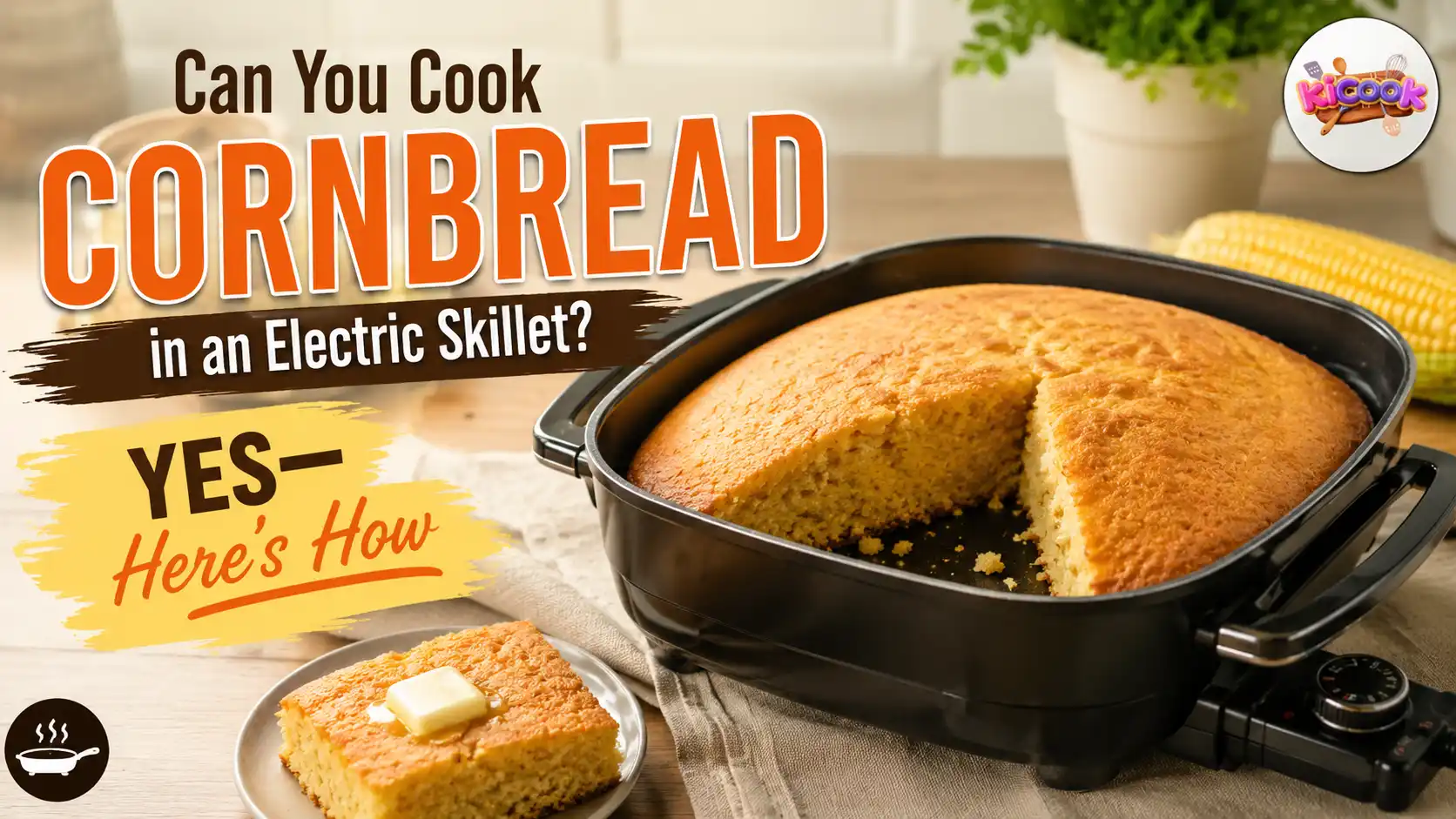
Yes, you can cook cornbread in an electric skillet, and you do not necessarily need an oven to get a moist center and a nicely browned bottom crust. The simplest approach is to grease the skillet, preheat it to about 325°F (163°C), spread in the batter, cover it, and cook until the center is set and a toothpick comes out clean.
There is also a second option: place the cornbread batter in a baking pan set on a rack inside the electric skillet. This keeps the baking pan away from direct bottom heat and makes the skillet behave a little more like a compact oven.
The important thing is not to treat an electric skillet exactly like a conventional oven. Most of its heat comes from underneath, while the lid holds warm air and moisture around the food. That difference affects temperature, cooking time, browning, and the final texture. If you want to understand this principle in more detail, see KiCook’s guide to using an electric skillet as an oven.
Quick Answer: How Do You Cook Cornbread in an Electric Skillet?
For an easy direct-skillet method, preheat a lightly greased electric skillet to about 325°F (163°C). Pour in the prepared cornbread batter, spread it evenly, cover with the lid, and cook for roughly 20 to 30 minutes. Begin checking early if your skillet is large or runs hot. The cornbread is ready when the center feels set and a toothpick inserted near the middle comes out clean or with only a few moist crumbs.
A direct electric-skillet cornbread recipe published by Health Craft also uses 325°F and a covered cooking time of about 25 to 30 minutes, which makes that a practical starting point rather than a universal rule for every appliance.
Electric skillet thermostats vary, so your own appliance manual and the way your skillet actually heats should always take priority over a generic temperature recommendation.
Electric Skillet Cornbread Temperature and Time
There is no single perfect temperature for every electric skillet or every cooking method.
| Method | Starting Temperature | Approximate Time | Best Doneness Check |
|---|---|---|---|
| Directly in the skillet | 325°F / 163°C | 20–30 minutes | Center set; toothpick clean |
| Direct method in a skillet that runs cool | Up to 350°F / 177°C | About 20–30 minutes | Watch the bottom closely |
| Baking pan on a rack | 350–375°F / 177–191°C | About 30–40 minutes | Toothpick clean and center firm |
A pan-on-rack electric skillet recipe from In the Kitch, for example, uses 375°F and cooks the cornbread covered for about 30 to 40 minutes. This is one reason you may see apparently conflicting temperatures online: the cooking setup is not always the same.
If temperature settings on your skillet are confusing, KiCook’s electric skillet medium-heat and temperature guide explains how Fahrenheit, Celsius, and common dial settings compare.
Ingredients for Easy Electric Skillet Cornbread
This recipe makes a simple, slightly tender cornbread that works well with chili, barbecue, soup, beans, or butter and honey.
| Ingredient | US Measurement | Metric Approximation |
|---|---|---|
| Yellow cornmeal | 1 cup | 150–160 g |
| All-purpose flour | 1 cup | 120–125 g |
| Sugar | 1/4 cup | 50 g |
| Baking powder | 1 tablespoon | 12 g |
| Salt | 1/2 teaspoon | About 3 g |
| Milk or buttermilk | 1 cup | 240 ml |
| Large eggs | 2 | 2 |
| Melted butter or neutral oil | 1/4 cup | 55–60 ml |
| Extra butter or oil for greasing | As needed | As needed |
The sugar is optional. Leave it out or reduce it if you prefer a more savory Southern-style cornbread.
For a richer texture, buttermilk works especially well. You can also stir in cheddar, chopped jalapeños, corn kernels, green onions, or a little honey depending on what you are serving alongside it.
How to Make Cornbread in an Electric Skillet
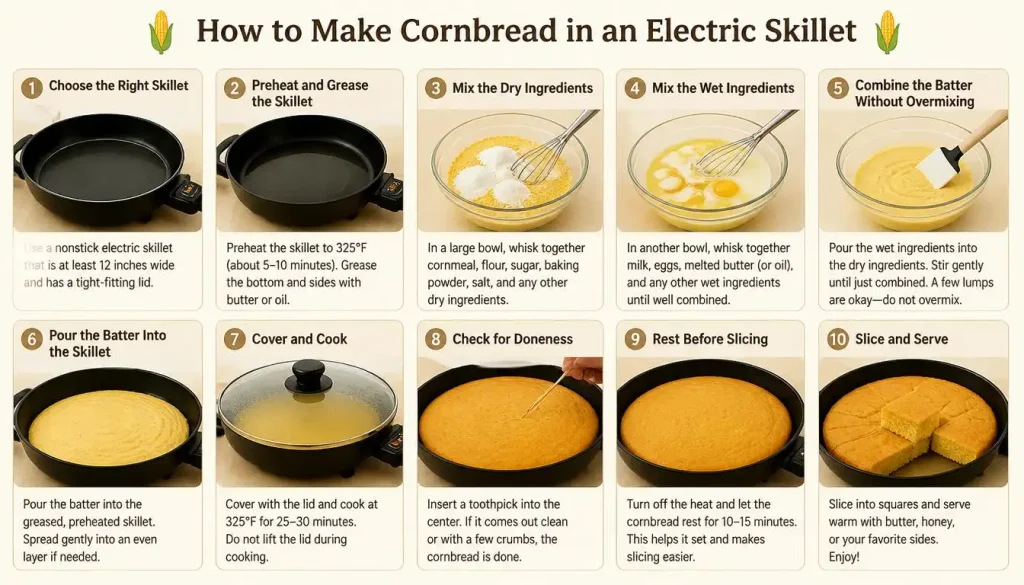
Step 1: Choose the Right Skillet
A skillet roughly 10 to 12 inches across works well for a standard batch. A larger skillet spreads the batter more thinly, which can shorten cooking time. A smaller cooking surface creates a deeper layer of batter, so the middle may need longer to set.
Step 2: Preheat and Grease the Skillet
Set the electric skillet to approximately 325°F (163°C) for the direct method.
Allow it to preheat according to the instructions for your model. Different manufacturers design their temperature controls differently, so do not assume every skillet reaches the selected temperature at exactly the same speed.
Lightly coat the cooking surface with butter or a neutral cooking oil. Make sure the corners and outer edges are covered because those areas can be difficult to release later.
Avoid aggressively overheating an empty nonstick skillet.
Step 3: Mix the Dry Ingredients
In a medium bowl, combine the cornmeal, flour, sugar, baking powder, and salt.
Break up any visible lumps so the baking powder is distributed evenly throughout the mixture.
Step 4: Mix the Wet Ingredients
In a separate bowl, whisk together the milk or buttermilk, eggs, and melted butter or oil.
If you are using melted butter, let it cool slightly before combining it with cold milk and eggs.
Step 5: Combine the Batter Without Overmixing
Pour the wet ingredients into the dry mixture and stir just until no large pockets of dry flour remain.
Do not beat the batter until perfectly smooth. A few small lumps are fine.
This is the same basic principle recommended in King Arthur Baking’s traditional cornbread recipe, where the batter is mixed gently only until combined. Too much mixing can make cornbread tougher instead of tender and crumbly.
Step 6: Pour the Batter Into the Skillet
Carefully pour the batter into the greased, preheated skillet.
Spread it into an even layer with a silicone or wooden spatula. An even depth matters because a thick area in the center can remain undercooked while the thinner edges become dry.
Once the batter is in, put the lid on promptly.
Step 7: Cover and Cook
Cook the cornbread covered at approximately 325°F (163°C).
Try not to lift the lid repeatedly during the first part of cooking. The lid helps retain the warm air that cooks the upper portion of the batter. Opening it again and again releases that heat and can slow the center from setting.
Start checking around 20 minutes if your skillet is wide or you know it runs hot. A deeper batch may take closer to 25 or 30 minutes.
Step 8: Check for Doneness
Insert a toothpick or thin skewer near the center.
If it comes out coated with wet batter, the cornbread needs more time. If it comes out clean or with a few moist crumbs, it is ready.
Also look for a center that feels firm rather than liquid or wobbly and edges that have begun to pull slightly away from the skillet.
Do not keep cooking simply because the top looks pale. Electric skillet cornbread often browns more strongly underneath than on top.
Step 9: Rest Before Slicing
Turn off and unplug the skillet according to the manufacturer’s instructions.
Let the cornbread rest for about 5 to 10 minutes. Resting helps the crumb settle and makes it easier to cut without breaking the entire loaf apart.
Slice it into wedges or squares and serve warm.
Can You Cook Cornbread Directly in an Electric Skillet Without a Baking Pan?
Yes. Cornbread can be cooked directly on a greased electric skillet surface, provided the model is suitable for this type of covered cooking.
The direct method is useful when you want fewer dishes and a browned bottom crust. It also eliminates the need to find a baking pan that fits inside your skillet.
The tradeoff is that the batter sits directly over the heating surface. If your skillet has strong hot spots or its thermostat runs hotter than the dial suggests, the bottom may brown before the center is finished.
That is why I prefer starting around 325°F rather than automatically using the temperature from a conventional oven recipe.
Direct Skillet vs. Baking Pan on a Rack
| Feature | Direct Skillet Method | Baking Pan + Rack Method |
|---|---|---|
| Setup | Very simple | Requires a suitable pan and rack |
| Bottom crust | More pronounced | Usually gentler |
| Risk of scorching | Higher | Lower |
| Cleanup | Less | More |
| Batter depth | Depends on skillet size | Easier to control with pan size |
| Oven-like baking | Moderate | Better |
| Good for beginners | Yes, with careful heat control | Yes, if equipment fits safely |
Neither method is automatically better. Use the direct method for convenience and crust. Use the rack method if your electric skillet tends to overbrown food on the bottom.
How to Make Cornbread With a Baking Pan Inside an Electric Skillet
For the rack method, choose a heat-safe baking pan that fits inside the skillet without pressing tightly against the sides.
Place a low baking or steaming rack in the bottom of the electric skillet, then set the filled baking pan on top. The goal is to create an air gap between the baking pan and the skillet’s hottest surface.
Some electric-skillet manufacturers even offer purpose-built baking or steaming racks for compatible models. For example, Presto lists a baking/steaming rack among the accessories for its 12-inch electric skillet. Always confirm compatibility with your own appliance rather than assuming any rack will fit safely.
Cover the skillet and follow a recipe designed for this arrangement. Temperatures around 350°F to 375°F (177°C to 191°C) are common for pan-on-rack cornbread, but again, your specific recipe and appliance should control the final setting.
Do You Need a Rack to Bake Cornbread in an Electric Skillet?
No—not if you are cooking the batter directly in the skillet.
A rack becomes useful when you want to put a separate baking pan inside the electric skillet. It lifts that pan away from intense direct bottom heat and can reduce the chance of a scorched crust.
Do not improvise with materials that are not heat-safe, and be especially careful with metal objects on a nonstick cooking surface because they can scratch the coating.
What Size Electric Skillet Is Best for Cornbread?
A 10- to 12-inch electric skillet is convenient for most standard homemade cornbread batches.
Size matters because it changes batter depth. Spread the same amount of batter across a large 12-inch surface and it will cook faster than the same batter poured deeply into a smaller skillet.
When adapting a recipe to a different skillet, watch the food rather than blindly following the clock.
How Batter Depth Changes Cooking Time
Thin batter layers heat through quickly but can become dry if left too long.
Deep layers take longer for heat to reach the center. Increasing the temperature is usually not the best solution because it can burn the bottom. Instead, maintain moderate heat and allow more time.
This is especially important if you double a recipe.
Should You Keep the Lid On While Cooking Cornbread?
Yes, for most electric skillet cornbread methods the lid should stay on during cooking.
A conventional oven surrounds a baking pan with hot air. An electric skillet does not. Its strongest heat is underneath the food, so covering the skillet helps hold warm air around the batter and supports cooking through the center. KiCook’s electric-skillet baking guide discusses this difference between bottom-heavy skillet heating and conventional oven heating in more detail.
Avoid lifting the lid every few minutes. Check only when the cornbread is approaching its expected cooking time.
Why Is the Top of My Cornbread Not Browning?
A pale top is one of the most common surprises when baking in an electric skillet.
It does not necessarily mean the bread is undercooked. Because the heating element is beneath the skillet, the bottom receives much more direct heat than the top.
Use the texture of the center and a toothpick test to judge doneness rather than waiting for deep golden color on top.
If the bottom is already well browned and the center is cooked, continuing simply to darken the top can turn a good batch into dry or burned cornbread.
Do You Need to Flip Electric Skillet Cornbread?
Usually, no.
Flipping an entire round of partially cooked cornbread can crack it and compress the crumb. If the center is cooked, a pale top is mostly cosmetic.
For a direct electric-skillet recipe, a crisp bottom and softer top are normal characteristics of the cooking method.
How to Keep Cornbread From Burning on the Bottom
Bottom burning usually means the heat is too high for the thickness of the batter or for the way your particular skillet cycles its heating element.
Start with moderate heat, keep the batter evenly spread, and begin checking before the maximum estimated time.
If you consistently get a dark bottom and raw center, reduce the temperature next time rather than shortening the cooking time dramatically.
A baking pan on a rack is another good solution for skillets with aggressive bottom heat.
How to Keep Cornbread From Sticking to an Electric Skillet
Grease the skillet evenly before adding batter. Butter gives the crust good flavor, while neutral oil usually tolerates heat well and spreads easily.
Also avoid cutting the finished cornbread directly on a nonstick skillet surface.
If foods have suddenly started sticking even when you grease the pan properly, the issue may be the cooking surface rather than the recipe. KiCook’s guide to why food sticks to an electric skillet covers worn coatings, excessive heat, oil use, and other common causes.
Why Is My Cornbread Raw in the Middle?
A cooked bottom with a wet center usually points to one of four problems: too much heat from below, batter that is too deep, insufficient cooking time, or too much moisture in the batter.
Lowering the heat often works better than raising it. High temperature may make the bottom look finished faster while the middle remains uncooked.
Keep the lid on, reduce the temperature slightly if the crust is darkening too quickly, and give the center more time.
When making a particularly deep batch, the pan-on-rack method can provide more forgiving heat.
Why Didn’t My Electric Skillet Cornbread Rise?
First check your baking powder.
Leavening that has been sitting in the cupboard for a long time may not give the batter enough lift. Another common cause is mixing the batter too aggressively after liquid is added.
Also make sure you have not accidentally substituted self-rising cornmeal mix without adjusting the other leavening ingredients.
Finally, do not spread a small recipe across an extremely large skillet and expect a tall loaf. Sometimes the cornbread did rise—it is simply too thin to look tall.
Why Is My Cornbread Dense or Gummy?
Dense cornbread often comes from overmixing, an incorrect flour-to-liquid ratio, weak leavening, or undercooking.
A gummy center usually needs more cooking time. If the bottom is already dark, reduce the heat and continue cooking covered instead of increasing the temperature.
When preparing the batter, stir only until the dry ingredients are moistened.
Why Is My Cornbread Dry or Crumbly?
Cornbread is naturally more crumbly than sandwich bread, but it should not feel unpleasantly dry.
Overcooking is one of the easiest ways to dry it out. Too much flour or cornmeal can do the same thing.
Measure dry ingredients carefully, include enough fat, and stop cooking once the center is done.
For a softer result, try buttermilk or a spoonful of honey in your next batch.
Regular Cornmeal vs. Self-Rising Cornmeal Mix
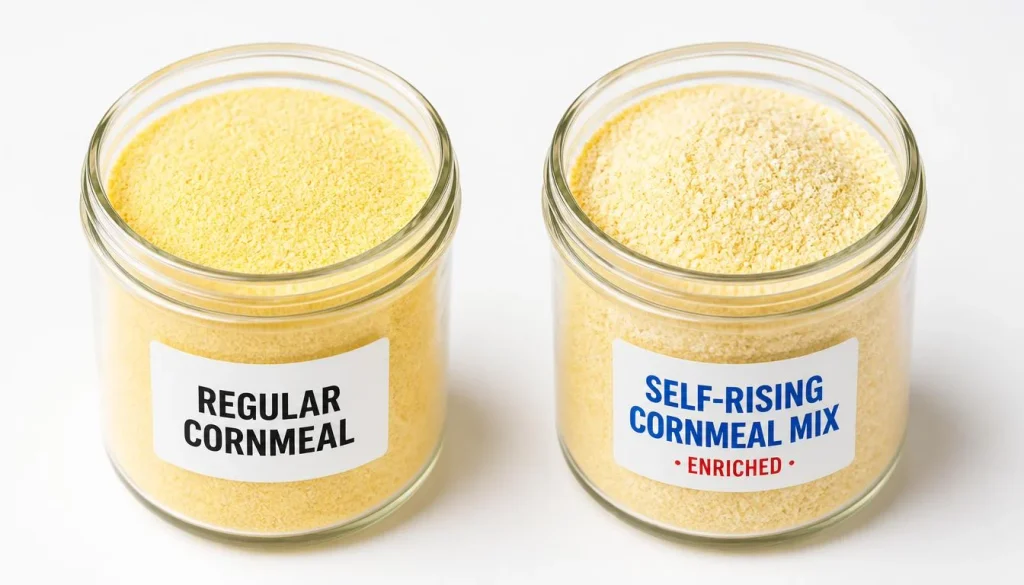
Regular cornmeal is simply ground corn and does not provide the same built-in leavening as a self-rising cornmeal mix.
If your recipe uses regular cornmeal, you will normally add baking powder and salt separately.
If you use self-rising cornmeal or a prepared cornmeal mix, check the package before adding additional baking powder and salt. Adding the full amount from a regular-cornmeal recipe on top of ingredients already included in the mix can throw off the flavor and texture.
Can You Make Jiffy or Boxed Cornbread Mix in an Electric Skillet?
Yes. A boxed corn muffin or cornbread mix such as Jiffy can be adapted to an electric skillet.
Prepare the batter according to the package directions first. Then choose either the direct skillet method or a suitable baking pan on a rack.
For direct cooking, use moderate heat and begin checking earlier than you would blindly follow an oven timer. The wide surface of an electric skillet may create a thinner layer of batter than the baking dish recommended on the box.
Do not automatically copy the package’s oven temperature to the electric skillet. The two appliances deliver heat differently.
Can You Double or Halve the Recipe?
You can, but changing the amount of batter changes cooking time.
A half batch spread across the same skillet will be thin and can finish quickly.
A double batch creates a much deeper layer and may leave the center raw while the bottom becomes too dark. If you need a large quantity, two normal batches usually give more predictable results than one extremely deep batch.
If you do increase the amount, make sure the skillet has enough capacity for the batter to rise without reaching the lid.
How to Get a Crisp Cornbread Crust
Preheating the skillet and lightly coating the surface with butter or oil gives the batter immediate contact with a hot surface, which helps develop a stronger bottom crust.
The direct method naturally gives you more crust than baking the batter in a separate pan on a rack.
For extra flavor, butter works beautifully, although neutral oil is useful if you want less chance of the milk solids browning too quickly.
Remember that the bottom can go from nicely browned to too dark if the skillet is running hot, so crust should not come at the expense of a properly cooked center.
Easy Electric Skillet Cornbread Variations
| Variation | What to Change |
|---|---|
| Southern-style | Reduce or omit sugar; use buttermilk |
| Sweet cornbread | Add a little more sugar or honey |
| Jalapeño cheddar | Fold in diced jalapeño and shredded cheddar |
| Corn-loaded | Add drained corn kernels |
| Green onion | Stir sliced green onions into the batter |
| Honey butter | Keep the basic recipe and serve with honey butter |
| Gluten-free | Use a tested gluten-free flour blend and verify all ingredients |
| Dairy-free | Replace milk and butter with suitable plant-based alternatives |
When adding moist ingredients such as creamed corn, remember that the batter may require more time to cook through.
Electric Skillet Cornbread vs. Oven-Baked Cornbread
| Feature | Electric Skillet | Conventional Oven |
|---|---|---|
| Main heat direction | Mostly from below | Surrounds the food |
| Top browning | Usually lighter | Usually stronger |
| Bottom crust | Can be very crisp | Depends on baking pan |
| Lid needed | Usually yes | No |
| Good without an oven | Excellent | Not applicable |
| Temperature adjustment | Often necessary | Recipe is usually written for it |
| Best advantage | Convenience and controlled countertop cooking | Traditional all-around baking |
An electric skillet is particularly useful in a small kitchen, RV, holiday cooking setup, or anytime you do not want to heat a full oven.
If you are considering buying one specifically for versatile cooking, KiCook’s beginner-friendly electric skillet guide discusses features such as temperature controls, lids, racks, cooking capacity, and nonstick surfaces.
What to Serve With Electric Skillet Cornbread
Cornbread works especially well with chili, beef stew, barbecue, pulled pork, fried chicken, beans, vegetable soup, collard greens, and hearty one-pot meals.
For breakfast or a snack, serve a warm slice with butter, honey, jam, or maple syrup.
Savory jalapeño-cheddar cornbread pairs especially well with chili, while a slightly sweeter version is good alongside smoky barbecue.
How to Store Leftover Cornbread
Allow leftover cornbread to cool completely before wrapping or placing it in an airtight container. Trapping steam while it is still hot can make the surface damp.
If you plan to eat it soon, keep it well covered. For longer storage, refrigerating or freezing is the better option.
To freeze, wrap individual portions so you can thaw only what you need.
How to Reheat Cornbread in an Electric Skillet
Set the skillet to low heat rather than using the original baking temperature.
Place the cornbread inside, add the lid, and warm gently until the center is heated. A small dab of butter on the cut side can help restore some richness.
Avoid high heat. Leftover cornbread is already cooked, so aggressive bottom heat can burn the crust before the inside warms.
Common Electric Skillet Cornbread Problems at a Glance
| Problem | Most Likely Cause | What to Do |
|---|---|---|
| Bottom burned | Temperature too high | Reduce heat |
| Middle raw | Batter too deep or heat too high | Lower heat and cook longer |
| Top pale | Limited top heat | Judge doneness by center, not color |
| Cornbread sticks | Not enough grease or worn surface | Grease evenly and inspect coating |
| Cornbread dry | Overcooked | Check earlier |
| Dense texture | Overmixed or weak leavening | Mix gently; use fresh baking powder |
| Gummy center | Undercooked | Continue covered at moderate heat |
| Very thin loaf | Skillet too large for batter amount | Use smaller skillet or more batter |
| Outside done too quickly | Hot spots/direct bottom heat | Try a baking pan on a rack |
Frequently Asked Questions
Can you bake cornbread directly in an electric skillet?
Yes. Grease the cooking surface, use moderate heat, add the batter, cover the skillet, and cook until the center passes the toothpick test. A starting temperature around 325°F (163°C) works well for many direct-skillet recipes.
What temperature do you cook cornbread in an electric skillet?
For direct cooking, start around 325°F (163°C), adjusting toward 350°F (177°C) only if needed. Pan-on-rack methods may use temperatures closer to 350–375°F (177–191°C). The recipe and your skillet’s manual should take priority.
How long does cornbread take in an electric skillet?
Directly cooked cornbread generally needs around 20 to 30 minutes, while a separate baking pan on a rack can take roughly 30 to 40 minutes. Batter depth and skillet performance matter more than the clock alone.
Do you need to preheat an electric skillet for cornbread?
Preheating is useful because it gives the batter a predictable starting temperature and can help develop the bottom crust. Follow your skillet manufacturer’s instructions for how to preheat your particular model.
Do you have to cover cornbread in an electric skillet?
For most methods, yes. The lid traps heat above the batter and helps compensate for the skillet’s bottom-focused heating.
Can you make Jiffy cornbread in an electric skillet?
Yes. Prepare the mix according to its package directions, then cook it using an appropriate direct or pan-on-rack electric skillet method. Start checking for doneness based on batter depth rather than assuming the oven time will transfer exactly.
Can you make cornbread without an oven?
Absolutely. An electric skillet is one option. The direct method requires only the skillet and lid, while a rack-and-pan method more closely mimics baking.
Do you need a baking pan for electric skillet cornbread?
No. You can cook the batter directly in a suitable greased skillet. A separate baking pan is optional and is most helpful when you want to protect the cornbread from strong direct bottom heat.
Do you need a rack?
Not for direct cooking. Use a rack when placing a separate baking pan inside the skillet, provided the equipment is safe and compatible with your appliance.
Why is my cornbread done on the bottom but raw in the middle?
The temperature is probably too high for the depth of your batter. Lower the heat, keep the skillet covered, and allow more time for the center to cook.
Why isn’t the top of my electric skillet cornbread brown?
Electric skillets produce most of their heat underneath the food, so the top often stays lighter than oven-baked cornbread. A pale top is fine if the center is fully cooked.
Should I flip cornbread in an electric skillet?
Usually not. Flipping is unnecessary and can break the cornbread. Use the toothpick test rather than top color to determine when it is ready.
Can I use a baking pan inside an electric skillet?
Some electric skillets can accommodate a heat-safe baking pan positioned on a suitable rack, but you should verify your model’s instructions and dimensions first.
Final Answer: Is an Electric Skillet Good for Cornbread?
Yes, an electric skillet can make very good cornbread when you work with the way the appliance actually heats.
For the easiest approach, grease the skillet, preheat it to about 325°F (163°C), add an even layer of batter, cover, and start checking for doneness around the 20-minute mark. A deeper batch may need closer to 25 or 30 minutes.
If your skillet tends to burn food on the bottom, use a compatible baking pan raised on a rack instead. That creates some distance from the heating surface and gives you a more oven-like result.
Most importantly, do not wait for the top to look exactly like oven-baked cornbread. Electric skillet cornbread often develops its best color underneath. Once the center is set and a toothpick comes out clean, let it rest for a few minutes, slice it, and enjoy it warm.
With the right temperature, a covered skillet, and a little attention to batter depth, you can make moist, tender cornbread with a satisfying crust—no conventional oven required.

“I believe great cooking starts with the right tools, trusted advice, and a little confidence in the kitchen.”
Hi, I’m Emma Carter. My love for cooking began in my grandmother’s kitchen, where I learned that every great meal starts with simple ingredients and the right cookware. Over the years, I’ve spent countless hours researching, testing, and comparing kitchen appliances, cookware, coffee makers, air fryers, and other everyday kitchen essentials.
Here at KiCook, my goal is to make your buying decisions easier with honest product reviews, practical buying guides, and easy-to-follow cooking tips. Whether you’re upgrading your kitchen or searching for the best appliance for your home, I focus on providing clear, reliable, and research-backed information you can trust.
When I’m not testing new kitchen gadgets or writing in-depth guides, you’ll usually find me trying new recipes, visiting local farmers’ markets, or enjoying a quiet cup of coffee while planning my next kitchen project.