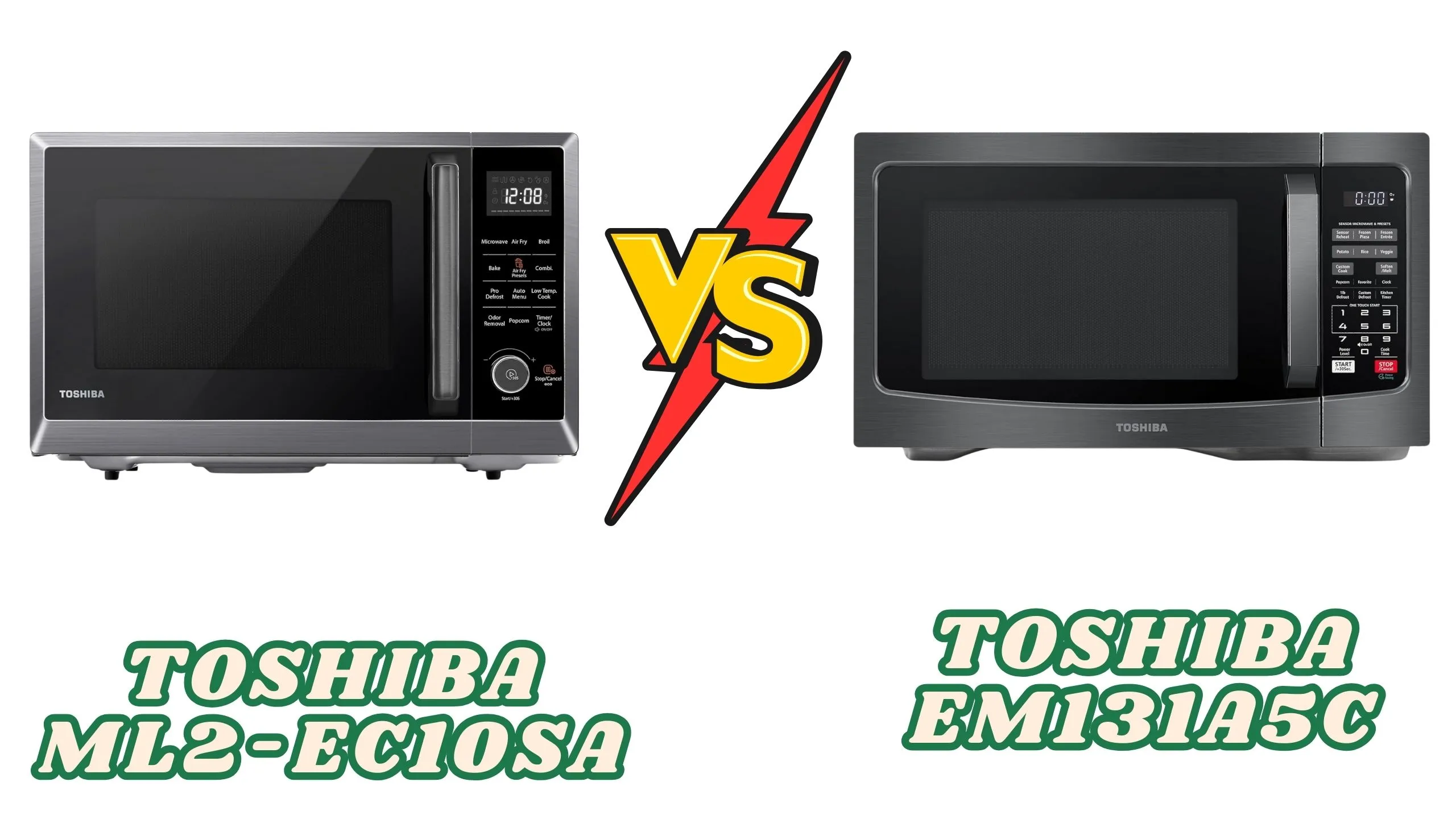
Many people compare the TOSHIBA ML2-EC10SA vs TOSHIBA EM131A5C because both are popular countertop appliances from the same brand, but they serve very different needs. At first glance, they look similar, which creates confusion for buyers.
I noticed that most people get stuck on one question:
Should I buy a multi-function microwave with air frying, or a simple, powerful microwave for daily reheating?
I spent time researching specs, manuals, and real user feedback to understand where each model truly fits in a real kitchen. This comparison is not about hype. It’s about daily use, space, performance, and value.
By the end of this article, you’ll know exactly which Toshiba model makes sense for your cooking habits, counter space, and budget.
Quick Comparison
| Feature | TOSHIBA ML2-EC10SA | TOSHIBA EM131A5C |
|---|---|---|
| Price Range | Mid to high | Budget to mid |
| Core Function | Microwave + Air Fry + Convection | Traditional Microwave |
| Capacity | ~1.0 cu. ft | 1.2 cu. ft |
| Power Output | 1000W | 1100W |
| Best For | Multi-purpose cooking | Fast reheating & defrosting |
| One-Line Takeaway | One appliance, many cooking styles | Simple, powerful, and reliable |
Product Overview – TOSHIBA ML2-EC10SA
Credit: Amazon
Check the latest price on Amazon
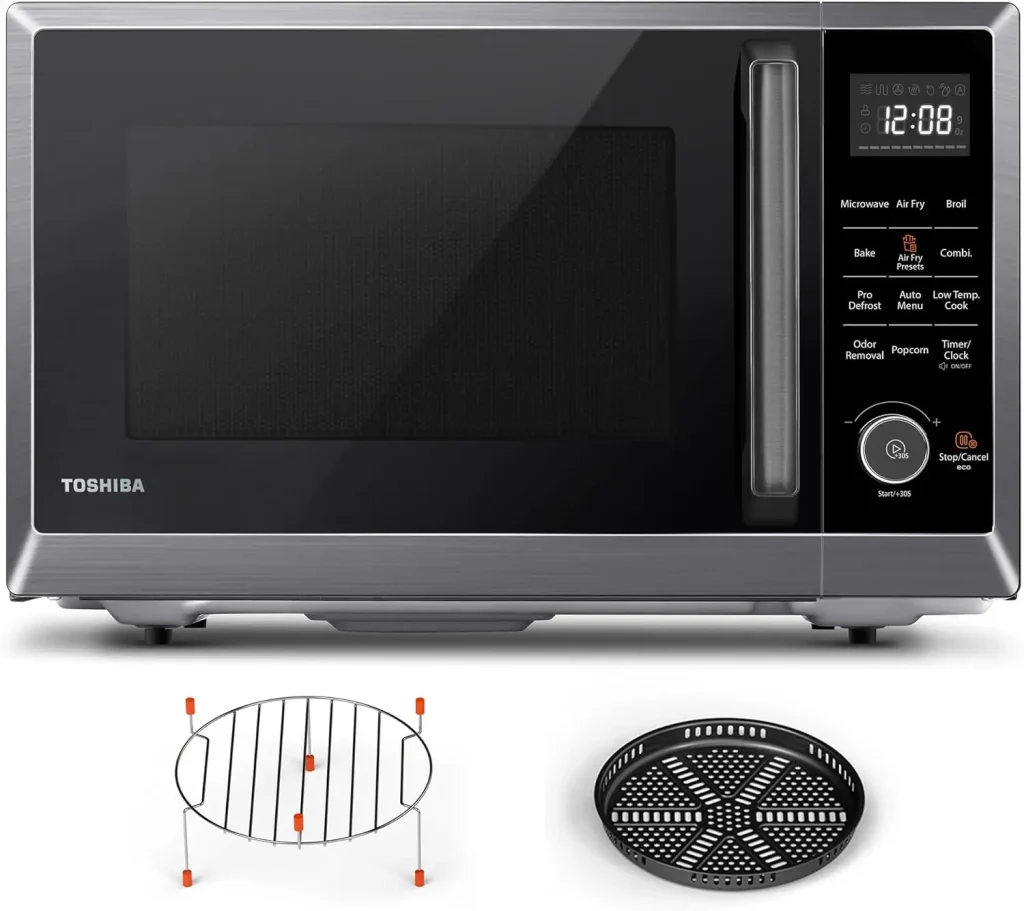
About TOSHIBA ML2-EC10SA
Toshiba is well known for blending modern features with practical design, and the ML2-EC10SA clearly follows that idea. This model is designed for people who want more than just reheating.
It’s an 8-in-1 countertop microwave that combines microwave cooking with air frying, convection baking, broiling, and combination modes. Instead of buying separate appliances, this unit tries to handle everything in one box.
This model is best suited for small families, apartments, or kitchens where counter space is limited but cooking variety matters.
Product Overview – TOSHIBA EM131A5C
About TOSHIBA EM131A5C
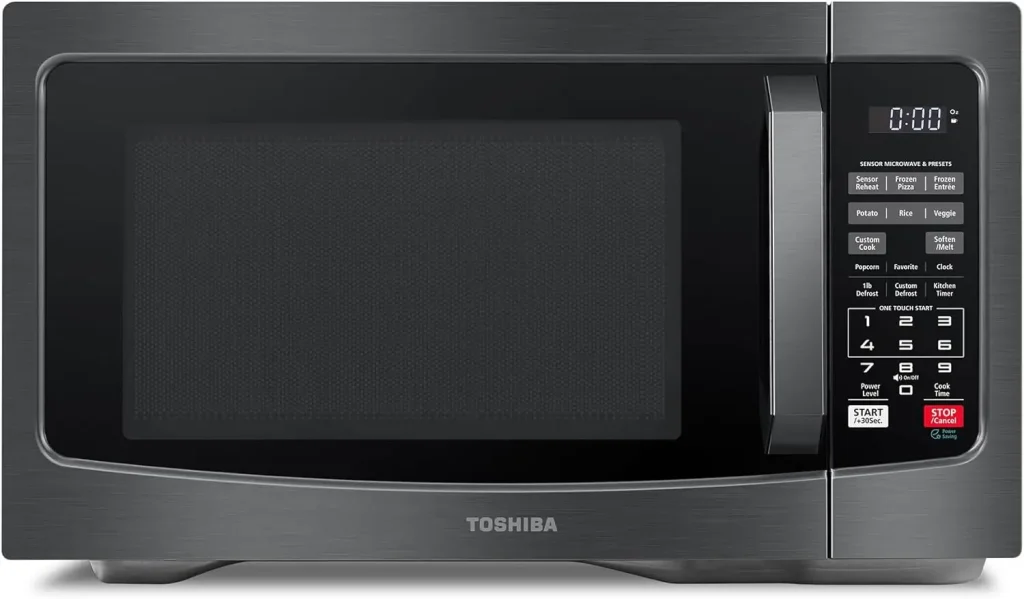
The EM131A5C is one of Toshiba’s most popular traditional countertop microwaves. It focuses on doing one job well—fast, even microwave cooking.
It features sensor cooking, strong power output, and a spacious interior. There’s no air fry or convection here, and that’s intentional. This model is built for people who want quick meals, reheating, and defrosting without complexity.
This microwave fits perfectly in busy households, offices, or kitchens where simplicity and reliability matter more than extra cooking modes.
Credit: Amazon
Feature-by-Feature Comparison
| Feature | ML2-EC10SA | EM131A5C |
|---|---|---|
| Design & Build | Modern black stainless steel, multifunction layout | Clean stainless look, classic microwave design |
| Size / Capacity | ~1.0 cu. ft, slightly compact | 1.2 cu. ft, roomier interior |
| Performance | Versatile but slower in combo modes | Fast, powerful, consistent heating |
| Ease of Use | Learning curve due to many modes | Very simple controls |
| Cleaning | More accessories to clean | Easy wipe-down interior |
| Durability | More components, more complexity | Fewer parts, long-term reliability |
Real-World Performance Comparison
In daily use, the difference becomes very clear.
The ML2-EC10SA shines when I want flexibility. I can air-fry frozen snacks, bake small portions, or reheat leftovers in one appliance. However, cooking with convection or air fry takes longer than a dedicated oven or air fryer.
The EM131A5C, on the other hand, feels faster and more predictable. Sensor reheating works well for popcorn, coffee, and leftovers. There’s no guessing, and results are consistent.
If you value speed and simplicity, the EM131A5C performs better.
If you value variety and fewer appliances, the ML2-EC10SA feels more useful.
Pros & Cons (Side-by-Side)
TOSHIBA ML2-EC10SA
| Pros | Cons |
|---|---|
| Multiple cooking modes | Smaller interior |
| Air fryer included | Takes time to learn |
| Saves counter space | More parts to clean |
| Modern design | Slower than basic microwave |
TOSHIBA EM131A5C
| Pros | Cons |
|---|---|
| Strong 1100W power | No air fry or convection |
| Large capacity | Single-purpose appliance |
| Sensor cooking works well | Less versatile |
| Easy to clean | Basic feature set |
Price vs Value Analysis
| Aspect | ML2-EC10SA | EM131A5C |
|---|---|---|
| Initial Cost | Higher | Lower |
| What You Get | Multiple appliances in one | Powerful microwave only |
| Long-Term Value | Good if used fully | Excellent for daily use |
| Best ROI | Small kitchens, variety cooks | Busy homes, reheating focus |
You pay more for the ML2-EC10SA, but only get value if you actually use its extra modes.
Who Should Choose Which Product?
Choose TOSHIBA ML2-EC10SA if you:
- Want air frying without another appliance
- Cook small baked or roasted meals
- Have limited counter space
- Like experimenting with cooking modes
Choose TOSHIBA EM131A5C if you:
- Mostly reheat or defrost food
- Want fast, strong microwave power
- Prefer simple controls
- Need larger interior space
Common Concerns & Deal-Breakers
- Noise: Both are normal, but convection mode is louder on ML2-EC10SA
- Size: EM131A5C fits larger plates better
- Cleaning: EM131A5C is easier
- Reliability: Simpler design of EM131A5C may last longer
Final Verdict
After comparing both, I see them as tools for different users.
The TOSHIBA EM131A5C is the better choice for most households that want speed, power, and simplicity.
The TOSHIBA ML2-EC10SA is ideal if you want one appliance to replace several, and you’re willing to trade speed for versatility.
There’s no wrong choice—only the right one for your cooking style.
FAQs on TOSHIBA ML2-EC10SA vs TOSHIBA EM131A5C
Can the ML2-EC10SA replace an air fryer?
Yes, for small portions, but it’s slower than a dedicated air fryer.
Is the EM131A5C more powerful than ML2-EC10SA?
Yes. It has higher microwave output and heats faster.
Which is easier to use for beginners?
The EM131A5C is simpler and more beginner-friendly.
Which model is easier to clean?
The EM131A5C, because it has fewer accessories.
Is convection cooking worth it in a microwave?
Only if you plan to use it regularly. Otherwise, it adds complexity.

“I believe great cooking starts with the right tools, trusted advice, and a little confidence in the kitchen.”
Hi, I’m Emma Carter. My love for cooking began in my grandmother’s kitchen, where I learned that every great meal starts with simple ingredients and the right cookware. Over the years, I’ve spent countless hours researching, testing, and comparing kitchen appliances, cookware, coffee makers, air fryers, and other everyday kitchen essentials.
Here at KiCook, my goal is to make your buying decisions easier with honest product reviews, practical buying guides, and easy-to-follow cooking tips. Whether you’re upgrading your kitchen or searching for the best appliance for your home, I focus on providing clear, reliable, and research-backed information you can trust.
When I’m not testing new kitchen gadgets or writing in-depth guides, you’ll usually find me trying new recipes, visiting local farmers’ markets, or enjoying a quiet cup of coffee while planning my next kitchen project.