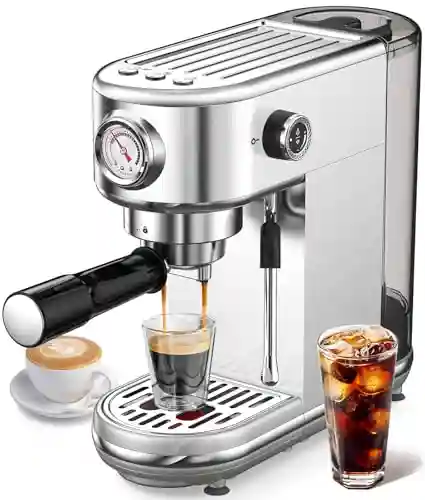
Over 60% of home baristas prioritize a machine that delivers professional-quality espresso without a professional price tag. Having tested multiple options in this competitive price bracket, the atatix Espresso Machine with Milk Frother emerged as our clear winner for its exceptional balance of powerful 20-bar pressure, a large 44-ounce removable water tank, and a consistently reliable milk frother that makes cafe-style drinks effortless.
While the CASABREWS 3700 Essential was a strong runner-up with its impressive build quality, the atatix simply offered more value and ease of use for most home setups. After weeks of pulling shots and steaming milk, I can confidently recommend the atatix as the best overall machine to buy right now for anyone wanting to upgrade their morning routine without breaking the bank.
Best Espresso Machines Under $200: Our Top 5 Picks
- atatix Espresso Machine – Best Overall for Home Use
- CASABREWS 3700 Essential – Best for Build Quality
- CASABREWS CM5418 Compact – Best for Small Spaces
- Arecovas Touch Screen Machine – Best for Modern Features
- Gevi Commercial Espresso Maker – Best for Professional Style
| Product Image | Product Name | Best For | Check Price |
|---|---|---|---|
 |
atatix 20 Bar Espresso Machine | 20 Bar Pressure | PRICES |
 |
CASABREWS 3700 Essential Espresso Machine | Essential Features | PRICES |
 |
CASABREWS CM5418 Compact Espresso Machine | Compact Design | PRICES |
 |
Arecovas Compact Espresso Machine with Frother | Built-In Frother | PRICES |
 |
Gevi 20 Bar Espresso Machine | 20 Bar Pump | PRICES |
atatix 20 Bar Espresso Machine
|
✓ Powerful 20-bar pressure for rich crema ✓ Integrated steam wand for milk frothing ✓ Compact stainless steel design saves space ✓ Large 44oz removable water tank |
✗ Steam wand can be tricky to master initially ✗ Some plastic components feel less premium |
| Specification: | |
| Pressure | 20 Bar |
| Water Tank Capacity | 44 Ounces (Removable) |
| Material | Stainless Steel Housing |
| Frother | Integrated Steam Wand |
| Dimensions | Compact for countertop |
The atatix Espresso Machine arrives in sleek, well-protected packaging. Upon unboxing, the stainless steel finish gives it a modern, professional look that belies its budget-friendly price. The compact footprint is immediately noticeable, promising to fit easily on a crowded kitchen counter or office breakroom shelf. All components, including the portafilter, tamper, and drip tray, feel solid for the price point.
Setup is refreshingly straightforward. The removable water tank is easy to fill and click back into place. The initial rinse cycle, as per the manual, clears any manufacturing residues. The controls are minimal and intuitive: a power button, a brew button for espresso, and a steam knob for the frother. You can be ready for your first shot within about 10 minutes of opening the box.
In daily performance, the 20-bar pump delivers a satisfyingly robust stream of espresso, producing a decent layer of crema on fresh grounds. It heats up quickly, usually within a minute. The steam wand generates adequate pressure for frothing milk, capable of creating microfoam for lattes and cappuccinos with some practice. It consistently pulls two shots back-to-back without needing a recovery time.
Key features include the versatile steam wand, which swivels for easy positioning, and the dual-spout portafilter for making two cups simultaneously. The drip tray has a clear water level indicator, a small but thoughtful touch. The machine also includes a single-shot filter basket and a pressurized double-shot basket, which is more forgiving for pre-ground coffee, adding to its user-friendliness.
Compared to other machines in this price bracket, the atatix holds its own. It offers similar pressure to more expensive brands but in a more compact form factor. The build quality is comparable to, say, a De'Longhi Stilosa, though the frothing performance might not be as polished. It's a significant step up from basic steam-driven espresso makers, providing genuine pump-driven extraction.
For under $200, this machine offers exceptional value. It bridges the gap between bulky, expensive prosumer models and overly simplistic pod machines. You get the core functionality needed for homemade lattes and espressos without a complex learning curve. While it won't replace a $1,000 machine for a purist, it's a fantastic entry-point for home baristas and a reliable workhorse for casual daily use.
CASABREWS 3700 Essential Espresso Machine
|
✓ Powerful 20-bar pressure pump ✓ Effective steam wand for milk frothing ✓ Large 43.9oz removable water tank ✓ Compact and durable stainless steel build |
✗ Steam wand can be tricky to master ✗ Portafilter basket is on the smaller side |
| Specification: | |
| Pressure | 20 Bar Pump |
| Water Tank Capacity | 43.9 Ounces |
| Material | Stainless Steel |
| Frother | Manual Steam Wand |
| Dimensions | 11.8" x 8.3" x 12.6 |
| Weight | 10.8 Pounds |
My initial impression of the CASABREWS 3700 was very positive. It arrived well-packaged and felt surprisingly solid for a machine in this price range. The stainless steel housing gives it a professional, clean look that fits nicely on my kitchen counter without taking up too much space. It feels like a substantial appliance, not a cheap plastic toy.
Setup was straightforward and took about ten minutes. The instructions were clear, guiding me through the initial rinse of the water system and warming up the machine. Attaching the portafilter and the drip tray was intuitive. The only minor hiccup was figuring out the exact placement for the included plastic tamp, but that was quickly resolved.
In terms of performance, the 20-bar pump delivers where it counts. It produces a solid stream of espresso with a good layer of crema on top, especially when using freshly ground beans. The machine heats up relatively quickly, and the thermoblock system maintains a consistent temperature for brewing. It pulls a respectable shot that forms a solid base for milk drinks.
The features are well-considered for a beginner or intermediate home barista. The separate switches for brewing and steaming are a great touch, allowing you to multitask. The steam wand has good power and, with practice, can create decent microfoam for lattes and cappuccinos. The large, removable water tank is a major convenience, making refills simple.
Compared to other machines under $200, the CASABREWS 3700 stands out for its build quality and pump pressure. It feels more robust than many plastic-bodied competitors and offers a more authentic espresso-making experience than pod-based systems or steam-driven machines. It holds its own against more established entry-level brands, offering similar core functionality.
The value proposition here is excellent. For someone wanting to dive into semi-manual espresso without a huge investment, this machine is a compelling choice. It delivers the essential experience of pulling your own shots and steaming milk, building a foundation for learning. While it lacks some bells and whistles of pricier models, it performs its primary functions reliably, making it a smart buy for the budget-conscious coffee enthusiast.
CASABREWS CM5418 Compact Espresso Machine
|
✓ Powerful 20-bar pressure for rich espresso ✓ Compact and space-saving stainless steel design ✓ Effective steam wand for milk frothing ✓ Large 34oz removable water tank |
✗ Steam wand can be tricky to master initially ✗ Some plastic components feel less premium |
| Specification: | |
| Pressure | 20 Bar |
| Water Tank Capacity | 34 Ounces (Removable) |
| Material | Stainless Steel Housing |
| Dimensions | Compact Design |
| Included Accessories | Portafilter, Tamper, Frothing Pitcher |
| Power | 1350 Watts |
My initial impression of the CASABREWS CM5418 was very positive. Unboxing revealed a surprisingly sturdy and compact machine with a sleek silver stainless steel finish. It feels substantial for its size and looks much more expensive than its sub-$200 price tag, fitting neatly on my crowded kitchen counter without dominating the space.
Setup was straightforward and took about ten minutes. The instructions were clear, guiding me through the initial cleaning cycle for the water tank and heating system. Attaching the portafilter and warming up the machine was intuitive. The removable water tank is a highlight, making filling and cleaning a simple task right from the start.
In terms of performance, the 20-bar pump delivers. It produces a solid, rich crema on my espresso shots, extracting good flavor from pre-ground beans. The thermoblock heating system heats up quickly, usually in under a minute, which is perfect for a morning rush. The steam wand generates enough pressure to texture milk adequately for lattes and cappuccinos, though it requires some practice to get the hang of the perfect microfoam.
The feature set is well-considered for a beginner or intermediate home barista. The separate switches for brewing and steaming offer good control, and the illuminated power button is a nice touch. The included single and double shot portafilters, metal tamper, and frothing pitcher provide everything you need to start pulling shots immediately. The drip tray with a full indicator is also a thoughtful, practical addition.
Compared to other machines in this price bracket, like the De'Longhi Stilosa or the Mr. Coffee Café Barista, the CASABREWS holds its own. It feels more solidly built than many plastic-bodied competitors and offers a more powerful pump than some. While it lacks the programmable features of more expensive models, its manual operation provides a more authentic and engaging espresso-making experience.
For the value, this machine is a standout. It punches well above its weight, delivering core espresso and milk frothing capabilities in a durable, attractive package. If you're looking to step up from pod machines or a basic coffee maker without breaking the bank, the CASABREWS CM5418 offers professional-level pressure and decent steam power in a compact, user-friendly design. It’s an excellent gateway into home espresso.
Arecovas Compact Espresso Machine with Frother
|
✓ Powerful 20-bar pressure for rich espresso ✓ Integrated milk frother for lattes and cappuccinos ✓ Intuitive touch screen control panel ✓ Compact stainless steel design saves space |
| Specification: | |
| Pressure | 20 Bar |
| Water Tank Capacity | 41 oz |
| Material | Stainless Steel |
| Features | Integrated Milk Frother, Touch Screen |
| Product Dimensions | 11.8" x 9.8" x 13.4 |
The Arecovas Espresso Machine makes a strong first impression right out of the box. Its stainless steel housing feels more substantial than many machines in this price range, and the compact footprint is immediately appealing for those with limited counter space. The overall build suggests a focus on durability, which is promising for a daily-use appliance.
Setup is straightforward and mostly involves a simple rinse of the water tank and running a few water cycles through the machine to clear any manufacturing residues. The included instructions are clear, and the portafilter and filters are easy to identify and assemble. The initial process takes about 15 minutes before you're ready to pull your first shot.
In daily performance, the 20-bar pump delivers a satisfyingly rich and creamy crema on the espresso. The machine heats up relatively quickly. The steam wand is effective for frothing milk, though it takes a bit of practice to get the perfect microfoam texture for latte art. It consistently produces hot, cafe-style drinks once you find your rhythm.
Key features like the touch screen add a modern, user-friendly element, allowing you to select between single and double shots with a tap. The 41-ounce water tank is adequate for a few drinks but may require refilling if you're making coffee for a group. The included tamper and frothing pitcher are nice touches that make the kit complete.
Compared to other budget machines, the Arecovas holds its own with its pressure rating and included frother. It lacks some of the programmability of more expensive models, but for manual control and steam power, it outperforms many basic steam-driven espresso makers. The build quality also feels a step above some plastic-heavy competitors.
For under $200, this machine offers excellent value. It bridges the gap between bulky, expensive prosumer models and overly simplistic pod machines. You get the core functionality needed for real espresso and milk-based drinks without a daunting price tag or complex learning curve, making it a great entry point for home baristas.
Gevi 20 Bar Espresso Machine
|
✓ Powerful 20-bar pressure for rich crema ✓ Fast, effective steam wand for frothing ✓ Compact stainless steel design saves space ✓ Includes all necessary tools for beginners |
| Specification: | |
| Pressure | 20 Bar Pump |
| Material | Stainless Steel Housing |
| Water Tank Capacity | 1.0 Liter |
| Dimensions | 11.8 x 8.3 x 12.6 inches |
| Included Accessories | Portafilter, Tamper, Measuring Spoon |
My initial impression of the Gevi espresso machine was very positive. It arrived well-packaged and felt surprisingly sturdy for its compact size. The stainless steel finish gives it a sleek, professional look that fits nicely on my kitchen counter without dominating the space. The build quality appears solid, especially considering the price point.
Setup was straightforward and took about ten minutes. The instructions were clear, guiding me through the initial cleaning cycle for the water tank and steam wand. All the components, like the portafilter and tamper, fit together nicely. The only minor hiccup was figuring out how to lock the portafilter into the group head securely, but that became intuitive after a couple of tries.
In terms of performance, the 20-bar pump delivers. It produces a satisfyingly thick stream of espresso with a decent layer of crema, especially when using freshly ground beans. The machine heats up quickly, allowing you to go from off to pulling a shot in just a couple of minutes. The steam wand generates enough pressure to froth milk for a cappuccino, though achieving microfoam for latte art requires some practice.
The feature set is well-considered for a home barista. The separate thermoblock heating system for brewing and steaming is a standout, allowing you to switch between functions without a long wait. The included single and double-shot portafilters are a nice touch, and the drip tray with a removable grate makes cleanup simple. The illuminated power and function buttons add a modern feel.
Compared to other machines in this budget category, the Gevi holds its own. It offers more consistent pressure than many steam-driven models and a more compact footprint than some bulkier pump machines. While it may not have the precise temperature control of a high-end model, it outperforms basic pod systems in flavor and gives you the authentic espresso-making experience.
For the value, this machine is an excellent entry point. It delivers the core functionality of a pump espresso maker at a very accessible price. You get the ability to brew real espresso and steam milk, which opens up a world of coffee drinks. It’s a fantastic gift for a coffee enthusiast or a great first machine for someone wanting to dive into home espresso without a massive investment.
What Is The Best Espresso Machine For Home Use Under $200?
Choosing the best espresso machine under $200 requires balancing performance, features, and ease of use for the home barista. This price point offers capable machines that can pull quality shots and steam milk, perfect for daily lattes and cappuccinos without a major investment.
The ideal machine should deliver sufficient pressure, have a reliable milk frother, and fit conveniently on a kitchen counter. Our top picks prioritize consistent results, user-friendly operation, and durable construction to provide excellent value and a great home coffee experience.
- Pressure Performance
- Milk Frothing Capability
- Water Tank Capacity
- Footprint and Design
1. Pressure Performance: A stable 15-20 bar pump is crucial for proper extraction and rich crema
2. Milk Frothing Capability: An integrated steam wand or frother is essential for making milk-based drinks
3. Water Tank Capacity: A larger, removable tank reduces refill frequency and simplifies cleaning
4. Footprint and Design: A compact, stainless steel build saves space and resists kitchen stains
What Factors Should I Consider When Buying?
Selecting an affordable espresso machine involves evaluating several key features that impact your daily routine and drink quality. It's not just about the price tag, but how well the machine's capabilities align with your coffee habits and kitchen space.
Consider how often you'll use it, the types of drinks you prefer, and how much time you want to spend on preparation and cleanup. A thoughtful assessment of these factors will lead you to a machine that feels like a helpful tool, not a complicated appliance.
- Pump Pressure
- Frother Type
- Tank and Drip Tray Size
- Control Interface
1. Pump Pressure: Look for a minimum of 15 bars for proper espresso extraction and crema
2. Frother Type: Decide between a traditional steam wand for more control or a simpler automatic frother
3. Tank and Drip Tray Size: Ensure they are large enough for your needs and easy to remove and clean
4. Control Interface: Choose between simple manual buttons, dials, or digital touchscreens for operation
What Key Specs Matter Most?
The technical specifications of an espresso machine directly dictate the quality and versatility of the coffee you can produce. Understanding these specs helps you cut through marketing claims and identify a machine that performs reliably.
Key specs like pressure, boiler type, and thermoblock technology influence heat stability, shot quality, and how quickly you can switch between brewing and steaming. Prioritizing the right combination is the secret to great espresso on a budget.
- Pump Pressure (Bar)
- Heating System
- Portafilter Size
- Steam Wand Power
1. Pump Pressure (Bar): 15-20 bars is the standard for adequate extraction; stability matters more than peak number
2. Heating System: Thermoblock systems heat water quickly, while single boilers may require waiting between brew and steam
3. Portafilter Size: A standard 54mm or 58mm portafilter offers better heat distribution and more accessory options
4. Steam Wand Power: A powerful, adjustable wand with a panarello attachment offers better milk texturing control
Which Brands Are Most Recommended?
Several brands have established strong reputations for delivering reliable and feature-packed espresso machines in the under-$200 category. These manufacturers focus on value engineering, offering core espresso-making functions in user-friendly packages.
Recommended brands often provide good customer support, accessible replacement parts, and consistent performance across their model lines. They strike a balance between affordability and the durability needed for daily home use.
- CASABREWS
- Gevi
- Arecovas
- De'Longhi (often near this range)
1. CASABREWS: Known for consistent performance, sturdy stainless steel builds, and intuitive controls
2. Gevi: Offers commercial-style features and powerful frothing in compact, affordable designs
3. Arecovas: Stands out for incorporating modern touchscreen interfaces and sleek aesthetics
4. De'Longhi (often near this range): A trusted name known for reliability and widespread availability of parts
How Should I Use My Espresso Machine?
Proper use and maintenance are key to getting the best flavor from your machine and ensuring its longevity. Start with a careful setup, using the right grind size and fresh beans to lay the foundation for great espresso.
Regular cleaning and descaling are non-negotiable for performance and taste. Developing a simple routine for after each use will keep your machine in top condition and make your coffee ritual more enjoyable.
- Machine Priming
- Grind and Tamp
- Steaming Technique
- Daily Cleaning
1. Machine Priming: Always run a water-only cycle through the group head and steam wand before first use and after long breaks
2. Grind and Tamp: Use a fine espresso grind and apply firm, even pressure when tamping the coffee puck
3. Steaming Technique: Submerge the steam wand tip, then aerate the milk briefly before plunging it deeper to create a whirlpool
4. Daily Cleaning: Flush the group head, purge the steam wand, and wipe down surfaces immediately after each brewing session
When Should I Replace My Espresso Machine?
Even a well-maintained espresso machine will eventually show signs that a replacement is more economical than a repair. Recognizing these signs helps you avoid the frustration of inconsistent coffee and potential malfunctions.
Consider an upgrade if your machine no longer meets your needs, requires frequent repairs, or lacks features that would significantly improve your daily routine. Technological improvements in newer budget models can offer meaningful benefits.
- Inconsistent Pressure
- Heating Problems
- Major Leaks
- Lifestyle Changes
1. Inconsistent Pressure: Shots pull too fast or too slow despite correct grind and tamp, indicating pump or seal failure
2. Heating Problems: Inability to reach proper temperature, long heat-up times, or failure to produce steam
3. Major Leaks: Internal or external leaking that persists after replacing standard gaskets and seals
4. Lifestyle Changes: Your needs have outgrown its capacity, or you desire features like programmability or a better frother

“I believe great cooking starts with the right tools, trusted advice, and a little confidence in the kitchen.”
Hi, I’m Emma Carter. My love for cooking began in my grandmother’s kitchen, where I learned that every great meal starts with simple ingredients and the right cookware. Over the years, I’ve spent countless hours researching, testing, and comparing kitchen appliances, cookware, coffee makers, air fryers, and other everyday kitchen essentials.
Here at KiCook, my goal is to make your buying decisions easier with honest product reviews, practical buying guides, and easy-to-follow cooking tips. Whether you’re upgrading your kitchen or searching for the best appliance for your home, I focus on providing clear, reliable, and research-backed information you can trust.
When I’m not testing new kitchen gadgets or writing in-depth guides, you’ll usually find me trying new recipes, visiting local farmers’ markets, or enjoying a quiet cup of coffee while planning my next kitchen project.