

Is your JURA milk frother not frothing properly? Perhaps the machine produces steam but no milk, the milk comes out in small splashes, or the foam is thin and watery. These problems can make it difficult to prepare a good cappuccino or latte.
The good news is that a faulty frother does not always mean your coffee machine needs repair. Dried milk, a blocked fine foam frother, a restricted milk pipe, or a blocked connector can affect how the system works.
In this guide, you will learn how to identify the problem, check the common causes, and try nine practical fixes. You will also learn how to clean the JURA milk system and when professional service may be necessary.
Quick Answer: Why Is My JURA Milk Frother Not Frothing?
A JURA milk frother may stop producing foam because the fine foam frother is dirty, dried milk is blocking the milk system, the milk pipe is incorrectly connected, or the connector is restricted. Start by cleaning the removable frother parts and checking the milk pipe. If little or no steam comes out, the machine may also have a blocked connector or a steam-system problem.
How to Identify Your JURA Milk Frother Problem
Before taking anything apart, pay attention to what happens when you prepare a milk drink. Different symptoms can point to different causes.
| What You Notice | Possible Cause | What to Check First |
|---|---|---|
| No milk or foam comes out | Blocked frother or milk pipe | Clean the frother and inspect the pipe |
| Steam comes out but no milk | Milk intake or connection problem | Check the milk pipe and connector |
| Milk comes out in small splashes | Dirty frother | Clean and rinse the removable parts |
| Milk comes out without proper foam | Blocked air passage or dirty frother | Inspect the frother |
| Foam is thin or watery | Dirty or incorrectly assembled frother | Clean and reassemble it |
| Very little steam comes out | Blocked connector or scale buildup | Check the connector and maintenance alerts |
| Milk is cooler than usual | Steam or machine heating problem | Check the machine and drink settings |
| The problem keeps returning | Damaged or worn component | Inspect the milk system |
These are possible causes, not guaranteed diagnoses. The correct solution depends on your JURA model and the type of milk system it uses.
9 Reasons Your JURA Milk Frother Is Not Frothing and How to Fix Them

Start with the easiest checks. You may not need to try all nine fixes to get your milk frother working again.
1. The JURA Fine Foam Frother Is Dirty or Blocked
A dirty fine foam frother is one of the first things to check when your JURA milk frother stops producing good foam.
Every time you prepare a cappuccino or latte, small amounts of milk remain inside the frother. As the machine cools, this milk can dry and stick to the internal parts.
Over time, the passages become restricted. You may notice weak foam, milk spraying from the nozzle, or no foam at all.
JURA also lists a dirty fine foam frother as a cause of insufficient foam and milk spraying in its E8 instructions.
How to fix it:
- Stop the milk preparation programme.
- Allow the frother to cool before touching any removable parts.
- Disconnect the milk pipe.
- Remove the fine foam frother according to your model’s instructions.
- Take apart only the components that the manual identifies as removable.
- Rinse the parts under running water.
- Remove dried milk using the recommended JURA milk system cleaner when needed.
- Reassemble the parts carefully.
- Refit the frother and test it.
Make sure every component is fitted correctly. A small part left out of position can affect the way milk and air move through the frother.
2. Dried Milk Residue Is Blocking the Milk System
Sometimes the frother itself looks clean, but the milk system still does not work correctly.
This can happen when milk dries inside the tube or other parts of the milk circuit. The blockage may restrict the movement of milk even when the outside looks normal.
You may notice that the machine takes longer to draw milk or produces less foam than usual.
How to fix it:
- Remove the milk pipe from the milk container.
- Check the pipe for visible milk residue.
- Rinse the removable pipe under running water if your manual allows it.
- Run the machine’s milk system cleaning programme.
- Use the recommended JURA milk system cleaner.
- Complete the fresh-water rinsing stage.
- Test the milk system again.
Avoid using ordinary dish soap or an unapproved chemical inside the milk circuit. Use only the cleaning products recommended for your JURA model.
3. The Milk Pipe Is Blocked, Kinked, or Damaged
Your JURA machine needs a clear path to draw milk from the container.
A bent, blocked, or damaged milk pipe can interrupt this process. You might hear the machine operating, but little or no milk reaches the frother.
A small crack can also allow air to enter the milk line, making the milk flow inconsistent.
How to fix it:
- Remove the milk pipe from the machine and milk container.
- Look along its full length.
- Check for sharp bends or flattened sections.
- Look for dried milk inside the tube.
- Rinse or clean the removable tube according to the manual.
- Check for cracks, loose ends, or visible damage.
- Replace the tube if it is damaged and use a compatible JURA part.
Do not push sharp objects through the tube to remove a blockage. This can damage the pipe and create a bigger problem.
4. The Milk Pipe Connector or Seal Is Loose
A milk pipe may look correctly installed but still have a poor connection.
If the connector is loose or a seal is damaged, the system may struggle to draw milk. Air can enter the connection and affect milk flow.
This can cause irregular frothing, sputtering, or milk coming out in small amounts.
How to fix it:
- Switch off the milk preparation process.
- Check where the milk pipe connects to the machine.
- Make sure the pipe is fully inserted.
- Inspect the connector for cracks or visible damage.
- Check any removable seals that your manual identifies.
- Replace damaged parts with compatible components.
- Reconnect the pipe and test the system.
Do not force a connector into place. It should fit correctly without excessive pressure.
5. The Air Intake or Venting Tip Is Blocked
A JURA fine foam frother uses air and steam to create milk foam.
If the air passage becomes restricted, the machine may produce poor foam even when milk is flowing through the pipe.
You may notice large bubbles, thin foam, or milk that comes out without the texture you expect.
How to fix it:
- Remove the frother if your model allows it.
- Check the removable air intake or venting components shown in your manual.
- Look for dried milk or visible residue.
- Rinse removable parts with water as instructed.
- Use the recommended milk system cleaner for stubborn residue.
- Allow the parts to drain and refit them correctly.
- Prepare another milk drink to check the result.
Do not push a needle, pin, or sharp object into a small air opening. You could damage the component or change the way air enters the frother.
Also, not every JURA frother has the same removable air components. Follow the instructions for your exact machine.
6. The Machine Produces Steam but Does Not Draw Milk
This is a confusing problem because the machine appears to be working.
You may see steam coming from the frother, but milk does not travel through the tube.
The problem may be related to the milk pipe, its connection, an air leak, or a restriction in the milk intake path.
How to fix it:
- Check that the milk container has enough milk.
- Make sure the end of the milk pipe reaches the milk.
- Inspect the tube for bends or cracks.
- Check both pipe connections.
- Clean the removable milk system components.
- Check whether the tube and connector are fitted correctly.
- Try preparing milk again.
If steam comes out normally but the machine still cannot draw milk after these checks, the milk intake assembly may need inspection.
Do not open the machine to reach its internal pump or steam components.
7. The JURA Milk Frother Is Sputtering or Producing Watery Foam
Does your machine produce milk, but the foam looks thin, bubbly, or uneven?
This problem can be frustrating because the machine appears to complete the milk preparation process.
One possible reason is a dirty fine foam frother. Milk residue can affect the mixing of air and milk. Incorrectly fitted removable components can also interfere with normal frothing.
How to fix it:
- Check whether the milk pipe is properly connected.
- Remove and clean the fine foam frother according to the manual.
- Inspect the removable air intake parts, where applicable.
- Check that all components are assembled correctly.
- Run a milk system cleaning cycle.
- Test the frother using fresh milk.
You can also compare the result with another suitable type of milk.
However, do not immediately assume that the fat content is the problem. JURA explains in some model-specific FAQs that milk fat content does not affect frothing. The machine and frother should be checked first.
8. The Frother Has Weak or No Steam
If little or no water or steam comes out of your JURA fine foam frother, the problem may be more serious than a dirty milk pipe.
One possible cause is a blocked connector.
JURA’s E8 instructions explain that milk residue or limescale fragments released during descaling can block the fine foam frother connector. The machine may also make very little pump noise.
How to fix it:
- Stop the milk preparation programme.
- Check whether the machine displays an error or maintenance message.
- Allow the machine to cool.
- Consult your exact model’s troubleshooting section.
- If the manual identifies a removable connector that the user can clean, follow those instructions carefully.
- Refit the component securely.
- Test the steam function according to the manual.
Some JURA E8 models provide instructions for removing and cleaning the black connector using the special opening on the coffee-measuring spoon.
This procedure is not universal. Do not unscrew a connector unless your own model’s manual specifically instructs you to do so.
If steam remains weak or does not return, contact JURA service.
If you recently descaled the machine and its water or steam flow changed, our guide on coffee maker not working after descaling may also help you understand why problems sometimes appear after a descaling cycle.
9. The Frother Housing or Internal Components Are Damaged
If cleaning, rinsing, and checking the connections do not solve the problem, a damaged component may be responsible.
The removable frother housing, connector, seals, or other milk system parts can become worn over time.
You might notice:
- Milk leaking around the frother.
- A connector that will not stay in place.
- Steam escaping from an unusual area.
- Repeated loss of milk suction.
- The same frothing problem returning after cleaning.
What should you do?
- Stop using the milk system if you notice damage or unusual steam leakage.
- Check the removable parts for visible cracks.
- Compare them with the replacement parts listed for your model.
- Contact JURA support if the problem involves internal components.
- Ask an authorised service provider to inspect the machine when necessary.
Do not try to repair internal steam or electrical parts yourself. These components can become very hot and may cause burns or electric shock.
How to Clean a JURA Milk Frother Step by Step
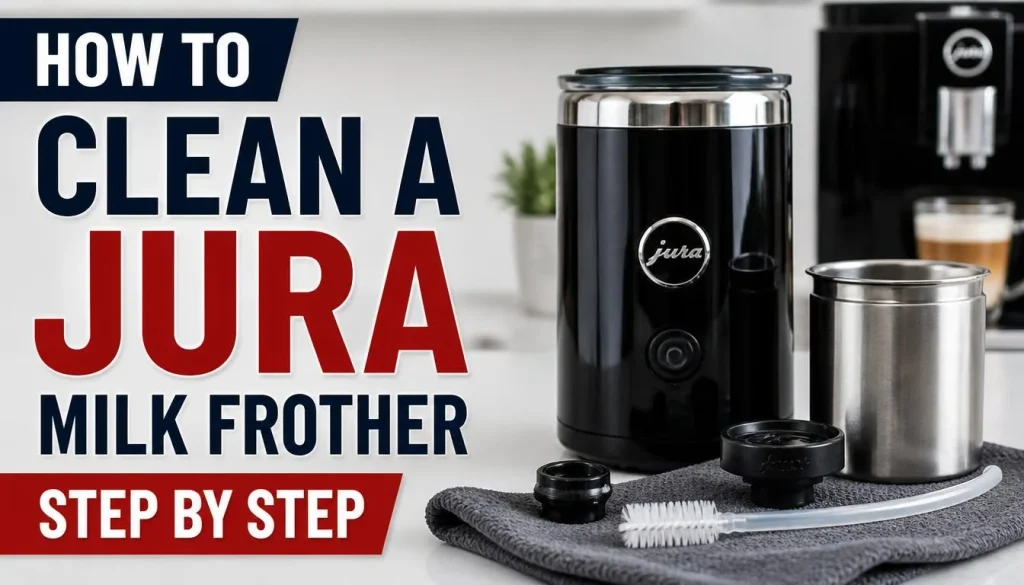
Regular cleaning is one of the best ways to prevent milk frothing problems.
JURA recommends cleaning the milk system daily when milk has been prepared on the applicable models. Some machines also prompt you to rinse the system after each milk preparation.
The exact programme and cleaning steps depend on your machine.
Here is the general cleaning process.
Step 1. Remove the Milk Pipe and Prepare the Cleaning Container
Remove the milk pipe from the milk container or milk cooler.
Use the cleaning container supplied with your machine, where required.
Read your manual before removing the frother or other components.
Step 2. Prepare the JURA Milk System Cleaner
Use the original JURA milk system cleaner or the approved product specified in your manual.
Prepare the solution using the correct amount of cleaner and water.
Do not guess the cleaning ratio. Some JURA models use a container with marked filling levels, while others have different instructions.
Step 3. Start the Milk System Cleaning Programme
Open the maintenance or cleaning menu.
Select the milk system cleaning programme and follow the instructions shown on the display.
Depending on the model, you may need to connect the milk pipe to the cleaning container before starting.
Let the automatic programme run without interruption.
Step 4. Rinse the Milk System With Fresh Water
When the machine asks for fresh water, empty and rinse the cleaning container.
Add the amount of fresh water specified in your manual.
Reconnect the pipe and complete the rinsing stage.
This step helps remove any remaining cleaning solution from the milk system.
Step 5. Remove and Rinse the Frother Parts Where Required
Some JURA models allow the fine foam frother to be dismantled for a deeper clean.
Remove only the parts that your manual identifies as removable.
Rinse them thoroughly under running water. If dried milk remains, use the approved cleaning solution as instructed.
Step 6. Reassemble and Test the Frother
Make sure every part is correctly fitted.
Reconnect the milk pipe and return the frother to its proper position.
Prepare a small milk drink and check whether the foam has improved.
For a model-specific example, see the official JURA E8 instructions.
Important: Never use an unapproved cleaning chemical. JURA warns that unsuitable cleaning agents may fail to remove milk residue properly. A blocked frother can even come loose and release hot steam. Keep your hands away from the outlet during operation and follow all safety instructions.
Why Does My JURA Milk Frother Keep Having Problems?
If the same problem returns every few days, there may be an ongoing maintenance or component issue.
Here are some common reasons.
Irregular milk system cleaning: Milk residue can build up when the system is not cleaned as recommended.
Dried milk inside the pipe: Milk left in the tube can become harder to remove over time.
Loose or worn connectors: A poor connection may affect milk intake and create air leaks.
Incorrect assembly: A removable frother part fitted incorrectly can affect the flow of milk and air.
Limescale buildup: Mineral deposits can affect steam preparation, especially when the machine needs descaling or its water filter is not being used correctly.
If you are unsure how often your machine needs descaling, read our guide on how often you should descale your coffee maker.
Remember that milk system cleaning and machine descaling are two different jobs. Descaling does not replace regular milk system cleaning.
How to Prevent Future JURA Milk Frothing Problems
A few simple habits can reduce the chance of another frothing problem.
- Rinse after preparing milk: Follow your machine’s milk system rinsing instructions.
- Clean the milk system regularly: Complete the cleaning programme when prompted and follow the recommended schedule.
- Check the milk pipe: Look for cracks, bends, and dried residue.
- Use approved cleaning products: Choose the correct JURA milk system cleaner.
- Inspect removable parts: Make sure the frother is correctly assembled.
- Follow descaling alerts: Descale when the machine requests it and use the recommended products.
- Store milk safely: Keep milk refrigerated and follow normal food safety guidance.
These steps take only a little time, but they can help keep the frother clean and working properly.
When Should You Contact JURA Customer Support?
Not every milk frothing problem can be fixed at home.
Contact JURA support or an authorised service provider if:
- No steam comes out after the recommended cleaning steps.
- Milk still does not draw through a clean and correctly connected pipe.
- The frother or connector is visibly damaged.
- Steam escapes from an unusual location.
- The machine repeatedly displays an error.
- The milk system leaks after reassembly.
- Cleaning does not improve the problem.
Keep your model name and serial number ready when contacting support. This will help the service team identify the correct instructions and replacement parts.
You can find model-specific manuals and troubleshooting help through the official JURA USA Product Support, JURA UK Product Support, JURA Canada Product Support, or JURA Australia Product Support.
Frequently Asked Questions
Why is my JURA milk frother not drawing milk?
A JURA milk frother may fail to draw milk because the milk pipe is blocked, kinked, damaged, or incorrectly connected. Dried milk inside the frother can also restrict the flow. Check the pipe and removable connections first, then clean the milk system using the recommended JURA procedure.
Why does my JURA coffee machine produce steam but no milk?
This may happen when the milk intake path is restricted or the pipe is not connected correctly. Check that the milk pipe reaches the milk and that both connections are secure. If cleaning does not restore milk flow, the connector or internal milk system may need professional inspection.
Why is my JURA milk frother sputtering?
A dirty fine foam frother is one possible reason. Dried milk may block the small passages and interfere with normal milk and air flow. Remove and clean the removable frother parts according to your manual. Also check that the milk pipe is connected correctly.
Why is my JURA milk foam watery or bubbly?
Watery or bubbly foam may result from a dirty frother, blocked air passage, or incorrectly assembled components. Clean the removable parts and check the pipe connections. If the problem continues, consult your model’s troubleshooting guide or contact JURA support.
Why is my JURA milk frother producing cold milk?
Milk that is colder than usual may indicate a steam or heating problem, but the cause depends on your machine. Check that the machine has completed its heating process and that you selected the correct milk drink. If the milk remains unusually cold, contact JURA support rather than opening the machine.
How often should I clean my JURA milk frother?
JURA recommends cleaning the milk system daily when milk has been prepared on applicable models. Some machines also request a rinse after each milk preparation. Follow your model’s instructions because the recommended deep-cleaning and dismantling schedule can differ.
Can a blocked connector stop a JURA milk frother from working?
Yes. JURA explains that milk residue or loose limescale fragments can block the fine foam frother connector on certain models. This may result in little or no water or steam coming from the frother. Follow the connector-cleaning procedure in your exact model’s manual.
Can I replace the JURA frother venting tip myself?
Some JURA milk system components are removable and replaceable, but the design differs between models. Check your manual or the official parts list before ordering a replacement. Do not force a small component out of its housing or use an incompatible replacement.
Why does my JURA milk frother keep getting blocked?
The most common reason is that milk residue is not being removed completely. Milk can dry inside the fine foam frother and milk pipe after use. Follow the daily cleaning instructions, complete the required rinsing programme, and inspect the removable parts regularly.
Final Thoughts
A JURA milk frother that stops producing foam can be frustrating, especially when you use it every day for cappuccinos and lattes. However, you do not always need to replace the machine.
Start by checking the fine foam frother, milk pipe, and connectors. Clean the removable parts properly and run the recommended milk system cleaning programme. If the machine still produces weak steam or cannot draw milk, the problem may need professional attention.
Most importantly, follow the instructions for your exact JURA model. Regular cleaning and correct maintenance can help prevent many milk frothing problems and keep your coffee routine running smoothly.

“I believe great cooking starts with the right tools, trusted advice, and a little confidence in the kitchen.”
Hi, I’m Emma Carter. My love for cooking began in my grandmother’s kitchen, where I learned that every great meal starts with simple ingredients and the right cookware. Over the years, I’ve spent countless hours researching, testing, and comparing kitchen appliances, cookware, coffee makers, air fryers, and other everyday kitchen essentials.
Here at KiCook, my goal is to make your buying decisions easier with honest product reviews, practical buying guides, and easy-to-follow cooking tips. Whether you’re upgrading your kitchen or searching for the best appliance for your home, I focus on providing clear, reliable, and research-backed information you can trust.
When I’m not testing new kitchen gadgets or writing in-depth guides, you’ll usually find me trying new recipes, visiting local farmers’ markets, or enjoying a quiet cup of coffee while planning my next kitchen project.