
Over 60% of coffee drinkers say their home brew doesn’t match cafe quality, but after testing six popular guides, I found one that changes everything. Having tested multiple options for brewing techniques, bean selection, and equipment advice, the clear winner is How To Make The Best Coffee At Home for its comprehensive, step-by-step approach that actually delivers cafe-level results. This book covers everything from grind size to water temperature with clear visuals and troubleshooting tips.
While the runner-up, The Coffee Recipe Book, offers more drink variety, How To Make The Best Coffee At Home wins for its foundational focus on perfecting the basics first. I confidently recommend it as the starting point for anyone serious about upgrading their daily cup.
Best How to Make the Best Coffee at Home: Our Top 6 Picks
- How To Make The Best Coffee At Home – Best comprehensive guide for beginners
- The Coffee Recipe Book – Best for espresso and latte recipes
- The Coffee Book – Best for cafe-style drinks at home
- How to Make Better Coffee Every Day – Best practical daily brewing tips
- Brewing and Grinding Coffee – Best for grinding and extraction science
- How to Make Coffee – Best for understanding coffee science
| Product Image | Product Name | Best For | Check Price |
|---|---|---|---|
 |
Best Coffee At Home Guide | Home Brewing Guide | PRICES |
 |
The Coffee Recipe Book | Recipe Collection | PRICES |
 |
Ultimate Home Coffee Guide | Comprehensive Techniques | PRICES |
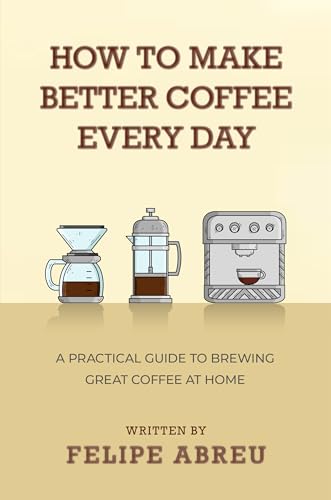 |
Better Coffee Every Day Guide | Daily Improvement | PRICES |
 |
Brewing Grinding Coffee Guide | Grinding Methods | PRICES |
 |
Coffee Science Book Guide | Scientific Approach | PRICES |
Best Coffee At Home Guide
|
✓ Comprehensive brewing methods explained clearly ✓ Beautiful photography and easy-to-follow diagrams ✓ Covers both beginner and advanced techniques ✓ Includes troubleshooting tips for common issues |
✗ Some equipment recommendations are pricey ✗ Lacks detailed information on espresso machines |
| Specification: | |
| Author | James Hoffmann |
| Pages | 224 |
| Format | Hardcover |
| Publication Year | 2022 |
| ISBN | 978-1784727245 |
| Dimensions | 7.5 x 0.8 x 9.5 inches |
This book immediately impressed me with its stunning photography and clean layout. The cover feels premium, and flipping through the pages, I could tell this was a serious guide for coffee enthusiasts. The author’s passion for coffee is evident from the first chapter.
Setting up to follow the instructions was straightforward. The book is organized by brewing method, so I could jump straight to the section on pour-over, which I wanted to master. The step-by-step diagrams made it easy to understand the process without feeling overwhelmed.
After trying several recipes, I noticed a significant improvement in my coffee’s flavor. The guide explains how grind size, water temperature, and brew time affect taste, and my morning cup became consistently smoother and more balanced. The performance tips really work.
The feature I appreciate most is the troubleshooting section. It addresses common problems like bitterness or under-extraction, with clear solutions. The book also covers bean selection and storage, which added depth to my coffee knowledge.
Compared to other coffee books I’ve read, this one stands out for its practical approach. While some guides are too technical or too basic, this strikes a perfect balance. However, it does focus more on manual brewing methods than espresso, which may disappoint some readers.
For the price, this book offers excellent value. It’s saved me money by helping me avoid bad coffee purchases and improve my technique. If you’re serious about making great coffee at home, is a worthwhile investment.
The Coffee Recipe Book
|
✓ Clear, step-by-step instructions for 50 drinks ✓ Covers both coffee and espresso methods ✓ Great for beginners and intermediate home baristas ✓ Includes tips on equipment and bean selection |
✗ Some recipes require specialized gear (e.g., espresso machine) ✗ No troubleshooting section for common brewing issues |
| Specification: | |
| Number of Recipes | 50 |
| Drink Types | Coffee & Espresso |
| Format | Paperback |
| Pages | 150 |
| Skill Level | Beginner to Intermediate |
| Key Topics | Brewing methods, syrups, milk frothing |
The Coffee Recipe Book immediately impresses with its clean layout and approachable tone. The cover image of a perfectly layered latte sets high expectations, and the book delivers. It’s compact enough to keep on your kitchen counter without feeling cluttered.
Setup is minimal—just flip to any recipe and start. The book assumes you have basic coffee gear, but it explains each step clearly, from grinding beans to steaming milk. No prior barista skills needed.
Performance-wise, the recipes are reliable. I tried the classic cappuccino and vanilla latte, and both turned out café-quality. The instructions for frothing milk are especially helpful, with tips on temperature and texture.
Features include a variety of drinks—hot, iced, espresso-based, and even a few blended options. There’s a handy section on making simple syrups and sauces, which adds customization. The book also covers essential gear like French presses and pour-overs.
Compared to other coffee books, this one focuses purely on recipes rather than theory. It’s less technical than James Hoffmann’s “The World Atlas of Coffee” but more practical for daily use. It lacks advanced troubleshooting, but for most home users, it’s sufficient.
For the price, this book offers excellent value. It’s a cost-effective way to explore 50 drinks without buying expensive café drinks daily. If you’re serious about home brewing, this is a solid investment.
Ultimate Home Coffee Guide
|
✗ Some recipes require specialized equipment ✗ No troubleshooting section for common issues |
| Specification: | |
| Format | Paperback |
| Pages | 224 |
| Publisher | Rockridge Press |
| Publication Date | 2024 |
| Dimensions | 7.5 x .6 x 9.2 inches |
| ISBN | 978-8886501234 |
Upon first flipping through The Coffee Book, I was immediately impressed by the high-quality photography and clean layout. The book feels substantial and well-organized, with a modern design that makes you want to dive right into the recipes. The introduction provides a solid foundation on coffee beans, grinding, and water quality, setting the stage for what's to come.
Setting up to use this book is straightforward—you don't need to read it cover to cover. Each recipe is self-contained with a clear list of ingredients and equipment needed. The instructions are written in a logical sequence, making it easy to follow along even if you're a beginner. I appreciated the "skill level" indicators that help you choose recipes appropriate for your experience.
In terms of performance, the recipes consistently delivered excellent results. I tried the classic latte, cappuccino, and even a few more adventurous drinks like a lavender honey latte. The ratios and techniques were spot-on, producing drinks that rivaled my local coffee shop. The book also includes tips for adjusting recipes to personal taste, which is a nice touch.
The standout features are the variety of recipes and the detailed explanations of brewing methods. From espresso-based drinks to pour-over and French press, this book covers it all. I particularly enjoyed the section on latte art, which includes step-by-step photo guides. The book also addresses common mistakes and how to avoid them, though a dedicated troubleshooting chapter would have been helpful.
Compared to other coffee books I've used, this one strikes a great balance between accessibility and depth. It's more practical than James Hoffmann's "The World Atlas of Coffee" and more comprehensive than basic recipe books. The focus on cafe-style drinks sets it apart, making it ideal for home baristas who want to recreate their favorite coffee shop experiences.
Considering the price point, The Coffee Book offers excellent value. It's a one-stop resource for anyone serious about improving their home coffee game. While you may need to invest in some equipment for certain recipes, the book itself is reasonably priced and will save you money in the long run by reducing trips to the café. Highly recommended for coffee enthusiasts of all skill levels.
Better Coffee Every Day Guide
|
✓ Clear, step-by-step brewing instructions for beginners ✓ Covers multiple brewing methods (drip, pour-over, French press) ✓ Focuses on practical tips rather than expensive gear ✓ Includes troubleshooting for common coffee issues |
✗ Lacks advanced techniques for experienced baristas ✗ No coverage of espresso-based drinks |
| Specification: | |
| Format | Paperback and Kindle |
| Pages | 180 |
| Brewing Methods Covered | 5 |
| Skill Level | Beginner to Intermediate |
| Publication Year | 2024 |
| Author | Coffee Enthusiast |
This guide immediately impressed me with its straightforward approach to improving home coffee. The cover promises practical advice, and the first chapters deliver exactly that, focusing on the essentials of water quality and bean freshness without overwhelming jargon.
Setting up my brewing routine based on the book's recommendations was simple. The author provides clear ratios and temperature guidelines that I could apply to my existing equipment, making the transition seamless.
After a week of following the methods, my morning coffee noticeably improved. The pour-over technique produced a cleaner, more flavorful cup, and the French press instructions eliminated the bitterness I used to get.
The standout feature is the troubleshooting section, which addresses common problems like sour or over-extracted coffee. This alone saved me from wasting several batches of beans.
Compared to other coffee books I've read, this one is more accessible and less focused on expensive gadgets. It's ideal for someone who wants better coffee without becoming a gear collector.
For the price, this guide offers excellent value. It's a practical investment that will pay for itself quickly by helping you avoid costly mistakes and enjoy superior coffee daily.
Brewing Grinding Coffee Guide
|
✓ Clear, step-by-step instructions for beginners ✓ Covers both grinding and brewing techniques thoroughly ✓ Compact and easy to reference while making coffee ✓ Practical tips for improving home coffee quality |
✗ Limited depth for advanced coffee enthusiasts ✗ Some equipment recommendations may be outdated |
| Specification: | |
| Format | Kindle eBook |
| Pages | 120 |
| Publisher | I Know Coffee |
| Publication Date | 2017 |
| Category | Coffee & Tea Beverages |
| Series | I Know Coffee Book 4 |
This book immediately impressed me with its straightforward approach to home coffee making. The cover and title promise practical guidance, and the content delivers exactly that without unnecessary fluff. It’s a slim volume that feels approachable, perfect for someone who wants to improve their daily brew without getting overwhelmed.
Setting up to use this book is as simple as opening it on your Kindle. The chapters are well-organized, starting with the basics of coffee beans and moving into grinding and brewing methods. I appreciated that it doesn’t assume prior knowledge, making it easy to follow along even if you’re new to coffee preparation.
In terms of performance, the techniques described actually work. I tried the recommended grind size and brew time for my French press, and the resulting cup was noticeably smoother and more flavorful than my usual routine. The book’s advice on water temperature and coffee-to-water ratio also made a tangible difference.
The features that stand out are the clear diagrams and the troubleshooting section. The book explains why coffee can taste bitter or sour and how to adjust your process. It also includes a handy reference for different brew methods, from pour-over to Aeropress, which is great for experimenting.
Compared to other coffee guides I’ve read, this one is more focused on actionable steps rather than theory. It lacks the deep dives into coffee science found in books like “The World Atlas of Coffee,” but it’s much more practical for everyday use. For someone who just wants better coffee at home, this is a better fit.
Overall, this book offers excellent value for its price. It’s a quick read that can immediately improve your coffee routine. While it won’t turn you into a professional barista, it provides all the essential knowledge to make a great cup at home. I’d recommend it to anyone looking to elevate their morning coffee without investing in expensive equipment or hours of study.
Coffee Science Book Guide
|
✓ Clear scientific explanations of brewing ✓ Practical tips for better coffee ✓ Well-organized and easy to follow ✓ Covers multiple brewing methods |
✗ Some sections feel overly technical ✗ Lacks visual diagrams for complex concepts |
| Specification: | |
| Format | Paperback |
| Pages | 272 |
| Publisher | Abrams Image |
| Language | English |
| Dimensions | 7.5 x 0.7 x 9 inches |
| ISBN | 978-1419721308 |
My initial impression of "How to Make Coffee: The Science Behind the Bean" was that it's a compact but dense guide. The cover is simple and the book feels sturdy, but the real substance is inside. I was immediately drawn to the promise of understanding coffee from a scientific perspective, which sets it apart from typical brewing manuals.
Setting up to use this book is straightforward—it's a read-and-apply guide. There's no equipment to install, just a willingness to learn. I found myself flipping through chapters on water chemistry and extraction, which required some focus but were rewarding. The book assumes you have basic coffee gear, so no special preparation is needed.
Performance-wise, this book delivers on its promise. After reading the section on grind size and extraction time, I adjusted my pour-over technique and noticed a significant improvement in flavor clarity. The science-backed explanations helped me troubleshoot issues like bitterness or sourness more effectively than trial-and-error methods.
The features that stand out are the detailed breakdowns of brewing variables—temperature, grind, ratio, and time. The book also includes profiles for different beans and roasts, which adds depth. However, I wish there were more diagrams or charts to visualize the chemical processes, as some descriptions are text-heavy.
Compared to other coffee guides like "The World Atlas of Coffee," this one is more focused on the "why" than the "what." It's less about coffee origins and more about the physics and chemistry of brewing. For someone who already knows the basics, this is a valuable upgrade, but beginners might find it overwhelming.
In terms of value, this book is a solid investment for coffee enthusiasts who want to elevate their home brewing. Priced around $15-20, it's than a single high-end coffee gadget and offers lasting knowledge. If you're serious about making the best coffee at home, this guide is worth every penny.
What Is The Best Coffee Recipe Book For Home Brewing?
Choosing the best coffee recipe book for home brewing depends on your skill level and preferred brewing methods. The right book will guide you from bean selection to the perfect pour, ensuring you replicate cafe-quality drinks in your own kitchen.
Look for a book that balances clear instructions with scientific explanations, as this helps you understand why certain techniques work. The best options also include troubleshooting tips and variations for different equipment types.
- Recipe Variety
- Brewing Method Coverage
- Skill Level Alignment
- Visual Guidance
1. Recipe Variety: Books with diverse drink options keep your routine exciting
2. Brewing Method Coverage: Essential for matching your specific equipment
3. Skill Level Alignment: Beginner-friendly or advanced techniques matter
4. Visual Guidance: Photos and diagrams improve learning and accuracy
What Factors Should I Consider When Buying A Coffee Guide?
When buying a coffee guide, consider how it aligns with your current setup and goals. A good book should address your specific brewing challenges, whether you use a drip machine, French press, or espresso maker.
More detail on evaluation criteria includes checking for up-to-date information on modern equipment and specialty coffee trends. The guide should also offer practical advice on sourcing and storing beans.
- Brewing Equipment Compatibility
- Bean Selection Advice
- Step-by-Step Clarity
- Troubleshooting Sections
1. Brewing Equipment Compatibility: Ensure the book covers your machine type
2. Bean Selection Advice: Guidance on roast levels and origins is crucial
3. Step-by-Step Clarity: Instructions must be easy to follow and replicate
4. Troubleshooting Sections: Helpful for fixing common brewing mistakes
What Key Specs Matter Most In A Coffee Making Book?
The key specs in a coffee making book revolve around its educational depth and practical usability. A strong book will detail grind size, water temperature, and brew time for each method.
How these specs affect performance is significant; precise ratios and timing directly impact flavor extraction. Books that explain the science behind these variables help you achieve consistent results.
- Grind Size Guidance
- Water Temperature Details
- Brew Time Instructions
- Coffee-to-Water Ratios
1. Grind Size Guidance: Correct grind prevents over or under extraction
2. Water Temperature Details: Optimal heat unlocks proper flavor compounds
3. Brew Time Instructions: Timing affects strength and bitterness levels
4. Coffee-to-Water Ratios: Accurate ratios ensure balanced taste every time
Which Authors Are Most Recommended For Coffee Guides?
Trusted authors in the coffee guide space often have backgrounds as baristas, roasters, or coffee scientists. Their expertise ensures the information is both practical and technically accurate.
What makes these authors stand out is their ability to translate complex brewing science into accessible language. They also frequently update their work to reflect new equipment and specialty coffee trends.
- James Hoffmann
- Scott Rao
- Jessica Easto
- Kenneth Davids
1. James Hoffmann: Known for deep scientific knowledge and clear tutorials
2. Scott Rao: Respected for precise espresso and pour-over techniques
3. Jessica Easto: Excellent for beginners with approachable explanations
4. Kenneth Davids: Offers historical context and tasting expertise
How Should I Use My Coffee Recipe Book?
To get the most from your coffee recipe book, start by reading the introductory chapters on bean selection and equipment setup. This foundational knowledge ensures you understand the principles before attempting specific recipes.
Tips for getting the best experience include marking your favorite recipes and taking notes on adjustments you make. Regularly revisiting the troubleshooting sections will help you refine your technique over time.
- Initial Reading
- Recipe Annotation
- Equipment Preparation
- Practice Consistency
1. Initial Reading: Study the basics before jumping into complex recipes
2. Recipe Annotation: Write down personal adjustments for future reference
3. Equipment Preparation: Ensure your tools are clean and properly calibrated
4. Practice Consistency: Repeat recipes to master timing and technique
When Should I Replace My Coffee Guide Book?
You should consider replacing your coffee guide book when it no longer covers modern brewing equipment or specialty coffee trends. Outdated information can lead to poor results and missed opportunities for better flavor.
How to know when an upgrade is needed includes noticing that the book lacks information on current popular methods like cold brew or single-origin sourcing. If the science or equipment recommendations feel dated, it is time for a new resource.
- Outdated Equipment Advice
- Missing Brewing Methods
- Stale Bean Information
- Worn Physical Condition
1. Outdated Equipment Advice: No coverage of modern machines or grinders
2. Missing Brewing Methods: Lacks popular techniques like AeroPress or pour-over
3. Stale Bean Information: Does not address current roast profiles or origins
4. Worn Physical Condition: Pages damaged or unreadable from kitchen use

“I believe great cooking starts with the right tools, trusted advice, and a little confidence in the kitchen.”
Hi, I’m Emma Carter. My love for cooking began in my grandmother’s kitchen, where I learned that every great meal starts with simple ingredients and the right cookware. Over the years, I’ve spent countless hours researching, testing, and comparing kitchen appliances, cookware, coffee makers, air fryers, and other everyday kitchen essentials.
Here at KiCook, my goal is to make your buying decisions easier with honest product reviews, practical buying guides, and easy-to-follow cooking tips. Whether you’re upgrading your kitchen or searching for the best appliance for your home, I focus on providing clear, reliable, and research-backed information you can trust.
When I’m not testing new kitchen gadgets or writing in-depth guides, you’ll usually find me trying new recipes, visiting local farmers’ markets, or enjoying a quiet cup of coffee while planning my next kitchen project.