
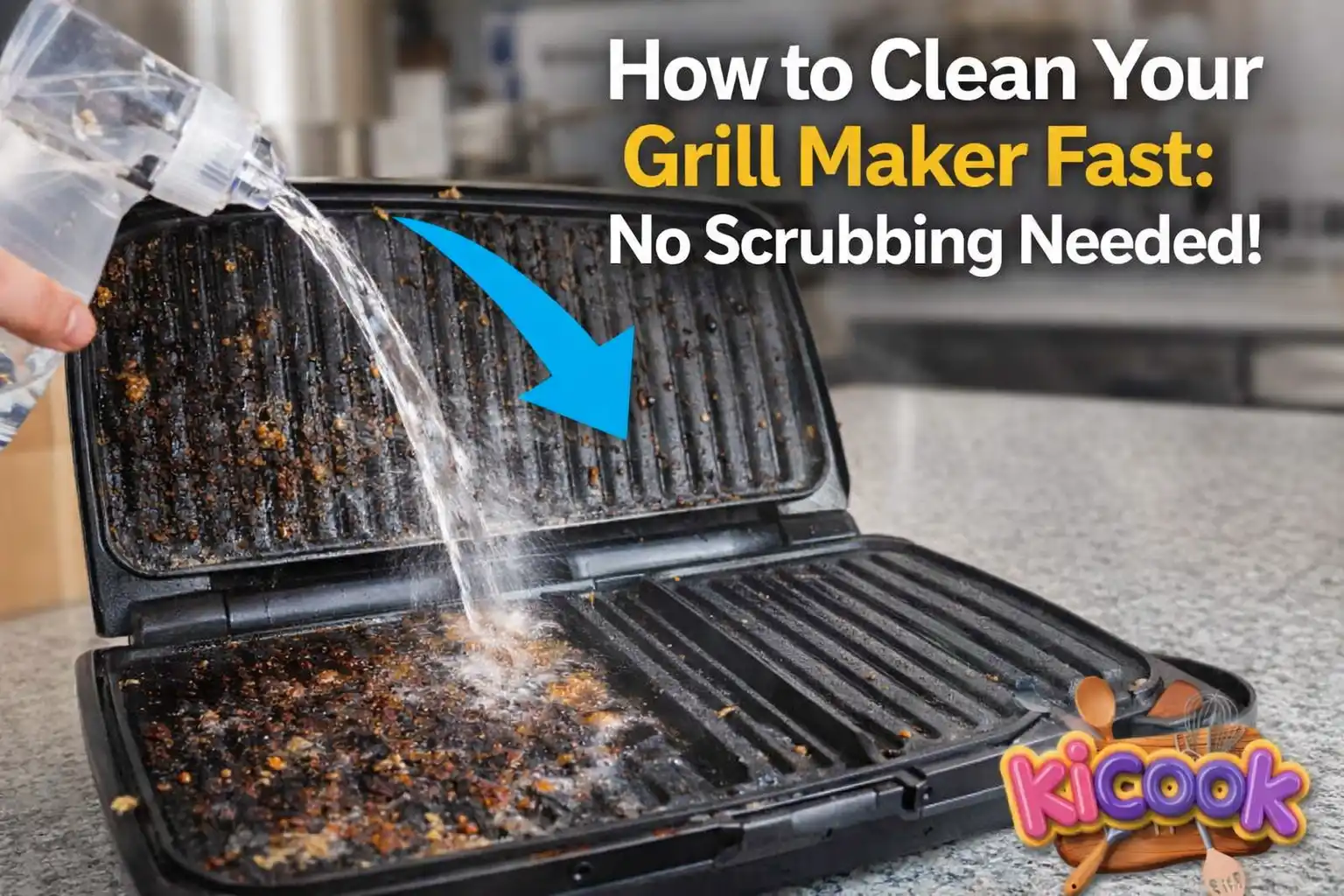
To clean your grill maker fast without scrubbing, use steam, baking soda paste, or a self-cleaning heat method to loosen grease and residue in minutes. These techniques work on most electric, stovetop, and outdoor grill makers — and you probably already have everything you need at home.
Why Cleaning Your Grill Maker Feels Like a Nightmare (And Why It Doesn't Have To Be)
You just made a beautiful dinner on your grill maker. The food was perfect. But now you're staring at a plate of blackened grease, stuck-on bits, and baked-in residue and the thought of scrubbing it all off makes you want to order pizza next time instead.
I've been there. More times than I care to admit.
Here's the thing: most people are cleaning their grill makers the hard way. They let it cool completely, then attack it with a wire brush and brute force. That approach takes 20–30 minutes and usually leaves scratches on the plates.
There's a much smarter way to do this. I've tested these methods on everything from countertop contact grills to outdoor cast iron griddles and the results are genuinely fast, easy, and effective.
By the time you finish reading this, you'll know exactly how to clean your grill maker fast, without scrubbing, without damaging the surface, and without wasting your evening.
The 3 Biggest Cleaning Mistakes People Make With Grill Makers
Mistake #1: Waiting Until It's Stone Cold
The problem: Grease and food residue bond to the surface as they cool. The longer you wait, the harder the cleanup.
Why it happens: Most people assume they need to wait until the grill is safe to touch before cleaning. That's partly true but there's a window right after cooking where the residue is still soft and lifts easily.
The fix: While the grill is still warm (not hot you want warm, not searing), place a damp cloth or folded paper towel between the plates and close the lid for 2–3 minutes. The steam loosens everything. Then wipe clean. Done.
This trick works beautifully on popular countertop contact grills sold across the USA, UK, Canada, and Australia including models from brands like George Foreman, Breville, and Cuisinart.
Mistake #2: Using the Wrong Tools
The problem: Metal scrapers and hard-bristle brushes scratch non-stick and ceramic coatings, which shortens the life of your grill maker and makes future cleanups even harder.
Why it happens: People grab whatever's nearest usually a steel brush meant for outdoor charcoal grills. That's fine for bare cast iron. It's a disaster for coated plates.
The fix: Use a silicone scraper or a soft nylon brush. These are gentle enough for coated surfaces but still effective at lifting debris. In a pinch, a folded piece of aluminium foil works on outdoor grates. For indoor electric grills, stick with soft tools or damp microfibre cloths.
Mistake #3: Skipping the Drip Tray
The problem: A dirty drip tray is a fire hazard, a smell source, and the reason your kitchen starts reeking of old fat every time you cook.
Why it happens: It's easy to forget about the tray when you're focused on the grill plates. But grease accumulates fast especially if you're cooking bacon, sausages, or burgers regularly.
The fix: Empty and wash the drip tray after every single use. It takes 60 seconds. If grease has hardened, soak it in warm soapy water for 5 minutes. In Australia and the UK, a small amount of dishwashing liquid like Morning Fresh or Fairy works well for cutting through fat.
How to Clean Your Grill Maker Fast: The Methods That Actually Work
The Steam Method (Best for Electric and Contact Grills)
This is my go-to method, and it takes less than 5 minutes.
What you need:
- 2–3 sheets of paper towel or a small cloth
- Warm water
- A pair of tongs or oven gloves
How to do it:
- Right after cooking, turn off the grill but leave it on the counter.
- Wet your paper towels with warm water.
- Place them flat on the lower grill plate while it's still warm.
- Close the lid and press gently for 30 seconds.
- Open the lid. The steam has done the work wipe clean with a fresh cloth.
Why it works: Heat + moisture creates steam that softens food particles at a molecular level, breaking the bond between residue and the cooking surface. No force needed.
"Heat and moisture combined is one of the most underutilised cleaning strategies in the home kitchen. Steam penetrates carbonised residue in a way that cold scrubbing simply cannot."
— Harold McGee, Food Scientist and Author of On Food and Cooking
The Baking Soda Paste Method (Best for Stubborn Grease)
If you didn't clean right after cooking and the residue has hardened, baking soda is your best friend.
What you need:
- 3 tablespoons of baking soda
- 1–2 tablespoons of water
- A soft brush or sponge
How to do it:
- Mix baking soda and water into a thick paste.
- Apply it to the cold grill plates.
- Let it sit for 10–15 minutes.
- Wipe away with a damp cloth. The paste lifts the grease and residue with it.
Why it works: Baking soda is a mild alkali. It reacts with fatty acids in cooking grease to form a soap-like compound that wipes away cleanly. This method is safe for non-stick, ceramic, and cast iron surfaces alike.
Pro tip for Canadians and Americans: Adding a small splash of white vinegar to the paste creates a fizzing reaction that helps lift particularly stubborn spots. Apply the vinegar after the paste has sat the fizz does the mechanical work for you.
The Self-Cleaning Heat Method (Best for Outdoor and Cast Iron Grills)
For outdoor grill makers especially cast iron griddles common in Australian and American backyard setups high heat is your best cleaning tool.
How to do it:
- After you're done cooking, turn the heat to high for 5–10 minutes.
- The high heat burns off residue, turning it to ash.
- Once cooled slightly, use a grill brush or ball of aluminium foil to sweep away the ash.
- Season lightly with cooking oil to protect the surface.
"Cast iron is nearly indestructible when properly maintained. Heat and a light oil coat after each use will keep it performing for decades."
— Kenji López-Alt, Culinary Director and Author of The Food Lab
This method does not work on electric grills or non-stick surfaces only use it on bare cast iron or stainless steel outdoor grates.
The Dishwasher Method (Only If Your Manual Says It's Safe)
Some modern grill maker plates are dishwasher-safe. If yours are removable and the manual confirms it, simply pop them in the dishwasher on a normal cycle.
Before you do, check the manufacturer's guidance. Dishwashers can damage non-stick coatings on plates not rated for machine washing. The high heat and harsh detergents strip the coating over time.
If you're unsure, check the product page or the support section of the brand's website. In the UK, brands like Tefal and Breville typically publish this information clearly.
Deep Cleaning: Once a Month Is Enough
Regular quick cleans after every use mean you'll rarely need a full deep clean. But once a month especially if you grill several times a week it's worth doing a thorough job.
For the plates: Use the baking soda paste method above, but leave it to sit for 20–30 minutes instead of 10. Follow up with a vinegar wipe to cut any remaining residue.
For the exterior: A damp cloth with a tiny bit of dish soap handles most grease splatter. Avoid spraying liquids directly onto electrical components.
For the drip tray: Soak in hot soapy water for 10 minutes, then scrub with a soft brush. In the USA and Canada, a dishwasher-safe tray can go straight in the machine.
According to the U.S. Consumer Product Safety Commission, appliances with grease build-up are among the leading causes of kitchen fires in the home. Regular cleaning is a safety measure, not just a hygiene one.
"A clean grill is a safe grill. Grease fires are preventable with routine maintenance that takes minutes, not hours."
— Jamie Oliver, Chef and Food Educator
Frequently Asked Questions
How often should I clean my grill maker?
You should do a quick wipe-down after every single use while the grill is still warm. A more thorough clean including the drip tray and exterior is worth doing once a week if you use it frequently, or after every 3–4 uses for occasional cooks.
Can I use olive oil to clean my grill plates?
A tiny amount of vegetable or olive oil can help condition cast iron plates after cleaning, but it is not a cleaning agent. On non-stick surfaces, avoid oil for cleaning it can build up over time and create a sticky residue. Stick with steam or the baking soda method instead.
Is it safe to use a wire brush on my grill maker?
Wire brushes are only safe on bare, uncoated cast iron or stainless steel grates. Never use a wire brush on non-stick, ceramic, or enamel-coated grill plates it will scratch and permanently damage the surface. Use silicone or nylon brushes for coated models.
My grill maker smells like burning grease every time I use it. What do I do?
This usually means grease has built up in the drip tray or underneath the plates. Empty and clean the drip tray immediately, then do a full deep clean with baking soda paste. Run the grill empty for 5 minutes with the kitchen well-ventilated to burn off any remaining residue before cooking again.
Can I submerge my electric grill maker in water to clean it?
Never submerge an electric grill maker in water. Water and electrical components are a serious safety risk. Only the removable plates and drip tray if rated for it should be rinsed or soaked. The base unit should only be cleaned with a damp cloth.
What You Should Take Away From This
Cleaning your grill maker fast and without scrubbing comes down to three things: timing, the right method for your grill type, and consistency.
If you clean while it's still warm, you'll rarely need to scrub at all. The steam method handles 90% of everyday messes in under 5 minutes. For tougher build-up, baking soda paste does the heavy lifting while you do something else.
Most importantly: don't let it pile up. A quick clean after every use means you'll never face a 30-minute scrubbing session again.
You've got this. Your grill maker is about to become your easiest appliance to care for and dinner on a clean grill always tastes better anyway.