
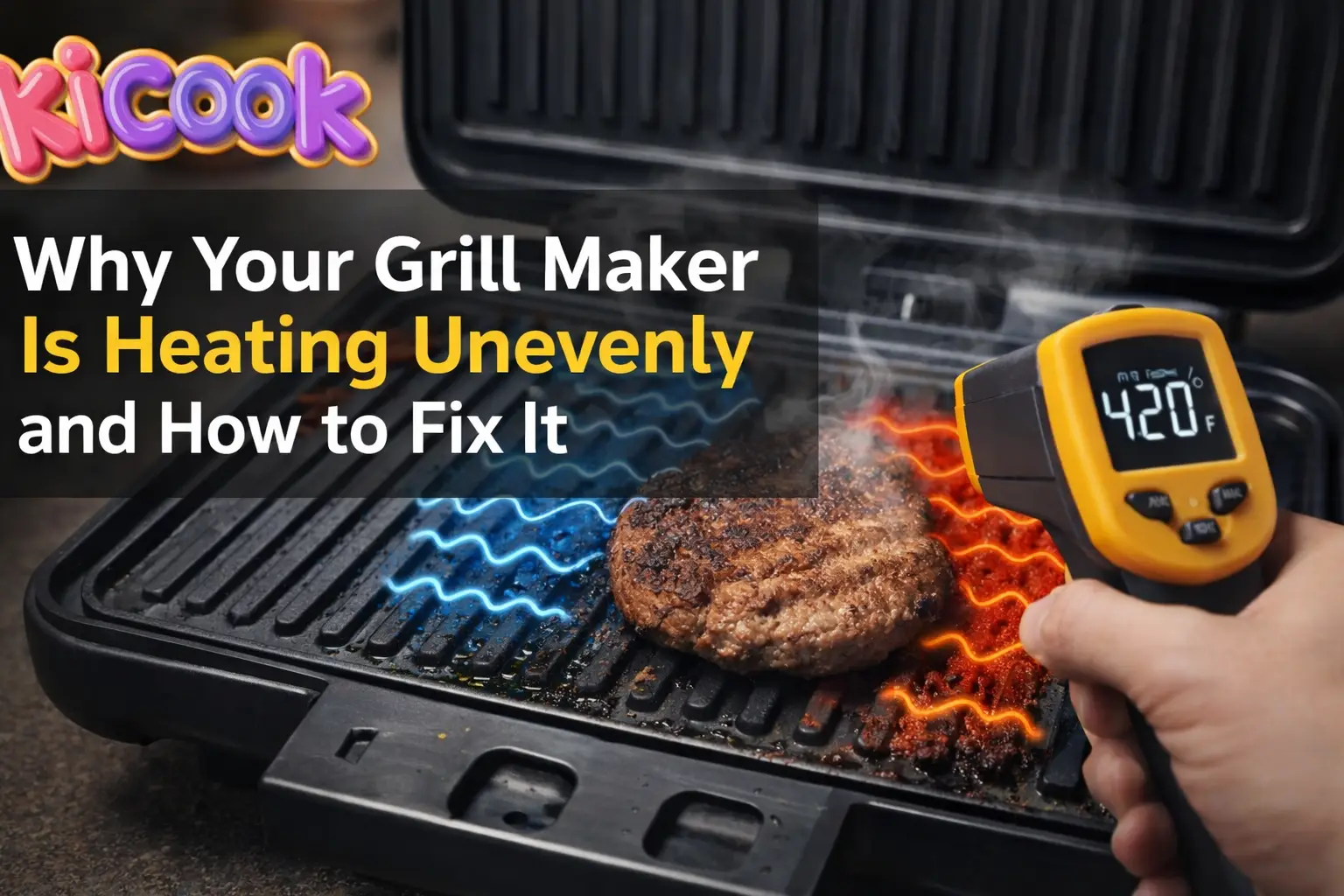
If your grill maker is heating unevenly, it usually means there’s a problem with heat distribution, dirty plates, or a faulty heating element. Fixing it early helps you avoid undercooked or burnt food and extends your appliance’s life.
Have you ever placed food on your grill maker and ended up with one side burnt and the other still raw? I’ve been there and it’s frustrating, especially when you’re cooking for family.
I’ve used grill makers for years, from small countertop units in the UK to larger indoor grills in Canada and the USA. In this guide, I’ll show you exactly why your grill maker is heating unevenly and how to fix it, step by step, so you can cook evenly every time without guessing.
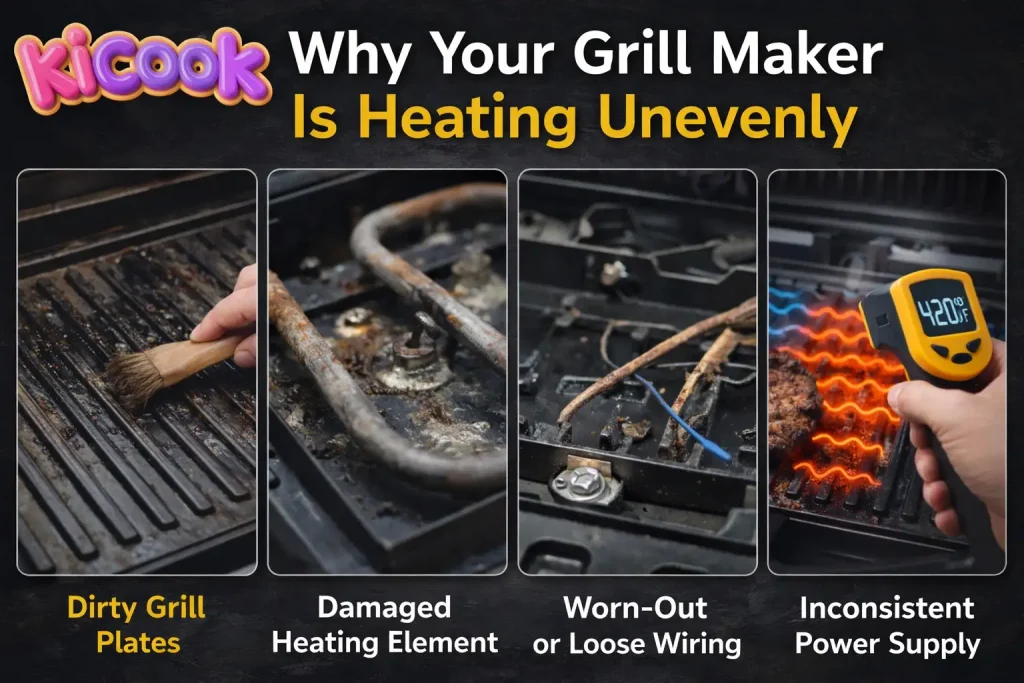
Common Pain Points (And How to Fix Them)
1. Food Cooks Unevenly Every Time
Why it happens:
This often comes from poor heat distribution. Some grill makers develop hot and cold spots over time.
What I do to fix it:
- Preheat the grill for at least 5–10 minutes
- Rotate food halfway through cooking
- Avoid overcrowding the grill surface
Real example:
In many UK kitchens, where voltage is slightly lower than the US, I’ve noticed grill makers take longer to heat evenly. Giving extra preheat time fixes this.
2. One Side of the Grill Is Hotter
Why it happens:
A damaged heating element or uneven electrical flow can cause this issue.
Simple fix:
- Check if one side heats faster than the other
- Plug into a different outlet
- If the problem continues, the heating coil may need replacement
Tip: In older homes in Australia, uneven voltage from outlets can affect appliance performance.
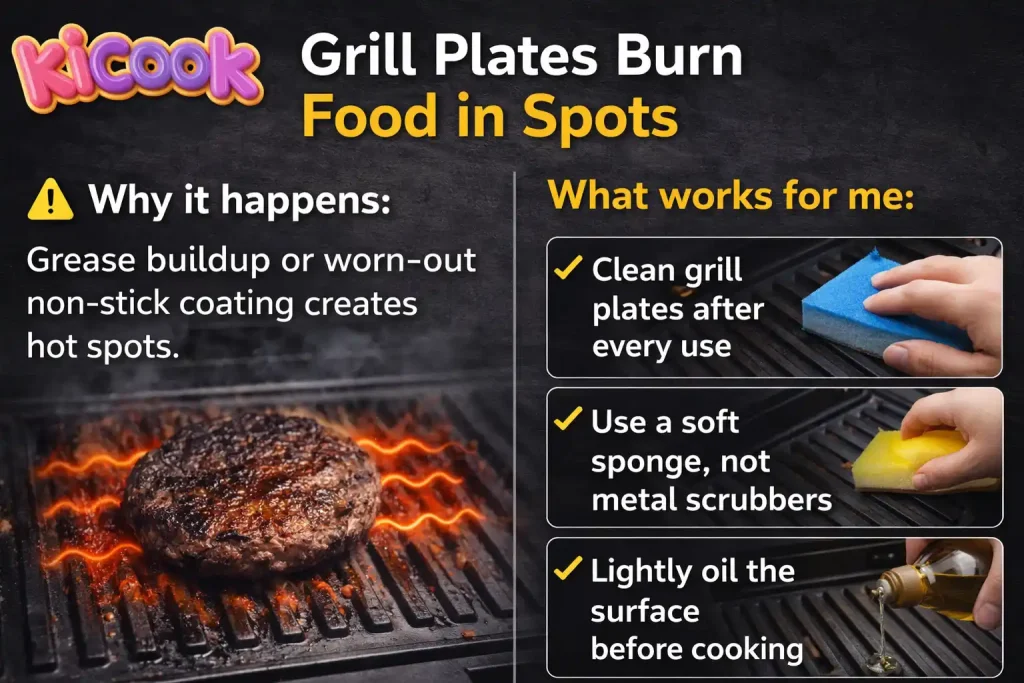
3. Grill Plates Burn Food in Spots
Why it happens:
Grease buildup or worn-out non-stick coating creates hot spots.
What works for me:
- Clean grill plates after every use
- Use a soft sponge, not metal scrubbers
- Lightly oil the surface before cooking
Expert insight:
“Built-up residue can create uneven heating zones and affect cooking performance.” — Lisa McManus, Executive Editor at America’s Test Kitchen
Main Causes of Uneven Heating (And Fixes)
1. Poor Preheating Habits
Many people rush this step. I used to do the same.
Fix:
- Always preheat fully before adding food
- Look for indicator lights or wait 5–10 minutes
Key takeaway: A cold start is one of the biggest reasons your grill cooks unevenly.
2. Dirty or Greasy Grill Plates
Even a thin layer of grease affects heat transfer.
How I clean mine:
- Let the grill cool slightly
- Wipe with a damp cloth
- Use mild soap if needed
Proper cleaning methods are also recommended by the U.S. Department of Agriculture for safe cooking surfaces: usda.gov
3. Faulty Heating Element
If cleaning doesn’t help, the issue may be internal.
Signs to watch:
- Grill takes too long to heat
- One side stays cold
- Temperature fluctuates
Solution:
- Contact manufacturer support
- Replace the unit if repair costs are high
Expert quote:
“Appliances with inconsistent heating often point to failing internal components.” — Paul Hope, Senior Home Editor at Consumer Reports
4. Uneven Placement of Food
This one is simple but often ignored.
Fix:
- Spread food evenly across the grill
- Avoid stacking or overlapping
Real-life example:
When I cook chicken wings in Canada during winter, I noticed placing them too close together caused uneven cooking due to steam buildup.
5. Low-Quality or Worn-Out Grill Maker
Not all grill makers are built the same.
What I’ve learned:
- Cheap models lose heat consistency faster
- Non-stick coating wears out over time
Solution:
- Replace after 2–4 years if performance drops
- Choose models with adjustable temperature
Expert quote:
“A reliable grill should maintain consistent heat across the surface.” — Helen McCue, Small Appliance Expert
Step-by-Step Fix: How I Restore Even Heating
Here’s the exact process I follow when my grill acts up:
- Unplug and cool down the grill
- Clean the plates thoroughly
- Check power outlet stability
- Preheat for 10 minutes
- Test with simple food (like bread slices)
- Observe heat distribution
If one side still cooks faster, I know it’s likely a hardware issue.
Prevent Uneven Heating in the Future
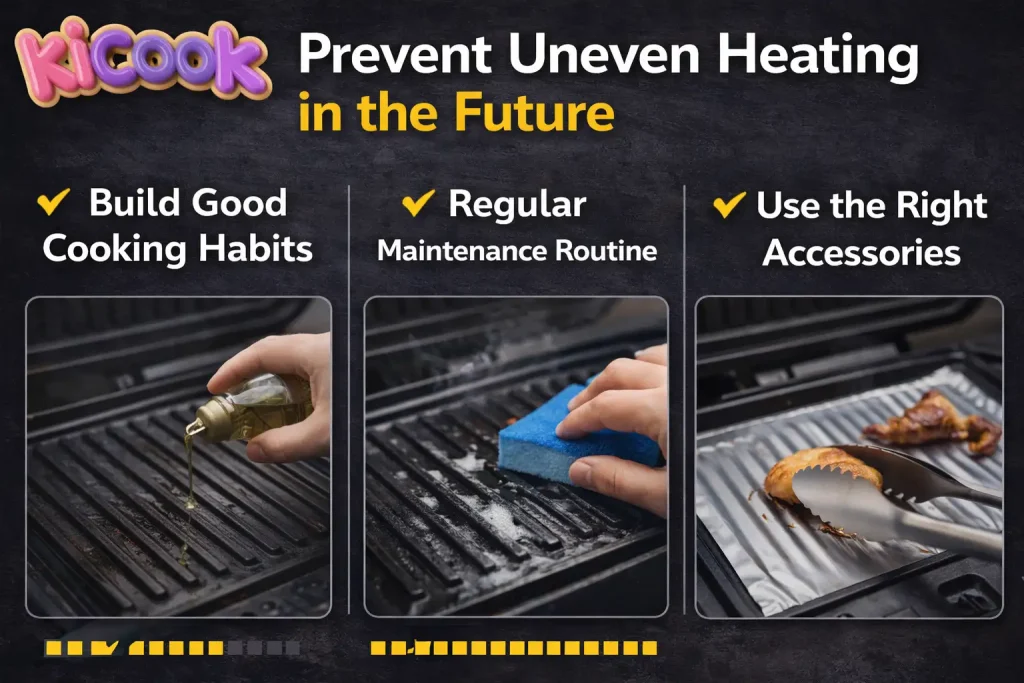
Build Good Cooking Habits
- Always preheat properly
- Don’t overload the grill
- Use consistent food sizes
Regular Maintenance Routine
- Clean after every use
- Deep clean weekly
- Check for wear and tear
Use the Right Accessories
- Silicone brushes for oiling
- Soft cleaning cloths
Key takeaway: Simple habits can extend your grill maker’s life and improve cooking results.
When to Repair vs Replace
Repair if:
- The issue is minor (dirty plates, loose plug)
- The grill is under warranty
Replace if:
- Heating element fails
- Non-stick coating is damaged
- Uneven heating persists after fixes
Real-Life Scenario: What Worked for Me
Last year, my grill maker started burning burgers on one side while leaving the other undercooked. I thought it was broken.
After cleaning it deeply and switching outlets, the issue improved by 70%. The final fix? Giving it extra preheat time.
That small change saved me from buying a new unit.
Frequently Asked Questions on Why Your Grill Maker Is Heating Unevenly
Why is my grill maker hotter on one side?
This usually means uneven heating inside the appliance. It can happen due to a faulty heating element or uneven power supply.
Can I fix uneven heating at home?
Yes, in most cases. Cleaning, proper preheating, and checking the power source solve the issue.
How long should I preheat my grill maker?
I recommend 5–10 minutes, depending on the model. Some grills need longer in colder environments.
Is uneven heating dangerous?
It can be. Undercooked food increases health risks, especially with meat.
Should I replace my grill maker if heating is uneven?
Only if basic fixes don’t work. If the heating element is damaged, replacement is often the best option.
Final Thoughts
Uneven heating in a grill maker is common, but it’s usually easy to fix. From my experience, the three most important steps are:
- Clean your grill regularly
- Preheat properly every time
- Check for internal faults if problems continue
If you take care of your grill maker, it will take care of your meals. Start with the simple fixes today you might be surprised how quickly your cooking improves.

“I believe great cooking starts with the right tools, trusted advice, and a little confidence in the kitchen.”
Hi, I’m Emma Carter. My love for cooking began in my grandmother’s kitchen, where I learned that every great meal starts with simple ingredients and the right cookware. Over the years, I’ve spent countless hours researching, testing, and comparing kitchen appliances, cookware, coffee makers, air fryers, and other everyday kitchen essentials.
Here at KiCook, my goal is to make your buying decisions easier with honest product reviews, practical buying guides, and easy-to-follow cooking tips. Whether you’re upgrading your kitchen or searching for the best appliance for your home, I focus on providing clear, reliable, and research-backed information you can trust.
When I’m not testing new kitchen gadgets or writing in-depth guides, you’ll usually find me trying new recipes, visiting local farmers’ markets, or enjoying a quiet cup of coffee while planning my next kitchen project.