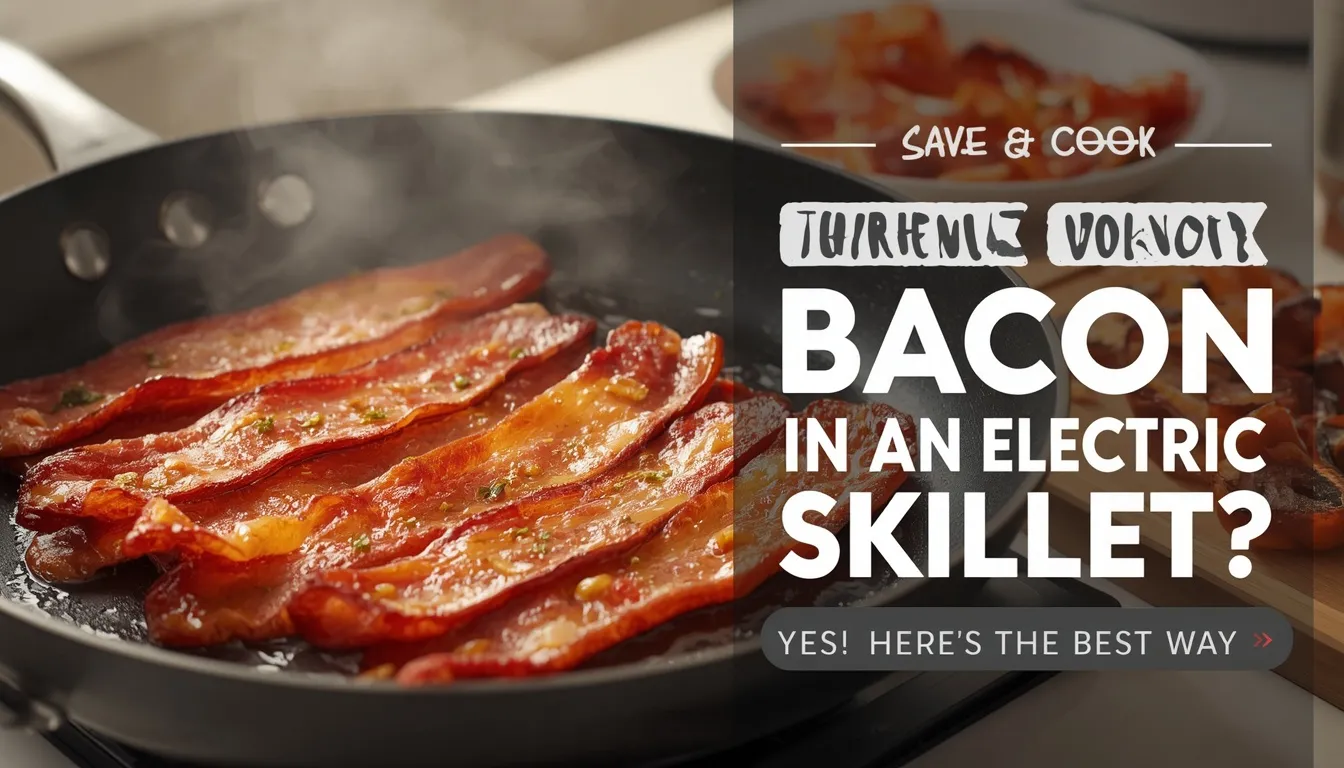
Yes, you can cook bacon in an electric skillet, and it is actually one of the easiest ways to prepare a full batch without crowding a small frying pan.
An electric skillet gives you direct temperature control, plenty of cooking space, and a fairly consistent surface for rendering bacon fat. For most regular bacon, 300–325°F (149–163°C) is a useful starting range. As one manufacturer reference, Presto lists bacon at 300–325°F with an approximate cooking time of 8–10 minutes. However, the exact setting can vary by skillet model, bacon thickness, and how crispy you like it.
The trick is not to blast the bacon with high heat. Give the fat time to render, keep the strips in a single layer, and adjust the temperature if the edges begin browning too quickly.
This guide covers everything you need to know about cooking bacon in an electric skillet, including temperature, cooking time, thick-cut bacon, turkey bacon, frozen bacon, splatter control, grease handling, cleanup, and common mistakes.
Can You Cook Bacon in an Electric Skillet?
Absolutely. An electric skillet, sometimes called an electric frying pan in the UK and Australia, works very well for bacon.
Unlike a stovetop frying pan, an electric skillet has its own heating element and thermostat. That means you can choose a temperature rather than constantly adjusting a burner.
It is especially convenient when you want to cook:
- Several bacon strips at once
- Breakfast for a family
- Bacon and eggs
- Bacon for sandwiches or burgers
- Multiple batches without using your stovetop
- Breakfast in an RV, holiday kitchen, or other suitable space
If you are exploring other meals you can make with the appliance, KiCook’s guide to what you can cook in an electric skillet includes dozens of breakfast, lunch, dinner, and one-pan ideas.
Why an Electric Skillet Works So Well for Bacon
There are several reasons bacon and electric skillets make a good combination.
More Cooking Space
Most electric skillets provide a wide rectangular or round cooking surface. You can usually fit more bacon than you could in a standard frying pan.
The important part is keeping the strips in a single layer rather than stacking or overlapping them.
Adjustable Temperature
Bacon benefits from controlled heat. If the skillet gets too hot, the meat can darken before enough fat has rendered.
An adjustable thermostat makes it easier to slow the cooking process when necessary.
If you are unsure what the numbers or heat levels on your appliance mean, KiCook’s electric skillet medium-heat temperature guide explains Fahrenheit, Celsius, and common dial settings.
Easy Batch Cooking
After one batch is finished, you can remove some of the accumulated bacon grease and add another layer of strips.
Just remember that later batches may cook differently because the skillet is already fully heated.
What Temperature Should You Cook Bacon in an Electric Skillet?
A good starting point for regular bacon is 300–325°F (149–163°C).
Presto’s electric skillet temperature timetable lists:
| Bacon Type | Skillet Setting | Approximate Time |
|---|---|---|
| Regular bacon | 300–325°F (149–163°C) | 8–10 minutes |
| Canadian bacon | 275–300°F (135–149°C) | 3–4 minutes |
These are manufacturer-specific appliance settings rather than universal rules for every electric skillet.
Your skillet may run hotter or cooler than its dial suggests, so treat the numbers as a starting point.
What About 350°F?
You can encounter bacon instructions that use temperatures around 350°F (177°C), but you do not need high heat to make bacon crispy.
At a moderate temperature, the fat has more time to render before the lean portions become excessively dark.
If 325°F produces pale bacon on your appliance, increase the heat slightly. If the edges scorch quickly or grease splatters aggressively, lower it.
Why Bacon Temperature Varies by Electric Skillet
There is no single perfect temperature that applies to every appliance.
Several factors change the result:
- Skillet brand and model
- Actual surface temperature
- Thermostat accuracy
- Bacon thickness
- Starting temperature of the bacon
- Amount of bacon in the skillet
- Desired crispness
Thermostats also cycle the heating element on and off, so the cooking surface does not remain at one exact temperature every second.
When your manufacturer’s manual includes a bacon setting, use that recommendation first.
How Long Does Bacon Take in an Electric Skillet?
Regular bacon often takes roughly 8–10 minutes when cooked within the 300–325°F range on electric skillets using Presto’s timetable.
That does not mean every strip will finish at exactly eight or ten minutes.
Use this as a practical starting guide:
| Bacon | Approximate Approach |
|---|---|
| Thin-cut bacon | Start checking early; it cooks quickly |
| Regular streaky bacon | Around 8–10 minutes on some skillet models |
| Thick-cut bacon | Usually needs additional time |
| Canadian bacon | Usually much quicker than streaky bacon |
| Turkey bacon | Follow package directions and monitor closely |
| Back bacon | Cook until browned and properly cooked through |
Thickness matters more than the timer.
Two packages labeled “bacon” can behave very differently when one contains paper-thin rashers and the other contains thick butcher-cut strips.
How to Cook Bacon in an Electric Skillet Step by Step
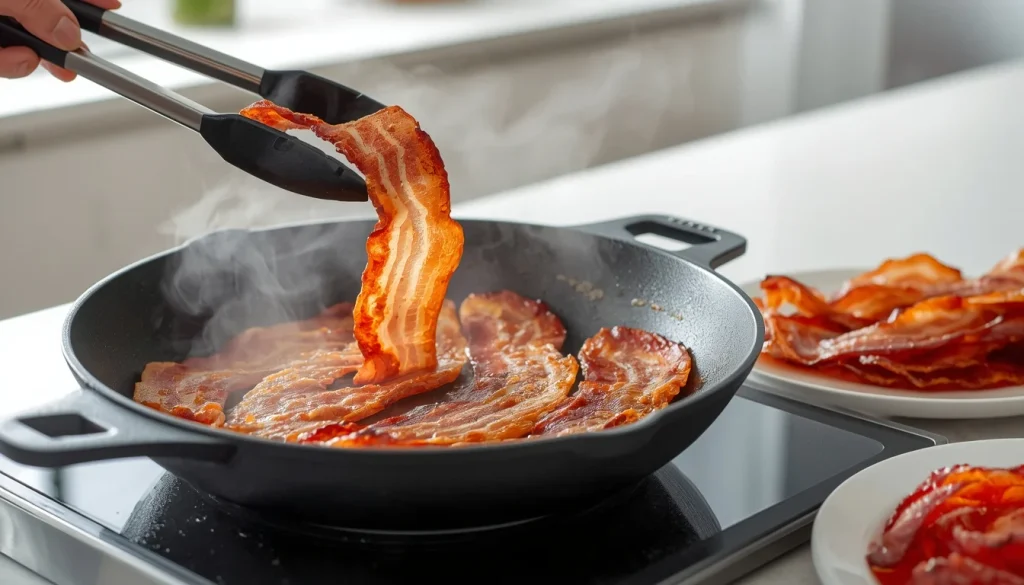
You do not need special ingredients. Bacon already contains enough fat for ordinary skillet cooking.
What You Need
Gather:
- Electric skillet
- Bacon
- Heat-safe tongs
- Plate
- Paper towels or a wire rack
- Heat-resistant container for grease
- Splatter screen, optional
Step 1: Arrange the Bacon
Place the bacon strips across the skillet in a single layer.
Avoid overlapping them.
The strips may touch slightly at first because bacon shrinks as the fat renders, but stacking several strips on top of one another causes uneven cooking.
If everything does not fit comfortably, cook in batches.
Step 2: Set the Temperature
Set your electric skillet around 300–325°F (149–163°C) unless your manufacturer’s instructions recommend something different.
For bacon, moderate heat is generally easier to control than immediately starting at a very high setting.
Step 3: Let the Fat Begin to Render
Leave the bacon alone long enough for the underside to begin browning.
As it heats, fat will melt from the strips and collect in the skillet.
This rendered bacon fat becomes the cooking medium, which is why regular bacon normally does not require extra oil or butter.
Step 4: Flip the Bacon
Use tongs to turn the strips after the first side has begun browning.
You do not need to flip bacon every few seconds.
Turning it once or a few times during cooking is usually enough to help both sides cook evenly.
Step 5: Watch the Color and Texture
Continue cooking until the bacon reaches your preferred texture.
For chewy bacon, remove it sooner.
For crispy bacon, allow more fat to render and continue until the strips are deeply browned and crisp without becoming burned.
Step 6: Remove and Drain
Transfer finished bacon to a paper towel-lined plate or wire rack.
A rack allows excess grease to drip away without keeping one side of the bacon in direct contact with oily paper.
Step 7: Handle the Bacon Grease Safely
Let hot grease cool before transferring or disposing of it.
Do not pour bacon grease down the kitchen sink. As the fat cools, it can solidify and contribute to clogged plumbing.
If you want to save bacon fat for cooking, strain it into a suitable heat-safe container and store it appropriately once cooled.
Should You Start Bacon in a Cold or Preheated Electric Skillet?
Both approaches can work, but a cold or gently warming skillet is particularly useful for fatty bacon.
Starting with bacon in the skillet before it becomes very hot gives the fat time to begin rendering gradually.
This can help you avoid a situation where the lean portions brown rapidly while thick sections of fat remain soft.
A fully preheated skillet can still work, especially when your appliance manufacturer’s directions specifically call for preheating.
The safest approach is simple: follow your appliance manual when it provides a method, and otherwise begin with moderate rather than aggressive heat.
Do You Need Oil or Butter to Cook Bacon in an Electric Skillet?
Usually, no.
Regular pork bacon contains plenty of fat. As that fat renders, it lubricates the cooking surface naturally.
Adding several tablespoons of oil can make the skillet unnecessarily greasy.
Butter is also unnecessary for regular bacon and can brown or burn before the bacon is finished.
There is one exception worth considering: very lean bacon alternatives, such as some turkey bacon products, may release much less fat. Depending on the product and your skillet surface, a very light coating of suitable cooking oil may help prevent sticking.
Always check the package instructions first.
Should You Cook Bacon With the Electric Skillet Lid On?
For crispy bacon, cook it uncovered most of the time.
Putting the lid on traps steam and moisture inside the skillet. That moisture can work against the dry, crisp texture you are trying to create.
If splattering is your concern, use a splatter screen rather than sealing the pan with a lid.
A screen helps contain grease droplets while allowing steam to escape.
How to Make Crispy Bacon in an Electric Skillet
Crispy bacon is more about technique than extreme heat.
Use a Single Layer
Every strip should contact the skillet.
Overlapping bacon creates soft areas where steam and moisture become trapped.
Give the Fat Time to Render
Do not immediately crank the temperature to the maximum setting.
Moderate heat lets the fat slowly melt away while the meat develops color.
Drain the Bacon Immediately
Once the bacon reaches your preferred crispness, move it out of the grease.
Leaving finished bacon sitting in a pool of fat can make the texture heavier.
Remember That Bacon Crisps as It Cools
Bacon can become slightly firmer during the first minute or two after leaving the skillet.
If it already looks extremely dark and rigid while still in the pan, it may be overcooked by the time you serve it.
How to Cook Thick-Cut Bacon in an Electric Skillet
Thick-cut bacon requires patience.
The biggest mistake is increasing the temperature dramatically because the bacon appears to be cooking slowly.
Instead:
- Arrange the strips in one layer.
- Start at moderate heat.
- Let the fat render gradually.
- Flip as needed.
- Reduce the heat if the exterior darkens too quickly.
- Give the thick fatty sections enough time to cook properly.
Thick bacon often takes longer than standard supermarket slices, so judge doneness by appearance and texture rather than relying only on a timer.
Can You Cook Turkey Bacon in an Electric Skillet?
Yes, you can cook turkey bacon in an electric skillet.
However, do not treat it exactly like fatty pork bacon.
Turkey bacon may contain substantially less fat depending on the product, so there may not be enough rendered grease to coat the skillet.
Check the package directions. If needed, lightly grease the skillet with a small amount of cooking oil.
Cook the turkey bacon until it reaches the level of doneness specified by the manufacturer.
Can You Cook Canadian Bacon in an Electric Skillet?
Yes.
Canadian bacon is quite different from American streaky bacon because it is much leaner and usually sold as round slices.
Presto’s skillet timetable lists Canadian bacon at approximately 275–300°F (135–149°C) for 3–4 minutes. Again, use this as a model-specific reference rather than a universal guarantee.
Because Canadian bacon contains less visible fat, it usually does not need the same long rendering process as streaky bacon.
Can You Cook Back Bacon in an Electric Skillet?
Yes.
Back bacon, commonly found in the UK, Ireland, Canada, and Australia, can be cooked in an electric frying pan or skillet.
Because back bacon is generally leaner through its meaty portion than American-style streaky bacon, watch it carefully.
Use moderate heat and cook both sides until properly cooked and browned to your preference.
If the bacon is especially lean and your skillet surface tends to stick, a very small amount of oil may be useful.
Can You Cook Frozen Bacon in an Electric Skillet?
USDA guidance states that bacon can safely be cooked from the frozen state. However, frozen strips that are stuck together can be awkward to cook evenly.
Whenever practical, thaw the bacon first.
The USDA identifies three safe thawing methods:
- Refrigerator
- Cold water
- Microwave
Bacon should not be thawed on the kitchen counter at room temperature.
You can read the full USDA Bacon and Food Safety guidance for additional storage, thawing, and handling information.
If you do cook frozen bacon directly, start gently. As the outside begins to warm, separate the strips carefully with tongs and spread them into a single layer.
Expect frozen bacon to take longer than refrigerated bacon.
How Much Bacon Can You Cook at Once?
The answer depends on the size and shape of your electric skillet.
Instead of counting strips, use a simpler rule:
Fill the cooking surface with one layer of bacon without stacking the slices.
A large rectangular skillet may accommodate considerably more bacon than a compact round model.
Trying to squeeze in extra strips usually slows the cooking process and produces uneven results.
How to Cook Multiple Batches of Bacon
Electric skillets are convenient when feeding several people, but batch two does not behave exactly like batch one.
By the second batch:
- The skillet is already hot.
- Rendered grease may still be present.
- Bacon can begin sizzling sooner.
- Browning may happen faster.
Between batches, carefully remove excess grease if it becomes too deep.
You do not need to wipe the skillet completely dry. A thin film of bacon fat is fine.
Allow the heat to stabilize, then add the next batch.
How Do You Know When Bacon Is Done?
Bacon is unusual because the strips are thin, making an accurate internal-temperature measurement difficult.
The USDA notes that raw pork bacon must be cooked before eating and explains that the time required depends on bacon type, thickness, heat, and desired crispness. It also notes that thin bacon is difficult to check accurately with a thermometer.
Look for:
- Properly cooked, browned meat
- Rendered fat
- Texture ranging from firm to crisp depending on preference
- No obviously raw sections
Do not partially cook raw bacon, refrigerate it, and plan to finish it later. USDA guidance recommends completely cooking bacon before removing it from the heat source.
Why Is My Bacon Cooking Unevenly?
Uneven bacon can result from the food itself or the appliance.
Possible causes include:
- Overlapping strips
- Different bacon thicknesses
- Overcrowding
- Hot spots in the skillet
- Inaccurate thermostat
- Uneven heating element performance
Try rotating strips between hotter and cooler sections of the pan if necessary.
If one part of your electric skillet consistently burns food while another stays pale, read KiCook’s electric skillet uneven-heating troubleshooting guide.
Why Is My Bacon Burning?
The skillet is probably too hot, or the bacon has been left cooking too long after most of its fat has rendered.
Lower the temperature if:
- Edges become dark almost immediately
- Grease splatters violently
- Thin areas burn while thick fat remains soft
- Bacon starts smoking excessively
More heat does not automatically produce better bacon.
Why Isn’t My Bacon Getting Crispy?
Several things can keep bacon soft.
The Skillet Is Crowded
Too many strips trap moisture and interfere with even cooking.
The Temperature Is Too Low
Gentle heat helps render fat, but eventually the bacon needs enough surface heat to brown.
You Used the Lid
A closed lid traps steam.
You Removed It Too Early
If substantial soft fat remains, give the bacon more time.
The Bacon Is Very Thick
Thick bacon naturally requires more time for its fat to render.
Why Is My Bacon Sticking to the Electric Skillet?
Bacon usually releases enough fat to resist sticking, especially on a healthy nonstick surface.
If it sticks badly, possible reasons include:
- Worn nonstick coating
- Damaged cooking surface
- Hot spots
- Bacon being moved before the underside releases
- Very lean bacon
- Residue left from previous cooking
KiCook has a separate guide explaining why food suddenly sticks to an electric skillet if sticking happens with more than just bacon.
Avoid scraping nonstick cookware with metal utensils.
Why Does Bacon Curl in an Electric Skillet?
Bacon curls because its meat and fat contract differently as they heat.
Some curling is normal.
To reduce it:
- Cook at moderate heat.
- Lay each strip flat when it enters the skillet.
- Turn it occasionally.
- Use tongs to gently reposition curled sections.
- Avoid extremely high heat.
Do not aggressively mash bacon against a nonstick surface with sharp or metal utensils.
A little curling does not prevent the bacon from cooking properly.
How to Keep Bacon From Splattering Everywhere
Bacon grease and moisture can cause splattering as the strips cook.
To reduce the mess:
- Use moderate rather than extreme heat.
- Keep excess water away from the skillet.
- Do not overcrowd the pan.
- Use a splatter screen.
- Remove accumulated grease carefully between large batches.
- Turn bacon gently rather than dropping it back into hot grease.
Do not add water to a skillet containing hot bacon fat.
Common Mistakes When Cooking Bacon in an Electric Skillet
Setting the Temperature Too High
This can brown the meat before enough fat renders.
Overcrowding the Skillet
Bacon cooks best when every strip has direct contact with the surface.
Adding Unnecessary Oil
Regular bacon already produces plenty of cooking fat.
Using the Lid for the Entire Cooking Time
The trapped steam can interfere with crisping.
Walking Away
Bacon can move from browned to burned surprisingly quickly toward the end of cooking.
Ignoring Excess Grease
During large batches, the skillet can accumulate a substantial amount of hot fat.
Remove excess grease carefully when necessary.
Using Metal Utensils on Nonstick Coating
Scratches can permanently damage the surface and make future sticking worse.
Electric Skillet vs Frying Pan vs Oven for Bacon
All three methods work. The best one depends on how much bacon you are cooking and how involved you want to be.
| Method | Temperature Control | Batch Capacity | Hands-On Attention | Best Use |
|---|---|---|---|---|
| Electric skillet | Very convenient | Medium to large | Moderate | Family breakfast |
| Stovetop frying pan | Depends on stove | Small to medium | Higher | A few strips |
| Oven | Stable | Large | Lower | Big batches |
An electric skillet sits between stovetop and oven cooking: you get a large surface while still having direct control over every strip.
An electric griddle can also cook bacon, although it has a flatter, shallower design. KiCook’s electric skillet vs electric griddle comparison explains where the two appliances differ.
How to Clean an Electric Skillet After Cooking Bacon
Bacon leaves plenty of grease, so cleanup matters.
Step 1: Unplug the Skillet
Disconnect it from power before cleaning.
Step 2: Let It Cool
Do not pour cold water into a very hot electric skillet.
Step 3: Remove the Grease
Once the fat is safe to handle but has not become completely solid, transfer it into an appropriate container.
Do not pour grease down the drain.
Step 4: Wipe Away Residue
Use paper towels to remove the remaining greasy film.
Step 5: Wash According to the Manufacturer’s Instructions
Electric skillet designs vary. Some have removable dishwasher-safe components, while others have electrical parts that must remain dry.
Do not assume the entire appliance can go into water or a dishwasher.
KiCook’s guide on whether electric skillets are dishwasher safe explains which components may or may not be washable, while the electric skillet water-cleaning guide covers safe hand-cleaning precautions.
How to Store and Reheat Leftover Bacon
If you somehow end up with leftover bacon, cool it and refrigerate it promptly.
USDA’s bacon storage chart lists home-cooked leftover bacon at 4–5 days in the refrigerator and about one month in the freezer for best-quality storage guidance.
Keep leftovers in a sealed container or tightly wrapped package.
To reheat bacon, you can briefly warm it in a skillet, microwave, or other suitable appliance until it reaches the texture you want.
Avoid reheating it for much longer than necessary, because already-crisp bacon can become dry quickly.
What Can You Cook With Bacon in an Electric Skillet?
Once the bacon is finished, your skillet is already warm and lightly coated with flavorful fat.
That makes it convenient for breakfast foods such as:
- Fried eggs
- Scrambled eggs
- Breakfast potatoes
- Hash browns
- Pancakes
- French toast
- Sausage
- Grilled breakfast sandwiches
You can remove most of the bacon grease and leave only the small amount required for the next food.
For lunch or dinner ideas, you can also use the same appliance for pork, vegetables, sandwiches, chicken, and one-pan meals. KiCook’s electric skillet fried chicken guide is a useful next recipe if you want to make more than breakfast foods.
Frequently Asked Questions
What temperature do you cook bacon at in an electric skillet?
For regular bacon, 300–325°F (149–163°C) is a useful starting point. Presto lists this range with an approximate 8–10 minute cooking time for bacon in several of its skillet manuals. Your model may behave differently, so check its instructions first.
How long should bacon cook in an electric skillet?
Regular bacon may take around 8–10 minutes at moderate skillet temperatures, but thin bacon can finish sooner and thick-cut bacon can take longer. Judge the bacon by its rendered fat, browning, and texture instead of the clock alone.
Should you start bacon in a cold electric skillet?
You can. Starting bacon in a cool or gently warming skillet encourages gradual fat rendering. If your skillet manufacturer specifically instructs you to preheat, follow the manufacturer’s method.
Do you need oil when cooking bacon?
Usually not. Regular pork bacon releases plenty of fat as it cooks. Very lean turkey bacon or another lean bacon product may benefit from a small amount of oil if its package directions permit it.
Can you cook bacon at 350°F in an electric skillet?
You can use a higher setting on some models, but 350°F may cook thin bacon more aggressively. A moderate range such as 300–325°F gives you more control on electric skillets whose manufacturer guidance supports it.
Should you flip bacon in an electric skillet?
Yes. Turning the strips helps both sides brown evenly. One or a few turns during cooking are normally sufficient.
Do you cook bacon with the lid on or off?
Cook bacon uncovered if you want a crisp texture. A lid traps steam, which can soften the bacon. Use a splatter screen if grease splashing is the problem.
Can you cook thick-cut bacon in an electric skillet?
Yes. Use moderate heat and allow extra time for the fat to render before the outside becomes too dark.
Can you cook turkey bacon in an electric skillet?
Yes. Because turkey bacon may contain less fat than pork bacon, follow the product’s cooking instructions and lightly grease the cooking surface if required.
Can you cook Canadian bacon in an electric skillet?
Yes. One Presto electric skillet timetable lists Canadian bacon at 275–300°F (135–149°C) for approximately 3–4 minutes.
Can you cook back bacon in an electric skillet?
Yes. Cook back bacon over moderate heat, turning as needed, until it is fully cooked and browned to your preferred level.
Can you cook frozen bacon in an electric skillet?
Yes. USDA guidance states that bacon may be cooked from frozen. However, thawing first makes it easier to separate the strips and cook them evenly. Refrigerator, cold-water, and microwave thawing are safe options when used correctly.
How do you keep bacon from curling?
Use moderate heat and reposition the strips with tongs as they cook. Some curling is completely normal because the fat and meat contract differently.
Can you cook bacon and eggs together in an electric skillet?
Yes. The easiest approach is to cook the bacon first, remove most of the grease, lower the temperature, and then cook the eggs. This prevents the eggs from sitting in excessive bacon fat.
Why is my bacon not getting crispy?
The skillet may be overcrowded, the heat may be too low, the lid may be trapping steam, or the bacon may simply need more time for the fat to render.
Is an electric skillet the same as an electric frying pan?
The terms are commonly used interchangeably. “Electric skillet” is particularly common in the United States, while “electric frying pan” is also widely used in markets such as the UK and Australia.
Final Thoughts
So, can you cook bacon in an electric skillet? Yes, and it is one of the most convenient ways to cook several strips at once.
For regular bacon, start around 300–325°F (149–163°C) when that range is compatible with your skillet’s manufacturer instructions. Arrange the strips in a single layer, give the fat time to render, turn the bacon as needed, and remove it when it reaches the level of crispness you enjoy.
You normally do not need oil or butter, and keeping the skillet uncovered will give you a better chance of producing crisp bacon.
Most importantly, do not treat one temperature or cooking time as universal. Thin bacon, thick-cut bacon, turkey bacon, Canadian bacon, back bacon, and different electric skillet models all behave a little differently.
Once you learn how your own skillet heats, cooking bacon becomes a simple routine: moderate heat, enough space, patient fat rendering, and careful timing.

“I believe great cooking starts with the right tools, trusted advice, and a little confidence in the kitchen.”
Hi, I’m Emma Carter. My love for cooking began in my grandmother’s kitchen, where I learned that every great meal starts with simple ingredients and the right cookware. Over the years, I’ve spent countless hours researching, testing, and comparing kitchen appliances, cookware, coffee makers, air fryers, and other everyday kitchen essentials.
Here at KiCook, my goal is to make your buying decisions easier with honest product reviews, practical buying guides, and easy-to-follow cooking tips. Whether you’re upgrading your kitchen or searching for the best appliance for your home, I focus on providing clear, reliable, and research-backed information you can trust.
When I’m not testing new kitchen gadgets or writing in-depth guides, you’ll usually find me trying new recipes, visiting local farmers’ markets, or enjoying a quiet cup of coffee while planning my next kitchen project.