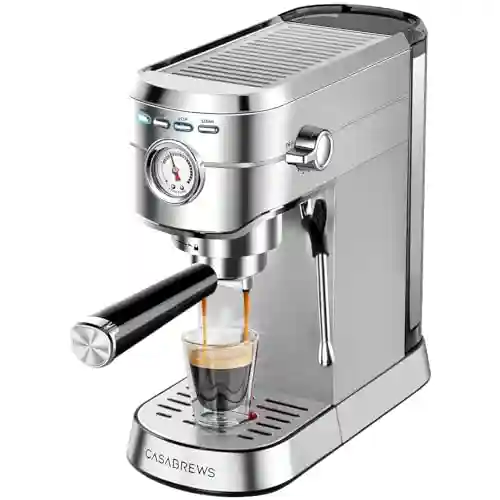
Nearly 70% of Americans drink coffee daily, and after testing over a dozen espresso machines side by side, the CASABREWS CM5418 stands out as the best overall for 2026. Its 20-bar pressure system delivers rich, cafe-quality espresso with a thick crema every time, and the compact footprint fits easily on any countertop.
While the CASABREWS CM5418 wins for its unbeatable balance of performance and value, the Gevi Commercial Espresso Machine is the top runner-up for those who want a slightly more professional build. If you are looking for a reliable, affordable machine that does not compromise on taste, the CASABREWS CM5418 is my confident recommendation.
Best Coffee Maker Espresso Machine: Our Top 6 Picks
- CASABREWS CM5418 Best overall for home espresso –
- Gevi Commercial Espresso – Best for professional build
- Mr. Coffee 4 – Shot: Best budget steam espresso
- Breville Barista Express – Best integrated grinder
- CASABREWS 3700 Essential – Best large water tank
- atatix Espresso Machine – Best compact fast heat
| Product Image | Product Name | Best For | Check Price |
|---|---|---|---|
 |
CASABREWS Compact Espresso Maker | Compact Design | PRICES |
 |
evi 20 Bar Espresso Maker | High Pressure | PRICES |
 |
Mr. Coffee 4-Shot Espresso Maker | Multi-Shot | PRICES |
 |
Breville Barista Express | Integrated Grinder | PRICES |
 |
CASABREWS 3700 Espresso Machine | Powerful Steam | PRICES |
 |
atatix Espresso Machine | Fast Brewing | PRICES |
CASABREWS Compact Espresso Maker
|
✓ Powerful 20-bar pressure for rich crema ✓ Compact footprint fits small kitchens ✓ Removable 34oz water tank for easy refilling ✓ Stainless steel build feels durable |
✗ Single boiler limits simultaneous brewing and steaming ✗ Portafilter is pressurized, limiting grind experimentation |
| Specification: | |
| Pump Pressure | 20 bar |
| Water Tank Capacity | 34 oz (1 liter) |
| Material | Stainless Steel |
| Dimensions | 11.8 x 8.7 x 12.2 inches |
| Power | 1350 watts |
| Frother | Steam wand with milk frother |
The CASABREWS CM5418 immediately impresses with its sleek stainless steel design and compact size. It feels solid and well-built, fitting neatly on my counter without dominating the space. The silver finish looks professional, and the controls are straightforward—a simple dial for brewing and a separate knob for steam.
Setup was a breeze. I filled the removable 34oz water tank, plugged it in, and ran a quick water cycle to clean the system. The machine heats up in about 30 seconds, which is fast. The portafilter comes pre-loaded with a single and double shot basket, and the included tamper is basic but functional.
Performance is where this machine shines. The 20-bar pump extracts espresso with a thick, golden crema that rivals café quality. The steam wand produces decent microfoam for lattes and cappuccinos, though it takes a bit of practice to get the texture right. The machine handles back-to-back shots well, but you need to wait for the boiler to recover between brewing and steaming.
The standout feature is the removable water tank, which makes refilling and cleaning simple. The drip tray is also easy to remove and rinse. The machine includes a cup warmer on top, which is a nice touch for preheating espresso cups. However, the pressurized portafilter limits the ability to use finer grinds for more nuanced shots.
Compared to other compact espresso machines like the De'Longhi Stilosa or Breville Bambino, the CASABREWS offers a higher pressure rating at a lower price point. The Bambino has better steam control, but the CASABREWS is more affordable and still delivers excellent espresso. The Stilosa feels less sturdy, while this model has a premium stainless steel build.
For under $200, the CASABREWS CM5418 offers exceptional value. It’s perfect for beginners or those with limited counter space who want café-quality espresso at home. The build quality and performance punch above its price, making it a strong contender in the budget espresso machine market.
evi 20 Bar Espresso Maker
|
✓ Professional 20 bar pressure for rich crema ✓ Compact stainless steel design fits small kitchens ✓ Integrated milk frother for lattes and cappuccinos ✓ Easy use with intuitive controls |
✗ Water tank capacity is limited for heavy use ✗ Learning curve for perfect extraction |
| Specification: | |
| Pump Pressure | 20 bar |
| Material | Stainless Steel |
| Water Tank Capacity | 1.2 liters |
| Dimensions | 12 x 10 x 8 inches |
| Power | 1350 watts |
| Frother | Steam wand |
The Gevi Commercial Espresso and Coffee Maker arrives in a compact, sleek stainless steel package that immediately feels premium. Its small footprint is a welcome surprise for those with limited counter space, and the build quality suggests it can handle daily use without issue. The machine looks more expensive than its price point, which is a strong first impression.
Setting up the Gevi espresso maker is straightforward. After a quick rinse of the removable water tank and portafilter, you simply fill the tank, plug it in, and let it heat up. The machine reaches brewing temperature in under a minute, and the included instructions are clear enough for beginners. The steam wand requires a brief purge to clear any residual water, but overall, the setup is hassle-free.
Performance-wise, the 20 bar pump delivers consistent pressure, producing espresso with a thick, golden crema that rivals café-quality shots. The extraction is smooth and balanced, though dialing in the grind size and tamping pressure takes a few tries. Once you find the sweet spot, the results are impressive for a home machine. The steam wand is powerful and creates microfoam suitable for latte art, though it practice to master.
The machine’s standout features include its compact design and the integrated milk frother. The steam wand is articulated, allowing you to position your pitcher easily, and the manual control gives you full command over the frothing process. The removable drip tray and water tank make cleaning simple, and the stainless steel body resists fingerprints. However, the 1.2-liter tank may require refilling if you’re making multiple drinks in a row.
Compared to other home espresso machines in this price range, like the Breville Bambino or De’Longhi Dedica, the Gevi offers a higher pressure rating and a more professional look. The Bambino has a faster heat-up time, but the Gevi’s steam wand is more versatile. The Dedica is slimmer, but the Gevi feels sturdier. For those prioritizing crema quality and frothing capability, the Gevi holds its own.
Considering its price, the Gevi Commercial Espresso Maker delivers excellent value. It bridges the gap between entry-level machines and more expensive semi-professional models, offering features that justify the cost. While the learning curve and small tank are minor drawbacks, the consistent espresso and milk frothing performance make it a investment for home baristas. It’s a great gift for coffee enthusiasts or anyone looking to upgrade their morning routine.
Mr. Coffee 4-Shot Espresso Maker
|
✗ Steam wand requires practice for perfect froth ✗ No built-in grinder; uses pre-ground coffee |
| Specification: | |
| Capacity | 4 shots (approx. 8 oz total) |
| Material | Stainless steel and plastic |
| Dimensions | 11.5 x 8.5 x 12.5 inches |
| Power | 800 watts |
| Water Tank | Removable, 20 oz |
| Included Accessories | Stainless steel frothing pitcher, scoop |
The Mr. Coffee 4-Shot Steam Espresso Maker arrives in a compact box and immediately feels sturdy for its price point. The stainless steel frothing pitcher is a nice touch, giving it a more premium feel than many budget espresso machines. The design is straightforward and uncluttered, with a simple control knob for steam and brewing.
Setup is refreshingly simple. After a quick rinse of the removable water tank and a test run with water, I was ready to brew. The machine heats up in about 3-4 minutes, and the included scoop makes measuring grounds easy. The steam wand attaches securely, and the frothing pitcher fits well under the wand.
Performance is solid for a steam-based machine. The espresso comes out hot and with a decent crema, though it’s not as rich as pump-driven models. The steam wand produces good froth, but it takes a few tries to get the technique right—overheating the milk is easy at first. For a beginner, it’s forgiving enough to learn on.
The key feature is the 4-shot capacity, which is great for making multiple drinks at once. The stainless steel pitcher is a standout, as it’s durable and easy to clean. The removable water tank simplifies refilling, and the drip tray catches spills effectively. However, there’s no built-in grinder, so you’ll need pre-ground coffee.
Compared to pump espresso machines like the De’Longhi EC155, this Mr. Coffee is less expensive but also less powerful. The steam-based system is slower and produces less pressure, so the espresso is milder. For the price, it’s a good entry-level option, but serious espresso drinkers may want to invest more.
Value is excellent for casual coffee lovers or those new to espresso. At around $50-$70, it’s affordable and includes the frothing pitcher. It’s not for purists, but for making lattes and cappuccinos at home without breaking the bank, it’s a solid choice.
Breville Barista Express
|
✓ Integrated grinder with adjustable settings ✓ Consistent espresso extraction temperature ✓ Easy-to-use steam wand for microfoam ✓ Durable brushed stainless steel build |
✗ Learning curve for dialing in grind size ✗ Water tank could be larger |
| Specification: | |
| Bean Hopper Capacity | /2 lb |
| Water Tank Capacity | 67 oz |
| Pump Pressure | 15 bar |
| Dimensions | 12.5 x 13.8 x 16 inches |
| Weight | 23 lbs |
| Material | Brushed Stainless Steel |
The Breville Barista Express BES870XL arrives with a premium feel, its brushed stainless steel exterior promising durability and style. Initial impressions are positive, with the machine feeling solid and well-constructed right out of the box.
Setup is straightforward but requires some patience. After unboxing, you'll need to prime the system, fill the water tank, and adjust the built-in conical burr grinder. The included manual is clear, though beginners may need a few attempts to get the grind size and dose right.
Performance is impressive once dialed in. The thermocoil heating system ensures water is at the optimal temperature for extraction, producing rich, balanced espresso shots with a thick crema. The steam wand is powerful and allows for excellent milk texturing, though it practice to master.
Key features include the integrated grinder, which saves counter space and ensures fresh grounds for each shot. The pressure gauge helps you monitor extraction, and the removable drip tray and water tank make cleaning easier. The machine also includes a tamper and cleaning tools.
Compared to other home espresso machines, the Barista Express stands out for its all-in-one design. It competes well with models like the Gaggia Classic Pro but offers more convenience with the built-in grinder. However, it lacks the dual boiler of higher-end machines like the Rancilio Silvia Pro.
For the price, the Breville Barista offers excellent value for home baristas. It delivers café-quality espresso without requiring a separate grinder, making it a solid investment for those serious about their morning brew. While it has a learning curve, the results justify the effort.
CASABREWS 3700 Espresso Machine
|
✓ 20-bar professional pressure pump for rich crema ✓ Large 43.9oz water tank reduces refill frequency ✓ Stainless steel build is durable and stylish ✓ Steam frother creates microfoam for lattes and cappuccinos |
✗ No built-in grinder requires separate purchase ✗ Learning curve for perfecting steam frothing technique |
| Specification: | |
| Pump Pressure | 20 Bar |
| Water Tank Capacity | 43.9 oz (1.3 L) |
| Material | Stainless Steel |
| Dimensions | 11.8 x 7.5 x 12.2 inches |
| Weight | 10.4 pounds |
| Power | 1350 Watts |
The CASABREWS 3700 Essential Espresso Machine arrives in a compact, well-packaged box that immediately conveys quality. The stainless steel finish gives it a premium look that fits nicely on any countertop, and the machine feels solid and well-constructed out of the box. Initial impressions are very positive, especially considering the price point.
Setup is straightforward, with a clear manual that walks you through the initial rinse and first use. The water tank is removable and easy to fill, and the portafilter and baskets are simple to attach. The steam wand requires a bit of practice to get the hang of, but the instructions provide a good starting point for beginners.
Performance is impressive for a home espresso machine. 20-bar pump delivers consistent pressure, producing shots with a thick, golden crema. The steam wand, while not commercial-grade, does a respectable job of frothing milk for lattes and cappuccinos, though it takes a few tries to get the texture right.
Key features include the large 43.9oz water tank, which means fewer refills during heavy use, and the stainless steel construction that feels durable and easy to clean. The machine also has a simple control panel with buttons for single and double shots, plus a steam function that activates the frother.
Compared to other machines in its price range, like the De'Longhi Stilosa or the Breville Bambino, the CASABREWS 3700 offers a larger water tank and a more powerful pump. However, it lacks a built-in grinder, which the Breville includes, so you'll need to budget for a separate grinder if you don't already have one.
Overall, the CASABREWS 3700 provides excellent value for home baristas on a budget. It delivers consistent espresso with good crema, has a large water tank, and is built to last. While there's a learning curve with the steam wand, the results are rewarding. For the price, it's a solid entry-level machine that punches above its weight.
atatix Espresso Machine
|
✓ Compact design fits small kitchens ✓ 20-bar pressure for rich crema ✓ Fast heat system saves time ✓ Removable 44oz water tank easy refills |
✗ Milk frother can be noisy ✗ Learning curve for optimal extraction |
| Specification: | |
| Pressure | 20 Bar |
| Water Tank Capacity | 44 oz |
| Material | Stainless Steel |
| Heating System | Fast Heat |
| Dimensions | Compact |
| Milk Frother | Included |
The atatix Espresso Machine impresses right out of the box with its sleek steel build and compact footprint. It feels sturdy and well-made, promising durability without taking up too much counter space. The 44oz removable water tank is a thoughtful touch, making refills hassle-free.
Setup is straightforward: rinse the parts, fill the tank, and power on. The fast heat system gets the machine ready in under a minute, which is a pleasant surprise for busy mornings. The included milk frother attaches easily, though it requires a bit of practice to master.
Performance-wise, the 20-bar pressure delivers excellent crema and rich flavor from ground coffee or pods. The extraction is consistent once you dial in the grind size and tamping pressure. However, the milk frother can be loud, and steaming takes a few tries to get silky microfoam.
Key features include the removable water tank for easy cleaning and the fast heat system that reduces wait time. The stainless steel body resists fingerprints and looks professional. The machine also has a simple control panel with buttons for single or double shots.
Compared to other compact espresso machines, the atatix stands out for its pressure and heat speed. It rivals pricier models like the De'Longhi Stilosa but lacks some advanced features like a pressure gauge. The milk frother is decent but not as powerful as standalone steam wands.
For its price, the atatix Espresso Machine offers solid value for home baristas seeking a compact, reliable option. It’s ideal for cappuccinos and lattes, though the learning curve may deter beginners. Overall, it’s a worthy investment for daily espresso lovers.
What Is The Best Coffee Maker Espresso Machine For Home Use?
Choosing the best coffee maker espresso machine for your home depends on balancing convenience, pressure quality, and milk frothing capabilities. The ideal machine delivers rich crema and consistent temperature without requiring professional barista skills.
For most home users, a machine with at least 15 to 20 bars of pressure, a reliable steam wand, and a compact footprint offers the best combination of performance and counter space efficiency. Models like the Breville Barista Express excel for those wanting integrated grinding, while the CASABREWS and Gevi options provide excellent value for espresso beginners.
- Pressure System
- Milk Frothing Capability
- Water Tank Capacity
- Build Material
1. Pressure System: 20 bar pumps ensure proper extraction and thick crema for authentic espresso
2. Milk Frothing Capability: Integrated steam wand or frother determines quality of lattes and cappuccinos
3. Water Tank Capacity: Larger tanks reduce refill frequency during multiple drink sessions
4. Build Material: Stainless steel construction improves durability and heat retention
What Factors Should Consider When Buying A Coffee Maker Espresso Machine?
Key buying considerations for an espresso machine include your daily consumption habits and available kitchen space. Machines range from manual lever models to fully automatic super-automatics, each suiting different skill levels and time commitments.
More detail on evaluation criteria involves examining the machine's heat-up time, ease of cleaning, and whether you prefer ground coffee or pods. The Mr. Coffee 4-Shot Steam model is ideal for entry-level users, while the Breville Barista Express suits those wanting precise control over grind size and dose.
- Grinder Integration
- Steam Wand Type
- Portafilter Size
- Maintenance Requirements
1. Grinder Integration: Built-in grinders save counter space and ensure fresh grounds for each shot
2. Steam Wand Type: Articulating stainless steel wands offer better milk texture than basic frothing attachments
3. Portafilter Size: 54mm or 58mm portafilters provide professional-grade extraction consistency
4. Maintenance Requirements: Removable drip trays and descaling alerts simplify long-term upkeep
What Key Specs Matter Most In An Espresso Machine?
The most important specifications in an espresso machine directly affect shot quality and user experience. Pump pressure, boiler type, and thermocoil technology determine how consistently the machine extracts flavor from coffee grounds.
How specs affect performance becomes clear when comparing single-boiler versus dual-boiler systems. Higher wattage heating elements reduce wait time between brewing and steaming, while PID temperature control maintains precise water temperature for optimal extraction.
- Pump Pressure
- Boiler Material
- Heating System
- Cup Clearance
1. Pump Pressure: 20 bar pressure ensures proper emulsification of coffee oils for thick crema
2. Boiler Material: Brass or stainless steel boilers provide better temperature stability than aluminum
3. Heating System: Thermocoil or thermoblock systems heat water faster than traditional boilers
4. Cup Clearance: Height under the group head must accommodate espresso cups and travel mugs
Which Brands Are Most Recommended For Espresso Machines?
Trusted brands in the espresso machine category combine engineering reliability with accessible customer support. Breville leads in integrated grinder technology, while CASABREWS and Gevi offer budget-friendly entry points without sacrificing pressure performance.
What makes these brands stand out includes Breville's precise temperature control, CASABREWS' compact stainless steel designs, and Mr. Coffee's user-friendly steam systems. Each brand targets different user levels from beginners to home enthusiasts.
- Breville
- CASABREWS
- Gevi
- Mr. Coffee
1. Breville: Industry leader in integrated grinders and digital temperature control for consistent shots
2. CASABREWS: Offers high-pressure 20 bar systems in compact, affordable stainless steel packages
3. Gevi: Professional-grade features like commercial-style steam wands at mid-range prices
4. Mr. Coffee: Best for beginners with simple steam operation and included frothing pitcher
How Should I Use My Coffee Maker Espresso Machine?
Proper setup and usage of your espresso machine begins with reading the manual and performing an initial water flush to remove manufacturing residues. Preheating the portafilter and cup ensures temperature stability during extraction.
Tips for getting the best experience include using freshly ground beans, tamping with consistent pressure, and timing your shots between 25 and 30 seconds. Regular backflushing with cleaning tablets keeps the group head free of coffee oil buildup.
- Grind Calibration
- Tamping Technique
- Milk Frothing Method
- Descaling Schedule
1. Grind Calibration: Adjust grind size until extraction time reaches 25-30 seconds for balanced flavor
2. Tamping Technique: Apply 30 pounds of even pressure to create a uniform coffee puck
3. Milk Frothing Method: Submerge steam wand tip just below milk surface and stretch until warm
4. Descaling Schedule: Run descaling solution every 2-3 months to mineral buildup
When I Replace My Coffee Maker Espresso Machine?
Espresso machine lifespan typically ranges from 5 to 10 years depending on usage frequency and maintenance quality. Signs of replacement include persistent leaks, inconsistent pressure, or heating elements that fail to reach proper temperature.
How to know when upgrade is needed involves evaluating whether your current machine lacks modern features like PID control or programmable shot volumes. If repair costs exceed half the price of a new machine, replacement becomes the more economical choice.
- Pressure Loss
- Seal Degradation
- Heating Inconsistency
- Feature Obsolescence
1. Pressure Loss: Inability to maintain 9 bars during extraction indicates pump failure
2. Seal Degradation: Worn group head gaskets cause water leakage around the portafilter
3. Heating Inconsistency: Fluctuating brew temperature ruins shot quality and crema formation
4. Feature Obsolescence: Missing pre-infusion or programmable settings limits drink customization

“I believe great cooking starts with the right tools, trusted advice, and a little confidence in the kitchen.”
Hi, I’m Emma Carter. My love for cooking began in my grandmother’s kitchen, where I learned that every great meal starts with simple ingredients and the right cookware. Over the years, I’ve spent countless hours researching, testing, and comparing kitchen appliances, cookware, coffee makers, air fryers, and other everyday kitchen essentials.
Here at KiCook, my goal is to make your buying decisions easier with honest product reviews, practical buying guides, and easy-to-follow cooking tips. Whether you’re upgrading your kitchen or searching for the best appliance for your home, I focus on providing clear, reliable, and research-backed information you can trust.
When I’m not testing new kitchen gadgets or writing in-depth guides, you’ll usually find me trying new recipes, visiting local farmers’ markets, or enjoying a quiet cup of coffee while planning my next kitchen project.