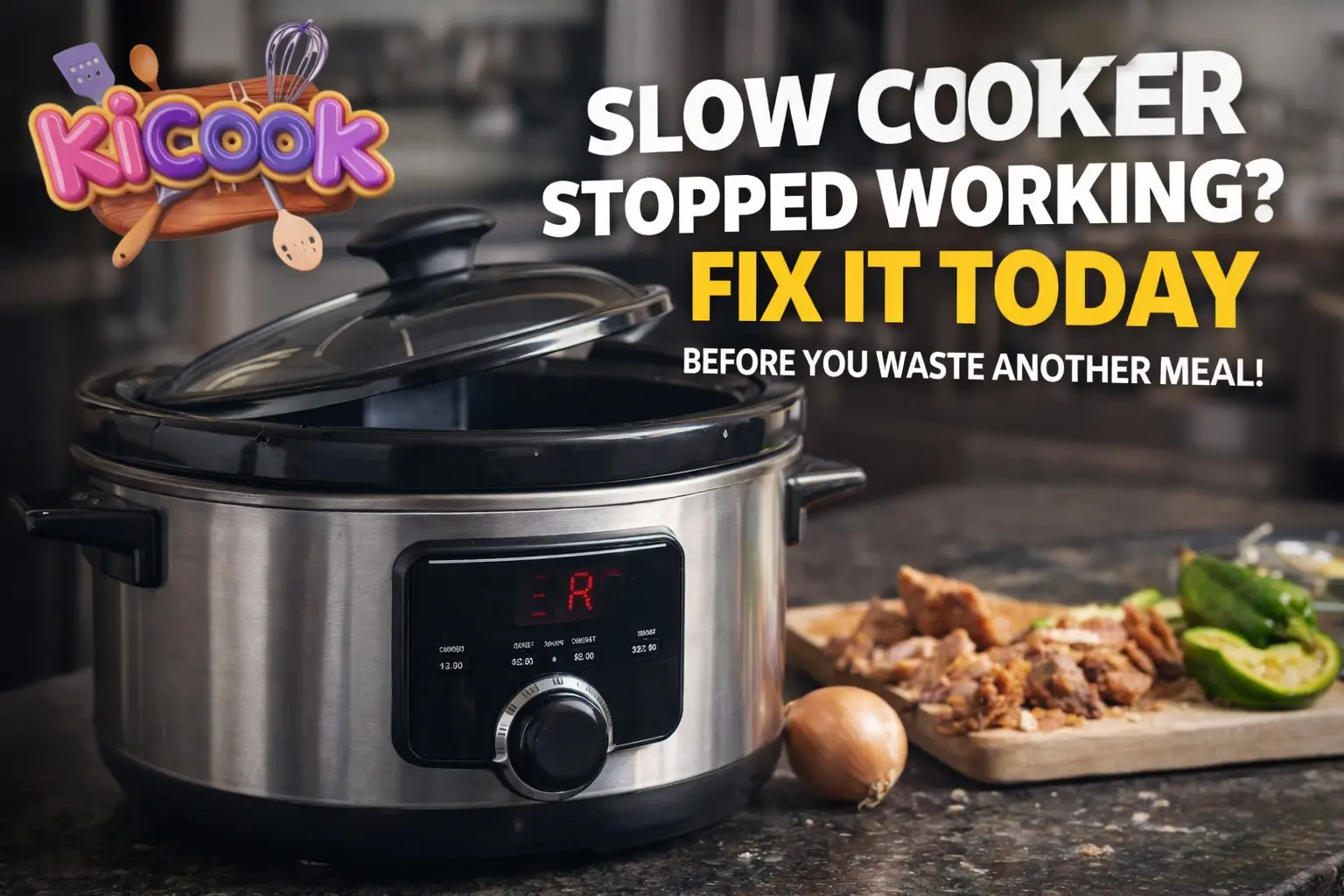
If your slow cooker stopped working, the issue is usually electrical either the power source, faulty cord, blown fuse, or internal thermostat problem. Most slow cooker failures are repairable with simple troubleshooting, saving you the cost of a replacement.
How Slow Cookers Work (So You Can Diagnose Them)
Before diagnosing a non-working slow cooker, it helps to understand the basics.
- Heating element: Warms the pot slowly over hours.
- Thermostat sensor: Keeps temperature stable.
- Control panel: Sets low/medium/high and timer functions.
A failure in any of these can cause complete shutdown. Most consumers don’t realize slow cookers rely on simple electrical parts similar to toasters or coffee makers.
Common Reasons Your Slow Cooker Stopped Working
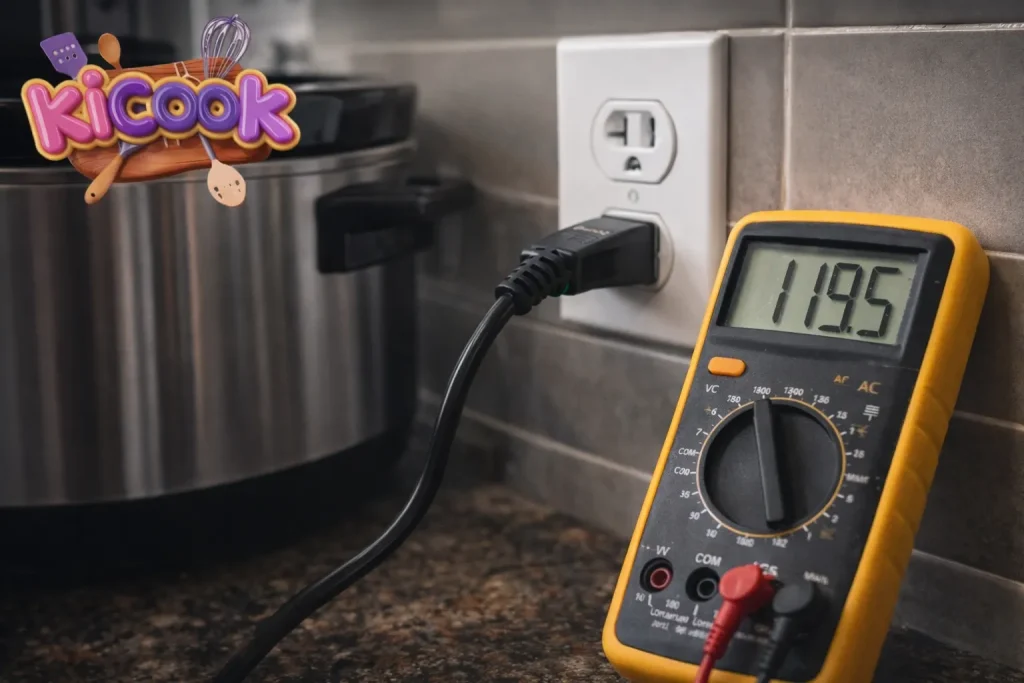
1. No Power at the Outlet
This is surprisingly common.
- Check the outlet with another appliance.
- Try another socket or breaker panel.
- Reset GFCI outlets (often in kitchens).
If the cooker gets no electricity, it can’t heat.
2. Damaged Power Cord or Plug
Over time the cord can wear.
Symptoms:
- Visible cuts or kinks
- Loose connection at the cooker end
- Cooker works sometimes, not always
If the wire is damaged, disconnect immediately and replace the cord if possible.
3. Internal Fuse or Thermostat Failure
Inside every slow cooker:
- A thermal fuse prevents overheating
- A thermostat controls temperature
When these fail, the cooker stops heating entirely. This usually requires professional help or replacement parts.
4. Control Panel or Timer Failure
Digital models can stop responding or display errors due to:
- Power surges
- Water damage
- Circuit board issues
If buttons or screens don’t respond, the control board might need repair or replacement.
Quick DIY Tests Before You Panic
| Test | How to Do It | What It Tells You |
|---|---|---|
| Outlet check | Plug another device | Confirms outlet power |
| Cord wiggle test | Move cord gently | Detects internal wiring issue |
| Try another setting | Switch cooker modes | Rules out setting errors |
These simple checks quickly rule out easy fixes.
When It’s Not Electrical: Other Causes
Lid or Pot Misalignment
Some cookers won’t start if the pot isn’t seated properly.
- Ensure the ceramic pot sits evenly.
- Check that the lid locks (if model requires).
Safety Shutoff
Cookers with safety sensors may shut off if:
- Overheated
- Detect moisture in control area
- Lid sensor fault
Unplug for 20 minutes and retry — this often resets safety circuits.
Expert Opinion
By: Habib Khan — Expert Kitchen Appliance Writer
I’ve repaired and troubleshooted hundreds of kitchen appliances. Slow cookers are robust but not indestructible. Almost always, you can diagnose the issue at home with no tools beyond a multimeter and simple observation. But do not attempt internal repairs unless you’re confident with electrical safety.
Pros & Cons of Fixing vs. Replacing
Pros of Fixing:
- Cheaper than buying new
- Environmentally friendly
- You understand your appliance better
Cons of Fixing:
- Some parts hard to source
- Not worth it on very old models
- Internal repairs can be risky
When to Replace Your Slow Cooker
Replace when:
- It repeatedly fails
- Internal parts are unrepairable
- Electronics are beyond simple repair
- Cost of repair > new unit
Slow cookers are inexpensive compared to ovens, so replacement is often the most cost-effective option.
FAQ – People Also Ask
Why does my slow cooker light turn on but it won’t heat?
This usually means the heating element or thermostat has failed. Power is reaching the cooker, but the element isn’t converting it to heat.
How long should a slow cooker last?
Most quality models last 5–10 years with regular use. Frequent high-heat cooking shortens lifespan.
Can I repair a slow cooker myself?
You can diagnose electrical issues at home, but internal repairs (fuse or thermostat replacements) should be done only if you have electrical experience.
Is it safe to use a slow cooker that sometimes stops heating?
No — intermittent heating means inconsistent cooking temperatures, which risks undercooked food and possible foodborne illness.
For more on how slow heating affects cooking safety, the U.S. Department of Agriculture (USDA) provides guidelines on safe internal temperatures for slow-cooked meals.
Strong Conclusion
A slow cooker that stops working doesn’t always mean the end. Most times, it’s a simple electrical or seating issue you can fix quickly. Start with the basics outlet, cord, and proper pot alignment before considering professional repair or replacement. With the right steps, you’ll be back to slow-cooked meals in no time.
Related Articles You May Find Helpful
- Learn why your slow cooker food gets watery in this detailed guide fro slow-cooker-food-watery-reddit/ where real users share solutions.
- Discover the reasons slow cooker food becomes watery and how to prevent it in the kitchen at why-is-my-slow-cooker-food-watery/
- If your slow cooker isn’t heating properly (but hasn’t stopped completely), check these easy fixes for a slow cooker not heating at slow-cooker-not-heating-easy-fixes.

“I believe great cooking starts with the right tools, trusted advice, and a little confidence in the kitchen.”
Hi, I’m Emma Carter. My love for cooking began in my grandmother’s kitchen, where I learned that every great meal starts with simple ingredients and the right cookware. Over the years, I’ve spent countless hours researching, testing, and comparing kitchen appliances, cookware, coffee makers, air fryers, and other everyday kitchen essentials.
Here at KiCook, my goal is to make your buying decisions easier with honest product reviews, practical buying guides, and easy-to-follow cooking tips. Whether you’re upgrading your kitchen or searching for the best appliance for your home, I focus on providing clear, reliable, and research-backed information you can trust.
When I’m not testing new kitchen gadgets or writing in-depth guides, you’ll usually find me trying new recipes, visiting local farmers’ markets, or enjoying a quiet cup of coffee while planning my next kitchen project.