
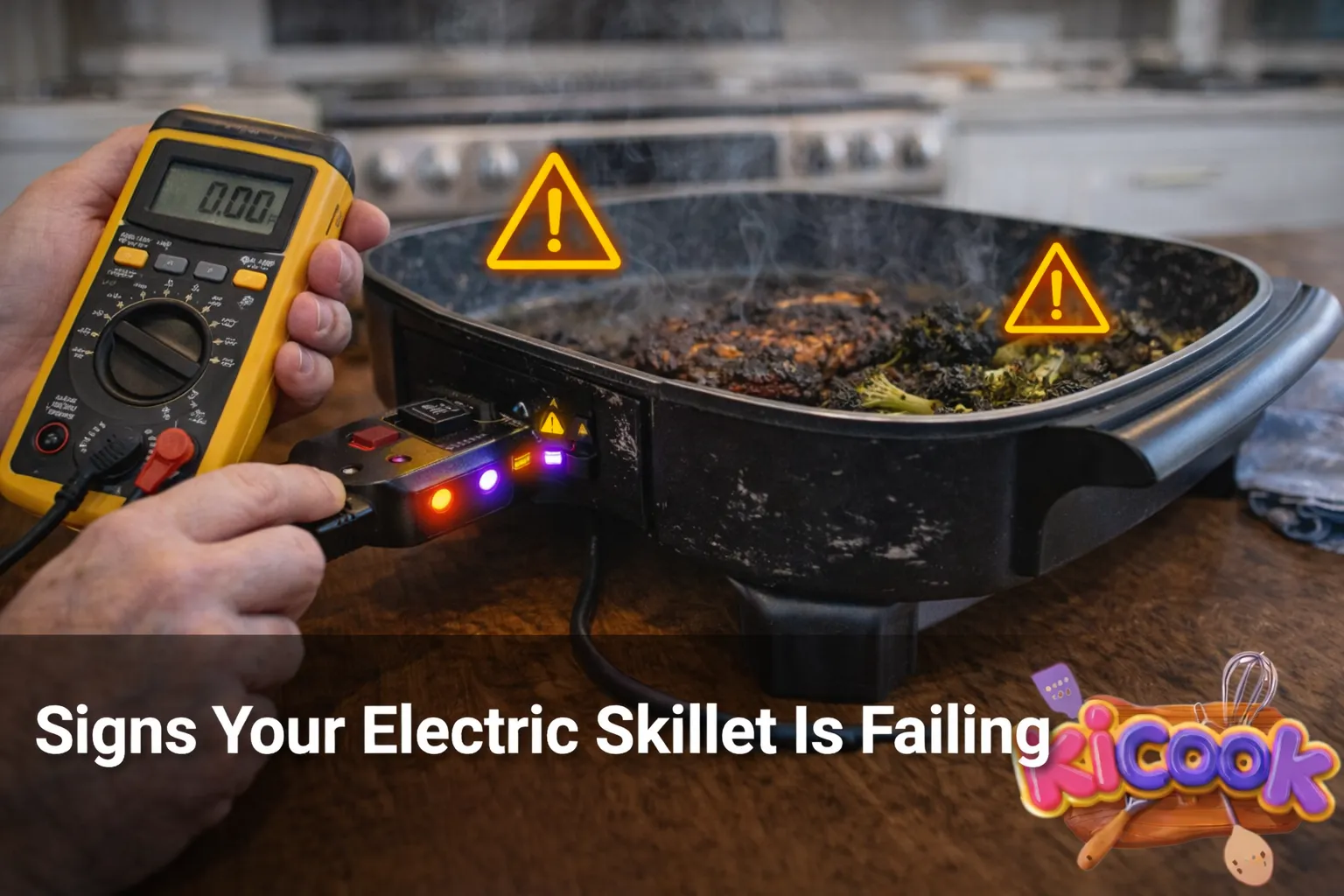
The most common signs your electric skillet is failing include uneven heating, temperature control problems, power issues, strange smells, and visible damage to the heating element or cord. If you notice these early warning signs, you can often fix the problem before your electric skillet stops working completely.
I’ve used electric skillets for years in my kitchen, especially for family dinners, weekend breakfasts, and quick one-pan meals. They’re convenient, portable, and perfect for small apartments in the USA, UK, London flats, and Canadian homes. But like any kitchen appliance, they don’t last forever.
The problem is this: most people ignore the early warning signs.
One day the skillet works fine. The next day, it won’t turn on.
In this guide, I’ll walk you through the real signs your electric skillet is failing, why they happen, and what you can do before it becomes a safety hazard.
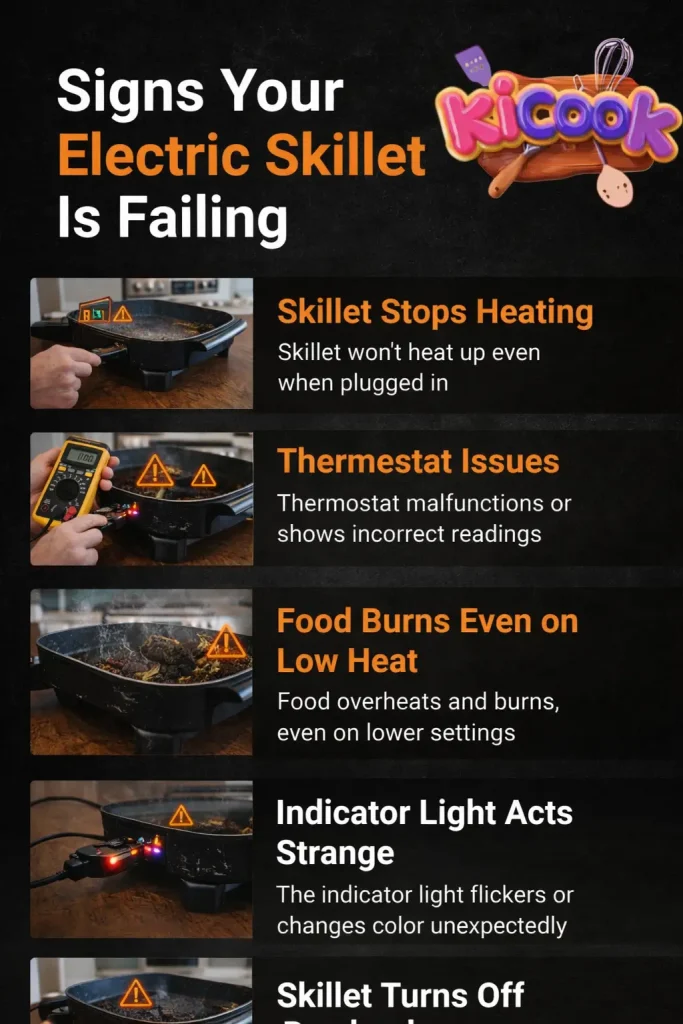
Why Paying Attention Early Matters
Electric skillets rely on:
- Heating element
- Temperature control probe
- Power cord
- Nonstick coating
- Internal wiring
If one component weakens, performance drops.
Ignoring small problems can lead to:
- Burnt food
- Undercooked meals
- Electrical risk
- Fire hazard
If you want a full overview of common issues, you can also read this guide: 15-common-electric-skillet-problems
1. Uneven Heating
This is the first sign I usually notice.
If your electric skillet:
- Has hot spots
- Leaves cold areas
- Burns food in one corner
Then the heating element may be failing.
Why It Happens
- Aging heating element
- Damaged internal wiring
- Warped cooking surface
What You Can Do
- Rotate food halfway
- Check if skillet sits flat
- Inspect for surface warping
If the heating becomes unpredictable, replacement may be safer.
2. Temperature Control Not Working Properly
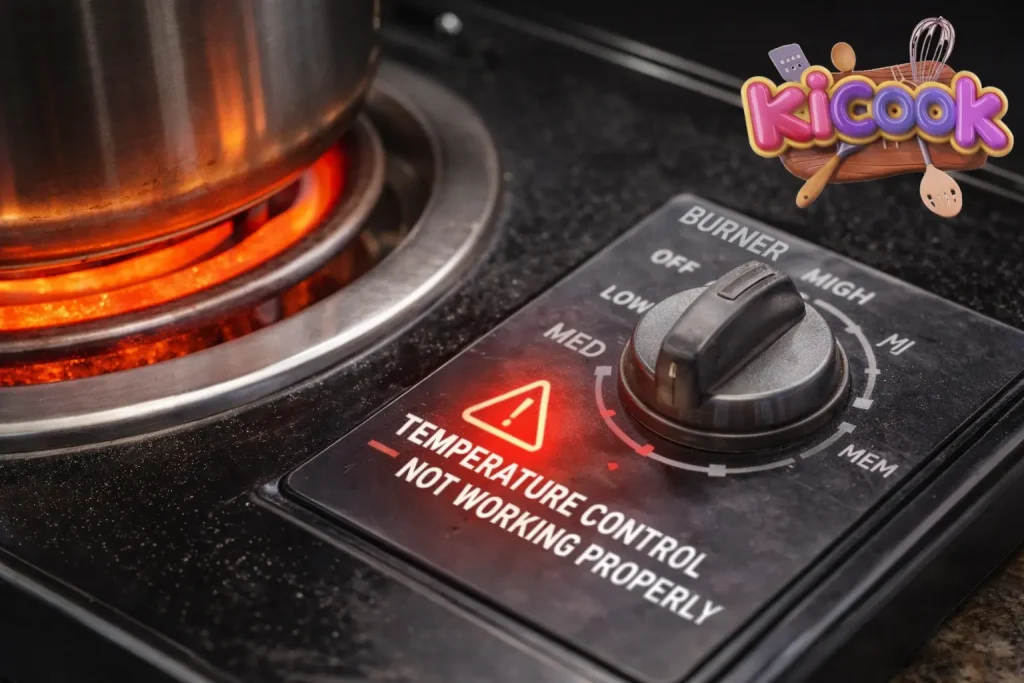
The thermostat is critical.
If your skillet:
- Doesn’t reach set temperature
- Overheats quickly
- Shuts off randomly
Then the temperature control probe may be faulty.
I once had a skillet that kept overheating at 350°F even when set to 250°F. It ruined several meals before I realized the thermostat was broken.
You can learn more about fixing this issue here: electric-skillet-troubleshooting-guide
3. Skillet Takes Too Long to Heat
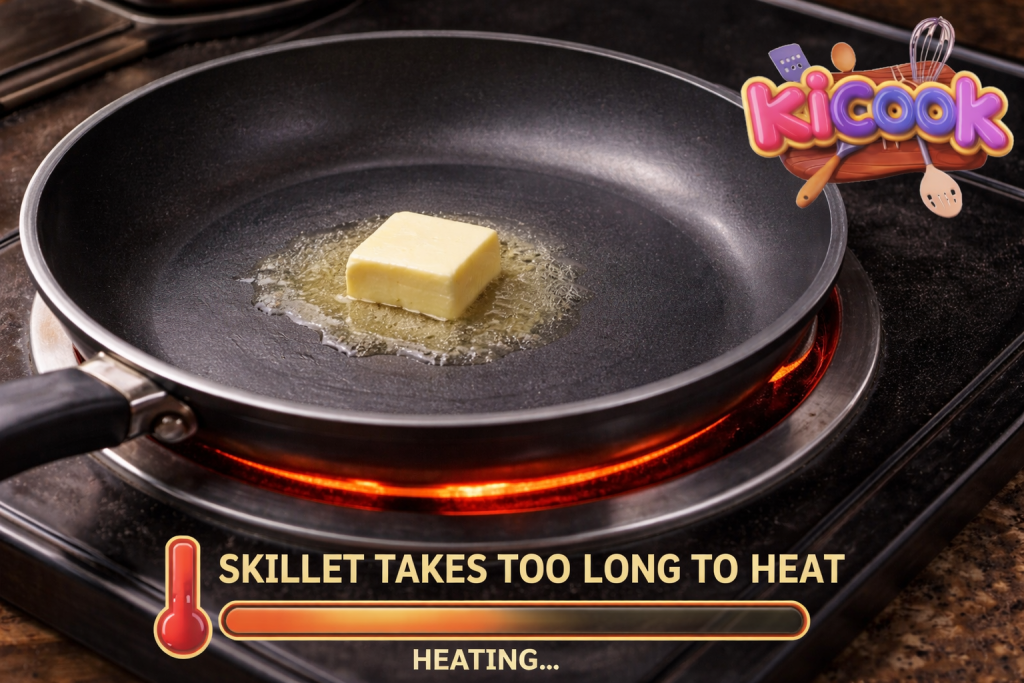
Electric skillets should heat within minutes.
If it now:
- Takes 10–15 minutes
- Struggles to maintain heat
- Feels weak
This may signal:
- Failing heating element
- Loose electrical connection
- Internal wear
In colder climates like Canada or the UK, you might notice heating issues more in winter.
4. Power Issues or Random Shut Off
One of the most serious warning signs.
If your skillet:
- Turns off during cooking
- Flickers
- Won’t turn on
First check:
- Wall outlet
- Extension cord
- Power cable
If those are fine, the internal wiring may be damaged.
For more detailed solutions, read: electric-skillet-not-working
5. Burning Smell or Smoke
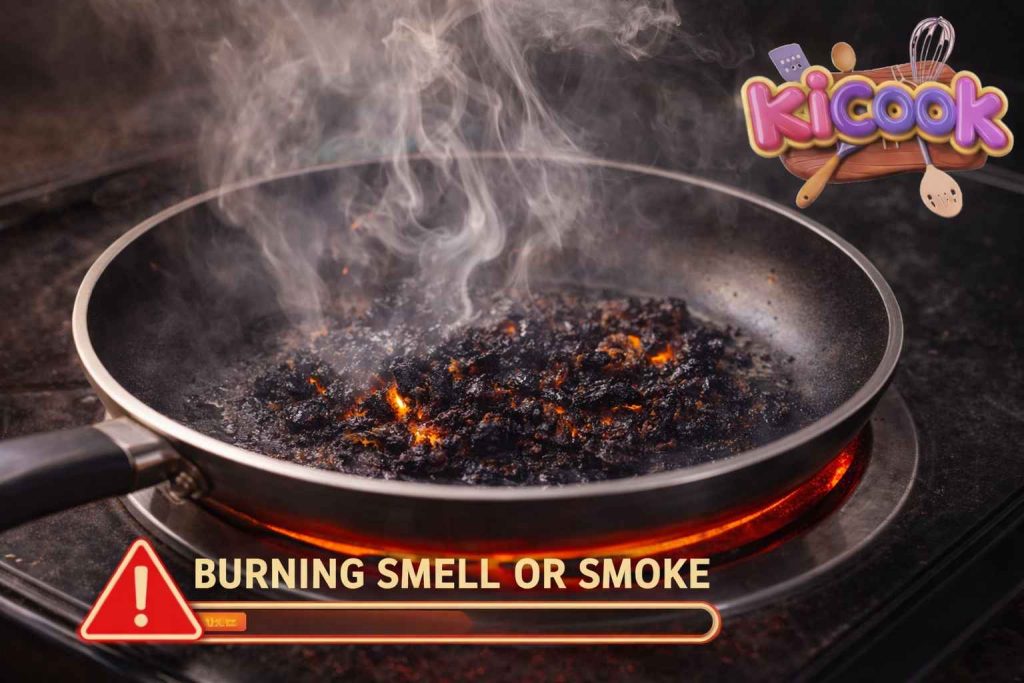
This should never be ignored.
A burning smell may mean:
- Electrical short
- Melting insulation
- Grease buildup
Stop using it immediately.
Safety should always come first. You can review safety advice here: electric-skillet-safety-issues
As Benjamin Franklin said:
“An ounce of prevention is worth a pound of cure.” — Benjamin Franklin
Early action prevents bigger damage.
6. Nonstick Coating Peeling or Scratching
The nonstick surface is important for:
- Easy cooking
- Easy cleaning
- Preventing food sticking
If coating is:
- Peeling
- Flaking
- Deeply scratched
It may release particles into food.
This doesn’t always mean the skillet is electrically failing, but it signals aging.
7. Warped or Uneven Cooking Surface
Over time, heat can warp the pan.
Signs include:
- Oil pooling on one side
- Food sliding
- Uneven browning
Warping affects heat distribution and cooking performance.
8. Temperature Dial Feels Loose or Unresponsive
The control dial should feel firm.
If it:
- Feels loose
- Spins too easily
- Doesn’t click
The thermostat connection may be wearing out.
9. Visible Damage to Power Cord
Check for:
- Cracks
- Frayed wire
- Exposed copper
- Melted areas
Damaged cords increase fire risk.
In apartments in New York, London, or Toronto, electrical safety is especially important due to older wiring systems.
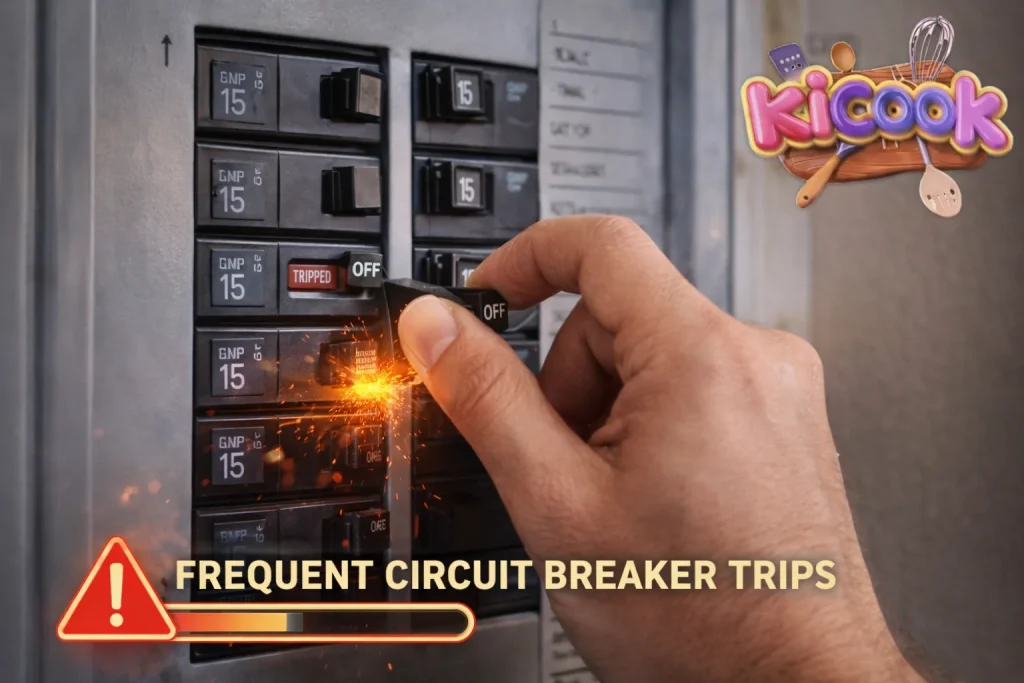
10. Frequent Circuit Breaker Trips
If your skillet trips the breaker, it could mean:
- Electrical short
- Overloaded circuit
- Internal damage
Never ignore repeated breaker trips.
Common Customer Pain Points (And My Solutions)
Let’s address real frustrations.
“My Food Burns on One Side”
Cause: Uneven heating
Solution: Rotate food and test temperature with thermometer. If problem continues, consider replacement.
“It Smells Like Plastic”
Cause: New unit burn-off or overheating wiring
Solution: Run empty at 350°F for 10 minutes (new unit). If smell persists, stop using it.
“It Turns Off Randomly”
Cause: Faulty thermostat
Solution: Test with different outlet. If problem remains, replace probe or skillet.
“It’s Not Worth Repairing”
Sometimes repair costs exceed value.
If you’re wondering about long-term value, read: are-electric-skillets-worth-it
When to Repair vs Replace
Repair If:
- Cord is detachable
- Thermostat probe replaceable
- Minor surface issue
Replace If:
- Heating element failing
- Internal wiring damaged
- Repeated safety problems
In the USA and Canada, replacement units are often affordable.
In the UK, check warranty period first.
How Long Should an Electric Skillet Last?
Average lifespan:
- 3–7 years
Depends on:
- Frequency of use
- Cleaning habits
- Storage conditions
Proper care extends life.
Maintenance Tips to Prevent Failure
I follow these simple rules:
- Never submerge control probe
- Clean after each use
- Avoid metal utensils
- Store dry
- Don’t wrap cord tightly
These habits reduce wear.
Warning Signs You Should Stop Using It Immediately
Stop if you notice:
- Sparks
- Smoke
- Loud popping sound
- Exposed wires
Safety comes first.
Real Experience From My Kitchen
One winter in Canada, my skillet began heating unevenly. I ignored it. A month later, it stopped working mid-meal.
Looking back, I missed the warning signs.
Learning to identify early failure signs saves stress.
As Julia Child said:
“No one is born a great cook, one learns by doing.” — Julia Child
Appliance care is part of cooking skill.
Frequently Asked Questions
How do I know if my electric skillet thermostat is broken?
If it overheats, underheats, or shuts off randomly, the thermostat may be faulty.
Is it safe to keep using a failing skillet?
No, especially if there are electrical smells or power issues.
Can heating elements be repaired?
Most sealed units cannot be repaired easily.
Why does my skillet cook unevenly?
Likely due to aging heating element or warped base.
How can I extend its lifespan?
Clean properly, avoid scratches, store carefully.
Is replacement better than repair?
Often yes, especially for budget models.
How do I test heating performance?
Use a food thermometer to check surface temperature consistency.
Final Thoughts: Signs Your Electric Skillet Is Failing
Recognizing the early signs your electric skillet is failing can save you from ruined meals and safety risks. Uneven heating, faulty temperature control, strange smells, and power problems are clear warnings.
From my experience, paying attention to small changes makes a big difference. If your skillet shows repeated problems, replacing it may be the safer option. A well-functioning electric skillet should heat evenly, maintain temperature, and operate safely.
Your kitchen should feel reliable and stress-free. Watching for early warning signs helps you keep it that way.

“I believe great cooking starts with the right tools, trusted advice, and a little confidence in the kitchen.”
Hi, I’m Emma Carter. My love for cooking began in my grandmother’s kitchen, where I learned that every great meal starts with simple ingredients and the right cookware. Over the years, I’ve spent countless hours researching, testing, and comparing kitchen appliances, cookware, coffee makers, air fryers, and other everyday kitchen essentials.
Here at KiCook, my goal is to make your buying decisions easier with honest product reviews, practical buying guides, and easy-to-follow cooking tips. Whether you’re upgrading your kitchen or searching for the best appliance for your home, I focus on providing clear, reliable, and research-backed information you can trust.
When I’m not testing new kitchen gadgets or writing in-depth guides, you’ll usually find me trying new recipes, visiting local farmers’ markets, or enjoying a quiet cup of coffee while planning my next kitchen project.