
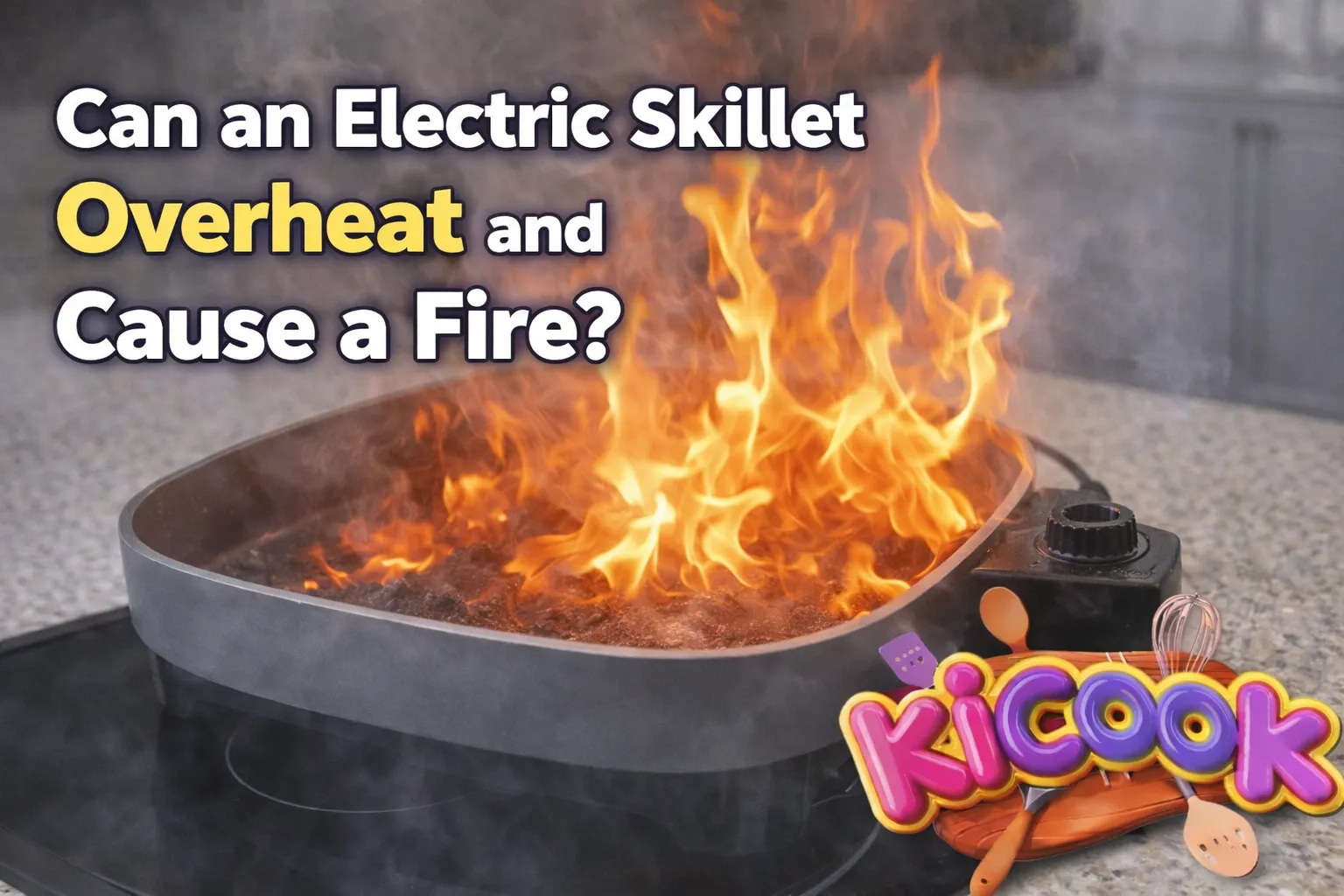
Electric skillets are convenient and versatile kitchen tools, but many people worry: can they overheat and actually start a fire? In this article, I’ll explain exactly how electric skillets work, the real risks, and how to use yours safely so you never have to stress.
Electric skillets can overheat if misused, but with proper handling and safety checks, the risk of fire is extremely low. Most modern models have built-in safety features that prevent dangerous temperatures, but user habits and electrical problems matter a lot.
What Happens When an Electric Skillet Overheats?
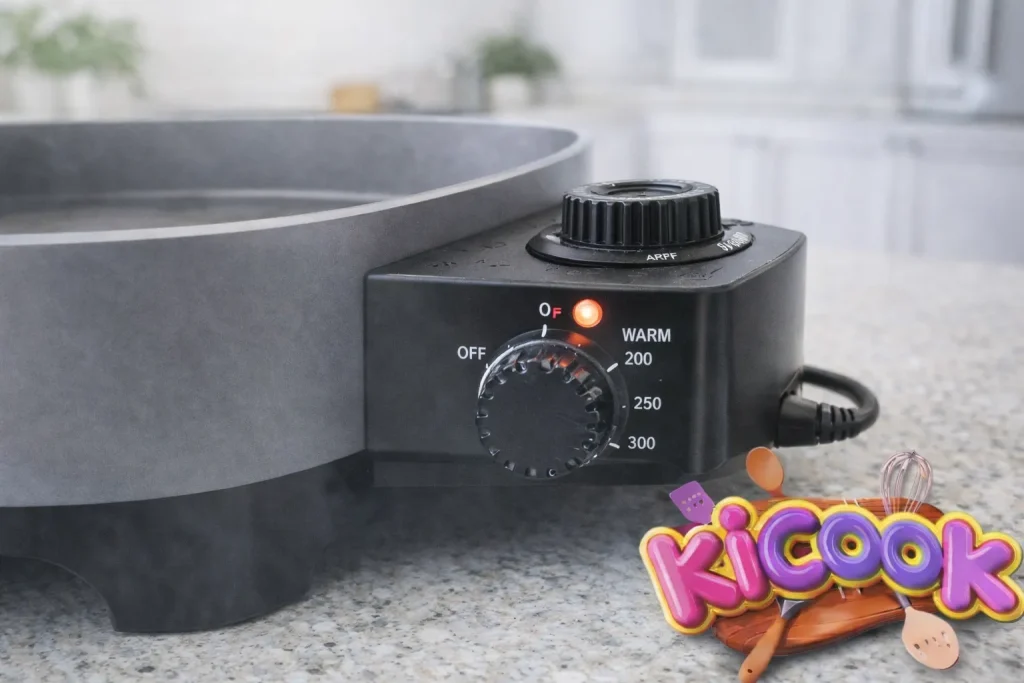
An electric skillet heats using a built-in heating element controlled by a thermostat. If that thermostat fails or the skillet is left on high for too long without food or liquid inside, temperatures can climb higher than designed.
How Skillets Detect Temperature
Most skillets use temperature sensors to regulate heat. When food reaches the set temperature, the heating element cycles off. If sensors fail, the skillet can get much hotter than intended—potentially damaging the unit or creating hazards.
Common Causes of Overheating
- Leaving skillet on “high” with no food inside
- Thermostat or thermostat probe malfunction
- Power surges or faulty wiring
- Cooking greasy foods that ignite at high heat
Overheating by itself doesn’t guarantee a fire, but it can increase the risk, especially if grease or flammable debris is involved.
Can Overheating Actually Cause a Fire?
The short answer is yes, but it’s uncommon. Fires involving electric skillets most often stem from user error rather than the appliance itself.
Why Overheating Can Lead to Fire
- Grease ignition – Oil that gets too hot can catch fire at high temperatures.
- Electrical faults – A short circuit or damaged cord can spark and start a fire.
- Combustible surroundings – Placing the skillet too close to curtains or paper towels increases danger.
However, properly used and maintained skillets with safety features rarely reach these danger zones.
Safety Features That Prevent Fires
Modern electric skillets often include protective features such as:
- Automatic shutoff when temperatures get dangerously high
- Thermostat sensors that cycle heat efficiently
- Insulated handles and housing
While these features reduce risk, nothing replaces good user habits.
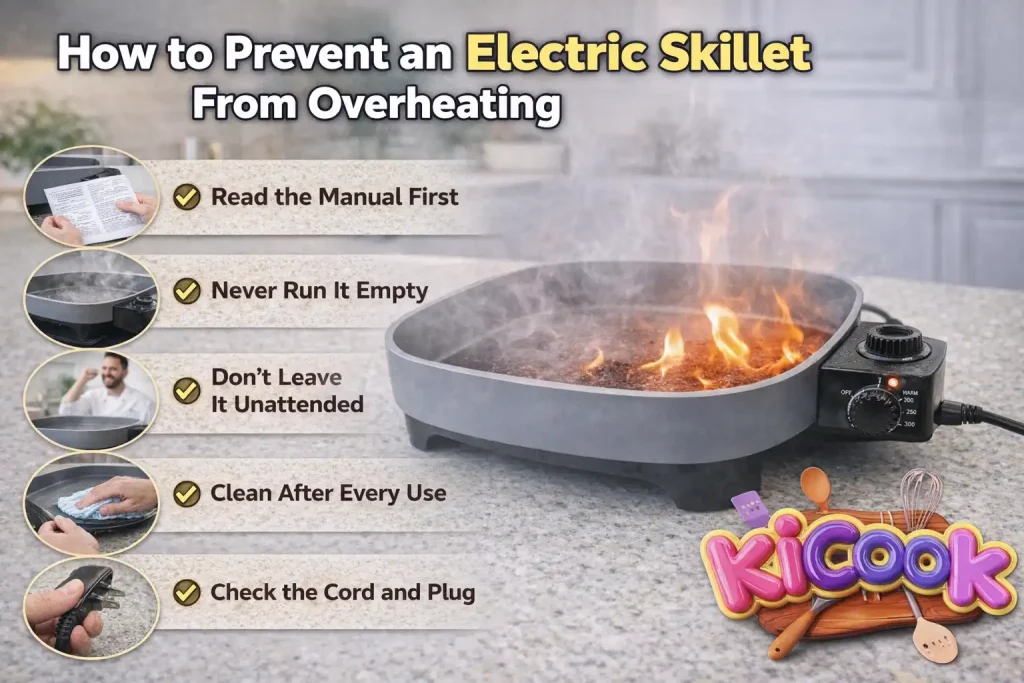
How to Prevent an Electric Skillet From Overheating
Here are practical steps I always follow:
1. Read the Manual First
Different models have unique heat ranges and safety tips.
2. Never Run It Empty
A skillet without food or water inside will heat too fast.
3. Don’t Leave It Unattended
Even great safety features can’t replace human supervision.
4. Clean After Every Use
Grease buildup is one of the biggest fire hazards.
5. Check the Cord and Plug
If wiring is damaged, stop using the skillet immediately.
Electric Skillet Safety: What You Need to Know
Understanding safety basics helps you avoid problems:
- Place the skillet on a stable, heat-resistant surface
- Keep flammable items away
- Use oven mitts when handling hot surfaces
- Unplug when not in use
Many safety issues can be prevented by simple habits learn more in my detailed guide on electric skillet safety.
Related reading: Electric Skillet Safety Issues & How to Fix Them
Troubleshooting: Signs Your Skillet Is Overheating
If you’re worried your skillet is running too hot, watch for these signs:
| Problem | What It Might Mean |
|---|---|
| Burning smell | Too hot or food stuck and burning |
| Smoking | Grease overheating or wrong heat setting |
| Discoloration | Overheating damage |
| Circuit breaker trips | Electrical problem |
For more on troubleshooting, check out my step-by-step guide: electric-skillet-troubleshooting-guide
Expert Opinion
By: Dila Lue , Kitchen Appliance Expert
Electric skillets are generally safe when used correctly. The risk of fire comes from improper use, such as leaving the skillet on without food or not cleaning grease away. With good habits and regular maintenance, you can use your skillet confidently.
Pros & Cons of Electric Skillets
Pros
- Fast, even heating
- Easy temperature control
- Great for versatile cooking
Cons
- Can overheat if misused
- Electrical device always carries some risk
- Grease fires are possible without careful cleanup
Final Verdict
Can an electric skillet overheat and cause a fire? Yes, but only under avoidable conditions. With proper handling and a good safety routine, the risk is minimal. Electric skillets are safe, practical, and a great addition to your kitchen when used responsibly.
Before you go, you might also find these helpful:
Related Articles You May Find Helpful
- Learn how to fix common problems with electric skillets in Electric Skillet Not Working? Troubleshooting Tips
- Discover if an electric skillet is worth buying in Are Electric Skillets Worth It?
- Explore common technical issues and solutions in 15 Common Electric Skillet Problems

“I believe great cooking starts with the right tools, trusted advice, and a little confidence in the kitchen.”
Hi, I’m Emma Carter. My love for cooking began in my grandmother’s kitchen, where I learned that every great meal starts with simple ingredients and the right cookware. Over the years, I’ve spent countless hours researching, testing, and comparing kitchen appliances, cookware, coffee makers, air fryers, and other everyday kitchen essentials.
Here at KiCook, my goal is to make your buying decisions easier with honest product reviews, practical buying guides, and easy-to-follow cooking tips. Whether you’re upgrading your kitchen or searching for the best appliance for your home, I focus on providing clear, reliable, and research-backed information you can trust.
When I’m not testing new kitchen gadgets or writing in-depth guides, you’ll usually find me trying new recipes, visiting local farmers’ markets, or enjoying a quiet cup of coffee while planning my next kitchen project.