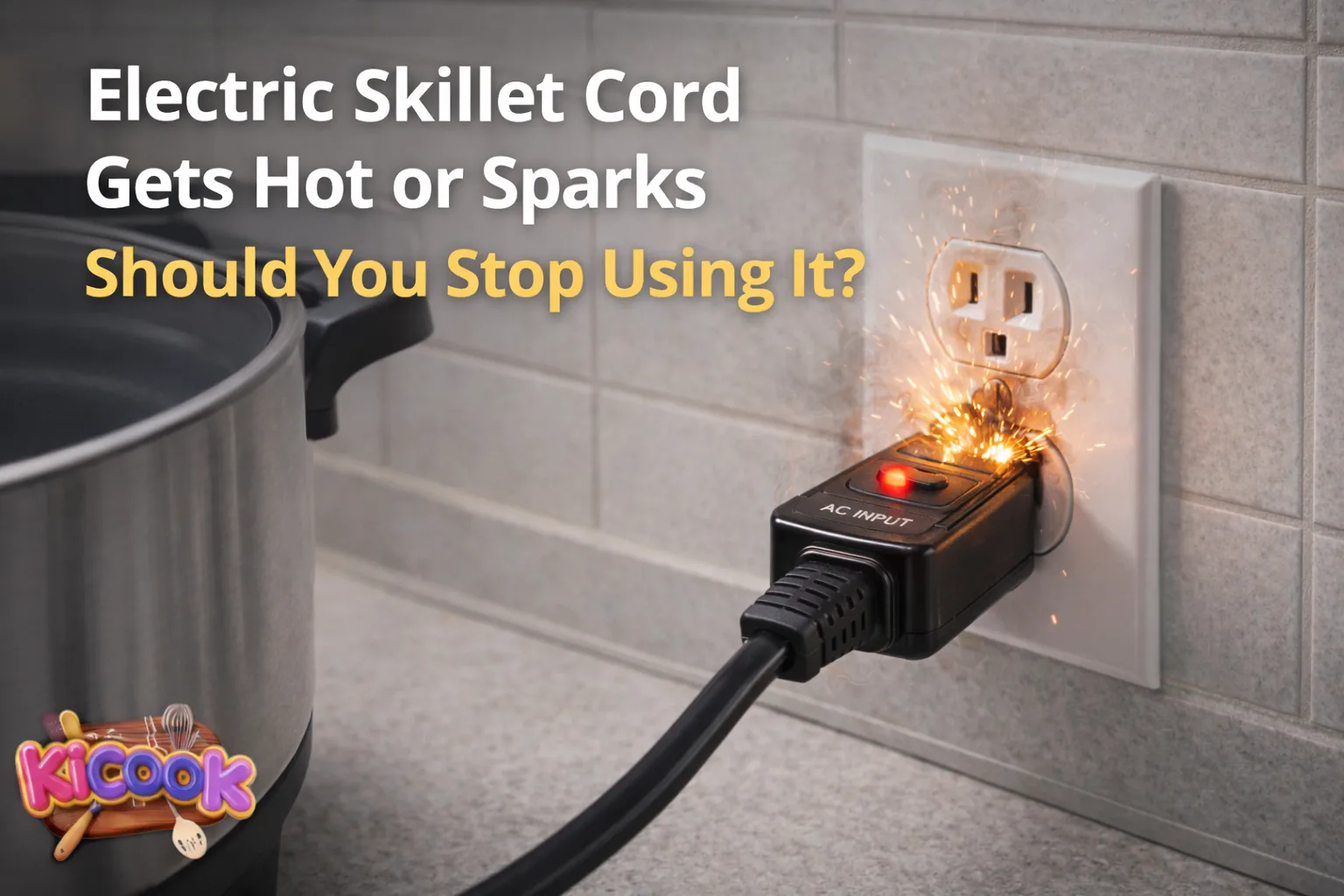
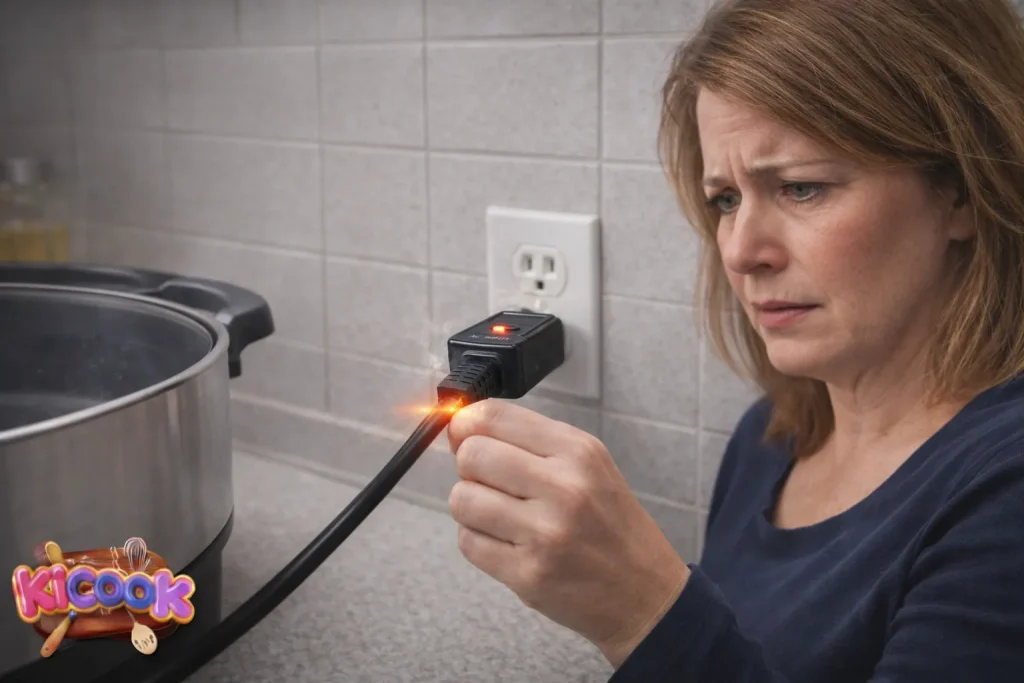
Yes—if your electric skillet cord gets hot or sparks, you should stop using it immediately. This is not normal behavior and can signal serious electrical risks, including fire or electric shock.
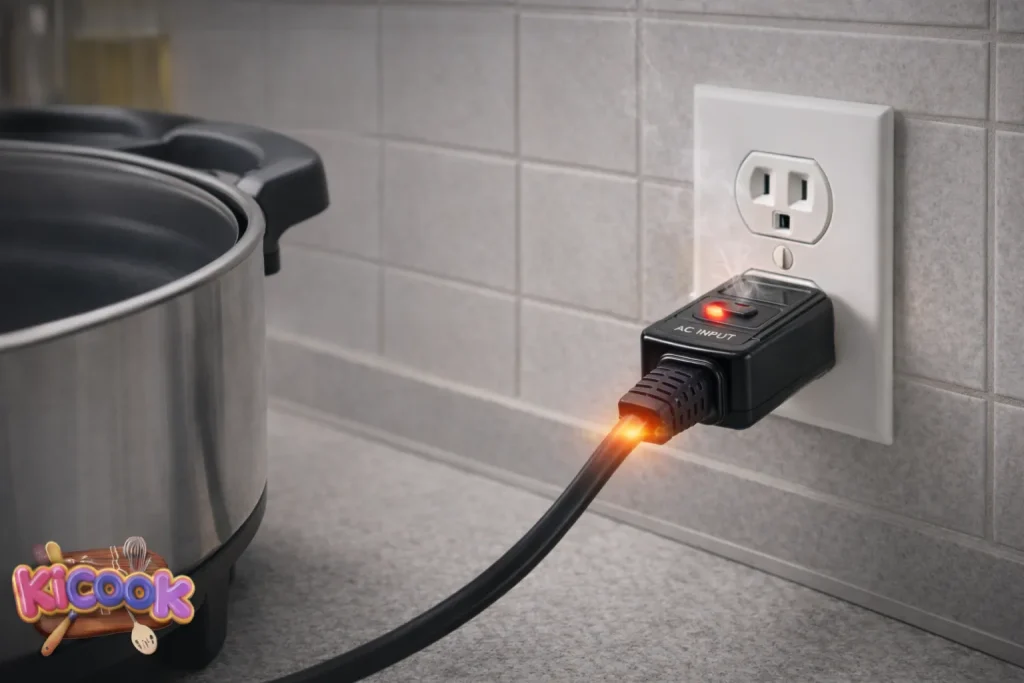
Why a Hot or Sparking Cord Is a Big Red Flag
I’ve used electric skillets for years, and I want to be very clear here.
The cord should never get hot or spark. Ever.
Unlike cycling heat inside the pan, cord issues point to electrical failure, not normal operation.
Common Reasons an Electric Skillet Cord Gets Hot or Sparks
1. Loose or Worn Plug Connection (Most Common)
This is the most frequent cause I see.
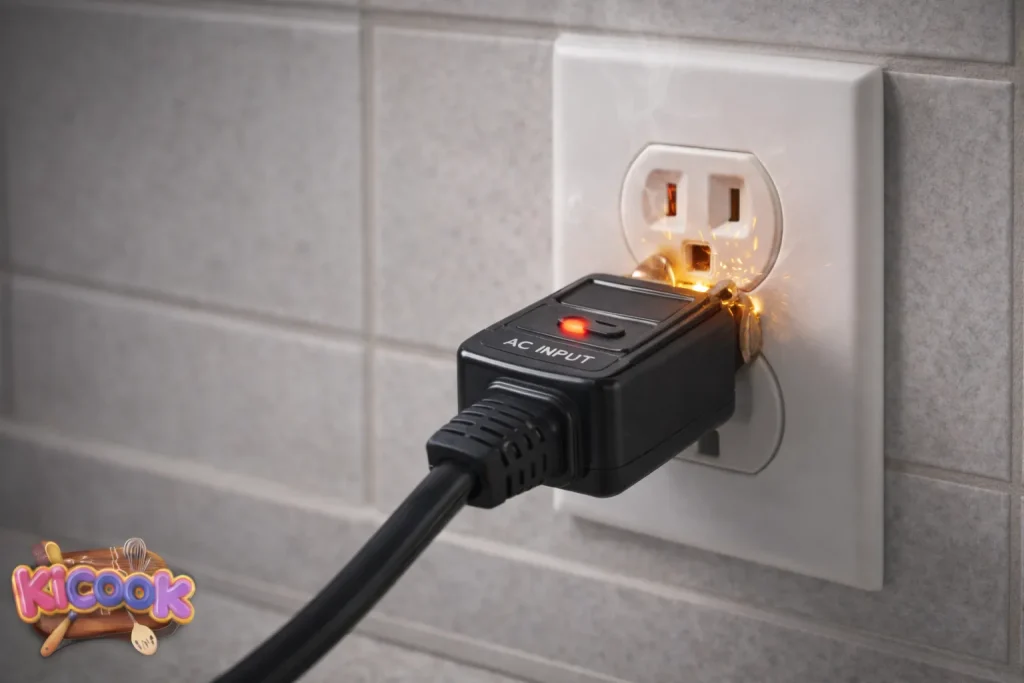
When the plug doesn’t fit tightly:
- Electricity jumps between contacts
- Heat builds up
- Sparks can appear
Warning signs:
- Plug feels warm
- Power cuts in and out
- You see tiny flashes near the outlet
2. Damaged or Frayed Power Cord
Over time, cords wear down.
Causes include:
- Bending the cord near the plug
- Storing the skillet tightly wrapped
- Heat exposure
What makes this dangerous:
Damaged insulation exposes live wires, increasing shock and fire risk.
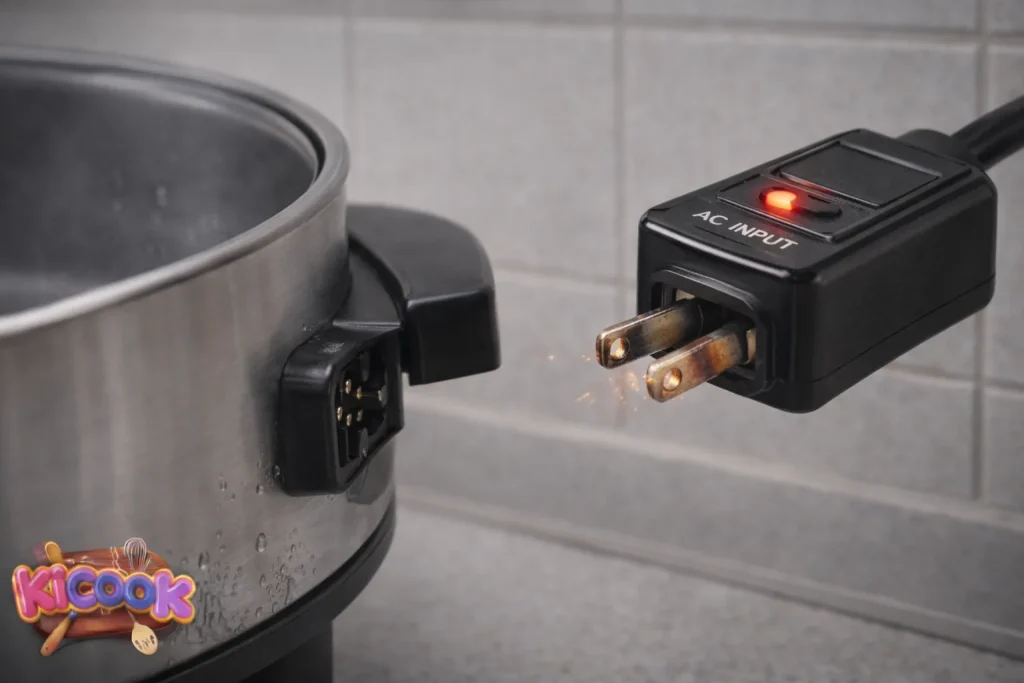
3. Faulty Temperature Control Probe or Connector
If your skillet uses a detachable probe, the connection point matters.
What can go wrong:
- Dirty or corroded contacts
- Loose internal connector
- Internal arcing
This can cause heat buildup right at the cord connection.
4. Overloaded Outlet or Extension Cord Use
Electric skillets draw a lot of power.
Risky situations:
- Using extension cords
- Sharing an outlet with other appliances
- Old or worn wall outlets
This increases resistance, which causes heat and sparks.
5. Internal Electrical Short (Serious Issue)
This is rare but dangerous.
Signs:
- Sparks even with a solid outlet
- Burning smell
- Cord heats quickly
An internal short means the skillet is no longer safe to use.
Is It Ever Safe to Keep Using a Skillet with a Hot Cord?
Short answer: No.
Stop using it immediately if:
- The cord feels hot to touch
- You see sparks
- You smell burning plastic
- The plug looks melted or dark
These are fire risk indicators, not minor issues.
Quick Safety Risk Table
| Symptom | Danger Level | What to Do |
|---|---|---|
| Warm plug | Medium | Unplug and inspect |
| Visible sparks | High | Stop using immediately |
| Burning smell | High | Replace skillet |
| Frayed cord | High | Do not repair—replace |
What I Do Immediately When This Happens
If I ever notice heat or sparks, I do this:
- Turn off the skillet
- Unplug it right away
- Let everything cool
- Inspect the cord and plug
- Do not plug it back in
If there’s visible damage, the skillet is done.
Can You Repair a Hot or Sparking Cord?
Sometimes, but rarely worth it.
Possible repair:
- Replacing a detachable probe (if cord is part of probe)
Not recommended:
- Splicing cords
- DIY electrical repairs
- Tape or temporary fixes
These fixes are unsafe for high-heat appliances.
Pros and Cons of Stopping Use Immediately
Pros
- Prevents fire
- Avoids electric shock
- Protects your home
Cons
- Cooking interrupted
- Replacement cost
Safety always wins this trade-off.
Expert Opinion
Based on real-world use and appliance safety standards:
If an electric skillet cord gets hot or sparks, the appliance has crossed from “inconvenient” into “unsafe.” Continuing to use it is not worth the risk.
I’ve seen minor issues turn into serious accidents too fast.
How I Prevent Cord Problems
These habits matter:
- Plug directly into a wall outlet
- Avoid extension cords
- Never bend the cord near the plug
- Store loosely after cooling
- Replace damaged probes early
FAQs – People Also Ask
Why is my electric skillet cord getting hot?
Usually due to loose connections, damaged cords, or overloaded outlets.
Can an electric skillet cause a fire?
Yes, especially if the cord overheats or sparks.
Is a warm plug normal?
No. The plug should stay cool during normal use.
Can I tape a damaged cord?
No. This is unsafe and increases fire risk.
Should I replace my electric skillet if it sparks?
Yes. Sparking indicates a serious electrical fault.
Final Thoughts
If you’re asking, “Electric skillet cord gets hot or sparks – should you stop using it?”, the answer is clear.
Yes. Stop immediately.
This is not a performance issue—it’s a safety issue.
No meal is worth the risk of fire or electric shock.
When electricity sends a warning, always listen.

“I believe great cooking starts with the right tools, trusted advice, and a little confidence in the kitchen.”
Hi, I’m Emma Carter. My love for cooking began in my grandmother’s kitchen, where I learned that every great meal starts with simple ingredients and the right cookware. Over the years, I’ve spent countless hours researching, testing, and comparing kitchen appliances, cookware, coffee makers, air fryers, and other everyday kitchen essentials.
Here at KiCook, my goal is to make your buying decisions easier with honest product reviews, practical buying guides, and easy-to-follow cooking tips. Whether you’re upgrading your kitchen or searching for the best appliance for your home, I focus on providing clear, reliable, and research-backed information you can trust.
When I’m not testing new kitchen gadgets or writing in-depth guides, you’ll usually find me trying new recipes, visiting local farmers’ markets, or enjoying a quiet cup of coffee while planning my next kitchen project.


1 thought on “Electric Skillet Cord Gets Hot or Sparks – Should You Stop Using It?”