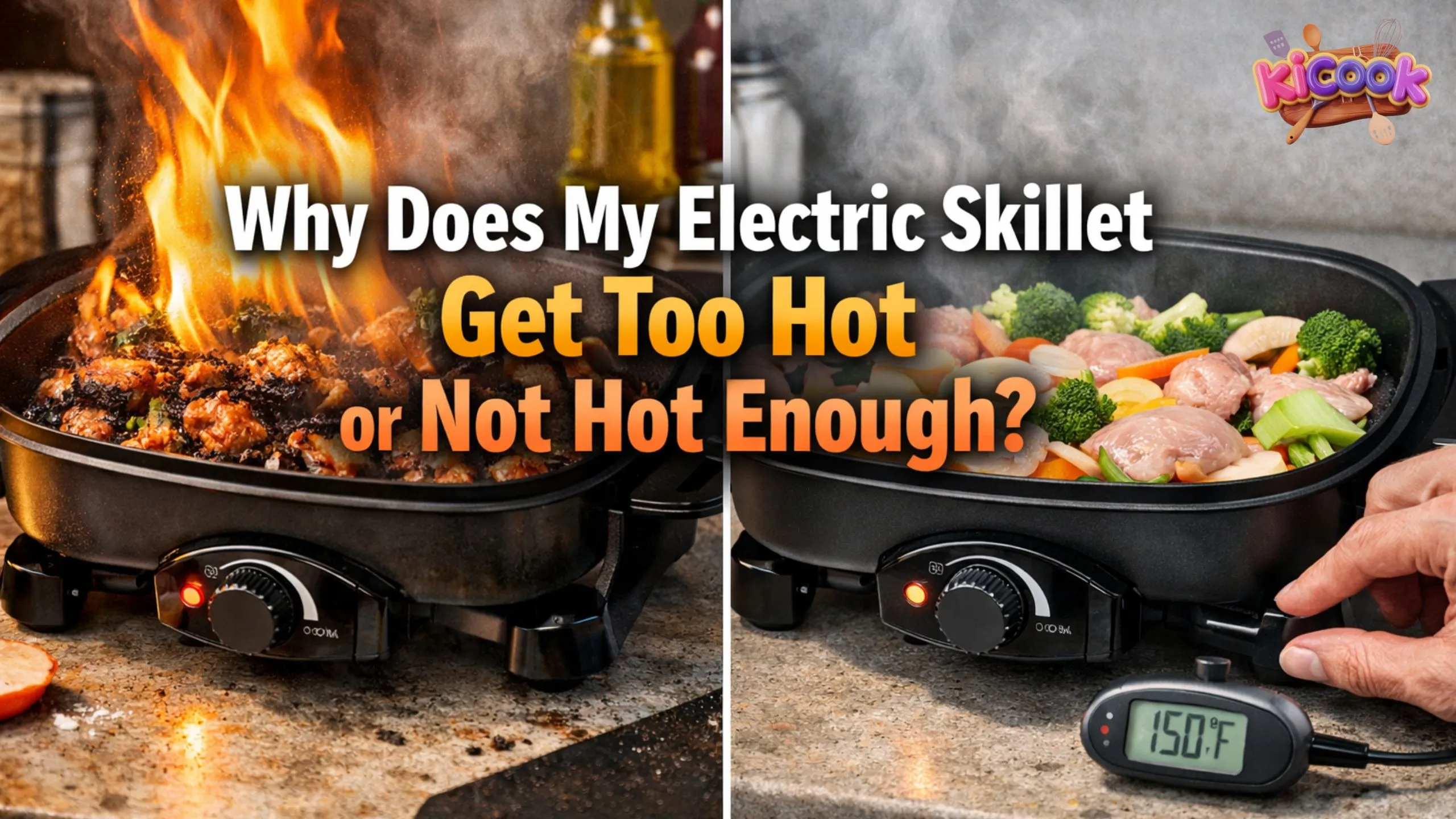
If your electric skillet gets too hot or not hot enough, the most common reasons are a faulty thermostat, uneven heating element, or user error with temperature settings. When it works well, an electric skillet gives steady heat and easy control. But the limitation is clear: once the thermostat or sensor starts failing, temperature becomes unreliable and can affect food safety and taste.
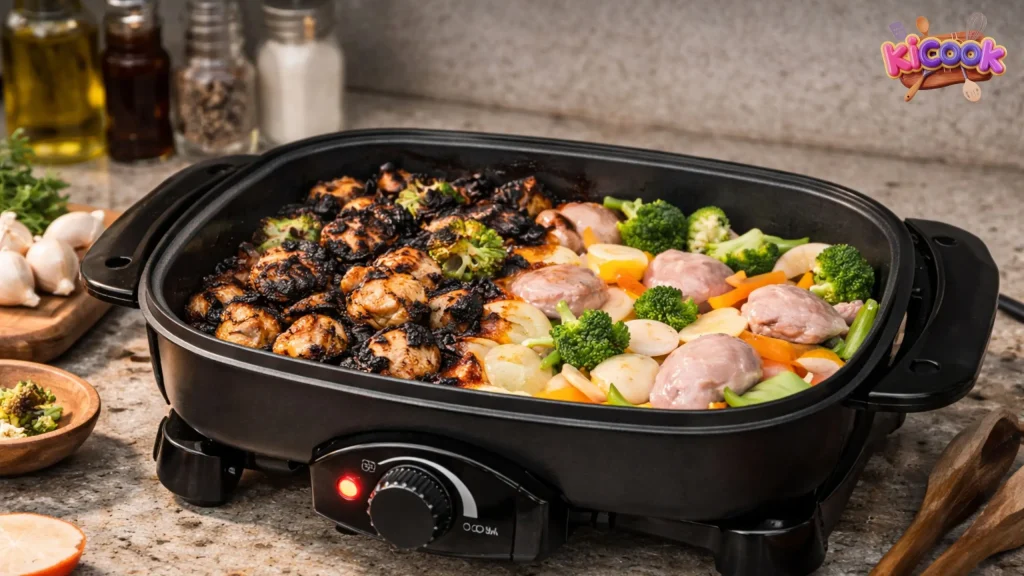
If you’ve ever watched food burn on one side while staying raw on the other, you’re not alone. I’ve been there. Electric skillets are supposed to make cooking easier, but temperature problems can quickly turn a simple meal into a headache. Sometimes the skillet overheats. Other times, it never gets hot enough, no matter how long you wait.
From my own experience using electric skillets for daily cooking, I’ve learned that these issues usually don’t come from one single cause. It’s often a mix of design limits, worn parts, and small mistakes we don’t even realize we’re making. In this guide, I’ll explain why this happens, what actually works to fix it, and when it’s time to stop troubleshooting and move on.
Why This Topic Actually Matters
Temperature control isn’t just about taste. It affects safety, texture, and confidence in the kitchen.
Many people assume electric skillets are “set and forget” appliances. That’s a big misconception. In reality:
- Small temperature errors can cause food to burn or stay undercooked
- Overheating increases fire and smell risks
- Low heat can make people think the skillet is “broken” when it’s not
I’ve noticed that when people ignore these issues, they either stop using the skillet or cook with constant frustration. Understanding why temperature problems happen helps you cook better and avoid unsafe habits.
My Real Experience
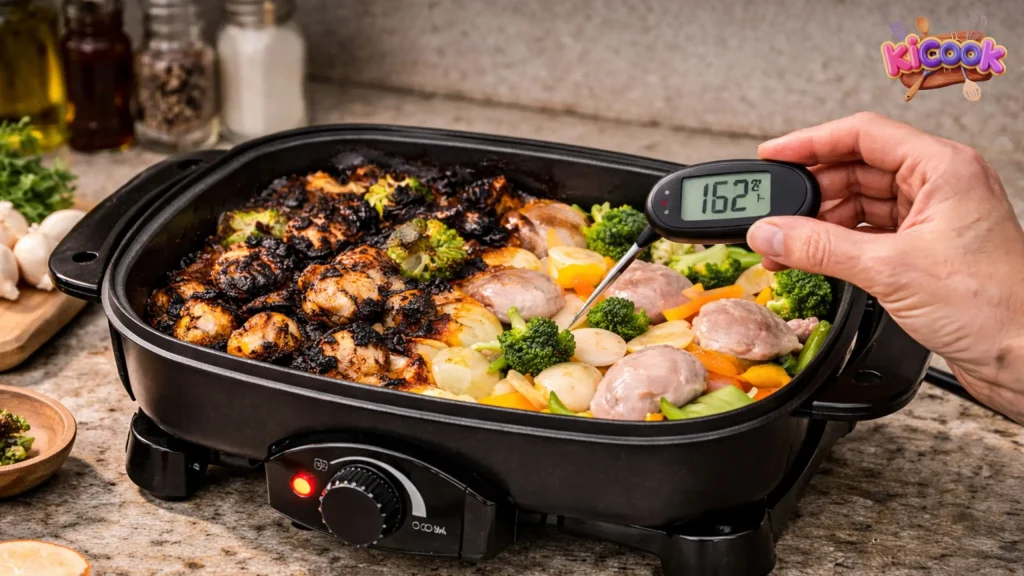
When my first electric skillet started overheating, I blamed the brand. Later, I realized the thermostat dial was worn and no longer matched the real temperature. On another skillet, the opposite happened—it took forever to heat because the heating element was aging.
What worked for me:
- Preheating with a thermometer to check real temperature
- Avoiding high settings unless truly needed
- Keeping the base and probe clean
What didn’t work:
- Turning the dial higher and higher
- Ignoring hot spots
- Using extension cords
Small details like pan placement and lid use made a bigger difference than I expected.
Main Reasons Your Electric Skillet Heats Incorrectly
Thermostat Problems (Most Common Cause)
The thermostat controls heat, but it can drift over time.
Signs:
- Food burns at medium settings
- Heat doesn’t change when you turn the dial
Aging thermostats are one of the most reported issues in electric skillets. I cover related failures in my guide on common electric skillet problems.
Uneven Heating Element
Electric skillets don’t always heat evenly, especially larger models.
Common causes:
- Warped heating plate
- Thin base material
- Long-term wear
This leads to hot spots and cold zones.
Incorrect Temperature Settings
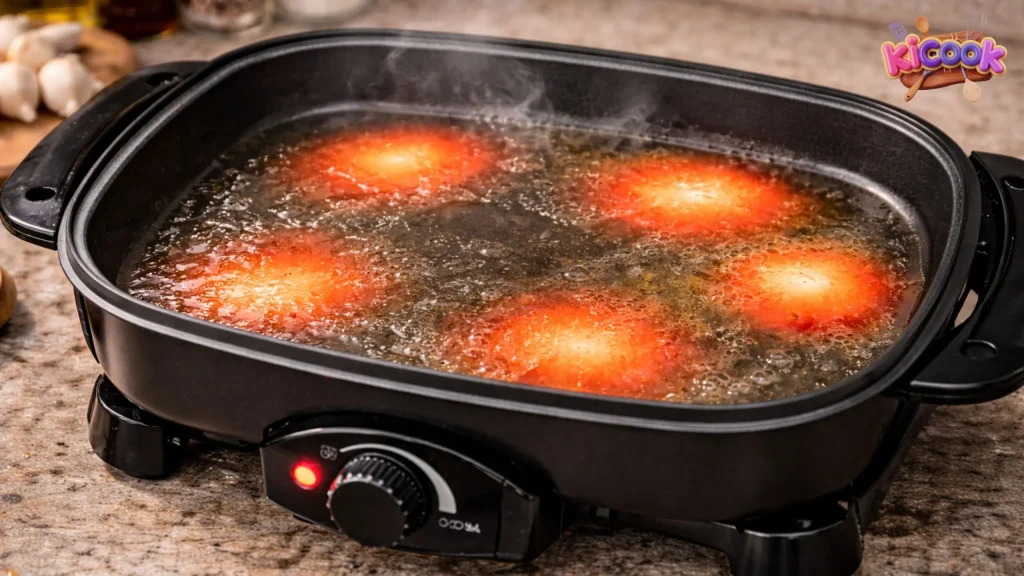
Many people cook too hot without realizing it.
According to the USDA Food Safety and Inspection Service, cooking at the correct temperature is key to both safety and food quality. Overheating doesn’t mean faster or better cooking—it often dries food out.
Electrical or Power Issues
Low power supply can cause weak heating.
Check for:
- Loose cords
- Damaged plugs
- Shared outlets
If your skillet doesn’t heat at all, this troubleshooting guide may help:
Is your electric skillet not heating?
Design Limitations
Not all electric skillets are built for precision cooking.
Consumer testing from Consumer Reports shows that countertop appliances often vary widely in temperature accuracy, especially at lower price points.
Pros & Cons of Electric Skillet Temperature Control
| Pros | Cons |
|---|---|
| Easy to use | Thermostats wear over time |
| Good for one-pan meals | Can have hot spots |
| Portable | Less precise than stovetops |
| Energy efficient | Repairs are limited |
My Honest Take After Researching This
Electric skillets are useful, but they are not precision tools. My strong opinion is this: if temperature accuracy matters to you, you must test and adjust, not trust the dial blindly. The caution is simple, once heating becomes unstable, food safety can suffer. My recommendation is to keep using your skillet if the heat is mostly steady, but replace it if overheating or underheating becomes frequent.
Common Mistakes to Avoid
- Cooking everything on high heat
- Ignoring preheating time
- Using damaged cords
- Overcrowding the pan
- Assuming all skillets heat the same
Avoiding these alone solves many complaints I see.
Who This Is Best For / Not Ideal For
Best for:
- Home cooks who want simple meals
- Small kitchens
- One-pan cooking fans
Not ideal for:
- Precision temperature cooking
- Long-term high-heat frying
- People who want repairable appliances
If you’re still unsure whether one fits your needs, you may find this helpful: Are electric skillets worth it?
FAQs on Electric Skillet Get Too Hot or Not Hot Enough
Why does my electric skillet overheat suddenly?
Usually due to a failing thermostat or internal sensor.
Can I fix an electric skillet thermostat?
In most cases, no. Replacement is safer than repair.
Is uneven heating normal?
Some unevenness is normal, but strong hot spots are not.
What temperature is medium heat on an electric skillet?
Often between 300°F and 350°F, but it varies by model.
Does lid use affect temperature?
Yes. Lids trap heat and raise internal temperature.
Conclusion
Temperature problems in electric skillets are common, but they’re not mysterious. From my experience, most issues come down to aging parts, uneven heating, or simple misuse. Once you understand how your skillet behaves, cooking becomes calmer and more predictable again.
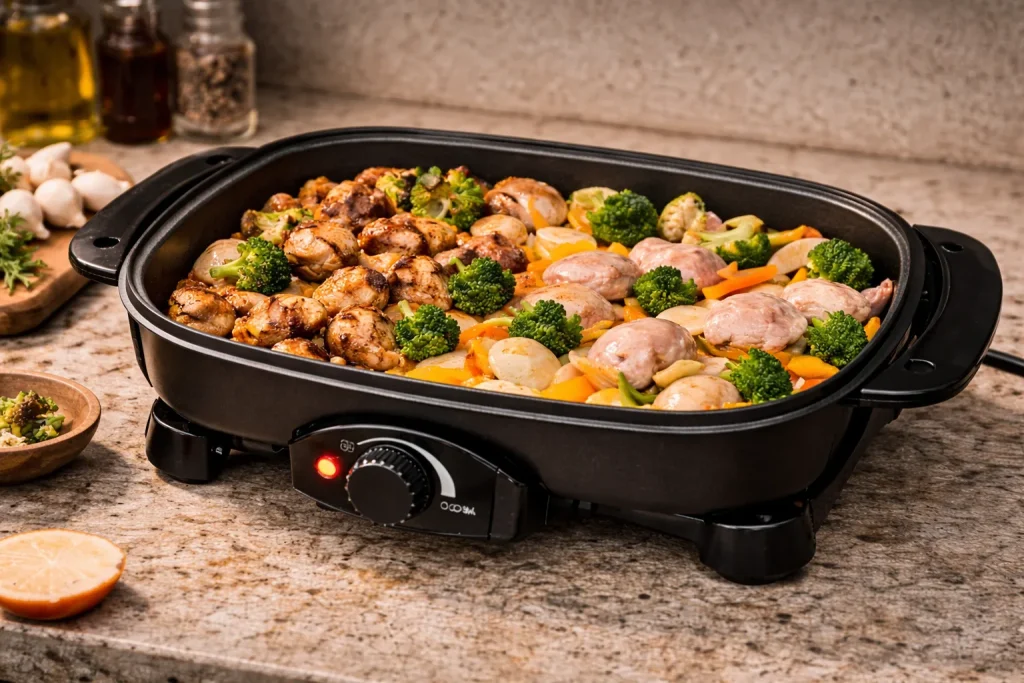
If your skillet still struggles after basic checks, it may be time to replace it or choose a different cooking tool. Either way, knowing the reason behind the problem puts you back in control and that’s what good cooking should feel like.

“I believe great cooking starts with the right tools, trusted advice, and a little confidence in the kitchen.”
Hi, I’m Emma Carter. My love for cooking began in my grandmother’s kitchen, where I learned that every great meal starts with simple ingredients and the right cookware. Over the years, I’ve spent countless hours researching, testing, and comparing kitchen appliances, cookware, coffee makers, air fryers, and other everyday kitchen essentials.
Here at KiCook, my goal is to make your buying decisions easier with honest product reviews, practical buying guides, and easy-to-follow cooking tips. Whether you’re upgrading your kitchen or searching for the best appliance for your home, I focus on providing clear, reliable, and research-backed information you can trust.
When I’m not testing new kitchen gadgets or writing in-depth guides, you’ll usually find me trying new recipes, visiting local farmers’ markets, or enjoying a quiet cup of coffee while planning my next kitchen project.