
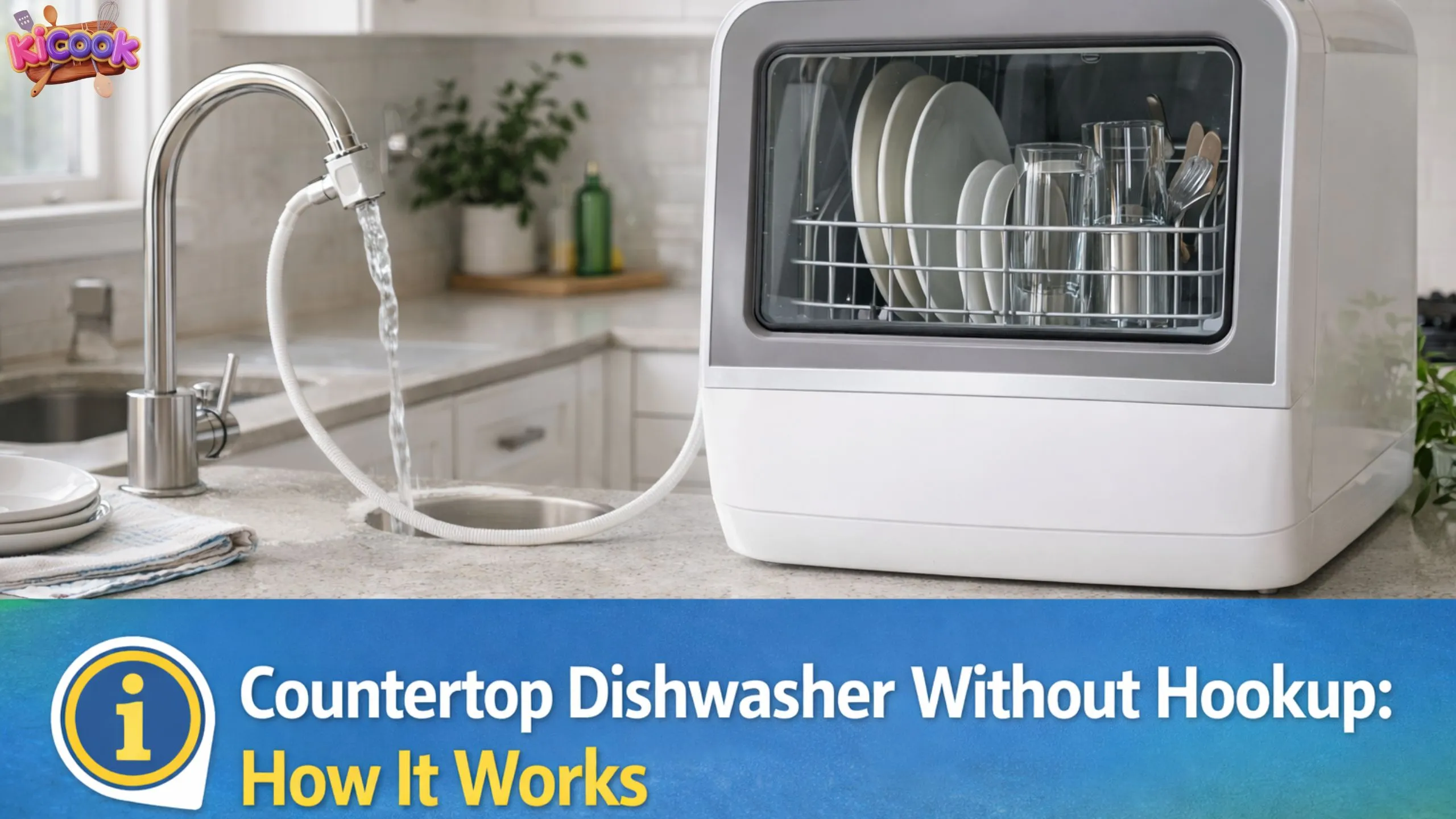
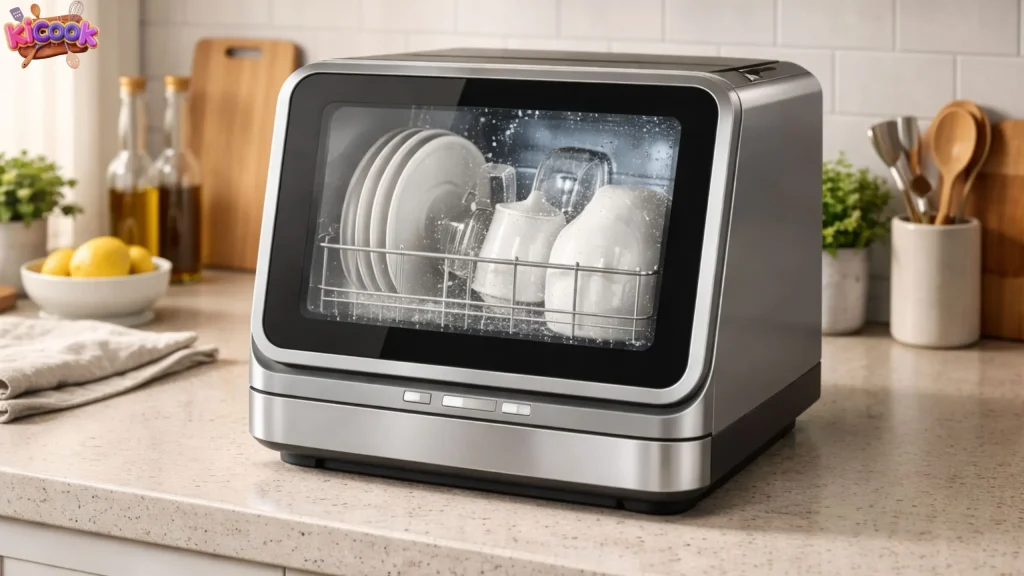
A countertop dishwasher without a hookup works by using a built-in water tank that you manually fill, instead of connecting it to your kitchen plumbing. The biggest benefit is that you can use it anywhere—apartments, rentals, RVs, even offices. The main limitation is capacity, since these machines handle fewer dishes per cycle than full-size dishwashers.
Many people want a dishwasher but feel stuck because they don’t have a proper kitchen hookup. I’ve been there. Small apartments, rental rules, or shared kitchens often make traditional dishwashers impossible. Hand-washing every day gets tiring, especially after cooking real meals at home.
I first looked into countertop dishwashers without hookups when I realized I was wasting time and water washing dishes by hand. I wanted something simple, portable, and easy to use without calling a plumber.
In this article, I’ll explain exactly how a countertop dishwasher without a hookup works, what to expect in daily use, and who it’s actually a good fit for. I’ll also share real observations that most product pages don’t talk about, so you can decide with confidence.
Why This Topic Actually Matters
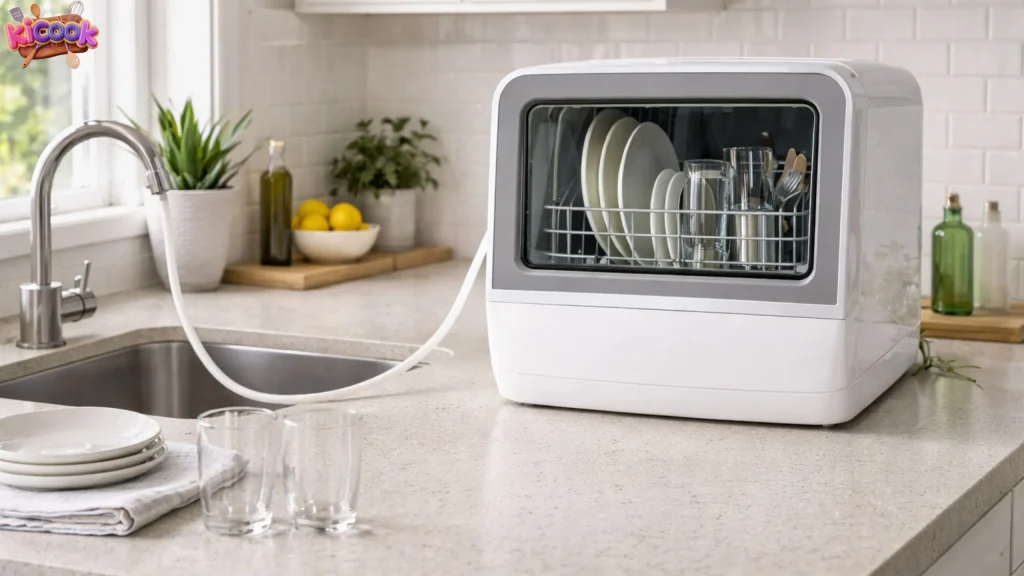
This topic matters because many people assume dishwashers are only for large kitchens with plumbing access. That belief stops them from exploring practical solutions.
Common struggles I see:
- Living in a rental where plumbing changes are not allowed
- Having a tiny kitchen with no space for built-in appliances
- Assuming countertop dishwashers are “too weak” to be useful
The wrong decision can lead to wasted money, frustration, or buying a machine that doesn’t fit your lifestyle. Understanding how these no-hookup dishwashers actually work helps you avoid unrealistic expectations and choose something that truly solves your daily problem.
My Real Experience / Observation
From my observation, the biggest surprise was how independent these machines really are. You don’t need a sink connection at all. You fill the tank, load the dishes, press start, and that’s it.
What worked well:
- Cleaning plates, bowls, cups, and small cookware
- Using it daily instead of waiting for a full sink
- Saving time compared to hand washing
What didn’t work:
- Overloading the basket
- Expecting it to wash large pots
- Ignoring water level instructions
One small detail people miss is water temperature. These machines heat water internally, but starting with lukewarm water can slightly reduce cycle time.
How a Countertop Dishwasher Without Hookup Works
These dishwashers are designed to operate without permanent plumbing.
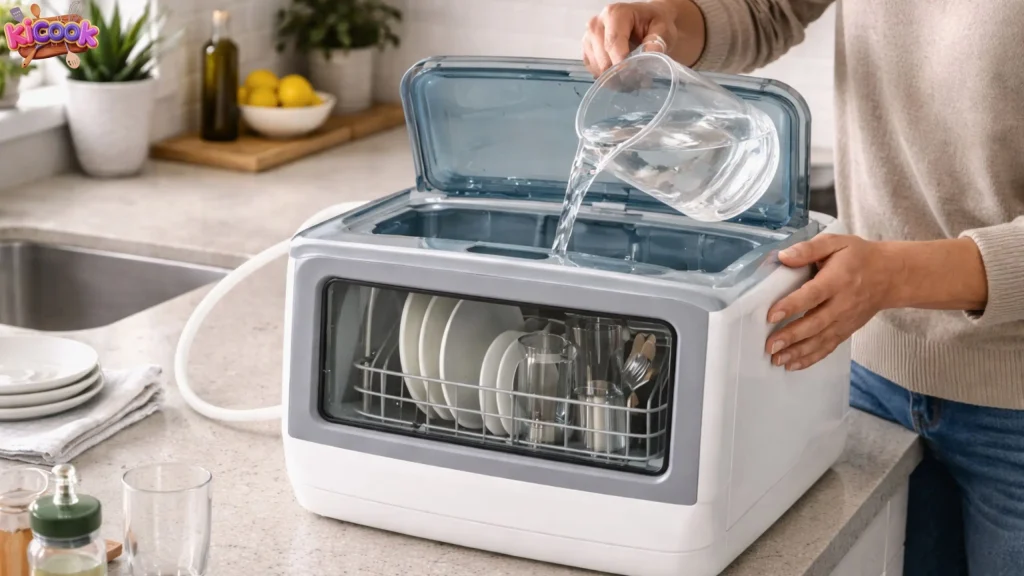
Built-in Water Tank System
Instead of connecting to a faucet:
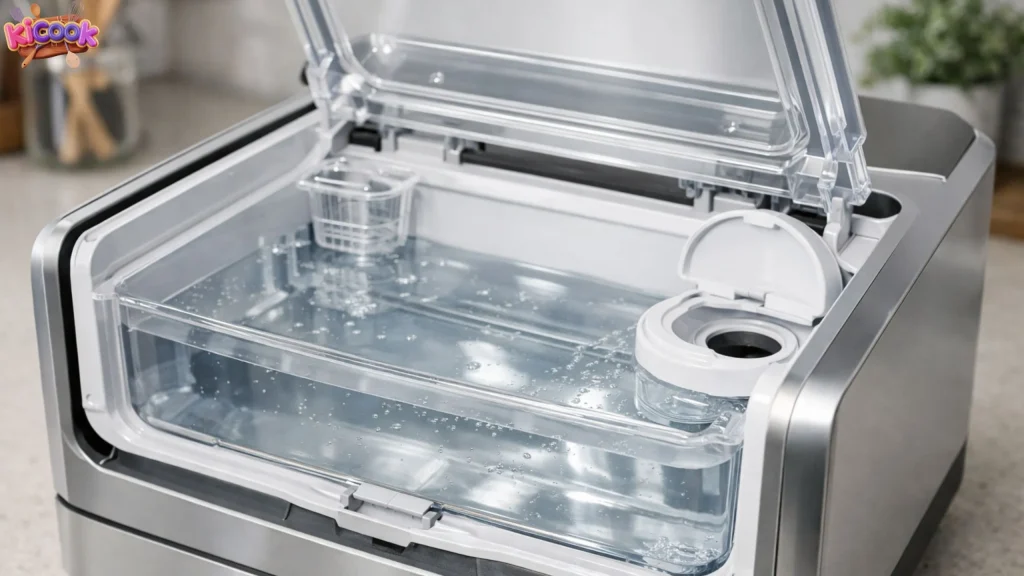
- You pour water into a top or side reservoir
- The machine measures the needed amount
- Internal pumps spray water during the wash
Most models need about 4–6 liters of water per cycle.
Drainage Process
After washing:
- Dirty water drains through a hose
- You place the hose into a sink or bucket
- No permanent drain connection needed
Heating and Drying
Inside the unit:
- A heating element warms the water
- Hot water improves cleaning
- Some models use hot air drying or residual heat
What You Can and Can’t Wash
Works Best For
- Plates and bowls
- Cups and glasses
- Cutlery
- Small pans
Not Ideal For
- Large frying pans
- Baking trays
- Oversized pots
Loading smartly makes a big difference.
Pros & Cons
Pros
- No plumbing or installation required
- Easy to move and store
- Uses less water than hand washing
- Great for small households
Cons
- Limited capacity
- Manual water filling needed
- Not suitable for large cookware
This balance is important to understand before buying.
My Honest Take After Researching This
My honest opinion is that countertop dishwashers without hookups are one of the most underrated kitchen appliances for small homes. They solve a real problem without adding complexity.
The main caution is capacity. If you cook for a family every day, this may feel limiting.
My clear recommendation: if you live alone, as a couple, or in a small space, this type of dishwasher is genuinely worth considering.
Common Mistakes to Avoid
- Overloading dishes
Leave space so water can spray properly. - Skipping regular cleaning
Clean filters weekly to avoid odor. - Using regular dish soap
Always use dishwasher detergent only. - Ignoring placement
Keep it near a sink for easy draining.
Who This Is Best For / Not Ideal For
Best For
- Apartment renters
- Students
- RV or tiny home users
- Offices or studios
Not Ideal For
- Large families
- Heavy daily cooking with big pots
- People who want zero manual steps
Knowing this builds realistic expectations.
FAQs
Do countertop dishwashers without hookups clean well?
Yes, when loaded properly, they clean everyday dishes effectively.
Do I need hot water to fill the tank?
No, they heat water internally, but warm water can help.
How much water do they use?
Usually less than hand washing, around 4–6 liters per cycle.
Can I place it anywhere?
Yes, as long as there’s a power outlet and drainage access.
Are they noisy?
Most are quiet, similar to a microwave or range hood.
Conclusion
A countertop dishwasher without a hookup works by giving you freedom from plumbing while still delivering real cleaning power. From my experience, it’s a practical solution for modern living where space and flexibility matter.
If you understand its limits and load it smartly, it can save time, water, and daily frustration. For small kitchens and simple routines, this appliance quietly does its job—and that’s exactly what most of us need.

“I believe great cooking starts with the right tools, trusted advice, and a little confidence in the kitchen.”
Hi, I’m Emma Carter. My love for cooking began in my grandmother’s kitchen, where I learned that every great meal starts with simple ingredients and the right cookware. Over the years, I’ve spent countless hours researching, testing, and comparing kitchen appliances, cookware, coffee makers, air fryers, and other everyday kitchen essentials.
Here at KiCook, my goal is to make your buying decisions easier with honest product reviews, practical buying guides, and easy-to-follow cooking tips. Whether you’re upgrading your kitchen or searching for the best appliance for your home, I focus on providing clear, reliable, and research-backed information you can trust.
When I’m not testing new kitchen gadgets or writing in-depth guides, you’ll usually find me trying new recipes, visiting local farmers’ markets, or enjoying a quiet cup of coffee while planning my next kitchen project.