
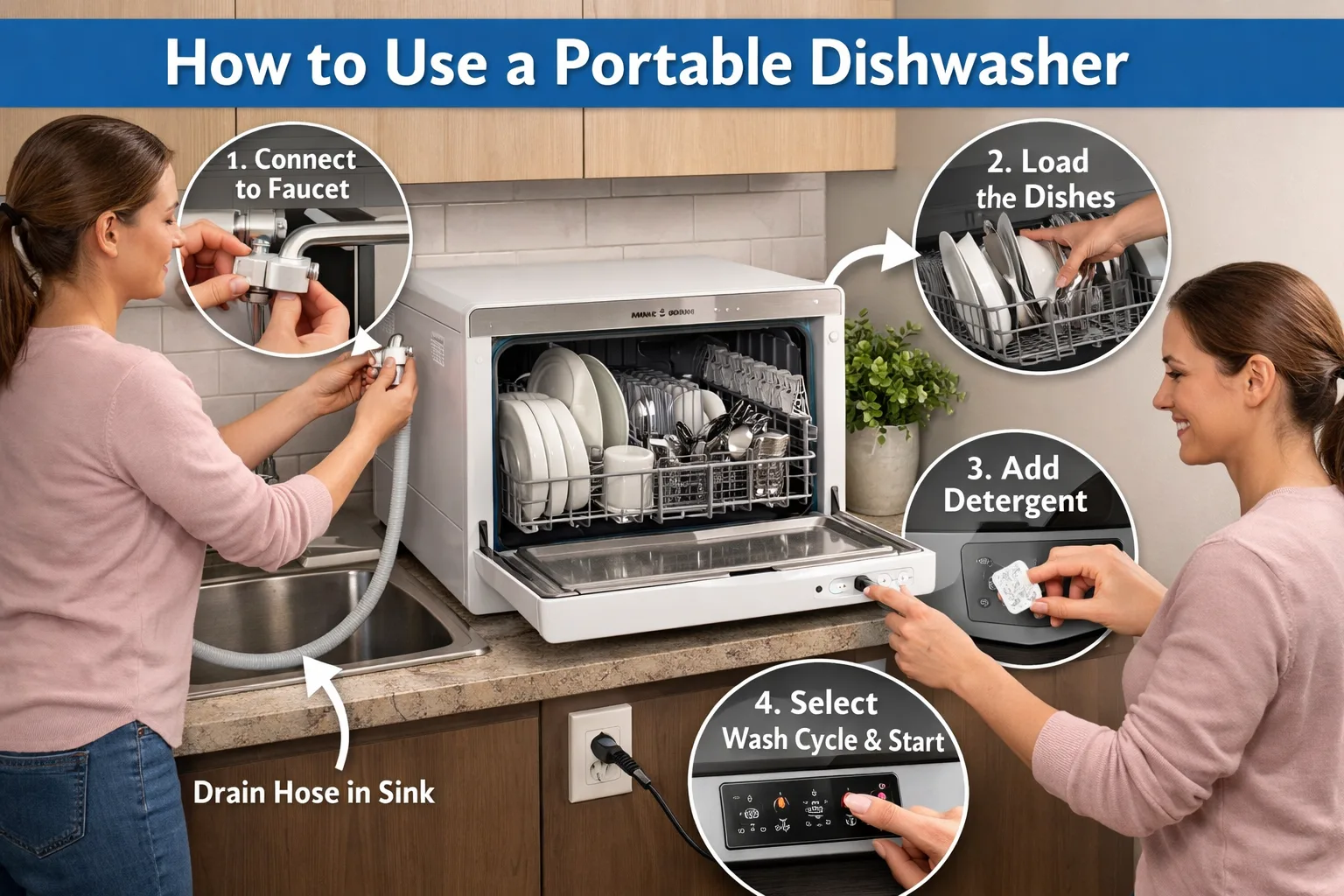
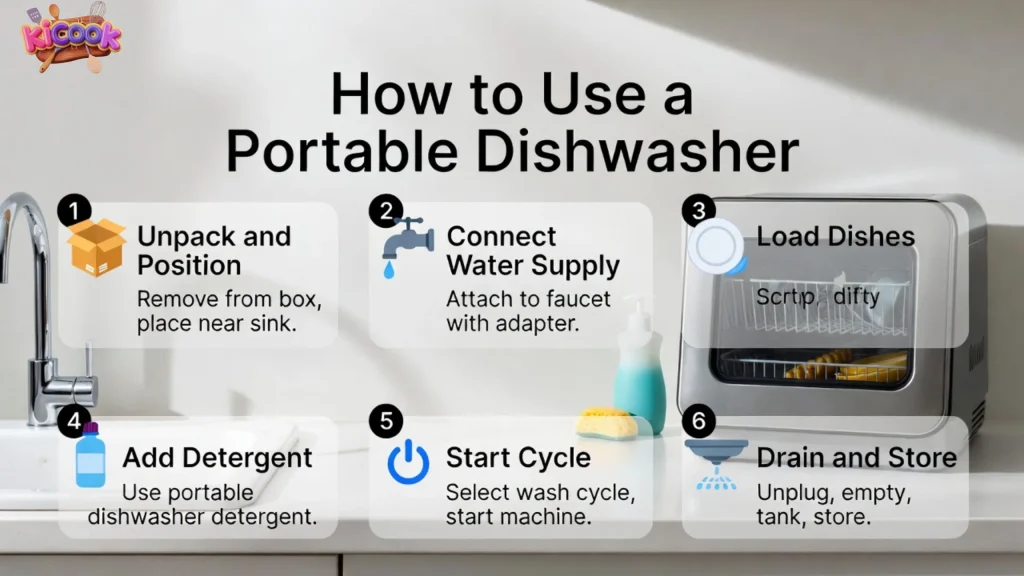
To use a portable dishwasher, roll the unit near your sink, connect the hose adapter to your faucet, and plug it into a grounded outlet. Load your dishes, add detergent, turn on the hot water, and start the cycle.
If you are living in a tight flat in London, a condo in Toronto, or an apartment in New York, you know the struggle. The sink is full, the counter space is non-existent, and the last thing you want to do after a long day is scrub plates by hand. I’ve been there. For years, I thought my only option was the sponge and soap routine until I discovered the freedom of a portable dishwasher.
It honestly changed my evening routine. No more soggy fingers or arguing over whose turn it is to wash up. But I remember staring at the machine when I first got it, wondering exactly how to hook it up without flooding my kitchen. It looks a bit different from the built-in units most of us grew up with.
In this guide, I’m going to walk you through exactly how to use a portable dishwasher, from the initial setup to the daily routine. I’ll share the tips I’ve learned to keep it running smoothly and answer the questions that usually pop up. Whether you have a standalone unit on wheels or a countertop model, I’ve got you covered.
Why a Portable Dishwasher is a Life Saver
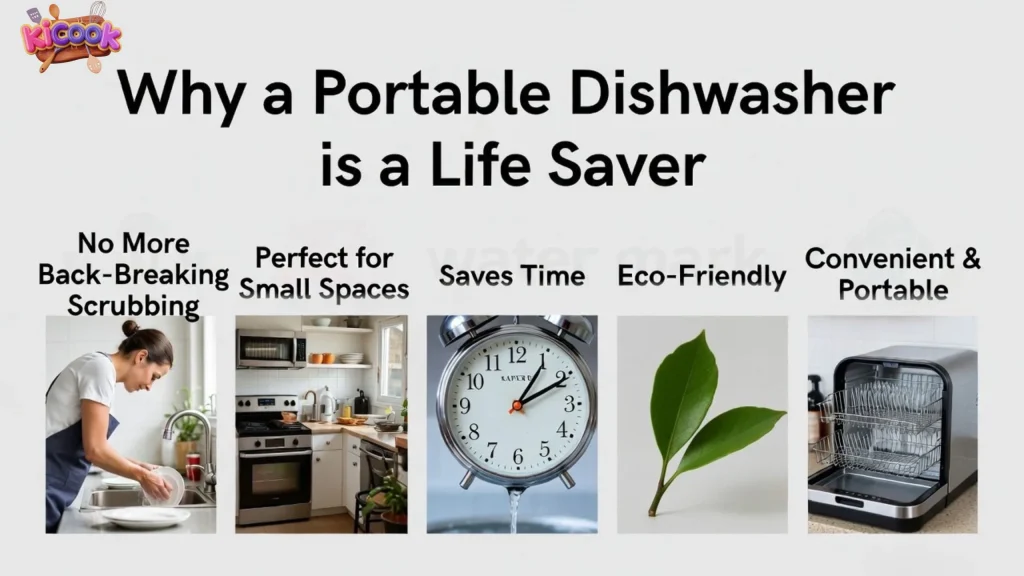
Before we get into the nuts and bolts of connecting hoses, let’s talk about why this machine is such a great addition to your home. If you are renting or have a kitchen layout that simply can’t fit a built-in model, this appliance bridges the gap.
I used to worry that these machines wouldn’t clean as well as the standard ones. I was wrong. They use the same mechanics, heating elements, and spray arms. The main difference is just how they get their water and where they drain it.
“Housework is something you do that nobody notices until you don’t do it.” – Erma Bombeck
This quote hits home, doesn’t it? A portable dishwasher helps you keep on top of that invisible work so you can actually enjoy your downtime.
Understanding Your Machine
There are generally two types of portable units:
- Freestanding (Roll-away): These look like a standard dishwasher but have wheels and a butcher block or laminate top. You roll them to the sink when needed.
- Countertop: These sit right on your counter and are much smaller.
If you are still deciding which one suits your space, you might want to look into how a countertop dishwasher works to see if that mechanism fits your lifestyle better.
Step 1: Preparing Your Kitchen Faucet
The most intimidating part for new users is usually the connection. Portable dishwashers don’t have permanent plumbing; they borrow your kitchen sink’s faucet.
To make this work, your faucet needs a special adapter. Most portable dishwashers come with a “unicoupler” or a quick-connect adapter. Here is how I handled the initial setup:
- Remove the Aerator: Unscrew the little mesh screen (aerator) at the tip of your kitchen faucet. You might need pliers for this if it’s tight—just wrap a cloth around it so you don’t scratch the chrome.
- Check the Threads: Your faucet will have either inside (female) or outside (male) threads.
- Install the Adapter: Screw on the dishwasher adapter that came with your machine. If it doesn’t fit, don’t panic. You can find universal adapters at any hardware store in the UK, US, or Canada.
Once this adapter is on, you can leave it there. It usually still allows the faucet to work normally when the dishwasher isn’t hooked up.
Step 2: Positioning and Loading
When it’s time to wash, roll your machine over to the sink. If you have a countertop model, it should already be placed near enough to the sink for the hoses to reach.
Loading It Right
Loading a portable unit is an art form. Since they can sometimes be slightly smaller than built-ins, space is at a premium.
- Face the Center: Make sure plates and bowls face towards the center spray arm.
- Don’t Block the Sprayer: I always give the spray arm a spin with my hand before closing the door to make sure no tall plates or ladle handles are blocking it.
- Silverware: Mix spoons and forks so they don’t “spoon” together and prevent water from reaching the dirty surfaces.
If you are confused about how much you can actually fit in there, I found this guide on dishwasher capacity incredibly helpful for visualizing a full load.
Step 3: Connecting the Water
This is the crucial “how to use a portable dishwasher” moment.
- Pull Out the Hoses: On the back of your machine, there is a compartment housing the power cord and the hose assembly. Pull them out.
- Attach the Unicoupler: Take the hose connector (unicoupler) and press it onto the faucet adapter you installed earlier. You will usually pull down on a locking collar, push it onto the faucet, and release the collar until it snaps into place. Give it a gentle tug to ensure it is secure.
- Turn on the Hot Water: Open your hot water tap all the way. The hose has two tubes: one pulls water in, and the other drains dirty water out into the sink. The faucet stays “on” during the whole cycle, but the machine controls when it takes water.
Important Pain Point Solved: A common worry is leakage. If you see water spraying from the connection, turn off the tap immediately. It usually means the adapter isn’t tight enough or a rubber washer is missing inside the coupler.
Step 4: Detergent and Settings
Add your detergent. I prefer using pods or tablets because they are less messy, but powder works fine too. Place it in the dispenser cup and close the latch.
Now, plug the machine into a grounded outlet.
Choosing a Cycle
Most machines have:
- Heavy: For pots and pans with stuck-on food.
- Normal: For everyday dinner plates.
- Light/Eco: For dusty glasses or lightly soiled items.
If you are worried about your electric bill, specifically regarding dishwasher electricity consumption, using the Eco mode or the air-dry setting can save a significant amount of energy over time.
Press Start. You will hear the machine drain for a few seconds (this clears old water), and then it will fill up.
“Cleanliness makes it easier to see the details.” – Oliver Gassmann
Step 5: The Cycle and Draining
While the machine is running, your sink is occupied. You cannot use the faucet. The drain hose will periodically spit hot, soapy water into your sink.
Pro Tip: Make sure your sink drain is clear! If you have a plug in the drain, the dishwasher water will back up and could overflow onto your floor. I learned this the hard way once.
The noise level is something people often ask me about. Since the machine is outside of a cabinet, it isn’t insulated by wood. However, modern units are surprisingly quiet. If you are sensitive to sound in a small apartment, checking out dishwasher noise levels can help you manage expectations.
Step 6: Unhooking and Storing
Once the cycle is done, the machine will beep. Here is how to disconnect safely:
- Turn Off the Water: Close the hot water tap.
- Release Pressure: There is usually a small red button on the side of the unicoupler. Press it to release the water pressure trapped in the hose. If you skip this, you might get sprayed with hot water when you unlock it.
- Unlock: Pull down the collar and remove the hose from the faucet.
- Drain the Hose: Hold the hose up for a second to let any remaining water drain back into the machine or the sink, then tuck it back into the storage compartment.
- Roll Away: Unplug it and roll it back to its corner.
Troubleshooting Common Issues
Even the best appliances have bad days. Here are some issues I’ve faced and how I fixed them.
1. Dishes aren’t dry
Portable dishwashers often use residual heat to dry. If your dishes are wet, try opening the door slightly right after the cycle ends to let the steam escape. This “flash drying” technique works wonders.
2. The machine smells
Food particles can get trapped in the filter. Check the bottom of the tub. Unscrew the filter cylinder and rinse it under the tap. It takes two minutes and prevents bad odors.
3. Faucet doesn’t fit
If your kitchen faucet is a fancy “pull-down” sprayer style, a standard portable dishwasher adapter won’t fit. You might need to install a separate standard faucet or tap into the plumbing under the sink (though that makes it less “portable”).
Dealing with Hard Water
If you live in an area with hard water (like London or parts of the US Midwest), you might notice cloudy glasses. This is mineral buildup.
- Rinse Aid: fill the rinse aid dispenser. It helps water sheet off dishes.
- Vinegar: Once a month, place a cup of white vinegar on the top rack and run a hot cycle. This breaks down limescale.
Pros and Cons: Is it Worth It?
I often get asked if the hassle of hooking it up every time is worth it. For me, absolutely. But let’s look at the balance.
Pros:
- Sanitization: It gets water hotter than your hands can handle.
- Water Savings: Surprisingly, using a dishwasher often uses less water than washing by hand. If you are eco-conscious, compare the numbers on dishwasher vs hand washing water usage.
- Time: You gain back 30 minutes of your evening.
Cons:
- Sink Monopoly: You can’t use the sink while it runs.
- Space: You need a place to park it when not in use.
If you are still on the fence, reading a detailed breakdown of portable dishwasher advantages and disadvantages might help clarify your decision.
Energy Efficiency
We are all trying to watch our utility bills these days. Portable dishwashers are generally quite efficient. To maximize this:
- Run full loads only.
- Skip the “heated dry” option if your machine has it.
- Scrape plates well instead of pre-rinsing them in the sink.
For a deeper look into what makes a machine eco-friendly, check out this guide on what is an energy efficient dishwasher.
For those interested in the broader environmental impact of using dishwashers versus hand washing, the University of Bonn has conducted extensive studies on household appliance efficiency that are worth reading.
Frequently Asked Questions
Can I permanently install a portable dishwasher?
Yes! Many roll-away models can be converted to under-counter installation. You usually just need to remove the wheels and the top butcher block, then plumb it in like a standard unit.
Do I need special detergent?
You should use standard automatic dishwasher detergent. Never use regular liquid dish soap (like Dawn or Fairy). It creates too many suds and will flood your kitchen floor with foam.
How long do the hoses last?
The hoses are durable, but they experience a lot of movement. Check them every year for cracks. They usually last the life of the machine if treated gently.
Is a countertop model better than a roll-away?
It depends on your space. Countertop models hold less (usually 4-6 place settings) but are great if you have zero floor space. If you want to know if they are a good investment, read are countertop dishwashers worth it.
Conclusion
Learning how to use a portable dishwasher is not difficult. It takes a few tries to get the rhythm of “roll, connect, load, wash,” but once it becomes a habit, you will wonder how you lived without it.
It’s about more than just clean plates; it’s about reclaiming your time and keeping your kitchen sanctuary organized. Whether you are in a flat in Manchester or a studio in Vancouver, this appliance is a massive upgrade to your quality of life.
“The objective of cleaning is not just to clean, but to feel happiness living within that environment.” – Marie Kondo
So, go ahead and get that machine running. Your future self, resting on the sofa instead of standing at the sink, will thank you.

“I believe great cooking starts with the right tools, trusted advice, and a little confidence in the kitchen.”
Hi, I’m Emma Carter. My love for cooking began in my grandmother’s kitchen, where I learned that every great meal starts with simple ingredients and the right cookware. Over the years, I’ve spent countless hours researching, testing, and comparing kitchen appliances, cookware, coffee makers, air fryers, and other everyday kitchen essentials.
Here at KiCook, my goal is to make your buying decisions easier with honest product reviews, practical buying guides, and easy-to-follow cooking tips. Whether you’re upgrading your kitchen or searching for the best appliance for your home, I focus on providing clear, reliable, and research-backed information you can trust.
When I’m not testing new kitchen gadgets or writing in-depth guides, you’ll usually find me trying new recipes, visiting local farmers’ markets, or enjoying a quiet cup of coffee while planning my next kitchen project.