
Hello there! If you’ve ever lifted the lid of your slow cooker, expecting a hearty, comforting soup, only to find a watery broth, you’re not alone. I’ve been there countless times in my own kitchen. That moment of disappointment, when the flavor is right but the texture is all wrong, is a common pain point for many home cooks.
But don’t worry; I’m here to help you understand why this happens and how to fix it easily. Through years of trial and error, I’ve found solutions that turn thin soup into a thick, delicious meal everyone will love. Let’s get started!
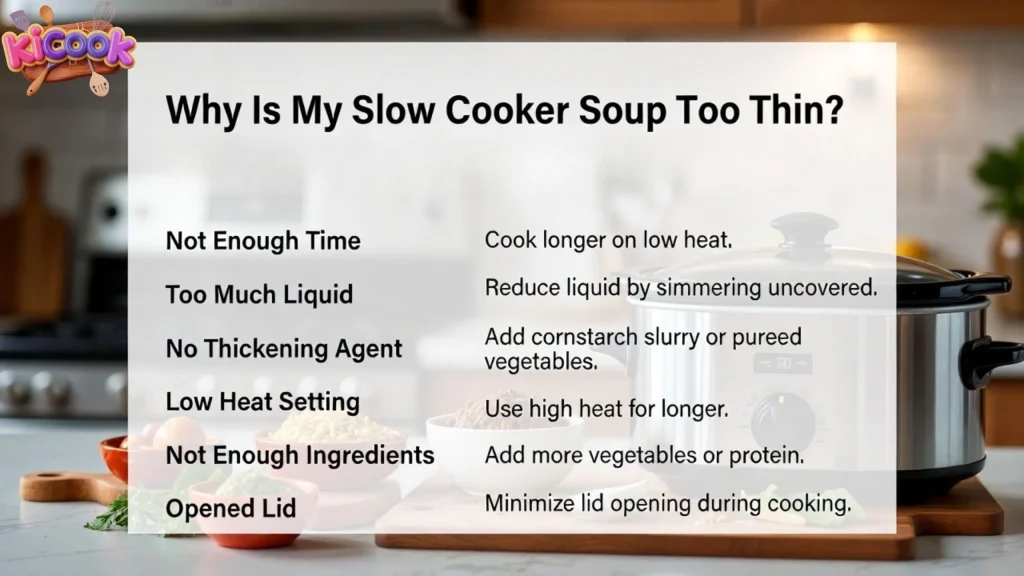
Why slow cooker soup too thin? Slow cooker soup often ends up too thin because the tight-fitting lid prevents liquid from evaporating, and recipes may call for too much broth or lack ingredients that add body. You can thicken it by using starches like flour or cornstarch, blending part of the vegetables, or letting it cook without the lid for a while.
I remember one chilly evening in my Canadian home, I prepared a classic vegetable soup in my slow cooker. I followed a family recipe, but when serving time came, it was more like a broth with floating bits. My guests were polite, but I felt I’d missed the mark. That experience sent me on a mission to solve this problem.
Whether you’re in the USA, UK, London, or anywhere else, these tips apply to all slow cooker models, from Crock-Pot to Instant Pot. The good news? Fixing thin soup is simpler than you think.
Understanding the Roots of the Problem
First, let’s talk about why slow cooker soup turns out thin. Knowing the causes helps prevent it next time.
- Too Much Liquid: Slow cookers are designed to retain moisture. Unlike stovetop cooking, where heat causes rapid evaporation, a slow cooker’s low heat and sealed lid trap steam. If you add the same amount of liquid as for a pot on the stove, you’ll have excess broth. I learned this the hard way when I made a beef stew that resembled soup. The liquid ratio is key—start with less broth; you can always add more later.
- The Lid Stays On: That lid is great for keeping heat in, but it also means condensation drips back into the pot. This constant cycle minimizes reduction, so your soup doesn’t thicken naturally. In my early days, I’d set it and forget it, only to find a thin result. Now, I adjust based on the recipe.
- Not Enough Thickening Ingredients: Many soups rely on starch from vegetables, beans, or grains to create a hearty texture. If your recipe skips these, the soup may stay thin. Ingredients like potato, barley, rice, pasta, and lentils absorb liquid as they cook, adding body. I once made a chicken soup without enough potatoes, and it was too brothy.
- Short Cooking Time: Some ingredients, like dried beans or certain root vegetables, need hours to break down and release their starches. If the cooking time is too short, they won’t contribute to thickness. I recommend checking your recipe for timing—most slow cooker soups need 6-8 hours on low for best results.
- Broth-Based Recipes: Some soups are meant to be light and brothy, like a consommé. But if you prefer a chunky, thick soup, you’ll need to make adjustments. It’s all about personal taste and the type of soup you’re aiming for.
“Good soup is one of the prime ingredients of good living.” — James Beard
Pain Points and Simple Fixes
I get it—you’ve invested time and money into making a healthy, easy meal, and thin soup feels like a letdown. It can ruin your dinner plans and leave you unsure about using your slow cooker again.
But here’s the thing: with a few tweaks, you can rescue any soup and make it perfect. Let’s explore some reliable methods to thicken your slow cooker soup.
1. Use a Slurry for a Quick Fix
A slurry is my go-to solution when I’m short on time. Mix equal parts cornstarch or flour with cold water until smooth. Stir this into your soup during the last 30 minutes of cooking. The heat will activate the starch, thickening the broth without lumps. I use this for soups like creamy chicken or mushroom. For gluten-free options, try arrowroot or tapioca starch—they work just as well.
2. Add Starchy Ingredients
Incorporate ingredients that absorb liquid and add texture. Potatoes, either diced or mashed, are fantastic. Barley, rice, pasta, and lentils also work wonders. Just add them early so they cook through. For example, in a vegetable soup, I toss in a handful of pearl barley, and by the end, it’s beautifully thick. Beans, like cannellini or kidney beans, can be mashed slightly to release their starch.
3. Blend Some Vegetables
This is a healthy, low-fat way to thicken soup. Use an immersion blender or a regular blender to puree a portion of the cooked vegetables—like carrots, peas, or squash—then mix it back into the pot. It creates a creamy base without dairy. I do this with tomato soup for a rich texture. If you don’t have a blender, mashing with a fork helps too.
4. Make a Roux or Beurre Manié
A roux is a cooked mixture of flour and fat, like butter or oil. Prepare it on the stove, then whisk it into the slow cooker. It adds flavor and thickness. For a quicker version, beurre manié—equal parts softened butter and flour kneaded together—can be stirred in near the end. This method is great for creamy chowders or gumbo.
5. Incorporate Dairy
Cream, milk, cheese, or yogurt can enrich and thicken soup. Add them in the last hour to prevent curdling. For a cheesy broccoli soup, I stir in shredded cheddar and a splash of cream. Yogurt is a lighter option for tangy soups. Remember to temper dairy by adding a little hot soup first to avoid separation.
6. Let It Reduce
If you have time, remove the lid for the last hour of cooking and set the slow cooker to high. This allows evaporation, reducing the liquid and concentrating flavors. I use this for hearty beef stews. Just keep an eye on it to prevent overcooking.
7. Use Gelatin or Egg Yolks
For clear broths, unflavored gelatin can add body. Dissolve it in water before adding. Egg yolks, mixed with a bit of hot soup and then stirred in, can thicken creamy soups like avgolemono. These are more advanced techniques but effective.
8. Adjust Cooking Methods
Sometimes, the issue is with the slow cooker itself. Older models might not heat evenly, leading to thin soup. Consider upgrading or using a different setting. I found that cooking on low for longer periods helps ingredients break down better for thickness.
Incorporating Tips into Your Routine
To avoid thin soup from the start, here are my best tips:
- Reduce Initial Liquid: Use about 25% less broth than stovetop recipes suggest. You can add more later if needed.
- Choose the Right Ingredients: Opt for starchy vegetables like potatoes, corn, or squash. Add grains like barley or rice.
- Check the Lid: If your soup is too watery, try propping the lid open slightly with a spoon to let steam escape.
- Monitor Cooking Time: Follow recipe guidelines, but don’t be afraid to extend time if soup seems thin.
- Taste and Adjust: Season as you go. Sometimes, a bit of salt or herbs can enhance the perception of thickness.
“Cooking is about passion, so it may look slightly temperamental in a way that it’s too assertive to the naked eye.” — Gordon Ramsay
Frequently Asked Questions for Slow Cooker Soup Too Thin
Can I add flour directly to my slow cooker soup?
It’s not recommended, as flour can clump. Instead, make a slurry with cold water first, or use a roux for smoother results.
How do I thicken soup without altering the flavor?
Blending vegetables or using a starch slurry adds thickness without changing taste much. Ingredients like potato or cauliflower are neutral.
Will pasta or rice make my soup too thick?
They can absorb a lot of liquid, so add them in moderation. If soup becomes too thick, just stir in a bit more broth.
Can I fix thin soup after it’s done cooking?
Yes! Transfer some soup to a pot on the stove and simmer to reduce, or add a slurry while heating. You can also blend part of it.
Is thin soup a sign of undercooking?
Not always. It’s usually about liquid ratio or missing thickeners. Ensure ingredients like potatoes are fully cooked and soft.
How can I make creamy soup without dairy?
Puree vegetables like potatoes, carrots, or cashews soaked in water. They create a creamy texture that’s vegan-friendly.
Does the type of slow cooker affect soup thickness?
Yes, some models have more condensation or heat variations. Experiment with settings—like using high for the last hour—to find what works.
“The only real stumbling block is fear of failure. In cooking, you’ve got to have a what-the-hell attitude.” — Julia Child
Conclusion
Dealing with thin slow cooker soup can be frustrating, but as I’ve learned, it’s a fixable problem. Whether you’re in the UK enjoying a cozy London night or in the USA preparing a family meal, these solutions will help you achieve the perfect texture. Remember, cooking is about experimentation and joy.
Don’t be discouraged by a watery batch; instead, see it as a chance to get creative. With these tips—from using a slurry to blending vegetables—you’ll turn any thin soup into a hearty, satisfying dish. Happy cooking, and may your slow cooker always deliver delicious results!
For more recipe ideas and slow cooker advice, I recommend visiting BBC Good Food’s slow cooker section—it’s a great resource for soups and stews.

“I believe great cooking starts with the right tools, trusted advice, and a little confidence in the kitchen.”
Hi, I’m Emma Carter. My love for cooking began in my grandmother’s kitchen, where I learned that every great meal starts with simple ingredients and the right cookware. Over the years, I’ve spent countless hours researching, testing, and comparing kitchen appliances, cookware, coffee makers, air fryers, and other everyday kitchen essentials.
Here at KiCook, my goal is to make your buying decisions easier with honest product reviews, practical buying guides, and easy-to-follow cooking tips. Whether you’re upgrading your kitchen or searching for the best appliance for your home, I focus on providing clear, reliable, and research-backed information you can trust.
When I’m not testing new kitchen gadgets or writing in-depth guides, you’ll usually find me trying new recipes, visiting local farmers’ markets, or enjoying a quiet cup of coffee while planning my next kitchen project.