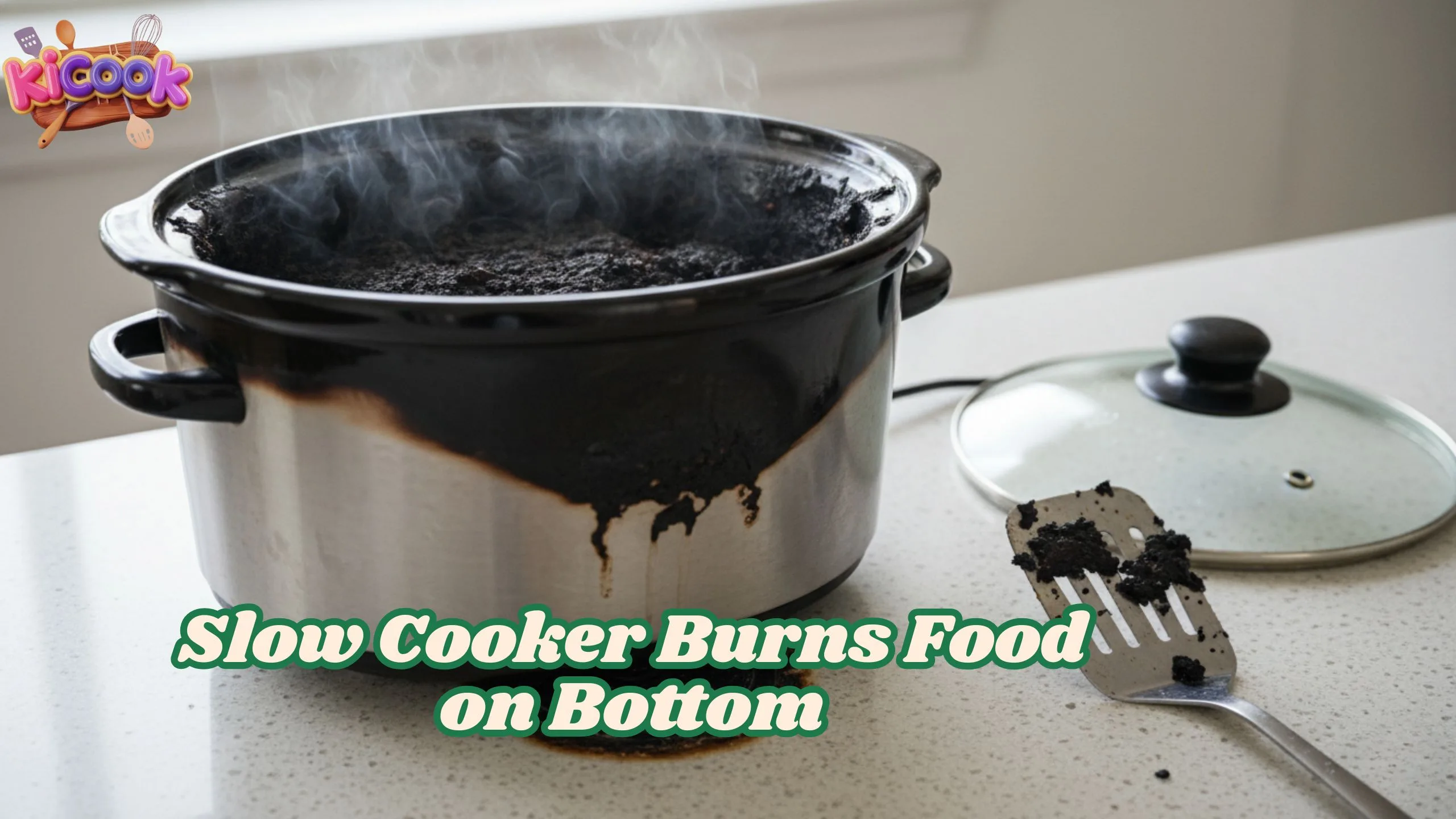
If a slow cooker burns food on the bottom, it is usually because the heat is too high, there is not enough liquid, or the food is sitting directly on the hot base for too long. Using the correct setting, adding enough moisture, and layering food properly usually stops the burning.
I have used slow cookers for years at home, especially for stews, beans, pulled meat, and office potluck meals. After burning food more than once, I learned that the problem was not the cooker itself, but how heat, liquid, and timing work together.
This topic matters to me because slow cookers are meant to save time, not ruin dinner after eight hours.
Real User Pain Points
Food sticks and burns even on “Low”
Many people say their slow cooker burns food on the bottom even when set to low, especially with sauces or beans.
Meat dries out instead of staying tender
Users expect soft, juicy meat but find it dry or overcooked at the base.
Sauces scorch while the top looks fine
The bottom layer burns while the upper food still looks undercooked.
Food burns during workday cooking
People leave the slow cooker on while at work and return to a burnt meal.
Older slow cookers seem worse
Long-term users notice newer recipes burn more often in older models.
“Older slow cookers often run hotter than expected, which explains uneven cooking and burnt bases.”
— Mark Feldman, Small Appliance Repair Technician
How Each Pain Point Is Solved
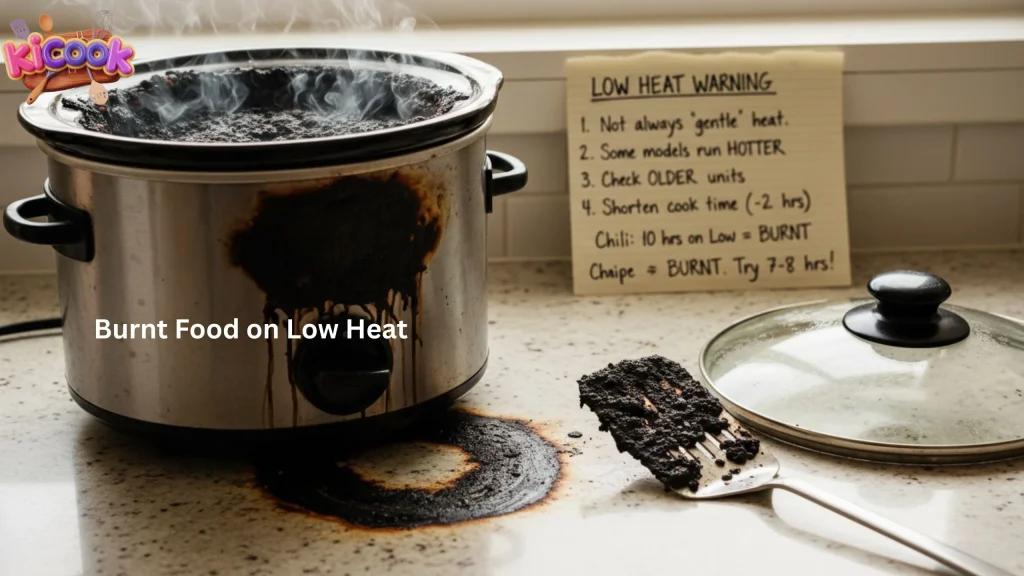
Burnt Food on Low Heat
Why it happens
“Low” is not the same across all slow cookers. Some models run hotter than expected, especially older units.
What works in real life
I now treat “Low” as steady heat, not gentle heat. I shorten cooking time by one to two hours and avoid leaving food longer than needed.
Example:
A chili recipe that said 10 hours on low worked better for me at 7–8 hours with no burning.
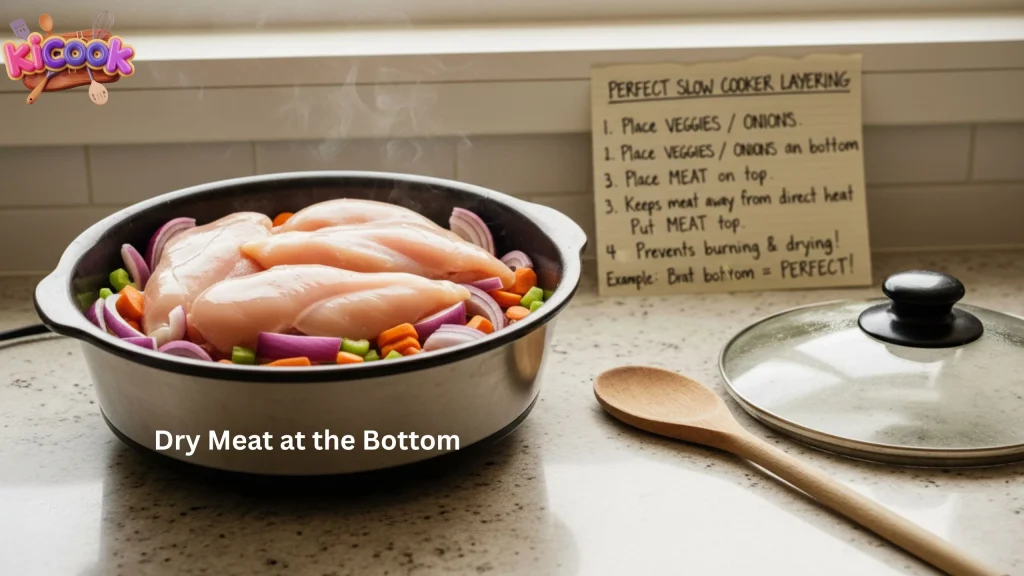
Dry Meat at the Bottom
Why it happens
Lean meat placed directly on the base cooks faster and loses moisture.
What works in real life
I always place vegetables or onions at the bottom and meat on top. This keeps meat away from direct heat.
Example:
When I stopped placing chicken breasts on the base, the burning stopped completely.
Scorched Sauces
Why it happens
Thick sauces heat faster than thin liquids and stick easily.
What works in real life
I dilute sauces slightly at the start and thicken them at the end by removing the lid.
Example:
Tomato-based pasta sauce stopped burning once I added half a cup of water early.
Food Burning While You’re at Work
Why it happens
Cooking longer than needed dries food and causes sticking.
What works in real life
I use a programmable timer or switch to “Warm” for the final hours.
Example:
Eight hours of cooking plus two hours on warm gave better results than ten hours on low.
Older Slow Cookers Burning More
Why it happens
Heating elements weaken over time and cause uneven heat.
What works in real life
I use silicone liners or parchment strips to protect the base.
Example:
My 8-year-old cooker stopped burning once I added a liner and stirred halfway.
“Most slow cooker burning issues come from lack of moisture and direct contact with the heating surface.”
— Sarah Collins, Home Economics Educator
Country-Specific Context
USA
Many homes use slow cookers for long workdays. Higher wattage models can cook hotter, so shorter times help reduce burning.
UK
Smaller kitchens and compact slow cookers heat faster. Thick stews burn more often unless extra liquid is added.
Canada
Cold weather leads to heavier meals like beans and roasts. These need layering to avoid base scorching.
Australia
Warmer climates mean kitchens retain heat. Cooking on low for too long increases bottom burning, especially in summer.
Experience-Based Benefits
Once I adjusted liquid levels and layering, my meals stopped sticking and tasted better. Cleanup became easier, and I stopped wasting food.
I also gained confidence leaving the slow cooker on during busy days, knowing it would not burn dinner again.
“Layering vegetables under proteins is one of the simplest ways to prevent scorching.”
— Emily Rogers, Test Kitchen Consultant
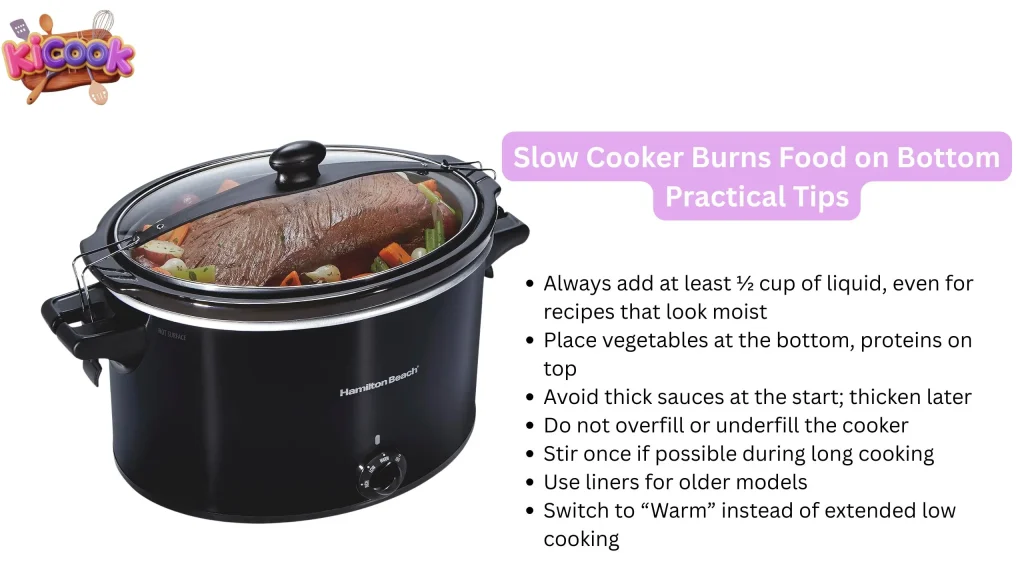
Practical Tips
- Always add at least ½ cup of liquid, even for recipes that look moist
- Place vegetables at the bottom, proteins on top
- Avoid thick sauces at the start; thicken later
- Do not overfill or underfill the cooker
- Stir once if possible during long cooking
- Use liners for older models
- Switch to “Warm” instead of extended low cooking
FAQs for Slow Cooker Burns Food on Bottom
Why does my slow cooker burn food only at the bottom?
Because the heating element is at the base, food touching it cooks faster and can scorch.
Can a slow cooker be too hot on low?
Yes. Some models, especially older ones, run hotter than expected.
Does not enough liquid cause burning?
Yes. Low moisture is one of the most common reasons food sticks and burns.
Are slow cooker liners safe?
Yes, most silicone or heat-safe liners are approved for slow cooking.
Should I stir food in a slow cooker?
If possible, stirring once during long cooking helps prevent sticking.
Why does tomato sauce burn easily?
Tomato sauce is thick and acidic, which makes it heat faster at the base.
Conclusion
If your slow cooker burns food on the bottom, the problem is usually easy to fix. Small changes in liquid, layering, and timing can make a big difference.
With the right setup, a slow cooker becomes reliable again and does what it should—cook food gently while you focus on other things.
According to the US Department of Agriculture, slow cookers work best when enough liquid is used to transfer heat evenly throughout the pot

“I believe great cooking starts with the right tools, trusted advice, and a little confidence in the kitchen.”
Hi, I’m Emma Carter. My love for cooking began in my grandmother’s kitchen, where I learned that every great meal starts with simple ingredients and the right cookware. Over the years, I’ve spent countless hours researching, testing, and comparing kitchen appliances, cookware, coffee makers, air fryers, and other everyday kitchen essentials.
Here at KiCook, my goal is to make your buying decisions easier with honest product reviews, practical buying guides, and easy-to-follow cooking tips. Whether you’re upgrading your kitchen or searching for the best appliance for your home, I focus on providing clear, reliable, and research-backed information you can trust.
When I’m not testing new kitchen gadgets or writing in-depth guides, you’ll usually find me trying new recipes, visiting local farmers’ markets, or enjoying a quiet cup of coffee while planning my next kitchen project.