
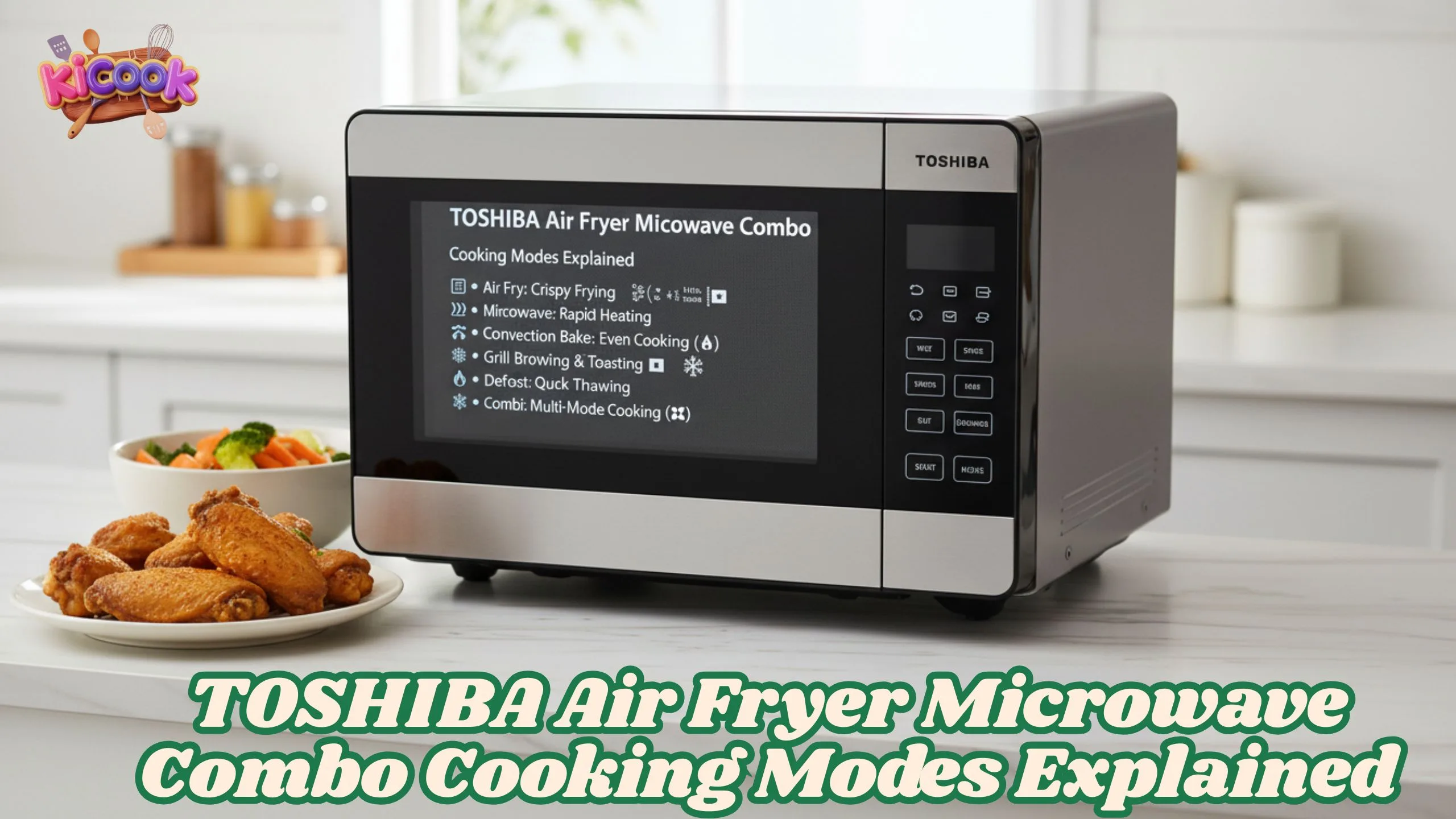
TOSHIBA air fryer microwave combo cooking modes explained means knowing what each built-in mode does, how it cooks food, and when I should use it for the best results. In simple words, it helps me cook faster, avoid mistakes, and get better taste with less effort.
Why I Took Time to Learn the Cooking Modes
I bought a TOSHIBA air fryer microwave combo because I wanted one appliance that could microwave, air fry, bake, roast, and grill. Like many people in the USA, UK, Canada, and London apartments, I had limited counter space and no patience for complicated cooking.
At first, the control panel felt confusing. Too many buttons. Too many modes. I worried about uneven cooking, dry food, and wasting ingredients. So I tested every function step by step. This article shares my real experience and explains each cooking mode in a clear, simple way, so you don’t have to guess.
What Is a TOSHIBA Air Fryer Microwave Combo?
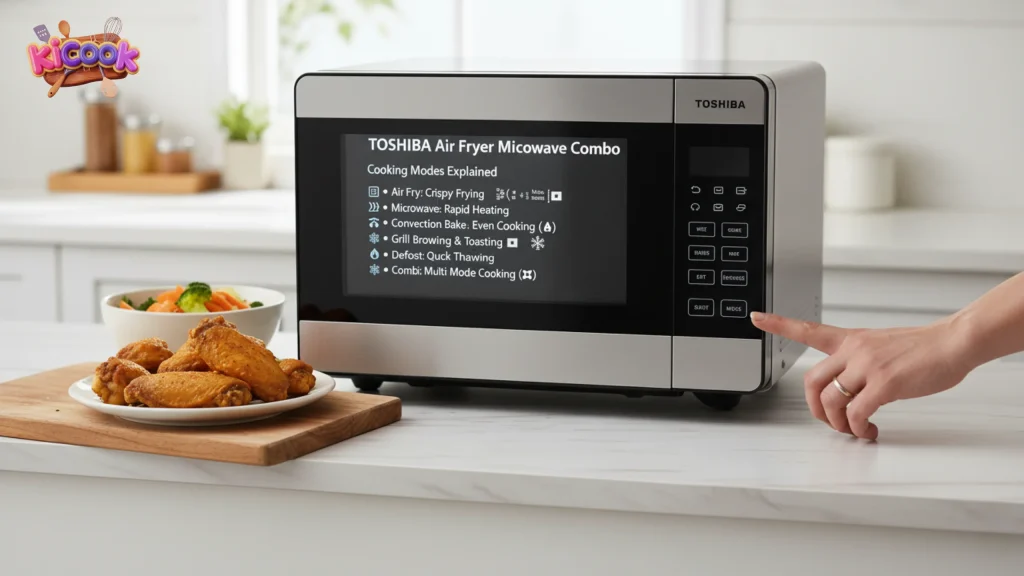
A TOSHIBA microwave air fryer combo is a countertop appliance that combines:
- Microwave cooking
- Air frying
- Convection baking
- Broiling
- Roasting
- Reheating
- Defrosting
Instead of using separate appliances, I use one machine for daily meals, snacks, and quick dinners.
Common Customer Pain Points (And How I Solved Them)
Before explaining the modes, let me address the real problems people face:
1. “My food cooks unevenly”
This usually happens when the wrong mode is used. Microwave mode alone heats fast but doesn’t brown food.
2. “Air fryer mode dries my food”
Wrong temperature or no preheat is often the cause.
3. “Too many buttons confuse me”
Each cooking mode has a clear purpose once explained simply.
4. “I don’t know when to use combo cooking”
Combo modes save time but need basic understanding.
Everything below solves these problems step by step.
Microwave Cooking Mode Explained
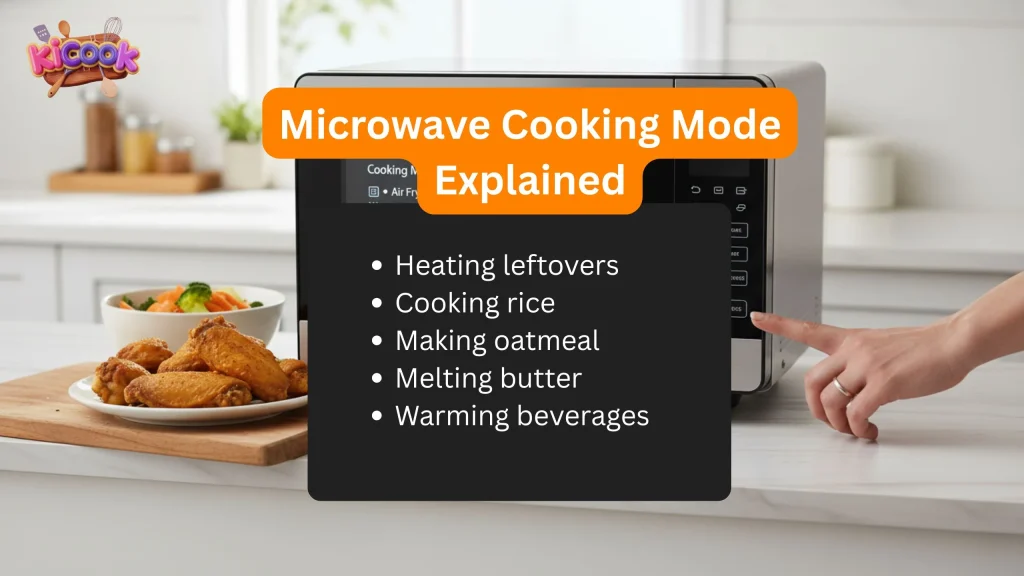
This is the classic microwave mode. I use it for:
- Heating leftovers
- Cooking rice
- Making oatmeal
- Melting butter
- Warming beverages
How it works:
It uses microwave energy to heat food from inside.
Best tips from my use:
- Use microwave-safe containers
- Cover food lightly
- Stir halfway for even heating
This mode is fast but does not make food crispy.
Air Fry Mode Explained
The air fry mode is one of my favorites.
I use it for:
- French fries
- Chicken wings
- Frozen snacks
- Spring rolls
- Nuggets
How it works:
Hot air circulates around food to create a crispy outer layer.
My pain point fix:
Preheat for 3–5 minutes and avoid overcrowding. This alone solved my dryness issue.
Convection Bake Mode Explained
The convection bake mode works like a small oven.
I use it for:
- Cakes
- Cookies
- Bread
- Pizza
- Muffins
Why I like it:
Heat spreads evenly, which helps baking results.
Tip:
Lower the temperature by about 10–15°F compared to a regular oven.
Broil Mode Explained
The broil mode uses high top heat.
I use it for:
- Melting cheese
- Browning casseroles
- Toasting sandwiches
- Finishing cooked food
Important note:
Watch closely. Broil works fast and can burn food if left too long.
Roast Mode Explained
The roast mode is ideal for meals with depth of flavor.
I use it for:
- Whole chicken
- Vegetables
- Potatoes
- Fish fillets
This mode combines steady heat and airflow, giving food a golden surface and juicy inside.
Combo Cooking Modes Explained
This is where many users feel unsure, but it’s actually helpful.
Microwave + Air Fry
- Faster cooking
- Crispy outside, soft inside
- Great for frozen foods
Microwave + Convection
- Reduces cooking time
- Keeps food moist
- Ideal for baked pasta and casseroles
My real result:
Combo modes save up to 30% cooking time without ruining texture.
Auto Cook Preset Modes Explained
Most TOSHIBA models include auto cook presets such as:
- Pizza
- Popcorn
- Potato
- Beverage
- Reheat
These presets adjust time and power automatically.
Who should use them:
Beginners and busy families.
Defrost Mode Explained
The defrost mode uses low power cycles.
I use it for:
- Meat
- Chicken
- Fish
Tip:
Turn food halfway to avoid partial cooking.
Reheat Mode Explained
Reheat mode is smarter than regular microwave heating.
It:
- Prevents soggy food
- Heats evenly
- Works well for leftovers
This solved my problem with rubbery pasta and dry rice.
Accessories and Their Role in Cooking Modes
To get the best results, I use:
- Air fryer basket
- Baking tray
- Glass turntable
Each accessory supports proper airflow and heat control.
Safety and Maintenance Tips
For long-term use:
- Clean after greasy cooking
- Avoid metal in microwave mode
- Use oven mitts
- Let the unit cool before cleaning
Quotes From Experts and Users
“Combo appliances save space and energy when used correctly.” — Emma Collins, Home Appliance Reviewer
“Air fryer microwave combos work best when users understand airflow and heat balance.” — David Turner, Kitchen Tech Analyst
“Preset modes help beginners avoid common cooking errors.” — Linda Moore, Cooking Instructor
For official safety and usage details, I recommend checking the TOSHIBA user manuals available on their support page
Frequently Asked Questions for TOSHIBA Air Fryer Microwave Combo Cooking Modes
Is a TOSHIBA air fryer microwave combo good for daily cooking?
Yes. I use it daily for quick meals, snacks, and reheating.
Can I bake a cake in it?
Yes, convection bake mode works well for cakes and bread.
Does air fry mode replace a traditional air fryer?
For small to medium portions, it works perfectly.
Is it suitable for UK and Canadian kitchens?
Yes. It fits standard voltage models sold in the USA, UK, and Canada.
Does combo cooking affect taste?
In my experience, combo modes improve texture when used correctly.
Final Thoughts and Conclusion
After months of real use, I can say that learning the TOSHIBA air fryer microwave combo cooking modes explained made cooking easier, faster, and less stressful. Once I understood which mode fits which food, my results improved instantly.
If you feel confused, you’re not alone. Start slow, use presets, and test one mode at a time. This appliance rewards simple use and patience. With the right settings, it becomes a reliable kitchen partner for everyday life.

“I believe great cooking starts with the right tools, trusted advice, and a little confidence in the kitchen.”
Hi, I’m Emma Carter. My love for cooking began in my grandmother’s kitchen, where I learned that every great meal starts with simple ingredients and the right cookware. Over the years, I’ve spent countless hours researching, testing, and comparing kitchen appliances, cookware, coffee makers, air fryers, and other everyday kitchen essentials.
Here at KiCook, my goal is to make your buying decisions easier with honest product reviews, practical buying guides, and easy-to-follow cooking tips. Whether you’re upgrading your kitchen or searching for the best appliance for your home, I focus on providing clear, reliable, and research-backed information you can trust.
When I’m not testing new kitchen gadgets or writing in-depth guides, you’ll usually find me trying new recipes, visiting local farmers’ markets, or enjoying a quiet cup of coffee while planning my next kitchen project.