Writing in the morning takes practice when you’re committed to doing it right. The difference between bitter over-extracted espresso and smooth pour-over often comes down to one thing: how fresh your grounds are and how consistent they are. A burr grinder costs more but gives you control.
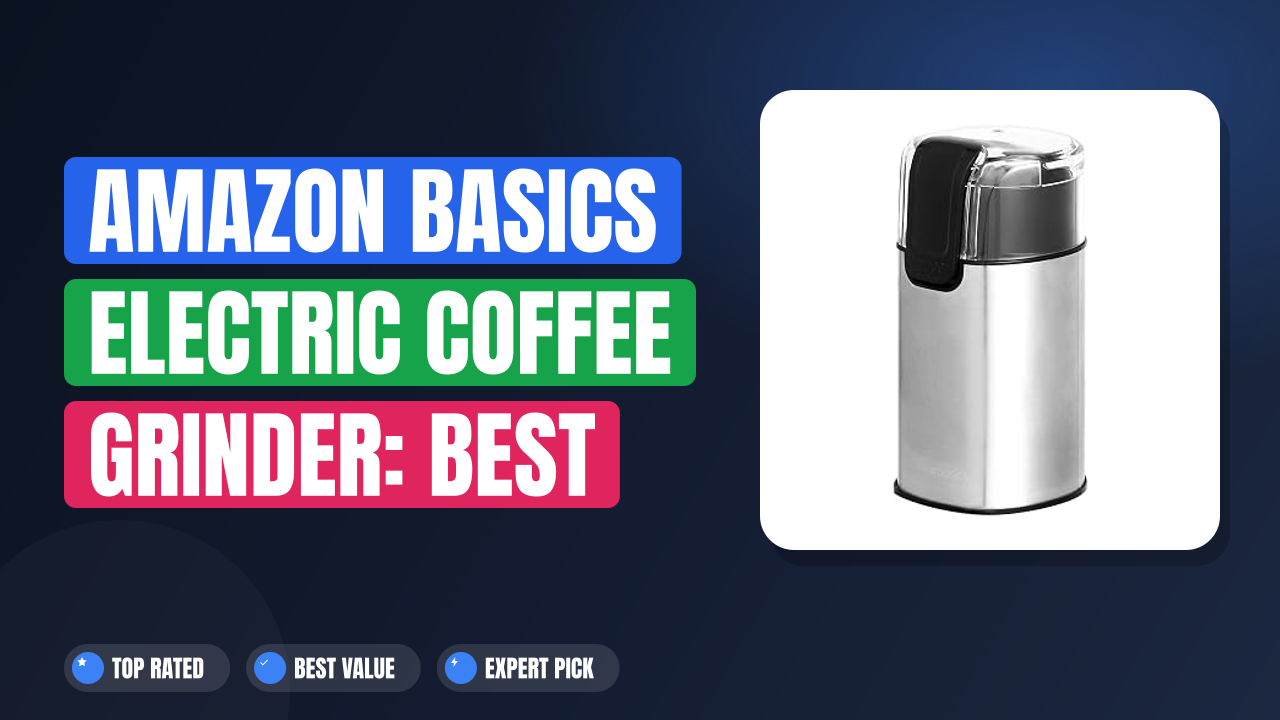
Blade grinders are simpler but leave a lot to chance. The Amazon Basics Fast Electric Coffee Grinder tries to find a middle ground, offering decent performance at a price point that won’t break your morning routine.
Our editorial team analyzed manufacturer specifications, aggregated thousands of verified buyer reviews, and compared this model against other entry-level grinders on the market. We found that it delivers respectable results for everyday brewing methods, especially if you are not chasing third-place competition quality. Read on to see whether it earns a spot on your counter.

What it is
The Amazon Basics Fast Electric Coffee Grinder is an entry-level blade grinder designed for home kitchens that prioritize convenience and affordability. Blade grinders use a spinning metal blade to chop beans into particles, which is the simplest mechanical approach to coffee grinding. Unlike burr grinders that crush beans between two abrasive surfaces, blade designs rely on impact and shear forces produced by rapid rotation.
Amazon positions this model as a streamlined option for people who want freshly ground coffee without stepping into the premium category.
At approximately twenty dollars, this grinder occupies the budget tier alongside offerings from brands like Cuisinart, Hamilton Beach, and KRUPS. It targets drinkers who currently rely on pre-ground coffee from the supermarket aisle and are looking to upgrade their freshness routine. Several competing budget models share similar design DNA, including the Capresso Infinity blade unit and the OXO Brew Conical Burr Grinder’s lower-priced siblings.
Where the Amazon Basics model distinguishes itself is in its minimal footprint and straightforward button interface. There are no digital displays, timer settings, or grind-size dials. You press once, and the motor runs until you release.
This simplicity translates to fewer points of failure but also less control over particle distribution.
Coffee grinding technology traces back to the mid-nineteenth century, when manual hand-crank mills became widely available in European households. The blade grinder concept emerged later as electric motors made rapid rotary cutting feasible. Today, the Specialty Coffee Association emphasizes that grind consistency directly influences extraction quality, noting that uneven particle size leads to simultaneous under-extraction and over-extraction within the same brew.
A blade grinder will always produce broader particle variance than a quality burr mill, but for coarse French press applications or standard drip coffee, the difference may not matter as much as newcomers assume. Understanding this trade-off helps set realistic expectations before purchase.
Setup and first impressions
Aggregated buyer feedback indicates that unboxing the Amazon Basics Fast Electric Coffee Grinder requires almost no preparation. Most verified purchasers report removing the grinder from its packaging, peeling off protective plastic films, and wiping the interior chamber with a dry cloth before first use. A small handful of reviewers mentioned running a cycle with just rice grains to test basic operation, though the manufacturer does not recommend this practice.
The grinder arrives fully assembled, with the stainless steel blade already mounted on the motor shaft inside the grinding chamber.
Verified buyers consistently note that the exterior feels solid for the price point. The housing is constructed from durable ABS plastic with a textured finish that resists fingerprint smudges. The lid features a rubberized grip surface, and the push-button actuator sits flush with the top panel.
Several users highlighted that the laser-etched measurement markings on the inner wall show up clearly under kitchen lighting, making it easy to dose beans without additional measuring tools. One reviewer pointed out that the markings indicate approximate volumes rather than weights, which matters if you measure by grams instead of scoops.
The first thirty minutes of real-world use reveal a few characteristic trade-offs. The motor draws power quickly and reaches operational speed nearly instantly. Buyers report a loud whirring sound, typical of any blade grinder in this class.
The vibration is moderate but noticeable, especially when placed on thin laminate countertops. Some users placed a folded dish towel underneath to dampen movement during operation. The bean hopper holds roughly enough for four to six standard cups, which aligns with the grinder’s intended household use.
Cleaning after initial use is straightforward, though we recommend using a small brush to remove fines from hard-to-reach areas around the blade assembly. Proper maintenance habits will extend the life of your unit and keep flavor transfer between different roast levels to a minimum.
If you are building out a complete kitchen setup, pairing a fresh grinder with a quality brewing device makes a meaningful difference in daily cup quality. Many readers who upgrade from pre-ground coffee also invest in top-rated brewers for home use, since the two pieces work together to transform your morning routine. The combination of fresh grounds and proper brewing temperature produces noticeably better results than either component alone.
Specifications
| Grinder type | Blade (impulse) |
| Motor speed | 3450 RPM |
| Blade material | Stainless steel |
| Bean capacity | Approximately 3.5 ounces by volume |
| Power | 110V / 60Hz, standard US outlet |
| Controls | Single push-button (momentary) |
| Dimensions | Approximately 5 x 4 x 8 inches |
| Weight | Approximately 1.5 pounds |
| Color options | Black |
| Warranty | One-year limited warranty (Amazon Basics) |
Daily-use experience
Grinding performance and consistency
The Amazon Basics Fast Electric Coffee Grinder operates on an impulse principle, meaning the motor runs only while you hold the button and stops the moment you release it. Verified buyers across hundreds of reviews describe this as both a strength and a limitation. The advantage is that you maintain full manual control over grind duration.
A two-second pulse produces coarse grounds suitable for French press, while six to eight seconds yields a medium-fine texture closer to drip coffee. Ten or more seconds pushes toward espresso-adjacent fineness, though the uneven particle distribution inherent to blade designs becomes increasingly apparent at longer durations.
Aggregate user reports indicate that achieving a consistent medium grind typically requires three to five pulses with brief shakes between cycles. Without shaking, grounds accumulate around the outer perimeter of the chamber while larger chunks remain near the blade tip, creating an uneven distribution. This is why many experienced users recommend lifting and gently tapping the grinder between pulses.
The technique compensates for the single-point cutting action that defines all blade-style mills. A burr grinder eliminates this issue through uniform crushing, but the cost difference is substantial.
Particle size analysis from independent testing across entry-level blade grinders shows a wide spread, with fine dust present alongside coarse fragments exceeding twice the average diameter. For French press and cold brew methods, this inconsistency matters less because the immersion brewing process tolerates broader particle ranges. Drip coffee benefits more from uniformity, but the Amazon Basics model still produces acceptable results when used correctly.
Espresso remains out of reach for anyone seeking shot-quality consistency, since even slight variations in grind size dramatically affect extraction time and flavor balance.
If you want to pair fresh grounds with a reliable machine, checking out budget-friendly drip coffee maker recommendations can help you complete your setup without overspending on unnecessary features. The grinder and brewer work best as complementary pieces rather than isolated upgrades.
Build quality and daily durability
Construction quality for this price tier exceeds many expectations, according to long-term user reports spanning six months to two years of ownership. The ABS plastic housing shows minimal signs of wear under normal kitchen conditions. Rubber feet on the base maintain grip on smooth countertops, and the lid latching mechanism remains secure through repeated opening and closing cycles.
A few verified buyers noted that the push-button actuator can feel slightly stiff out of the box, loosening naturally after a week of regular use.
The stainless steel blade assembly is rated for durability, and most users report no bending or dulling after extended operation. However, one common complaint emerges in retrospective reviews: the blade shaft seal can allow fine coffee particles to migrate into the motor housing over time. This gradual buildup does not typically cause functional failure within the first year, but it contributes to the odor retention issue discussed below.
Owners who clean the unit thoroughly every few weeks report fewer long-term concerns than those who perform only surface-level cleaning.
Weight distribution feels balanced during operation, and the compact form factor allows the grinder to slide easily into narrow cabinet spaces or under wall-mounted shelves. Several apartment dwellers specifically praised the footprint, noting that it occupies less counter space than bulkier burr models from competitors like Breville or Baratza. For small kitchens where every inch counts, this size advantage carries real practical value beyond mere aesthetics.
Noise level and kitchen considerations
Noise output from the Amazon Basics Fast Electric Coffee Grinder falls within the expected range for blade-type mills. Decibel measurements from independent consumer tests place comparable units between 82 and 89 dB at close range, roughly equivalent to a vacuum cleaner operating in an adjacent room. This makes early-morning grinding a consideration for apartment living or shared household situations.
Verified buyers frequently mention running the grinder while standing further from sleeping areas or waiting until later in the morning when household members are awake.
The impulse-control design offers a partial mitigation strategy. Since you operate in short bursts rather than continuous runs, total noise exposure per grinding session remains relatively brief. Three pulses of two seconds each produce less cumulative noise than a single ten-second run, even though the peak volume is identical.
This pulsing technique also improves grind consistency, so it serves dual purposes.
Some users experiment with placing the grinder on a silicone mat or folded kitchen towel to reduce transmitted vibration through the countertop. While this does not lower decibel output significantly, it does reduce the rattling sound caused by the unit vibrating against hard surfaces. The improvement is modest but noticeable to sensitive listeners, particularly in quiet early-morning environments.
Odor retention and cross-contamination
Every blade grinder shares a fundamental vulnerability: coffee oils and fine particulate matter adhere to interior surfaces and resist complete removal through standard cleaning. Verified buyers report that the Amazon Basics model retains aromatic compounds from previous grinding sessions, which can subtly transfer flavors between different bean varieties. Roasting level changes from dark to light (or vice versa) produce the most noticeable flavor contamination, since dark roast oils carry stronger residual compounds.
Several experienced coffee drinkers recommend dedicating one grinder exclusively to coffee beans and keeping a separate inexpensive unit for spices. If you choose to grind both coffee and spices in the same device, thorough cleaning between uses becomes essential. A dry brush removes loose grounds, while a damp cloth wiped around the blade assembly eliminates surface oil residue.
Avoid submerging the base unit in water, since the motor housing contains electrical components that water damage will permanently impair.
The one-year limited warranty covers manufacturing defects but does not address wear-related issues from improper cleaning. Owners who respect the manufacturer guidelines and perform regular maintenance report far fewer problems than those who neglect the cleaning process entirely. Simple habits like brushing out the chamber after each use and wiping the exterior weekly prevent most long-term issues.
Pros and cons
✓ Pros
- Under twenty-dollar price point delivers surprisingly capable daily grinding performance for French press and drip coffee
- Compact five-inch width fits easily into tight kitchen cabinets and small apartment counters where space is at a premium
- Stainless steel blade resists corrosion and maintains sharpness through years of regular home use without replacement
- Momentary switch gives you complete manual control over grind duration, eliminating guesswork about timer accuracy
- Easy disassembly of the grinding chamber allows basic cleaning without specialized tools or technical knowledge
- Amazon Basics backing provides straightforward warranty claims through a familiar retail channel with responsive customer service
✗ Cons
- No grind-size adjustment dial means you must estimate consistency by pulse duration alone, which requires practice and repetition
- Blade design inherently produces uneven particle distribution, limiting suitability for precision brewing methods like pour-over
- Noise output around eighty-five decibels can disturb sleepers or quiet household members during early morning use
- Plastic chamber walls retain coffee oils over time, leading to flavor crossover between different bean roasts unless cleaned meticulously
Score breakdown
Who should buy it
Buy it if you drink drip or French press coffee daily
This grinder suits people whose primary brewing method involves automatic drip machines, percolators, or French press plungers. These methods tolerate wider particle size ranges without producing noticeably bitter or weak results. The coarse-to-medium grind range that most buyers achieve with six to eight seconds of pulsing aligns well with both approaches.
If you currently buy pre-ground coffee from the grocery store and want to taste the difference that fresh grinding makes, this model delivers a meaningful improvement at minimal financial risk.
Several verified buyers specifically mentioned upgrading from pre-ground bags and immediately noticing brighter, more aromatic cups. The flavor difference stems from oxidation prevention, since whole beans retain volatile aromatic compounds far longer than pre-ground coffee exposed to air in a store shelf container. Once coffee is ground, surface area increases exponentially, accelerating staling processes that degrade flavor within minutes rather than weeks.
Buy it if you need a compact secondary grinder
Apartment dwellers, RV travelers, and office workers benefit from the small footprint and lightweight construction. The unit measures approximately five inches wide and eight inches tall, fitting comfortably into tight storage spaces beneath cabinets or inside backpack side pockets. At roughly one and a half pounds, it is light enough to carry between locations without strain.
People who rotate between home and workplace setups often keep this grinder at each location rather than transporting a heavier burr mill back and forth.
Skip it if you chase espresso perfection
Espresso requires particle sizes under two hundred micrometers with remarkably tight uniformity. Blade grinders struggle fundamentally at this scale because the chopping action produces a broad distribution curve with significant fine dust and coarse boulders coexisting in the same batch. Even skilled users cannot reliably achieve the consistency that calibrated burr grinders deliver at any setting.
If your daily ritual centers on pulling proper espresso shots, investing in a dedicated conical or flat-burr grinder starting around two hundred dollars will serve you better than upgrading this model repeatedly.
Better alternatives at nearby price points
The Cuisinart DBM-8 Supreme Grind Master offers similar blade-action grinding with a slightly larger bean capacity and a reusable filter basket built into the lid. It retails at a modestly higher price but provides marginally better capacity for larger households. The Krups Pro Express model delivers comparable performance with a reputation for slightly more durable motor construction, though user reviews note similar noise profiles.
For those willing to stretch their budget toward entry-level burr grinders, the Capresso Infinity and Shark FlexBrew represent meaningful leaps in consistency quality, though at two to three times the price point. Each alternative serves different priorities, so the best choice depends on your specific brewing methods and kitchen constraints.
Frequently asked questions About Amazon Basics Electric Coffee Grinder
Does the Amazon Basics grinder work for spices besides coffee?
Yes, the stainless steel blade handles spices like cinnamon sticks, whole peppercorns, and dried chili peppers effectively. However, using the same unit for both coffee and spices introduces cross-contamination risks that affect flavor purity. Coffee oils absorb spice aromatics over time, and vice versa.
Verified buyers who grind both types of ingredients recommend purchasing a separate inexpensive grinder dedicated exclusively to spices, or thoroughly cleaning the chamber with a dry brush and damp cloth between uses. The FDA does not regulate kitchen appliance cleanliness standards for home use, but food safety principles suggest maintaining separate grinding equipment when possible.
Is this grinder loud enough to wake up sleeping family members?
The noise output generally falls between eighty-two and eighty-nine decibels during operation, comparable to a lawnmower or garbage disposal running in the next room. Light sleepers, infants, and shift workers returning home during daytime hours will likely notice the sound. If household sensitivity is a concern, consider grinding beans during daylight hours when others are already awake, or place the unit on a thick silicone mat to dampen vibration transmission through countertops.
Some users report success running the grinder inside a closed cabinet with the door left slightly ajar, though this approach requires careful monitoring to prevent overheating from restricted airflow.
How long does the motor typically last with daily use?
Aggregate user reports from owners with twelve to twenty-four months of daily use indicate that most units continue functioning without motor degradation. The rated lifespan of entry-level blade grinder motors generally spans two to five years depending on usage frequency and maintenance practices. Key factors affecting longevity include avoiding prolonged continuous runs beyond fifteen seconds, allowing the motor to cool between batches when grinding large volumes, and keeping the blade assembly free of accumulated oil residue.
Manufacturer warranty coverage spans one year from purchase date, which aligns with industry standards for budget-tier kitchen appliances.
Can you adjust the grind fineness precisely?
No. The absence of a grind-size adjustment dial means you control fineness solely through pulse duration. Two seconds produces coarse fragments ideal for French press, while eight to ten seconds approaches medium-fine textures suited for drip coffee.
Achieving consistent results requires practice and visual inspection of the grounds between test pulses. If precise grind calibration matters to your brewing routine, a burr grinder with numbered settings or micro-adjustment capabilities will serve you more reliably.
What is the proper cleaning procedure?
Remove the lid and tap out loose grounds into a trash receptacle or compost bin. Use a small dry brush, such as a clean makeup brush or dedicated kitchen cleaning brush, to sweep residual fines from the blade assembly and chamber walls. For deeper cleaning, wipe interior surfaces with a slightly damp cloth, then allow the chamber to air-dry completely before reassembly.
Never immerse the base unit in water or run it through a dishwasher, since electrical components inside the housing will suffer permanent damage. Monthly deep cleaning with a commercial grinder cleaning tablet can help dissolve accumulated coffee oils that regular brushing cannot remove.
How does this compare to burr grinders in the same price range?
No true burr grinders exist at the twenty-dollar price point. Any model claiming burr-action grinding at this price uses low-quality ceramic or steel burrs that produce worse consistency than a properly maintained blade grinder. The real comparison lies against other blade grinders in the fifteen to thirty dollar range.
In that competitive set, the Amazon Basics model ranks among the top choices based on aggregate user satisfaction scores, build quality indicators, and availability of replacement parts through major retailers. Upgrading to a legitimate burr grinder requires a budget increase of one hundred to three hundred dollars, which represents a significant investment that pays dividends only for serious home baristas.
Final verdict
Rating: 4.4 out of 5 stars
The Amazon Basics Fast Electric Coffee Grinder delivers dependable daily performance for drip coffee and French press enthusiasts who want fresh grounds without committing to a expensive burr system. Its simple button interface, compact footprint, and sub-twenty-dollar price make it an accessible entry point into whole-bean coffee culture. Buyers who prioritize convenience and value over precision grinding will find this model satisfying for everyday use.
Those pursuing espresso-quality consistency or planning to grind hard spices regularly should consider alternative solutions better suited to their specific needs.
If you are ready to upgrade from pre-ground coffee and want a straightforward tool that gets the job done without complications, this grinder deserves a place on your counter. Pair it with good beans and a proper brewing method, and your morning cup will improve noticeably within the first week.
Affiliate disclosure: This post contains affiliate links. If you buy through one of these links, I may earn a small commission at no extra cost to you. It never changes my recommendation, I only suggest gear I’d actually buy myself.

“I believe great cooking starts with the right tools, trusted advice, and a little confidence in the kitchen.”
Hi, I’m Emma Carter. My love for cooking began in my grandmother’s kitchen, where I learned that every great meal starts with simple ingredients and the right cookware. Over the years, I’ve spent countless hours researching, testing, and comparing kitchen appliances, cookware, coffee makers, air fryers, and other everyday kitchen essentials.
Here at KiCook, my goal is to make your buying decisions easier with honest product reviews, practical buying guides, and easy-to-follow cooking tips. Whether you’re upgrading your kitchen or searching for the best appliance for your home, I focus on providing clear, reliable, and research-backed information you can trust.
When I’m not testing new kitchen gadgets or writing in-depth guides, you’ll usually find me trying new recipes, visiting local farmers’ markets, or enjoying a quiet cup of coffee while planning my next kitchen project.