
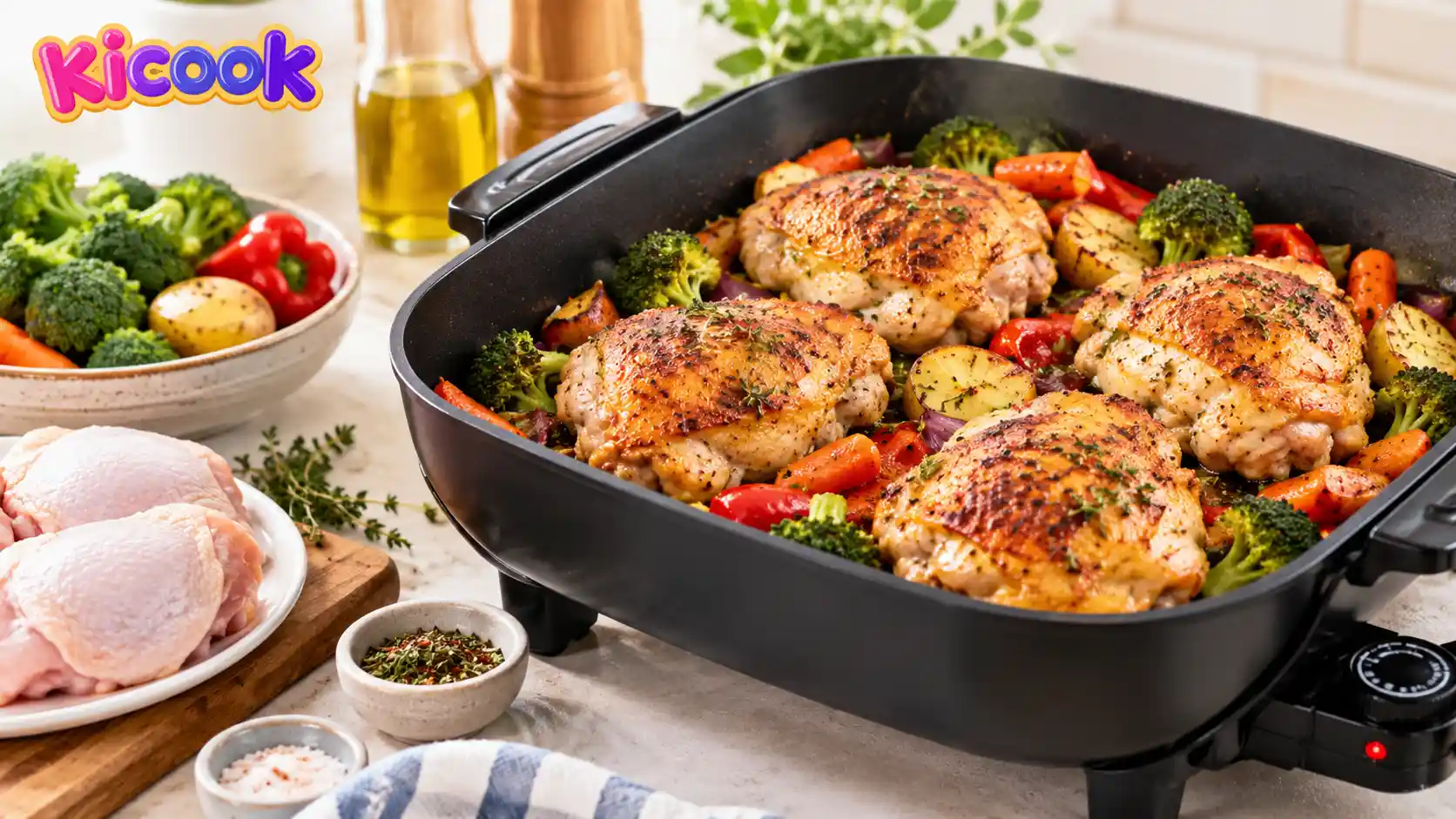
Yes, you can bake chicken in an electric skillet, and it can turn out surprisingly juicy and flavorful when you use the right temperature and keep the lid on for most of the cooking time.
An electric skillet does not bake chicken exactly the way a conventional oven does. Most of its heat comes from underneath, while the lid traps heat and moisture around the food. That combination creates an oven-like cooking environment that works especially well for chicken breasts, thighs, drumsticks, wings, and even a small whole chicken in the right skillet.
For most chicken pieces, 325°F to 350°F (163°C to 177°C) is a practical starting range. Cooking time varies considerably depending on the cut, thickness, whether the chicken contains bones, and how accurately your skillet holds its set temperature. KiCook’s guide to foods you can cook in an electric skillet also lists chicken in roughly this temperature range.
The most important rule, however, is not to rely on time alone. Use a food thermometer and make sure the chicken reaches the safe internal temperature recommended for your country.
Can You Really Bake Chicken in an Electric Skillet?
You can, although “baking” in an electric skillet is slightly different from baking in an oven.
A conventional oven surrounds food with hot air. An electric skillet heats primarily through the cooking surface at the bottom. When you cover the skillet, however, the lid holds hot air and steam inside. This allows the chicken to cook from more than just the bottom.
That is why a covered electric skillet can work well for baking-style chicken.
You get several benefits:
- Precise adjustable heat on many models
- Faster preheating than a full-size oven
- Less heat released into the kitchen
- Easy browning before covered cooking
- Good moisture retention
- Convenient one-pan cleanup
- Enough room for several pieces of chicken in larger skillets
Electric skillets are also versatile enough for much more than chicken. If you are still learning what your appliance can handle, KiCook’s electric skillet cooking ideas guide provides a broader look at meals and cooking methods that work well in one.
Always check your appliance manual before using a technique that differs from the manufacturer’s instructions.
Baking vs Roasting vs Frying Chicken in an Electric Skillet
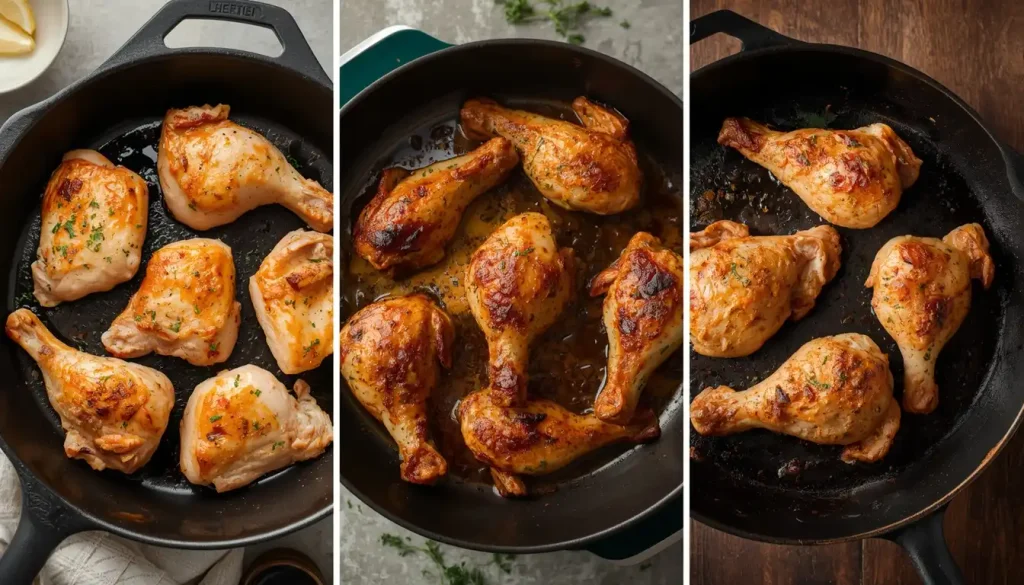
The words “bake,” “roast,” and “fry” are sometimes used loosely with electric skillets, but the methods are not identical.
| Method | How It Works | Typical Result |
|---|---|---|
| Baking-style cooking | Moderate heat with the lid on | Tender, moist chicken |
| Roasting-style cooking | Chicken may be elevated on a rack and cooked covered | Useful for a small whole chicken |
| Pan-frying | Direct contact with oil and the skillet surface | Brown, crisp exterior |
| Deep-frying | Chicken cooks in a larger quantity of hot oil | Very crisp fried coating |
| Braising | Chicken cooks covered with added liquid | Very tender, moist meat |
If what you really want is breaded, crispy fried chicken rather than baked-style chicken, KiCook has a separate guide to frying chicken in an electric skillet.
For baked chicken, you generally want far less oil and a lower cooking temperature than you would use for deep-frying.
What Temperature Should You Bake Chicken in an Electric Skillet?
For many chicken pieces, start around 325°F to 350°F (163°C to 177°C).
This range is hot enough to cook chicken efficiently without making the bottom scorch before the center finishes cooking.
KiCook’s electric skillet cooking chart gives chicken an approximate skillet setting of 325°F to 350°F, with cooking times around 25 to 40 minutes for typical chicken preparations. The exact result varies by cut and appliance.
If your skillet uses labels such as Low, Medium, and High instead of exact temperatures, do not assume every manufacturer’s “Medium” setting means the same thing. KiCook’s electric skillet medium-heat temperature guide explains why thermostat settings can vary between models.
For very thick chicken, lowering the heat after browning is often better than keeping the skillet at a high temperature throughout cooking.
Electric Skillet Chicken Cooking Time and Temperature Chart
Use the following numbers as planning estimates rather than guarantees.
| Chicken Cut | Suggested Skillet Setting | Approximate Cooking Time | Lid |
|---|---|---|---|
| Thin chicken cutlets | 325–350°F / 163–177°C | 8–15 minutes | Optional |
| Chicken tenders | 325–350°F / 163–177°C | 10–18 minutes | Optional/partial |
| Boneless chicken breast | 325–350°F / 163–177°C | 18–30 minutes | Recommended |
| Bone-in chicken breast | 325–350°F / 163–177°C | 25–40 minutes | Yes |
| Boneless thighs | 325–350°F / 163–177°C | 18–30 minutes | Recommended |
| Bone-in thighs | 325–350°F / 163–177°C | 25–40 minutes | Yes |
| Drumsticks | 325–350°F / 163–177°C | 25–40 minutes | Yes |
| Wings | 325–350°F / 163–177°C | 20–30 minutes | Usually |
| Small whole chicken | Model and method dependent | Varies significantly | Yes |
These times can change based on:
- Chicken thickness
- Starting temperature of the meat
- Bone-in versus boneless cuts
- Number of pieces in the skillet
- Thermostat accuracy
- Skillet material
- Lid design
- How often the lid is opened
Never use this table as the final test for doneness. A food thermometer is much more reliable.
Bone-In vs Boneless Chicken in an Electric Skillet
Both work, but they behave differently.
Boneless Chicken
Boneless breasts and thighs cook faster and are convenient for quick dinners.
The drawback is that boneless chicken breasts can dry out quickly. Moderate heat and careful temperature checking help prevent overcooking.
Bone-In Chicken
Bone-in breasts, thighs, and drumsticks generally take longer, but they are often more forgiving.
They are particularly suitable for covered electric skillet cooking because the trapped heat gives the center enough time to cook while the meat retains moisture.
| Factor | Bone-In Chicken | Boneless Chicken |
|---|---|---|
| Cooking speed | Slower | Faster |
| Moisture retention | Usually better | Can dry faster |
| Best for quick meals | Fair | Excellent |
| Covered cooking | Excellent | Excellent |
| Browning | Excellent | Excellent |
Skin-On vs Skinless Chicken: Which Works Better?
Either is fine.
Skin-on chicken is ideal when you want richer flavor and better browning. Starting skin-side down allows some of the natural fat to render into the skillet.
Skinless chicken is leaner and easier to season evenly, but a small amount of oil can help prevent sticking and improve browning.
For crispy skin, use skin-on pieces and avoid adding too much water or broth.
How to Bake Chicken in an Electric Skillet Step by Step
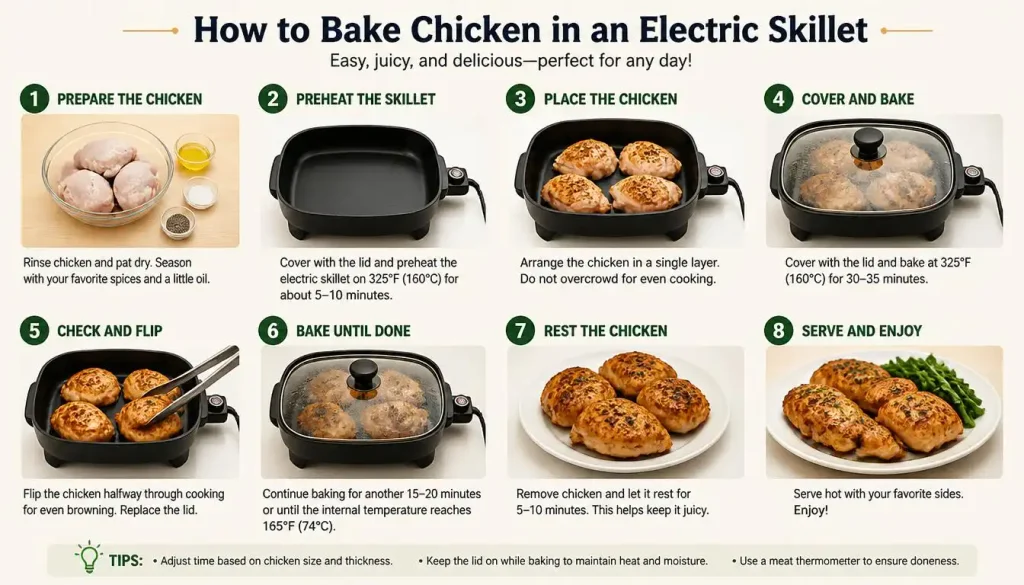
This basic method works particularly well for breasts, thighs, and drumsticks.
Step 1: Choose Evenly Sized Chicken Pieces
Try to cook pieces of similar size and thickness together.
If one chicken breast is twice as thick as another, the thin piece may become dry before the thick one is safely cooked.
For very thick boneless breasts, you can gently pound or butterfly them to create a more even thickness.
Step 2: Pat the Chicken Dry
Use paper towels to remove excess surface moisture.
Dry chicken browns more effectively and holds seasoning better than wet chicken.
Avoid rinsing raw chicken around your sink because splashing raw poultry juices can increase the risk of cross-contamination.
Step 3: Season the Chicken
A basic seasoning mixture can be as simple as:
- Salt
- Black pepper
- Garlic powder
- Onion powder
- Paprika
- Dried thyme or Italian seasoning
Rub a small amount of olive or other cooking oil over the chicken before applying the seasoning if desired.
Step 4: Preheat the Electric Skillet
Set the skillet to approximately 325°F to 350°F.
Give it enough time to reach temperature before adding the chicken.
Different electric skillets cycle their heating elements differently, so your manufacturer’s instructions should take priority over a general recipe.
Step 5: Add a Small Amount of Oil
Usually, one or two tablespoons is enough for several pieces.
You are not deep-frying the chicken. The oil is mainly there to encourage browning and reduce sticking.
Step 6: Brown the Chicken
Place the chicken in the skillet without crowding it.
For skin-on chicken, start with the skin side down.
Let the first side develop some color before turning. Moving chicken constantly can make browning harder.
Step 7: Cover the Skillet
Once the chicken has been browned, place the lid on the skillet.
This is the stage that makes electric skillet cooking behave more like baking.
The enclosed space traps heat and reduces moisture loss while the center cooks.
Step 8: Turn the Chicken
For individual chicken pieces, turning once or occasionally during cooking helps compensate for the fact that most electric skillet heat comes from below.
Use clean tongs rather than piercing the chicken repeatedly with a fork.
Step 9: Check the Internal Temperature
Near the end of the estimated cooking time, insert a clean digital food thermometer into the thickest part of the meat without touching bone.
Do not judge chicken only by its exterior color.
Step 10: Rest Before Serving
Once safely cooked, move the chicken to a clean plate and allow it to rest for several minutes.
A short rest helps the meat retain more of its juices when sliced.
Should You Cover Chicken When Cooking It in an Electric Skillet?
For baking-style chicken, yes, covering the skillet is usually helpful.
A lid does three important things:
- Holds heat around the upper surface of the chicken
- Reduces moisture loss
- Helps thicker pieces cook through more evenly
Without a lid, most of the cooking energy comes from the hot surface directly beneath the chicken.
That makes uncovered cooking better for browning but less oven-like.
Can You Cook Chicken in an Electric Skillet Without a Lid?
Yes, especially if you are cooking thin chicken cutlets, tenders, or small boneless pieces.
However, uncovered cooking is closer to pan-searing than baking.
For thicker breasts, thighs, and drumsticks, you may find that the outside browns too quickly while the center still needs more time.
A useful compromise is:
Brown uncovered → cook covered → finish uncovered if more browning is needed.
That gives you the benefits of both methods.
Do You Need to Flip Chicken in an Electric Skillet?
For most chicken pieces, yes.
Because the heat comes primarily from underneath, flipping gives both sides direct contact with the cooking surface.
Chicken breasts, thighs, tenders, and drumsticks usually benefit from being turned during cooking.
A whole chicken cooked on a rack may follow a different procedure. Always follow the recipe and instructions appropriate to your specific appliance.
Do You Need Oil to Bake Chicken in an Electric Skillet?
Not much.
A small amount is normally enough for browning and preventing sticking.
Skin-on thighs may release enough fat that you need very little additional oil. Skinless breasts are more likely to benefit from a light coating.
If your skillet has an effective nonstick cooking surface, you may be able to reduce the oil further.
Do not assume, however, that “nonstick” means nothing can stick. Very lean chicken cooked at excessive heat can still grab onto the surface.
What Internal Temperature Should Chicken Reach?
This is more important than any cooking-time estimate.
Food-safety authorities in different countries present poultry guidance slightly differently, so readers should follow the recommendation applicable where they live.
United States
The USDA states that poultry should reach a safe minimum internal temperature of 165°F (73.9°C) as measured with a food thermometer. USDA poultry temperature guidance
Canada
Health Canada lists 74°C (165°F) for chicken pieces such as breasts, legs, thighs, and wings, and 82°C (180°F) for whole poultry. Health Canada safe cooking temperatures
United Kingdom
The UK Food Standards Agency explains that food can be safely cooked using validated time-and-temperature combinations, including 70°C for 2 minutes or 75°C for 30 seconds. Poultry needs to be cooked all the way through. Food Standards Agency cooking guidance
Australia
Food Standards Australia New Zealand recommends cooking poultry to at least 75°C in the centre. FSANZ food-safety guidance
Whichever guideline applies to you, place the thermometer in the thickest part of the meat and avoid touching bone.
Can You Bake Chicken Breast in an Electric Skillet?
Yes. Chicken breast is one of the easiest cuts to prepare this way.
The challenge is avoiding dryness.
For boneless breasts:
- Make the pieces reasonably even in thickness.
- Season them well.
- Preheat the skillet to around 325°F to 350°F.
- Brown the first side.
- Turn the breasts.
- Cover the skillet.
- Reduce the heat if the exterior is browning too quickly.
- Cook until the safe internal temperature is reached.
If your breasts are very thick, butterfly them or gently pound the thickest section before cooking.
Can You Bake Chicken Thighs in an Electric Skillet?
Absolutely.
Chicken thighs are particularly suited to electric skillet cooking because they contain more fat and connective tissue than chicken breasts. As a result, they tend to remain juicy even during longer cooking.
Bone-in, skin-on thighs work especially well.
Start them skin-side down to render some fat and develop color, then turn, cover, and continue cooking.
For crispier skin, remove the lid near the end and place the skin side against the skillet again briefly.
Can You Cook Drumsticks in an Electric Skillet?
Yes.
Drumsticks work well with covered cooking because their shape and bone structure require more time than thin boneless pieces.
Brown them on several sides first, then cover the skillet and cook at moderate heat.
Turn them periodically for more even cooking.
Check the thickest part with a thermometer before serving.
Can You Cook Chicken Wings in an Electric Skillet?
Yes, though the result depends on the technique.
Covered wings will usually be tender but not exceptionally crisp.
For better texture:
- Dry the wings thoroughly
- Use only a small amount of oil
- Brown them before covering
- Avoid crowding
- Cook until safely done
- Finish uncovered to remove excess surface moisture
If your goal is heavily breaded, crunchy wings, frying will usually produce a different result than baking-style skillet cooking.
Can You Cook Chicken Tenders or Cutlets in an Electric Skillet?
Yes, and these are among the fastest chicken cuts to cook.
Because they are thin, they may not need a long covered phase.
Brown one side, flip, and cook only until the center reaches a safe temperature.
Watch them closely. A thin chicken cutlet can go from juicy to dry much faster than a bone-in thigh.
Can You Roast a Whole Chicken in an Electric Skillet?
It is possible with certain electric skillets, but the skillet must be large and deep enough for the chicken and lid to fit comfortably.
Whole-chicken cooking is not just theoretical. Presto publishes an electric skillet roast chicken recipe that uses a 3- to 3½-pound chicken, browns the bird first, then places it on a rack and cooks it covered. Presto’s electric skillet roast chicken method
That does not mean the exact same technique will work in every electric skillet.
Check:
- Skillet capacity
- Lid height
- Manufacturer instructions
- Temperature range
- Whether a rack is approved
- Whether the lid can close completely around the bird
Do You Need a Rack or Trivet?
For some whole-chicken recipes, yes.
A rack raises the bird away from direct contact with the hot skillet surface and allows it to cook more like a roast.
Presto’s published method specifically uses a cooking rack for its skillet roast chicken.
Do not improvise with materials that are not heat-safe or appliance-safe.
Does the Lid Need to Be Deep?
A high or domed lid is useful because a whole chicken takes considerably more vertical space than chicken pieces.
If the lid presses directly against the bird or cannot close properly, use another cooking method.
Can You Cook Frozen Chicken in an Electric Skillet?
Cooking from frozen requires extra caution.
USDA guidance says meat and poultry can be cooked from frozen in suitable cooking methods, but it can take approximately 50% longer than cooking fully thawed food. USDA frozen-food cooking guidance
For electric skillet baking, thawing first is usually the easier and more predictable option because:
- The chicken browns better
- Seasoning adheres better
- Thickness is easier to manage
- Cooking is more even
- Estimating cooking time becomes easier
If cooking a packaged frozen chicken product, follow the package directions rather than improvising an electric-skillet method.
How to Keep Electric Skillet Chicken Juicy
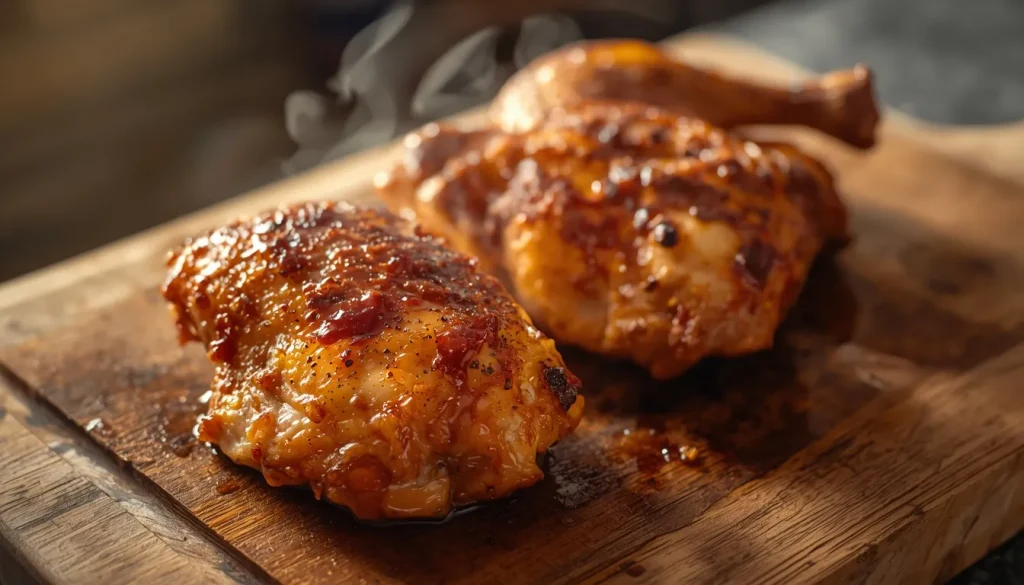
Dry chicken is usually the result of too much heat or too much cooking time.
These habits make a noticeable difference.
Use Moderate Heat
High heat may brown the outside quickly while leaving the center behind.
Avoid Overcooking
A thermometer lets you stop cooking when the chicken is safely done rather than giving it an unnecessary extra 10 or 15 minutes “just to be sure.”
Use the Lid
For thick pieces, the lid helps retain moisture and creates a more even cooking environment.
Do Not Open the Lid Constantly
Every time you remove the lid, heat and moisture escape.
Check occasionally rather than every minute.
Let the Chicken Rest
Give cooked chicken a few minutes before slicing it.
Choose Thighs When You Want More Forgiveness
Chicken thighs generally stay juicy more easily than very lean breast meat.
How to Get Crispy Chicken Skin in an Electric Skillet
A covered skillet naturally creates moisture, which is great for tenderness but not ideal for crisp skin.
Use this approach instead:
- Pat the skin completely dry.
- Preheat the skillet.
- Add only a thin layer of oil.
- Put the chicken skin-side down.
- Leave it alone long enough to brown.
- Flip and cook covered until nearly done.
- Remove the lid.
- Return the skin side to the skillet briefly to re-crisp it.
Avoid pouring lots of water or broth around the chicken if crispy skin is the goal. Too much liquid turns the method closer to braising.
You should also keep expectations realistic. An electric skillet does not provide the same intense top heat as an oven broiler.
Do You Need to Add Water When Baking Chicken in an Electric Skillet?
No.
Chicken releases its own moisture as it cooks, especially when covered.
You can add a small amount of broth, sauce, wine, or water when you deliberately want a moist, braised-style result.
But adding too much liquid changes the cooking method.
For browned or crisp chicken, use little or no added liquid.
For tender chicken with a sauce, a small amount of liquid can work beautifully.
Common Mistakes When Baking Chicken in an Electric Skillet

Using Heat That Is Too High
This is one of the easiest ways to end up with a dark exterior and undercooked center.
Overcrowding the Skillet
Chicken releases moisture as it cooks. Pack the skillet too tightly and you may end up steaming the meat instead of browning it.
Cooking Very Different Sizes Together
Thin cutlets and large bone-in thighs should not be expected to finish simultaneously.
Opening the Lid Too Often
Constantly checking the food slows covered cooking.
Adding Too Much Liquid
Extra liquid can prevent browning.
Relying Only on Cooking Time
Thirty minutes in one skillet may not equal thirty minutes in another.
Use a thermometer.
Using Color as the Only Doneness Test
A browned exterior does not prove that the center has reached a safe temperature.
Cutting the Chicken Immediately
Allowing it to rest briefly can improve juiciness.
Troubleshooting Electric Skillet Chicken
Why Is My Chicken Brown Outside but Raw Inside?
Your skillet is probably too hot, or your chicken pieces are too thick.
Lower the temperature, cover the skillet, and continue cooking until the center reaches the appropriate safe temperature.
Why Is My Chicken Dry?
Common causes include:
- Cooking too long
- Using heat that is too high
- Cooking thin breasts with thick pieces
- Leaving the skillet uncovered throughout cooking
Why Isn’t My Chicken Browning?
Possible causes include:
- Wet chicken surface
- Crowded skillet
- Skillet not fully preheated
- Too much liquid
- Moving the chicken too frequently
Why Is There So Much Liquid in the Skillet?
Chicken naturally releases moisture.
Crowding makes the problem worse because the liquid cannot evaporate efficiently.
Remove excess liquid carefully if necessary, or finish uncovered.
Why Is My Chicken Sticking?
The skillet may not have been fully preheated, you may have used too little oil, or the cooking surface may be worn.
Letting the chicken develop a proper browned surface before trying to flip it can also help.
Why Does One Side Cook Faster?
Electric skillets can develop hot spots or cycle their heating elements.
Rotate or reposition chicken pieces when necessary.
If your skillet repeatedly burns food in one area or behaves unpredictably, KiCook’s guide to common electric skillet problems may help identify the cause.
If the temperature seems very different from the dial setting, you can also check KiCook’s electric skillet thermostat troubleshooting guide.
Electric Skillet vs Oven for Baking Chicken
Neither method is automatically better. They simply have different strengths.
| Feature | Electric Skillet | Conventional Oven |
|---|---|---|
| Preheating | Usually quicker | Usually longer |
| Small batches | Excellent | Can be inefficient |
| Bottom browning | Strong | Moderate |
| All-around dry heat | Limited | Excellent |
| Crispy skin | Good with technique | Usually easier |
| Moisture retention | Excellent with lid | Depends on method |
| Kitchen heat | Lower | Higher |
| Whole large chicken | Limited by size | Better |
| One-pan stovetop-style meals | Excellent | Less convenient |
An electric skillet makes the most sense when you are cooking a moderate quantity of chicken and do not want to heat a full oven.
An oven is usually more convenient for very large birds or large trays of chicken.
Nonstick vs Stainless-Steel Electric Skillet for Chicken
The skillet material affects how the chicken behaves.
Nonstick Electric Skillet
Advantages:
- Less oil required
- Easier cleanup
- Easier release
- Beginner-friendly
Use silicone, wood, or other manufacturer-approved utensils rather than scratching the coating with metal tools.
Stainless-Steel Electric Skillet
Advantages:
- Strong browning potential
- Durable cooking surface
- Good fond development for sauces
The trade-off is that chicken may stick more easily unless the skillet is properly preheated and adequately oiled.
Easy Electric Skillet Baked Chicken Recipe
This simple recipe is designed for chicken thighs or medium-size chicken breasts.
Ingredients
- 4 chicken breasts or thighs of similar size
- 1 tablespoon olive oil
- 1 teaspoon salt
- 1 teaspoon paprika
- 1 teaspoon garlic powder
- ½ teaspoon onion powder
- ½ teaspoon black pepper
- ½ teaspoon dried thyme
- 2 tablespoons chicken broth, optional
Instructions
1. Prepare the chicken.
Pat the chicken dry with paper towels.
2. Season it.
Combine the salt, paprika, garlic powder, onion powder, black pepper, and thyme. Rub the seasoning evenly over the chicken.
3. Preheat the skillet.
Set your electric skillet to approximately 350°F (177°C), or follow the preheating instructions for your model.
4. Add oil.
Spread a small amount of oil over the cooking surface.
5. Brown the chicken.
Place the pieces in a single layer. Let the first side brown before turning.
6. Turn and cover.
Flip the chicken. Add a small splash of broth only if you want a moister result, then cover.
7. Reduce heat if necessary.
If the bottom is browning too quickly, lower the skillet toward 325°F (163°C).
8. Cook until safely done.
Continue until a food thermometer inserted into the thickest part shows the safe internal temperature appropriate to your location.
9. Rest.
Transfer the chicken to a clean plate and rest for about 5 minutes before serving.
Easy Flavor Variations
Once you understand the basic method, change the seasoning without changing the overall technique.
Lemon Pepper:
Use lemon zest, black pepper, garlic, and a little lemon juice after cooking.
Garlic Herb:
Use garlic, rosemary, thyme, and parsley.
Smoky BBQ:
Season lightly, then brush barbecue sauce over the chicken near the end so the sugars do not burn.
Cajun:
Use Cajun seasoning and a touch of oil.
Honey Garlic:
Add a honey-garlic glaze during the final portion of cooking rather than at the beginning.
Turn It Into a One-Pan Chicken Meal
One advantage of electric skillet cooking is that the chicken can become the base of a complete dinner.
Chicken and Vegetables
After browning the chicken, add vegetables such as:
- Bell peppers
- Onion
- Zucchini
- Green beans
- Mushrooms
Choose vegetables that can finish cooking in roughly the same amount of time.
Chicken and Potatoes
Small potatoes or thinly cut potatoes work better than very large pieces.
You may need a little broth and extra covered cooking time.
Chicken and Rice
Chicken and rice can work well in an electric skillet, but liquid ratios and cooking times become more important.
If you are adapting this into casserole-style cooking, KiCook’s guide to baking casseroles in an electric skillet explains how lid use, liquid, skillet depth, and temperature affect the result.
How to Store and Reheat Leftover Electric Skillet Chicken
Do not leave cooked chicken sitting at room temperature for hours.
USDA guidance says leftovers should generally be refrigerated within 2 hours of cooking, or within 1 hour when the surrounding temperature is above 90°F (32°C). USDA leftovers and food-safety guidance
Store the chicken in a covered container in the refrigerator.
USDA guidance also recommends reheating leftovers to 165°F.
To keep reheated chicken from becoming dry, add a small splash of broth or sauce and use gentle heat.
Frequently Asked Questions
Can you bake chicken in an electric skillet?
Yes. A covered electric skillet can create an oven-like environment suitable for chicken breasts, thighs, drumsticks, wings, and some small whole chickens. Moderate heat and a food thermometer are the keys to good results.
What temperature should I cook chicken in an electric skillet?
For many chicken pieces, 325°F to 350°F (163°C to 177°C) is a useful starting range. Adjust according to the cut, thickness, skillet model, and manufacturer’s instructions.
How long does chicken take in an electric skillet?
Many chicken pieces take somewhere around 20 to 40 minutes, but thin tenders may cook much faster. Thickness, bone, temperature, and skillet design all affect the time. Always verify doneness with a thermometer.
Do you put water in an electric skillet when cooking chicken?
You do not have to. A little broth or water can help create a moist, braised-style dish, but too much liquid prevents good browning.
Should I cover chicken in an electric skillet?
For thick pieces and baking-style cooking, covering is usually beneficial. The lid traps heat and moisture and helps the center cook more evenly.
Can you cook raw chicken in an electric skillet?
Yes. Raw chicken can be cooked in an electric skillet as long as it is handled safely and cooked to the safe internal temperature required by the food-safety authority where you live.
Do you have to flip chicken in an electric skillet?
Most individual chicken pieces benefit from being flipped because the heating element is underneath the cooking surface.
Can you cook chicken without oil in an electric skillet?
It may be possible in a good nonstick skillet, especially with fatty, skin-on chicken. However, a small amount of oil usually improves browning and reduces sticking.
Can you cook frozen chicken in an electric skillet?
It may be possible depending on the chicken product and appliance, but thawed chicken cooks more predictably and evenly. Frozen poultry generally requires substantially more cooking time. Always follow package and appliance instructions.
Can you roast a whole chicken in an electric skillet?
Yes, certain large electric skillets can handle a small whole chicken. A suitable rack and deep lid may be required. Follow a manufacturer-approved method whenever possible.
Is an electric skillet the same as an electric frying pan?
In everyday usage, the terms often describe the same general appliance: a skillet-shaped pan with its own electric heating element and temperature control. “Electric frying pan” is also common terminology in markets such as the UK and Australia.
How do you keep chicken from drying out in an electric skillet?
Use moderate heat, keep thicker pieces covered during the main cooking period, avoid unnecessary cooking after the safe temperature has been reached, and let the chicken rest before slicing.
How do you make chicken crispy in an electric skillet?
Dry the chicken thoroughly, preheat the skillet, use a small amount of oil, brown skin-side down, avoid excessive liquid, and finish uncovered.
Is electric skillet chicken healthier than fried chicken?
It can be prepared with far less oil than deep-fried chicken. The overall nutrition, however, depends on the chicken cut, skin, added fats, sauces, portion size, and other ingredients.
Can an electric skillet replace an oven for chicken?
For chicken pieces and small meals, often yes. For large whole birds, large batches, or recipes that depend on strong surrounding dry heat, a conventional oven is usually more practical.
Final Thoughts
So, can you bake chicken in an electric skillet? Absolutely.
An electric skillet is particularly useful for chicken breasts, thighs, drumsticks, wings, tenders, and other moderate-size cuts. The best approach is to brown the chicken first, use the lid for the main cooking stage, keep the heat moderate, and check doneness with a food thermometer rather than relying on the clock.
A setting around 325°F to 350°F is a useful starting point for many chicken recipes, but every skillet and every piece of chicken behaves a little differently.
For juicy results, avoid excessive heat and overcooking. For crispier skin, start and finish uncovered. And if you are cooking a whole chicken, make sure your skillet is large enough and use a manufacturer-approved rack or method when available.
Once you get comfortable controlling the heat, an electric skillet can be one of the easiest ways to put a well-browned, tender chicken dinner on the table without turning on the oven.

“I believe great cooking starts with the right tools, trusted advice, and a little confidence in the kitchen.”
Hi, I’m Emma Carter. My love for cooking began in my grandmother’s kitchen, where I learned that every great meal starts with simple ingredients and the right cookware. Over the years, I’ve spent countless hours researching, testing, and comparing kitchen appliances, cookware, coffee makers, air fryers, and other everyday kitchen essentials.
Here at KiCook, my goal is to make your buying decisions easier with honest product reviews, practical buying guides, and easy-to-follow cooking tips. Whether you’re upgrading your kitchen or searching for the best appliance for your home, I focus on providing clear, reliable, and research-backed information you can trust.
When I’m not testing new kitchen gadgets or writing in-depth guides, you’ll usually find me trying new recipes, visiting local farmers’ markets, or enjoying a quiet cup of coffee while planning my next kitchen project.