
An electric skillet usually uses 1200–1500 watts and is efficient for small, direct cooking. An electric stovetop cooktop often uses 1200–2000+ watts per burner, but overall energy use depends on cooking time and heat level.
Many people ask me which appliance uses less energy an electric skillet or a stovetop cooktop. This question matters if you want lower electricity bills or more efficient cooking.
I’ve used both plug-in electric skillets and portable electric stovetops in small kitchens and apartments. The energy difference isn’t always obvious because wattage, cooking time, and heat retention all play a role.
Credit: Amazon
Check the latest price on Amazon
In this article, I’ll compare real energy usage, efficiency, and practical cost differences so you can decide what makes more sense for your cooking style.
Quick Comparison
| Feature | Presto Electric Skillet | Electric Stovetop Cooktop |
|---|---|---|
| Typical Wattage | 1200–1500W | 1200–2000W per burner |
| Heat Area | Large flat surface | Focused burner heat |
| Energy Efficiency | Direct contact heating | Depends on pan + burner |
| One-Line Takeaway | Efficient for one-pan meals | More flexible but can use more power |
Product Overview – Electric Skillet

Credit: Amazon
Check the latest price on Amazon
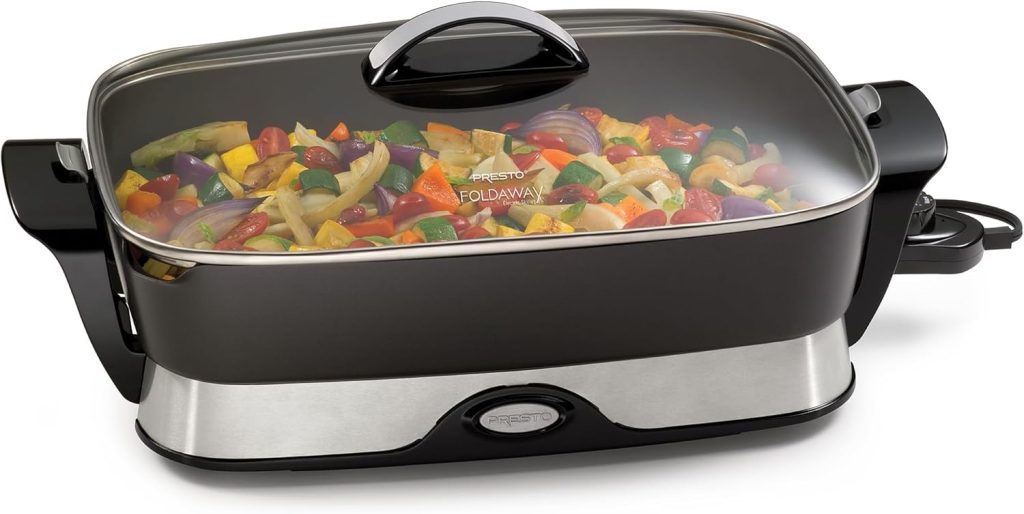
About Presto 16-inch Electric Foldaway Skillet
Presto is a well-known brand for affordable electric cooking appliances. This 16-inch skillet plugs directly into a wall outlet.
It heats through a built-in heating element under the pan. Most electric skillets like this use around 1200–1500 watts.
It’s designed for direct-contact cooking with minimal heat loss.
Best for small kitchens, dorms, or people who want a standalone cooking surface.
Product Overview – Electric Stovetop Cooktop

Credit: Amazon
Check the latest price on Amazon
About Portable Electric Cooktop (Cooksir)
Portable electric cooktops typically offer one or two burners. Each burner may use 1200–2000 watts depending on power level.
Unlike an electric skillet, the cooktop heats the pan first, and then the pan heats the food.
Best for people who want flexible cooking with different pots and pans.
Feature-by-Feature Comparison
Power Consumption
| Feature | Electric Skillet | Electric Stovetop |
|---|---|---|
| Average Wattage | 1200–1500W | 1200–2000W |
| Single Surface Cooking | Yes | Yes (per burner) |
| Multi-Pan Option | No | Yes |
Both can use similar wattage. The stovetop may draw more power at higher heat settings.
Energy Efficiency
| Feature | Electric Skillet | Electric Stovetop |
|---|---|---|
| Heat Loss | Low | Moderate (depends on pan fit) |
| Direct Heating | Yes | No (pan in between) |
| Warm-Up Time | Fast | Moderate |
Electric skillets often waste less heat because the heating element touches the cooking plate directly.
With stovetops, some heat escapes around the pan edges.
Cooking Time Impact
Energy use = Wattage × Time.
If you cook quickly at high heat, both appliances may use similar total energy.
If you simmer for long periods, total electricity use increases regardless of appliance.

Credit: Amazon
Check the latest price on Amazon
Real-World Energy Use Comparison
From my experience:
- For quick meals like eggs, stir-fry, or pancakes, the electric skillet feels more efficient. It heats fast and maintains temperature steadily.
- For boiling large pots of water or cooking multiple dishes, a stovetop makes more sense despite slightly higher wattage.
In small meal situations, the electric skillet may consume slightly less total electricity because it heats only one surface and loses less heat.
Pros & Cons (Side-by-Side)
Electric Skillet – Pros & Cons
| Pros | Cons |
|---|---|
| Direct heat efficiency | Single cooking surface |
| Lower heat loss | Fixed size |
| Stable temperature | Not for large pots |
Electric Stovetop – Pros & Cons
| Pros | Cons |
|---|---|
| Flexible cookware use | Possible heat loss |
| Multiple cooking options | Higher peak wattage |
| Better for boiling | Less direct efficiency |
Price vs Value Analysis
| Aspect | Electric Skillet | Electric Stovetop |
|---|---|---|
| Initial Cost | Affordable | Affordable |
| Energy Savings | Slight edge for small meals | Better for multi-dish cooking |
| Best ROI | Small households | Larger families |
For one-pan meals, the electric skillet often provides better energy efficiency.
For complex meals with multiple pots, a stovetop is more practical even if wattage is higher.
Who Should Choose Which?
Choose an Electric Skillet if you…
- Cook small meals daily
- Want direct, efficient heating
- Live in a dorm or small apartment
Choose a Stovetop if you…
- Cook multiple dishes at once
- Need to boil large pots
- Want cookware flexibility
Common Concerns
- Electric Bill Impact: Both are efficient compared to large ovens.
- Wattage Fear: Higher wattage doesn’t always mean higher cost — time matters.
- Overheating Risk: Both are safe if used properly.
- Energy Waste: Proper pan size reduces stovetop heat loss.
Final Verdict
If your goal is energy efficiency for small, simple meals, an electric skillet usually has a slight advantage. It heats directly and minimizes heat loss.
If you cook larger or more complex meals, a stovetop is more versatile and may be worth the slightly higher power draw.
Energy use depends more on how you cook than which appliance you choose.
FAQs on Electric skillet vs stovetop energy use
Does an electric skillet use less electricity than a stove?
For small meals, yes. For large meals, the difference is minimal.
Which is cheaper to run daily?
Both are affordable for regular use.
Is wattage the only factor?
No. Cooking time and heat retention matter.
Can I save electricity with lower heat settings?
Yes. Using moderate heat and proper cookware improves efficiency.
Affiliate Disclosure:
This article contains affiliate links. If you buy through these links, I may earn a small commission at no extra cost to you. I only recommend products I genuinely research and believe offer value.

“I believe great cooking starts with the right tools, trusted advice, and a little confidence in the kitchen.”
Hi, I’m Emma Carter. My love for cooking began in my grandmother’s kitchen, where I learned that every great meal starts with simple ingredients and the right cookware. Over the years, I’ve spent countless hours researching, testing, and comparing kitchen appliances, cookware, coffee makers, air fryers, and other everyday kitchen essentials.
Here at KiCook, my goal is to make your buying decisions easier with honest product reviews, practical buying guides, and easy-to-follow cooking tips. Whether you’re upgrading your kitchen or searching for the best appliance for your home, I focus on providing clear, reliable, and research-backed information you can trust.
When I’m not testing new kitchen gadgets or writing in-depth guides, you’ll usually find me trying new recipes, visiting local farmers’ markets, or enjoying a quiet cup of coffee while planning my next kitchen project.