
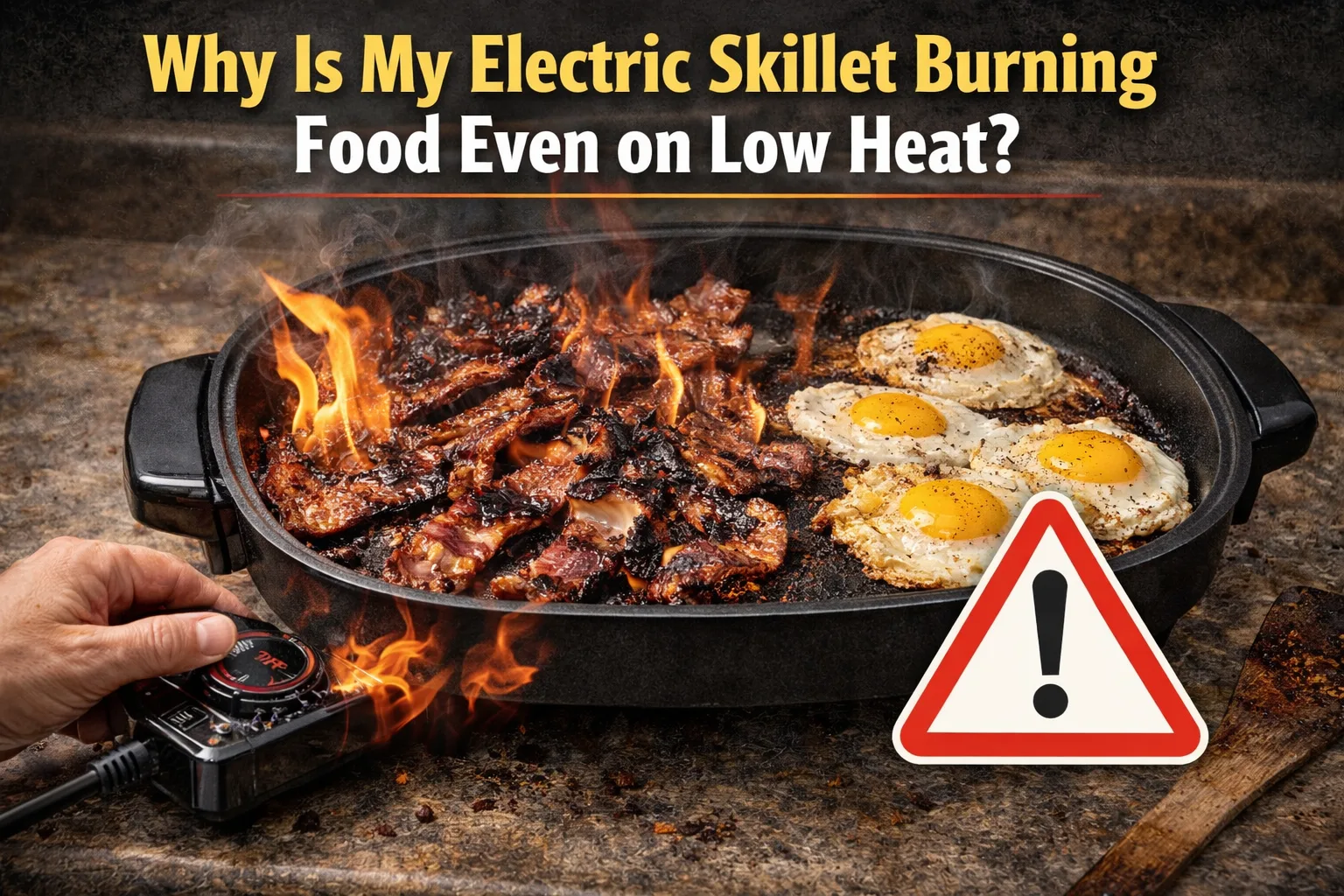
Your electric skillet may be burning food on low heat because the thermostat is faulty, the heating element is uneven, or residue on the surface is causing hotspots. Cleaning, calibrating, or using lower-quality oils incorrectly can also lead to burning.
I’ve used electric skillets for over two years to cook everything from stir-fries to pancakes. Even on low heat, I noticed food sticking and burning, which made me dig deeper into why this happens. Over time, I learned practical ways to prevent these problems without changing my entire cooking routine.
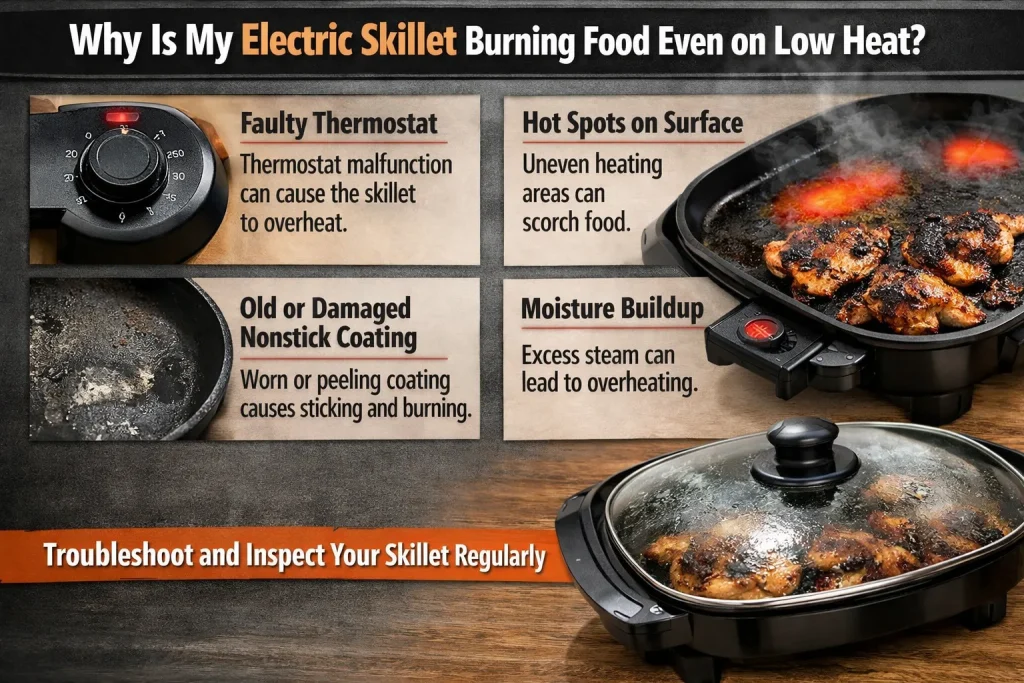
Real User Pain Points
1. Food Sticks to the Surface
Even with oil, delicate foods like eggs or fish cling to the skillet and burn, leaving a frustrating mess.
2. Uneven Cooking
Some parts of the skillet are hotter than others, so one side burns while the other side stays undercooked.
3. Misleading Temperature Settings
The “low” setting doesn’t always mean gentle heat. Users often find that low still cooks too fast.
4. Residue and Build-Up
Old grease, seasoning, or burnt-on food can create hotspots that char whatever you cook.
5. Limited Cooking Space
Crowding the skillet reduces airflow and increases burning, especially for stir-fry or vegetables.
6. Confusing Oil and Fat Choices
Some oils smoke or burn at low heat, leading users to think the skillet is overheating.
How Each Pain Point Is Solved
1. Food Sticks to the Surface
Issue: Foods like eggs, pancakes, or thin fish stick even with nonstick skillets.
Solution: Make sure your skillet is clean, dry, and preheated correctly. Lightly coat with oil, butter, or a mix to form a protective layer. I’ve found that letting the skillet reach temperature for 2–3 minutes before cooking prevents sticking.
Example: When making omelets, I lightly spread butter, let it melt fully, then pour the eggs. They slide perfectly without burning.
2. Uneven Cooking
Issue: Hotspots occur when the heating element or thermostat is uneven.
Solution: Stir or move food frequently. Rotate the skillet if your model allows, or check for warping. Using a flat, high-quality skillet helps.
Example: I noticed my old skillet burned one side of chicken. Upgrading to a flat, heavy-bottom skillet solved this problem.
3. Misleading Temperature Settings
Issue: “Low” may still be too high depending on the model.
Solution: Use an external thermometer or test with water first. Adjust the heat gradually instead of relying solely on the dial.
Example: For pancakes, I set my skillet between “Warm” and “Low” rather than directly on “Low,” avoiding burnt bottoms.
4. Residue and Build-Up
Issue: Old grease or seasoning creates hotspots that burn food.
Solution: Clean after every use using a soft sponge and mild detergent. Avoid abrasive tools that scratch the surface.
Example: After cleaning off years of residue, my skillets stopped burning vegetables at “Low.”
5. Limited Cooking Space
Issue: Overcrowding prevents proper heat distribution.
Solution: Cook in batches. Leave 1–2 inches between pieces of food to allow heat circulation.
Example: Stir-frying 2 cups of vegetables in a 12-inch skillet instead of 4 cups eliminated burning.
6. Confusing Oil and Fat Choices
Issue: Some oils smoke even at low heat, making food appear burnt.
Solution: Use oils with high smoke points (canola, avocado, or sunflower). Avoid olive oil for low-heat frying
Example: Switching from extra virgin olive oil to canola for scrambled eggs prevented black spots.
Country-Specific Context
USA
Many homes have compact kitchens and higher energy costs. Electric skillets are used for quick meals. Burnt food increases waste and utility bills, so proper cleaning and batching matter.
UK
Electric skillet use is growing, especially for apartments. Smaller skillets are common, so overcrowding is frequent. Users here benefit from smaller batches and precise heat adjustments.
Canada
With long winters, electric skillets are popular for indoor cooking. Cold kitchens can cause uneven heating, so preheating is essential.
Australia
High summer temperatures make overheating a concern. Lightweight skillets heat fast; users often burn food if oil isn’t evenly spread.
Experience-Based Benefits
After addressing these issues in my own kitchen, I noticed real improvements:
- Food no longer sticks, even for eggs and pancakes.
- Cooking times are predictable, reducing wasted ingredients.
- Cleaning became easier, saving time and effort.
- I could cook batches efficiently without sacrificing texture or flavor.
Supporting Quotes
“I struggled with my skillet burning chicken on ‘low’ until I realized residue was causing hotspots. Cleaning fixed it.” – Laura P., Home Cook
“Using the right oil and giving the skillet time to preheat completely made all the difference in breakfast cooking.” – James T., Kitchen Blogger
“Batch cooking in a small apartment kitchen prevents overcrowding and keeps food evenly cooked.” – Sophie M., Culinary Enthusiast
Practical Tips
- Preheat Skillet Properly: Allow 2–3 minutes before adding food.
- Use High Smoke-Point Oils: Avoid olive oil; choose canola or avocado.
- Cook in Batches: Leave space between food to prevent hotspots.
- Keep it Clean: Remove residue and grease after every use.
- Monitor Temperature: Use a thermometer for delicate dishes.
- Rotate Food: Stir or flip frequently for even cooking.
- Check for Skillet Warping: Replace warped skillets for consistent heat.
FAQs on Electric Skillet Burning Food Even on Low Heat
Can low heat still burn food?
Yes. Faulty thermostats or hotspots can make “low” higher than expected.
How do I know if my skillet is uneven?
Cook a thin layer of butter or oil; if it browns in spots first, your skillet has hotspots.
What oils are best for electric skillets?
High smoke-point oils like canola, sunflower, or avocado. Avoid extra virgin olive oil for frying.
Does cleaning affect burning?
Absolutely. Old grease or burnt-on food creates hotspots that burn your meals.
How do I fix a thermostat problem?
If cleaning and proper preheating don’t help, consult a troubleshooting guide like this one.
Can overfilling the skillet cause burning?
Yes. Crowding reduces airflow and creates uneven heat, leading to burnt food.
Are all electric skillets prone to this?
Not all. Quality, flat-bottom skillets with accurate thermostats reduce this issue. See best options here.
Conclusion
Electric skillets can burn food even on low heat due to uneven elements, residue, or misleading dials. By cleaning, preheating, using the right oil, and cooking in batches, you can enjoy evenly cooked meals. Simple changes in technique save time, ingredients, and frustration.
For more on common issues and safety tips, see Electric Skillet Safety Issues Nobody Talks About.