
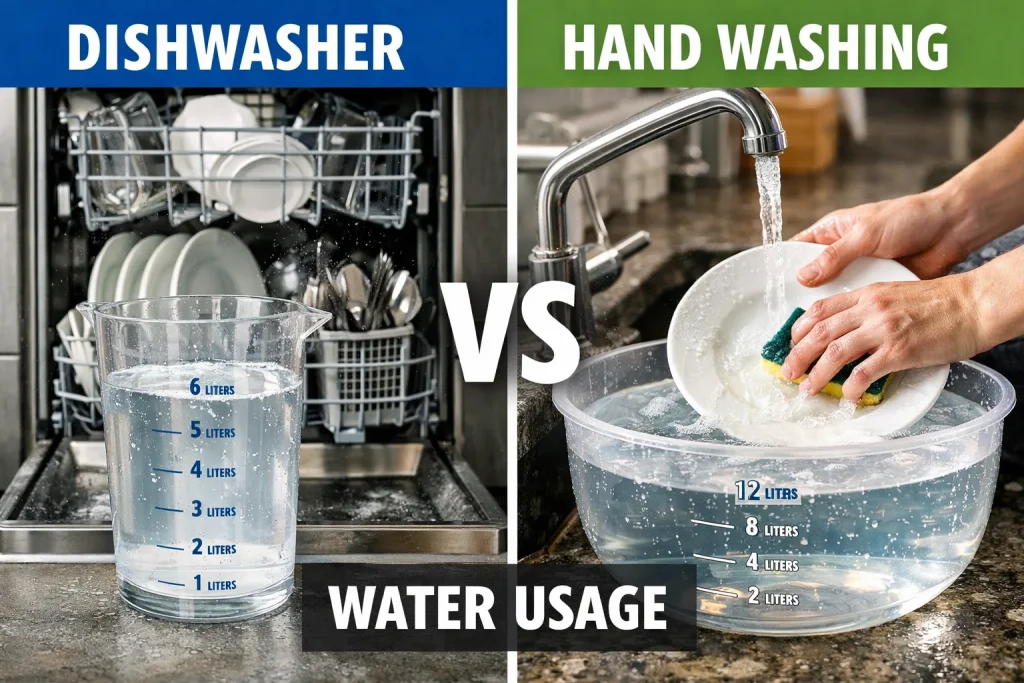
Dishwasher vs hand washing water usage: A modern dishwasher usually uses less water than hand washing, especially when fully loaded. Hand washing often wastes more water due to running taps and inconsistent washing habits.
This topic matters to me because I have lived in homes with and without a dishwasher, and I have tracked my water and energy bills over time. After switching between hand washing and different types of dishwashers, I noticed clear differences in water use, time spent, and daily stress in the kitchen.
Real User Pain Points
Wasting Too Much Water Without Realizing
Many people believe hand washing uses less water, but they leave the tap running while scrubbing dishes.
High Utility Bills
Water and energy bills feel higher, yet users are unsure which habit causes the increase.
Limited Kitchen Space
Apartments, offices, and shared homes often do not have space for full-size dishwashers.
Poor Cleaning Results
Hand washing can leave grease, soap residue, or bacteria when rushed or done with cool water.
Time Pressure in Busy Homes
Families and shared kitchens struggle to keep up with daily dish loads.
How Each Pain Point Is Solved
1. Water Waste From Hand Washing
When washing dishes by hand, most people keep the tap running for rinsing. In real use, this can consume 20–40 gallons of water per load.
A dishwasher uses a fixed amount of water per cycle. Modern models reuse and filter water during the wash, which keeps usage low and controlled.
In small kitchens, I have seen countertop models work well. If you are unfamiliar with them, this guide on what a countertop dishwasher is explains the concept clearly.
2. Rising Water and Energy Bills
Dishwashers heat water efficiently and only once per cycle. Hand washing often uses hot water continuously.
After switching to dishwasher use for daily loads, my monthly water usage dropped, even though I washed more dishes at once.
Energy-efficient models like those discussed in this Bosch dishwasher overview show how newer machines manage both water and electricity carefully without wasting resources.
3. Small or Shared Kitchen Spaces
Not everyone can install a built-in dishwasher. This is common in rentals, offices, and apartments.
Countertop dishwashers connect to a sink or use a built-in tank. I have used one in a small kitchen, and it handled daily plates and cups without crowding the space.
If you are curious about the process, this article on how a countertop dishwasher works explains it step by step in simple terms.
4. Inconsistent Cleaning With Hand Washing
Hand washing depends on water temperature, scrubbing time, and focus. On busy days, dishes may not be cleaned fully.
Dishwashers use consistent water pressure and heat. This helps remove grease and food safely, especially for baby bottles or office mugs.
From personal use, I noticed fewer water spots and less odor after switching to machine washing
5. Lack of Time in Daily Routines
Hand washing takes time every day. In families or shared homes, this often leads to arguments or delayed cleaning.
With a dishwasher, dishes are loaded once and cleaned together. For me, this reduced daily effort and kept the sink clear.
Many people ask if small machines are worth it. This honest breakdown of whether countertop dishwashers are worth it answers that concern clearly.
Country-Specific Context
USA
Water costs vary by state, but many homes pay for both water and heating. Dishwashers often reduce overall usage, especially in family homes.
UK
Smaller kitchens and higher energy prices make water efficiency important. Compact and countertop dishwashers are common in flats.
Canada
Cold water temperatures mean more energy is needed for heating. Dishwashers handle this more efficiently than hand washing.
Australia
Water conservation is a major concern. Efficient dishwashers help households stay within usage limits during dry seasons.
Experience-Based Benefits
From my own experience, using a dishwasher brought clear improvements.
I spent less time at the sink.
My water bills became more stable.
Dishes felt cleaner and smelled fresher.
The kitchen stayed organized, even during busy weeks.
These changes were practical, not dramatic, but they added comfort to daily life.
Supporting Quotes
“Modern dishwashers are tested to use less water than typical hand washing habits.”
— Sarah Jenkins, Consumer Energy Analyst
“People often underestimate how much water flows from an open tap during dishwashing.”
— Dr. Michael Torres, Environmental Researcher
“Small dishwashers help renters reduce water use without changing their kitchen layout.”
— Emma Collins, Home Appliance Consultant
Practical Tips
- Always run the dishwasher only when it is full
- Avoid pre-rinsing dishes unless food is burned on
- Use eco or normal cycles for daily loads
- Turn off the tap while scrubbing during hand washing
- Clean dishwasher filters monthly for better performance
FAQ for Dishwasher vs Hand Washing Water Usage
Does a dishwasher really use less water than hand washing?
Yes, in most real households, dishwashers use less water per load.
How much water does hand washing usually use?
Hand washing can use 20 gallons or more, depending on habits.
Are countertop dishwashers water efficient?
Yes, they use less water than full sinks of hand washing.
Is hand washing better for small loads?
Only if the tap is turned off while scrubbing and rinsing is controlled.
Do dishwashers increase electricity bills?
They use electricity, but overall energy use can be lower than heating water manually.
Is dishwasher water reuse safe?
Yes, water is filtered and sprayed again during the cycle.
Conclusion
Dishwasher vs hand washing water usage comes down to real habits, not assumptions. In most homes, dishwashers save water, time, and effort when used correctly. Choosing the right option depends on space, routine, and household size, but informed choices lead to better results and fewer daily frustrations.
According to the U.S. Environmental Protection Agency, certified dishwashers use significantly less water than traditional hand washing methods