
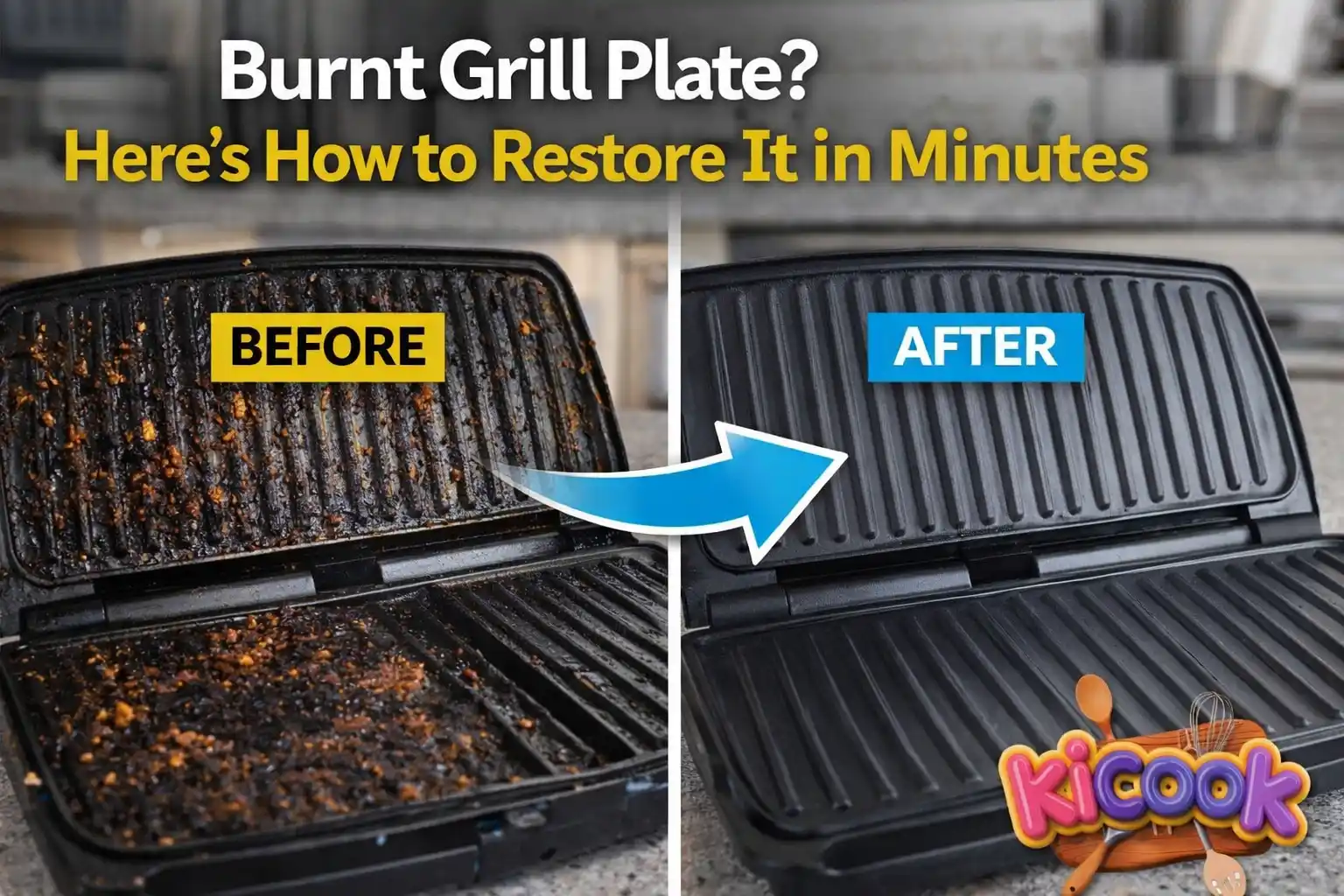
A burnt grill plate happens when grease, food residue, and high heat create stubborn carbon buildup. You can restore it quickly using heat, baking soda, vinegar, and the right scrubbing method without damaging the surface.
If you’ve ever looked at your grill plate after cooking and thought, “There’s no way this will ever look clean again,” you’re not alone. Burnt grease, stuck food, and black residue can feel impossible to remove.
I’ve dealt with this many times in my own kitchen especially after cooking burgers or marinated chicken. The good news? You don’t need expensive cleaners or hours of scrubbing. In this guide, I’ll show you simple, proven ways to fix a burnt grill plate in minutes using items you already have at home.
Common Pain Points (And How to Fix Them)
1. Thick Black Burnt Layer That Won’t Come Off
Why it happens:
High heat turns oil and food residue into carbon, which sticks hard to the surface.
Quick fix:
- Heat the grill plate for 3–5 minutes
- Turn it off
- Pour warm water carefully
- Let steam loosen the burnt layer
- Scrape gently with a non-metal tool
Real example: In the US and Canada, many people use indoor electric grills. After cooking steaks, this steam method works very fast without damaging nonstick coating.
2. Sticky Grease That Smells Bad
Why it happens:
Old grease builds up over time, especially if you don’t clean after every use.
Quick fix:
- Mix baking soda + water into a paste
- Apply on greasy spots
- Let sit for 10 minutes
- Wipe with a soft sponge
Tip: This works well in UK kitchens where grill pans are often used on gas stoves.
3. Scrubbing Damages the Surface
Why it happens:
Using steel wool or sharp tools scratches nonstick or cast iron surfaces.
Solution:
- Use silicone scrubbers or nylon brushes
- For cast iron, use coarse salt instead of soap
Real example: In Australia, many BBQ users ruin their plates by over-scrubbing. Gentle cleaning keeps your grill lasting longer.
Step-by-Step: How to Restore a Burnt Grill Plate
Step 1: Heat and Loosen Residue
Turn on your grill for a few minutes. This softens the burnt food.
Then:
- Turn off heat
- Add a little warm water
- Let steam break down residue
Key takeaway: Heat + steam does 50% of the cleaning work for you.
Step 2: Use Baking Soda Paste
Make a thick paste:
- 2 tablespoons baking soda
- 1 tablespoon water
Apply it on burnt areas and leave for 10–15 minutes.
“Baking soda works as a gentle abrasive that lifts burnt residue without scratching surfaces.” — Dr. Anne Marie Helmenstine, Chemist
Step 3: Add Vinegar for Deep Cleaning
Spray or pour a small amount of vinegar over the baking soda.
You’ll see bubbling—that’s normal.
- Let it sit for 5 minutes
- Wipe with a cloth or sponge
Why it works: The reaction breaks down grease and carbon.
Step 4: Gentle Scrubbing
Use:
- Soft sponge
- Nylon brush
- Silicone scrubber
Avoid:
- Steel wool (unless cast iron)
Key takeaway: Gentle pressure is enough when residue is already loosened.
Step 5: Rinse and Dry Properly
Wash with warm water and mild dish soap.
Dry immediately to prevent:
- Rust (especially cast iron)
- Water spots
Best Methods Based on Grill Type
Nonstick Grill Plates
- Avoid harsh scrubbing
- Use baking soda + soft sponge
- Never use metal tools
Example: Popular in UK flats and US apartments.
Cast Iron Grill Plates
- Use coarse salt + cloth
- Avoid soaking in water
- Apply a light oil coat after cleaning
“Proper care of cast iron includes cleaning without stripping its seasoning layer.” — Lodge Cast Iron Care Guide
Outdoor BBQ Grill Plates
- Use grill brush after heating
- Deep clean weekly
- Use vinegar spray for grease
Example: In Australia and Canada, outdoor BBQ cleaning is often done right after cooking while still warm.
Natural vs Store-Bought Cleaners
Natural Options (Recommended)
- Baking soda
- Vinegar
- Lemon juice
- Salt
Pros:
- Safe
- Cheap
- Eco-friendly
Store-Bought Cleaners
- Strong degreasers
- Chemical sprays
Use only if:
- Burn is extreme
- Natural methods fail
“Chemical cleaners should be used carefully and rinsed thoroughly to avoid residue.” — Consumer Product Safety Commission
Mistakes I See People Make (Avoid These)
1. Cleaning Too Late
Letting grease sit overnight makes it harder to remove.
Fix: Clean while still slightly warm.
2. Using Too Much Force
Hard scrubbing damages surfaces.
Fix: Let cleaning agents do the work.
3. Skipping Regular Cleaning
Build-up happens slowly.
Fix: Light clean after every use.
How to Prevent Burnt Grill Plates
Daily Habits That Help
- Wipe after each use
- Use a small amount of oil
- Avoid sugary marinades burning
Weekly Maintenance
- Deep clean once a week
- Check for grease buildup
Real-Life Example
I used to ignore small grease stains. After a week, they turned into a thick burnt layer. Now, I clean lightly after every use—it takes 2 minutes and saves a lot of effort later.
Frequently Asked Questions
How do you clean a severely burnt grill plate?
Use heat + steam first, then apply baking soda paste and vinegar. Let it sit before gentle scrubbing. Repeat if needed.
Can I use steel wool on my grill plate?
Only on cast iron. Never use it on nonstick surfaces because it causes scratches.
Does vinegar damage grill plates?
No, vinegar is safe for most grill plates when used in small amounts and rinsed properly.
How often should I clean my grill plate?
Light clean after every use. Deep clean once a week to prevent buildup.
What is the fastest way to remove burnt grease?
Heat the plate, add water for steam, then wipe. Follow with baking soda if needed.
Final Thoughts
Restoring a burnt grill plate doesn’t have to take hours. With the right steps, you can fix it in minutes.
Here’s what matters most:
- Use heat and steam to loosen residue first
- Let baking soda and vinegar do the heavy lifting
- Clean regularly to avoid tough buildup
I’ve used these methods for years, and they work every time. Start with a simple clean today, and your grill plate will stay in great shape for years.

“I believe great cooking starts with the right tools, trusted advice, and a little confidence in the kitchen.”
Hi, I’m Emma Carter. My love for cooking began in my grandmother’s kitchen, where I learned that every great meal starts with simple ingredients and the right cookware. Over the years, I’ve spent countless hours researching, testing, and comparing kitchen appliances, cookware, coffee makers, air fryers, and other everyday kitchen essentials.
Here at KiCook, my goal is to make your buying decisions easier with honest product reviews, practical buying guides, and easy-to-follow cooking tips. Whether you’re upgrading your kitchen or searching for the best appliance for your home, I focus on providing clear, reliable, and research-backed information you can trust.
When I’m not testing new kitchen gadgets or writing in-depth guides, you’ll usually find me trying new recipes, visiting local farmers’ markets, or enjoying a quiet cup of coffee while planning my next kitchen project.