
Food sticking to grill plates usually happens due to low heat, poor oiling, or worn non-stick surfaces. The good news is that a few simple fixes can stop sticking and make grilling smooth again.
If you’ve ever tried to flip chicken or veggies and watched them tear apart on your grill, you know how frustrating it feels. I’ve been there standing in my kitchen, wondering why my grill maker suddenly stopped working properly.
After years of using grill makers at home, I’ve learned that sticking is a common problem and it’s usually easy to fix. In this guide, I’ll walk you through simple, proven solutions that actually work. By the end, your grill plates will be smooth, your food will cook evenly, and cleanup will be much easier.
Pain Points: Why Food Sticks to Grill Plates
1. Grill Isn’t Hot Enough
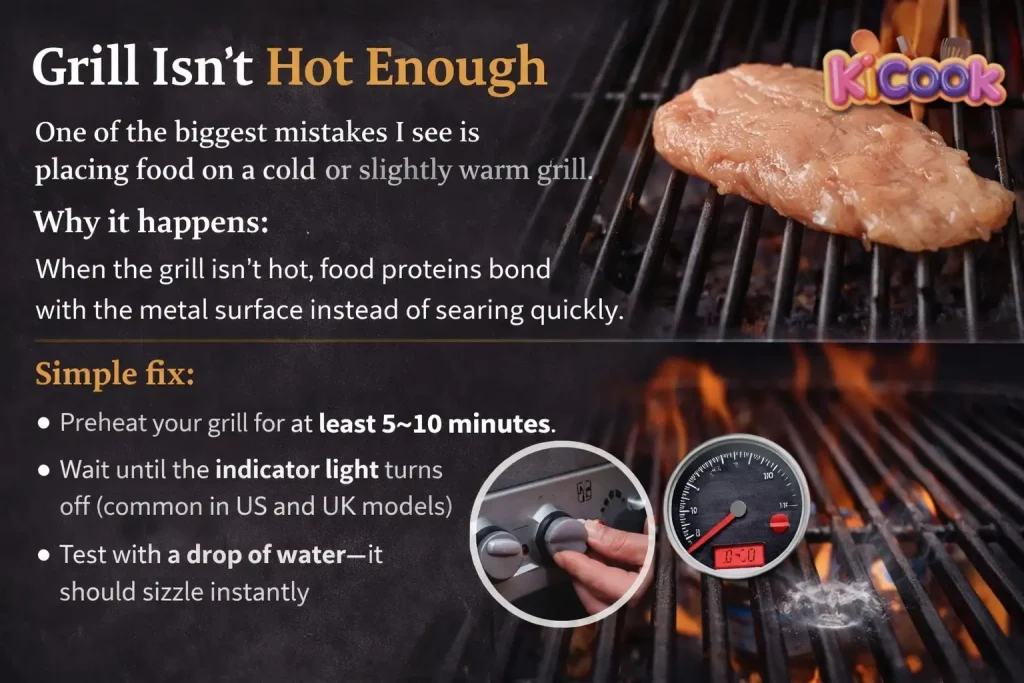
One of the biggest mistakes I see is placing food on a cold or slightly warm grill.
Why it happens:
When the grill isn’t hot, food proteins bond with the metal surface instead of searing quickly.
Simple fix:
- Preheat your grill for at least 5–10 minutes
- Wait until the indicator light turns off (common in US and UK models)
- Test with a drop of water—it should sizzle instantly
Real example:
In colder regions like Canada or the UK during winter, kitchen temperatures are lower. This means your grill may take longer to heat up. I always give it extra time.
Key takeaway: Hot grill = less sticking and better sear.
2. Not Using Enough Oil (or Using the Wrong Type)
I used to think non-stick plates didn’t need oil. That’s not true.
Why it happens:
Even non-stick coatings need a light oil layer to prevent food from bonding.
Simple fix:
- Use oils with high smoke points:
- Avocado oil (popular in the USA)
- Canola oil (common in Canada)
- Sunflower oil (widely used in the UK & Australia)
- Apply a thin layer using a brush or spray
Avoid:
- Butter (burns quickly)
- Olive oil at very high heat
Key takeaway: A light oil layer acts as a protective barrier.
3. Worn-Out Non-Stick Coating
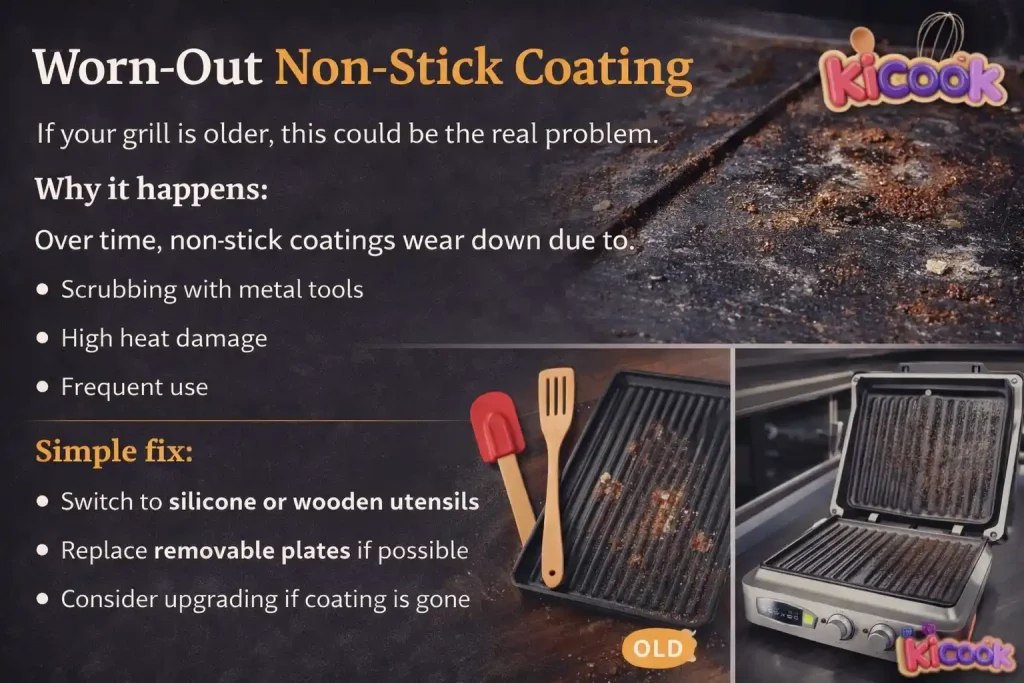
If your grill is older, this could be the real problem.
Why it happens:
Over time, non-stick coatings wear down due to:
- Scrubbing with metal tools
- High heat damage
- Frequent use
Simple fix:
- Switch to silicone or wooden utensils
- Replace removable plates if possible
- Consider upgrading if coating is gone
Real example:
In Australia, many users prefer grill models with replaceable plates. It’s cheaper than buying a new unit.
Key takeaway: Damaged coating = guaranteed sticking.
5 Simple Fixes That Work (Step-by-Step)
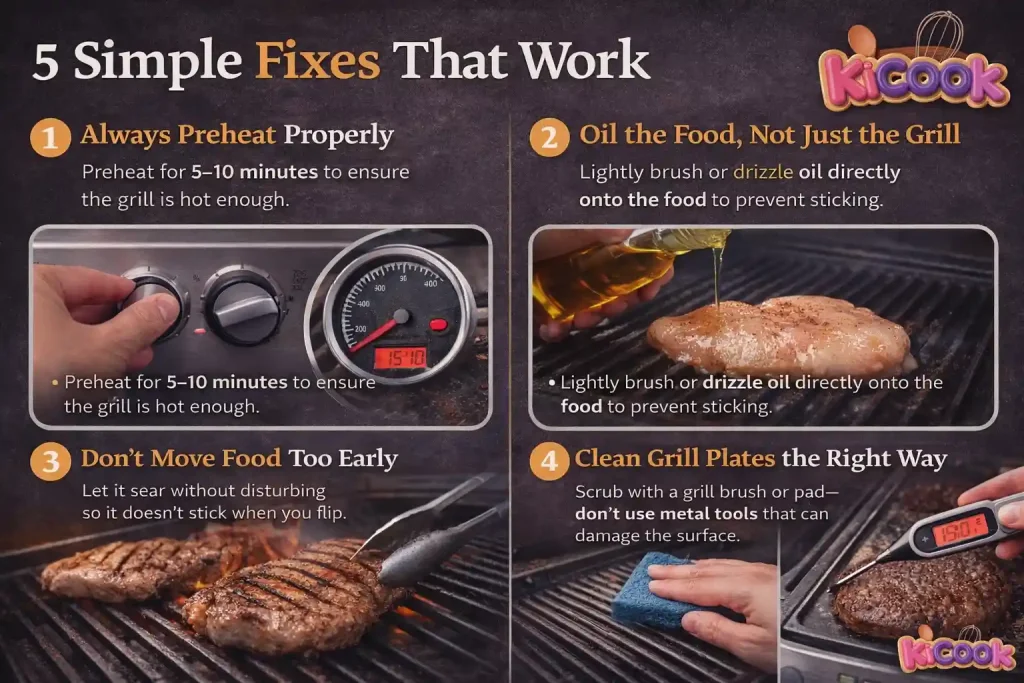
1. Always Preheat Properly
I never skip this step anymore.
Steps:
- Turn on the grill
- Close the lid
- Wait 5–10 minutes
- Check heat before placing food
Why it works:
Heat creates a quick crust on food, preventing sticking.
2. Oil the Food, Not Just the Grill
This small change made a huge difference for me.
How to do it:
- Lightly coat your food instead of pouring oil on plates
- Use a brush or your hands
Why it works:
Oil sticks better to food than to hot metal.
3. Don’t Move Food Too Early
This is where most people go wrong.
What happens:
Food naturally releases when it’s ready. If you force it, it sticks.
What I do now:
- Wait 3–5 minutes before flipping
- Test gently—if it resists, wait longer
Expert insight:
"Food will naturally release from a hot surface when it forms a proper crust." — Gordon Ramsay, Chef
4. Clean Grill Plates the Right Way
Dirty grills are sticky grills.
Steps I follow:
- Let the grill cool slightly
- Wipe with a damp cloth
- Use mild soap if needed
- Avoid steel wool or harsh scrubbing
The U.S. Department of Agriculture explains safe cleaning practices for cooking surfaces in their food safety guide: usda.gov
Key takeaway: Clean plates = smooth cooking surface.
5. Use the Right Cooking Temperature
Different foods need different heat levels.
Quick guide:
- Chicken: Medium-high
- Vegetables: Medium
- Fish: Medium-low
Expert insight:
"Controlling heat is the foundation of good cooking." — Jamie Oliver, Chef
Real example:
In UK households, many electric grill makers have adjustable dials. I always match the heat to the food type.
Common Grill Mistakes to Avoid
Overcrowding the Grill
Too much food lowers the temperature quickly.
Fix:
- Cook in batches
- Leave space between items
Using Frozen Food Directly
Frozen food releases water, which causes sticking.
Fix:
- Thaw food before grilling
Skipping Maintenance
If you never maintain your grill, problems build up.
Expert insight:
"Proper maintenance extends the life of non-stick surfaces and improves performance." — Harold McGee, Food Science Author
How to Restore a Sticky Grill Surface
If your grill is already sticky, don’t panic. I’ve fixed mine many times.
Quick restoration method:
- Heat the grill slightly
- Apply baking soda paste
- Gently scrub with a soft sponge
- Wipe clean and dry
- Lightly oil before next use
Result:
You’ll notice smoother cooking right away.
Best Practices for Long-Term Use
Here’s what I follow to keep my grill working like new:
- Always preheat
- Use proper oil
- Clean after every use
- Avoid metal tools
- Store in a dry place
Key takeaway: Consistency prevents problems.
Real-Life Scenario: What Worked for Me
A few months ago, my chicken kept sticking badly. I thought my grill was broken.
Here’s what I changed:
- Preheated longer (10 minutes)
- Switched to avocado oil
- Stopped flipping too early
Result?
Perfect grill marks and zero sticking.
Small changes made a big difference.
Frequently Asked Questions
Why does food suddenly start sticking to my grill?
This usually happens due to worn coating, poor cleaning, or low heat. Check all three before assuming your grill is faulty.
Can I use butter instead of oil?
You can, but it burns quickly at high heat. It’s better to use oils with a higher smoke point.
How do I know if my grill is hot enough?
Drop a little water on the surface. If it sizzles instantly, your grill is ready.
Is it safe to use scratched non-stick plates?
Light scratches are fine, but deep damage can affect performance and safety. Consider replacing the plates.
How often should I clean my grill?
I recommend cleaning after every use. It prevents buildup and keeps food from sticking.
Final Thoughts
Food sticking to grill plates is annoying, but it’s usually easy to fix. From my experience, the three most important things are:
- Always preheat your grill properly
- Use the right oil in the right way
- Keep your grill clean and well-maintained
Once you get these basics right, grilling becomes simple and enjoyable again. Try these fixes today—you’ll see the difference in your very next meal.