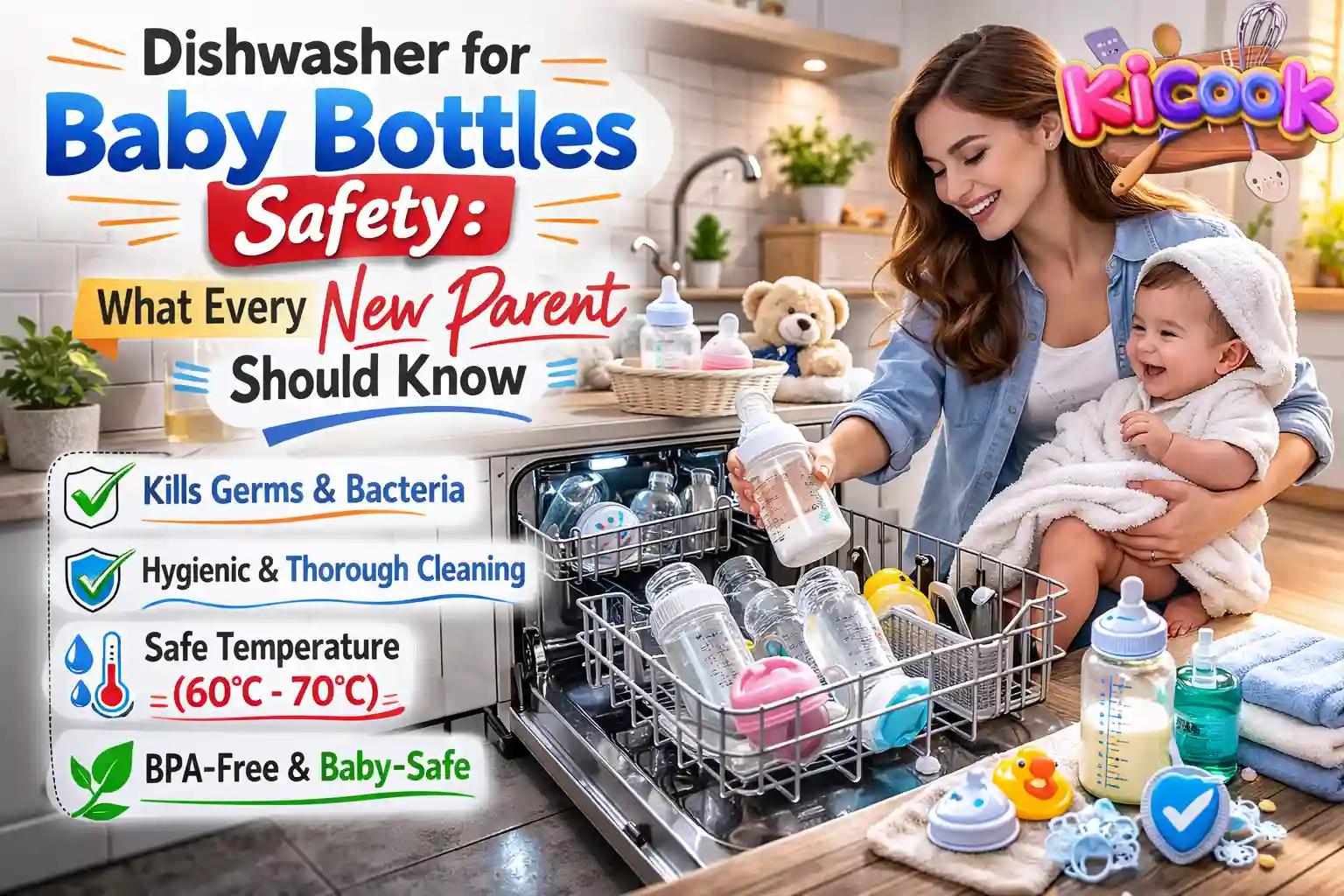
When I talk about Dishwasher for baby bottles safety, I mean using the right dishwasher settings, proper placement, and high-temperature cycles to clean and sanitize baby bottles safely. If used correctly, a modern dishwasher can remove milk residue, kill harmful bacteria, and keep your baby feeding equipment hygienic.
As a parent or caregiver, few things matter more than your baby’s health. I remember feeling anxious about every detail especially bottle cleaning. Was I washing them properly? Were germs still inside? Was hand washing enough?
If you live in the USA, UK, London, or Canada, you likely rely on a dishwasher for convenience. But is it safe for baby bottles? Let me walk you through everything I’ve learned about dishwasher for baby bottles safety, based on research, real-life experience, and practical tips.
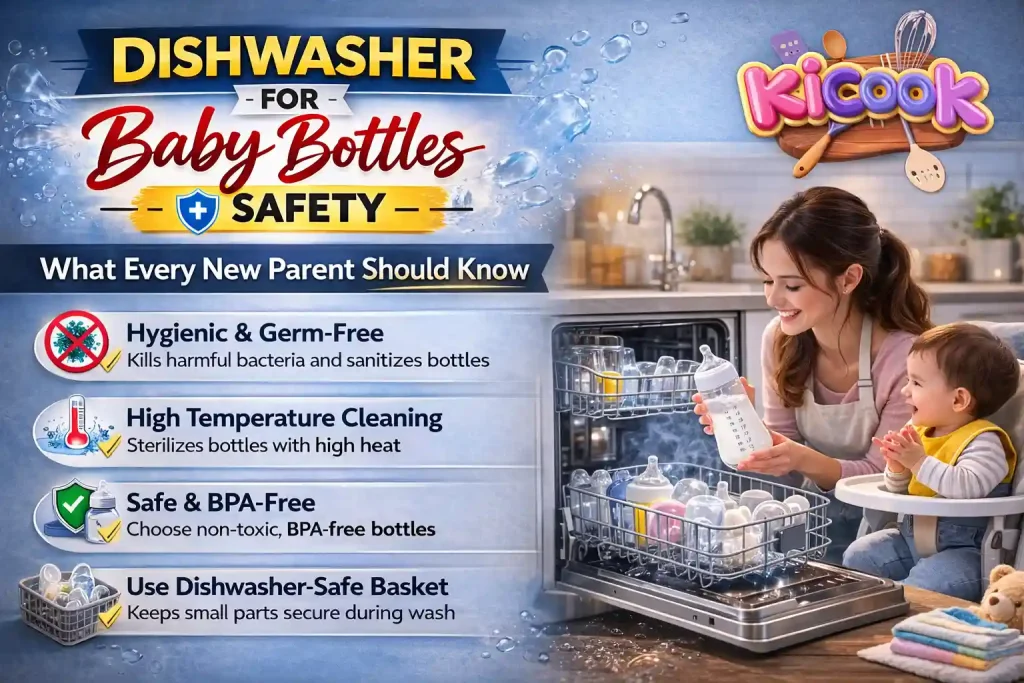
Why Baby Bottle Hygiene Matters
Baby bottles collect:
- Milk residue
- Formula buildup
- Saliva bacteria
- Moisture
Milk protein can stick to plastic bottles and silicone nipples. If not cleaned properly, bacteria can grow quickly.
Newborn immune systems are still developing. That’s why sanitation and hygiene are critical.
The American Academy of Pediatrics recommends proper cleaning of infant feeding equipment. For official safety advice, you can visit: cdc.gov
Is Dishwasher Safe for Baby Bottles?
Yes — most baby bottles labeled “dishwasher safe” can be cleaned safely in a dishwasher.
But safety depends on:
- High-temperature wash
- Proper placement
- Using safe detergent
- Sanitizing cycle
If done incorrectly, bottles may:
- Warp
- Retain soap residue
- Remain partially dirty
Let’s break it down.
How a Dishwasher Cleans Baby Bottles
A dishwasher uses:
- Hot water spray arms
- Detergent
- Rinse cycle
- Heated drying or sanitize mode
Many modern dishwashers in the USA and Canada reach 120–160°F (49–71°C). UK and London models often include eco and hygiene settings.
High temperature helps reduce bacteria.
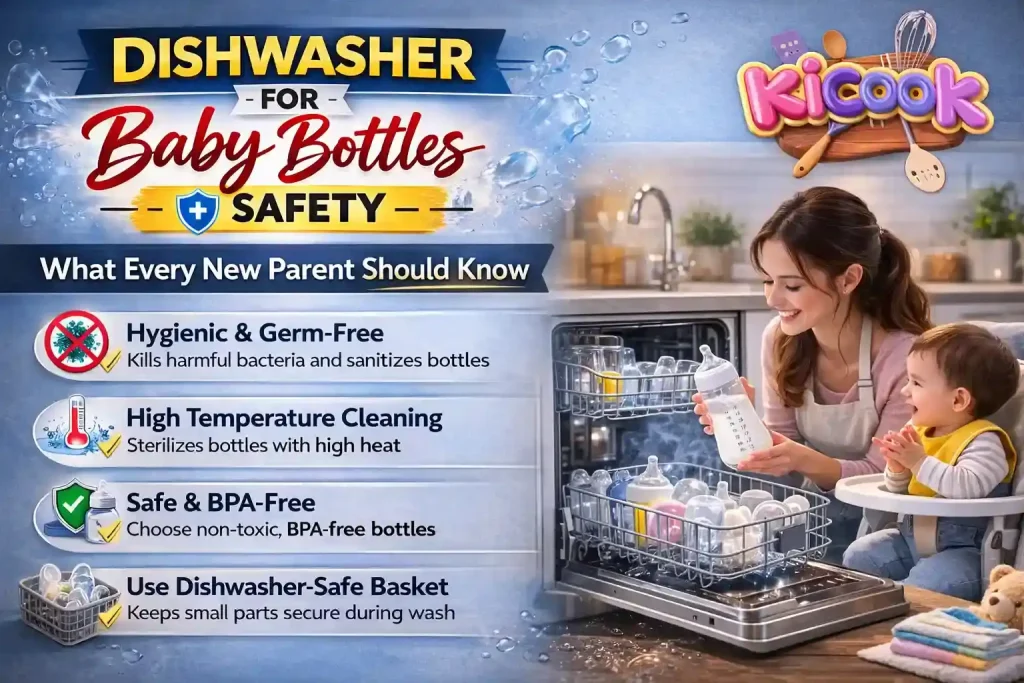
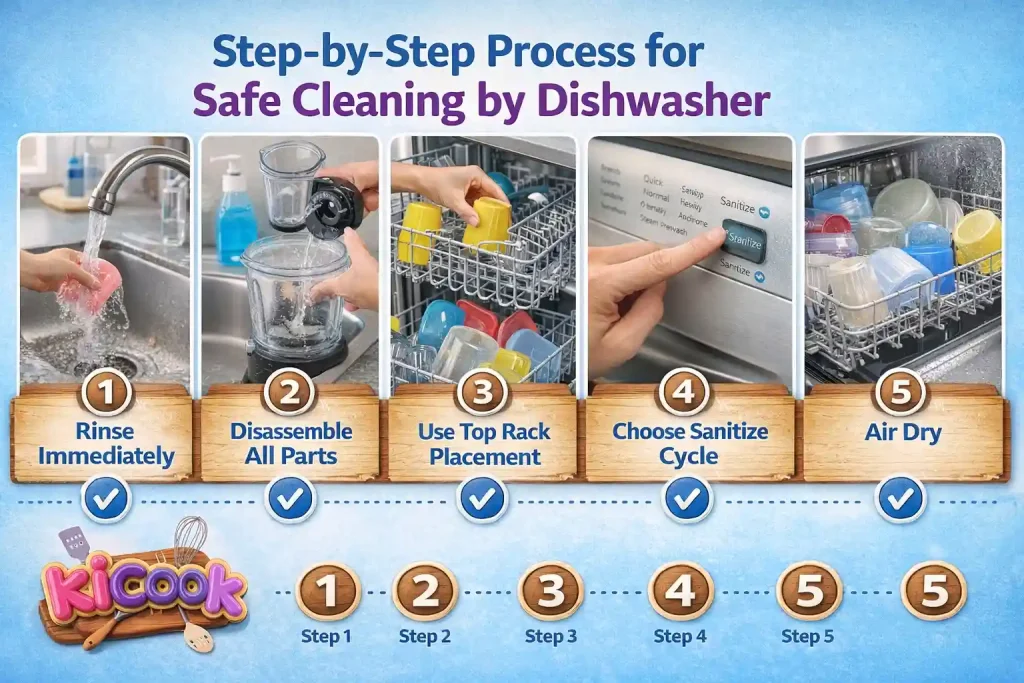
My Step-by-Step Process for Safe Cleaning
Here is exactly how I clean baby bottles safely:
1. Rinse Immediately
After feeding, I rinse bottles with warm water to remove milk residue.
2. Disassemble All Parts
Separate:
- Bottle
- Nipple
- Ring
- Cap
- Vent parts
This prevents hidden buildup.
3. Use Top Rack Placement
I place:
- Bottles upright on top rack
- Small parts in dishwasher basket
Top rack reduces heat exposure and prevents melting.
4. Choose Sanitize Cycle
If available, I use the sanitize setting.
5. Air Dry
After washing, I let parts air dry fully.
This method keeps everything safe and hygienic.
Common Parent Pain Points (And Solutions)
Let’s address real worries parents face.
Pain Point 1: “I’m Afraid Bottles Will Melt”
Solution:
Always use top rack. Confirm bottle is labeled dishwasher safe. Avoid placing near heating element.
Pain Point 2: “What If Soap Residue Stays?”
Solution:
Use baby-safe detergent. Avoid strong scented pods. Run extra rinse cycle if needed.
Pain Point 3: “Is Sanitizing Necessary?”
For newborns (under 3 months), sanitizing is recommended daily.
After 3–6 months, regular hot wash is usually enough unless baby is sick.
Pain Point 4: “We Live in a Small Apartment”
If you use compact dishwashers, they still work well.
If you’re renting, you might find this helpful: dishwasher-for-renters-pros-and-cons
Compact countertop dishwashers can safely clean baby bottles if they have high temperature cycles.
Dishwasher vs Hand Washing for Baby Bottles
Let’s compare.
| Feature | Dishwasher | Hand Washing |
|---|---|---|
| Water Temperature | High & consistent | Depends |
| Bacteria Removal | Strong | Depends on method |
| Time Saving | Yes | No |
| Effort | Low | High |
I personally prefer dishwasher because it ensures consistent hot water cleaning.
Are Plastic Bottles Safe in Dishwasher?
Most BPA-free plastic bottles are dishwasher safe.
However:
- Avoid very old bottles
- Replace scratched bottles
- Check manufacturer guidelines
Glass bottles are also dishwasher safe and resist odor better.
Best Dishwasher Features for Baby Bottle Safety
Look for these features:
- Sanitize cycle
- Adjustable top rack
- Bottle holders
- Extra rinse
- Stainless steel interior
- Quiet operation
If you’re a single parent, this guide may help: dishwasher-for-single-person-usage
Hygiene in USA, UK, and Canada
Water quality varies.
- USA & Canada: Many cities have treated water
- UK & London: Hard water areas may leave mineral spots
To prevent buildup:
- Use rinse aid
- Clean dishwasher monthly
- Descale in hard water regions
Cleaning the Dishwasher Itself
A dirty dishwasher cannot clean baby bottles properly.
I clean mine every 3–4 weeks.
Steps:
- Remove and clean filter
- Run vinegar cycle
- Wipe door seal
Maintenance keeps performance strong.
Safety for Couples with Babies
If you and your partner share feeding duties, a dishwasher helps reduce workload.
You can also read more about family usage here: dishwasher-for-couples-guide
It keeps routine organized and hygienic.
Expert Opinions on Bottle Cleaning
Dr. Benjamin Spock once said:
“Trust yourself. You know more than you think you do.” — Dr. Benjamin Spock
Parents often worry too much. Following proper cleaning steps is enough.
The CDC also advises regular cleaning and sanitizing of infant feeding items.
When to Sterilize Instead of Just Wash
Sterilizing is important:
- First use
- Baby under 3 months
- Premature babies
- Weak immune system
- After illness
You can use:
- Dishwasher sanitize cycle
- Boiling water
- Steam sterilizer
Signs Bottles Are Not Clean Enough
Watch for:
- Milk smell
- Cloudy film
- Sticky texture
- Visible residue
If you notice these, rewash immediately.
How Often Should Baby Bottles Be Washed?
After every feeding.
Never reuse without washing.
Dry completely before storage.
Common Mistakes to Avoid
- Leaving milk in bottle too long
- Skipping disassembly
- Overloading dishwasher
- Using harsh detergent
- Ignoring filter cleaning
Avoiding these mistakes ensures safety.
Environmental Benefits
Using a dishwasher can save water compared to running tap for long periods.
Energy-efficient models reduce electricity consumption.
This matters for eco-conscious families in Canada and the UK.
Frequently Asked Questions
Is dishwasher safe for newborn bottles?
Yes, if you use sanitize cycle and follow manufacturer instructions.
Should I sterilize daily?
For babies under 3 months, yes.
Can I wash pacifiers in dishwasher?
Yes, on top rack in small parts basket.
Are glass bottles safer?
Glass resists stains and odor but both glass and BPA-free plastic are safe.
What temperature kills bacteria?
High heat above 150°F helps reduce bacteria effectively.
Can compact dishwashers sanitize properly?
Yes, if they have high-temperature wash cycles.
Is hand washing safer?
Not necessarily. Consistent hot dishwasher cycles are often more reliable.
Final Thoughts on Dishwasher for Baby Bottles Safety
When it comes to Dishwasher for baby bottles safety, the key is proper usage, correct placement, and regular maintenance. A dishwasher can clean and sanitize bottles effectively, reduce bacteria, and save valuable time for busy parents.
As parents, we want peace of mind. By rinsing immediately, separating parts, using high heat cycles, and cleaning the machine regularly, you can confidently rely on your dishwasher.
Clean bottles mean safer feeding. And safer feeding means healthier babies and calmer parents.

“I believe great cooking starts with the right tools, trusted advice, and a little confidence in the kitchen.”
Hi, I’m Emma Carter. My love for cooking began in my grandmother’s kitchen, where I learned that every great meal starts with simple ingredients and the right cookware. Over the years, I’ve spent countless hours researching, testing, and comparing kitchen appliances, cookware, coffee makers, air fryers, and other everyday kitchen essentials.
Here at KiCook, my goal is to make your buying decisions easier with honest product reviews, practical buying guides, and easy-to-follow cooking tips. Whether you’re upgrading your kitchen or searching for the best appliance for your home, I focus on providing clear, reliable, and research-backed information you can trust.
When I’m not testing new kitchen gadgets or writing in-depth guides, you’ll usually find me trying new recipes, visiting local farmers’ markets, or enjoying a quiet cup of coffee while planning my next kitchen project.