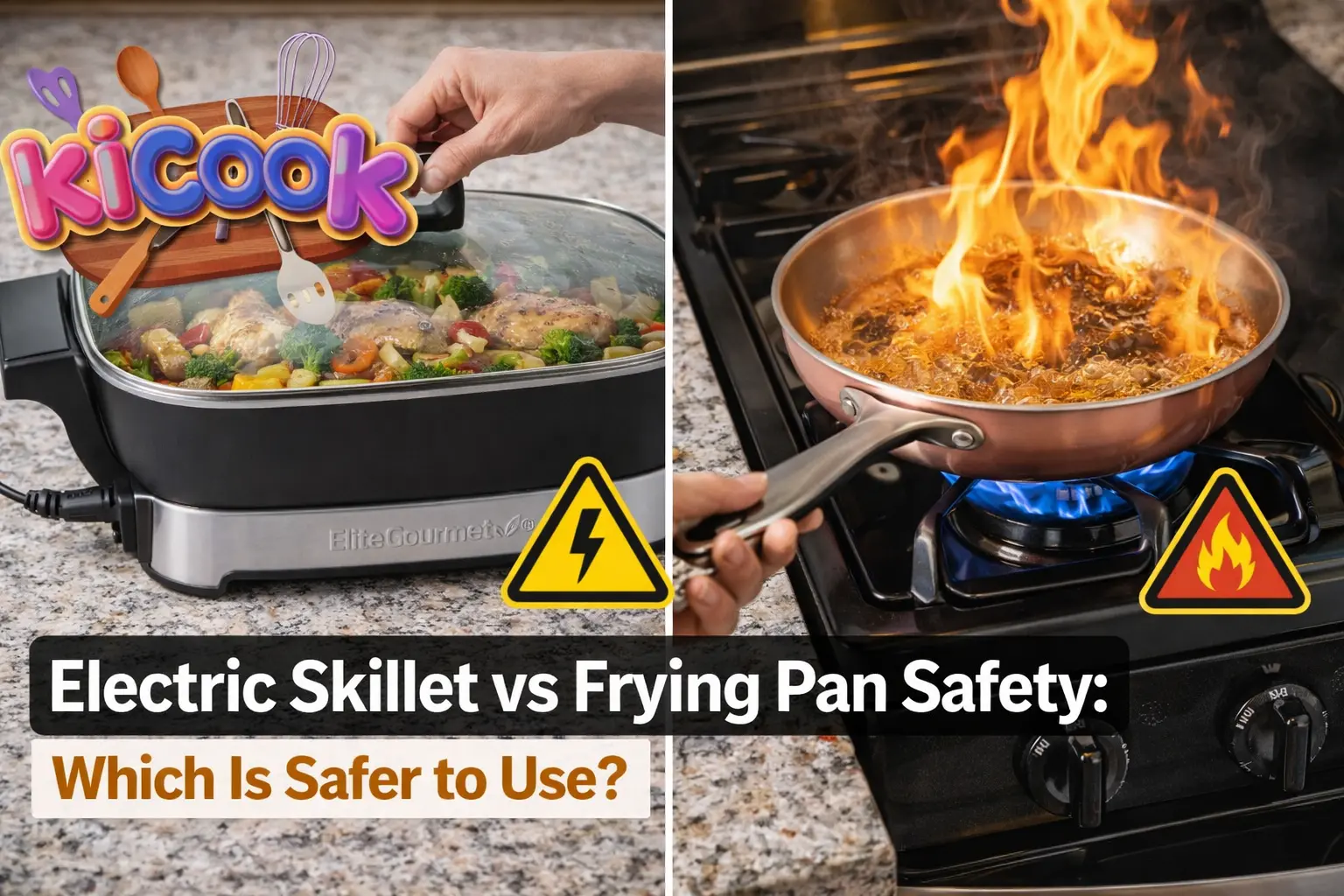
Both electric skillets and frying pans are safe when used correctly. Electric skillets reduce open-flame risk, while frying pans offer better heat control but depend on stovetop safety.
When people compare an electric skillet and a frying pan, safety is often the hidden concern. Many worry about overheating, burns, coating safety, or fire risk.
I’ve used both electric skillets and nonstick frying pans regularly in home kitchens. Each has its own safety strengths and weak points.
Credit: Amazon
Check the latest price on Amazon
In this guide, I’ll break down real safety factors heat control, burn risk, coating concerns, fire hazards, and long-term reliability, so you can decide which feels safer for your cooking style.
Quick Comparison
| Feature | Electric Skillet (Elite Gourmet) | Frying Pan (Caraway Ceramic) |
|---|---|---|
| Heat Source | Plug-in electric element | Stovetop burner |
| Open Flame Risk | None | Possible (gas stove) |
| Temperature Control | Dial-based | Manual stove control |
| One-Line Takeaway | Safer from flame risk | Safer with proper heat control |
Product Overview – Electric Skillet
Credit: Amazon
Check the latest price on Amazon
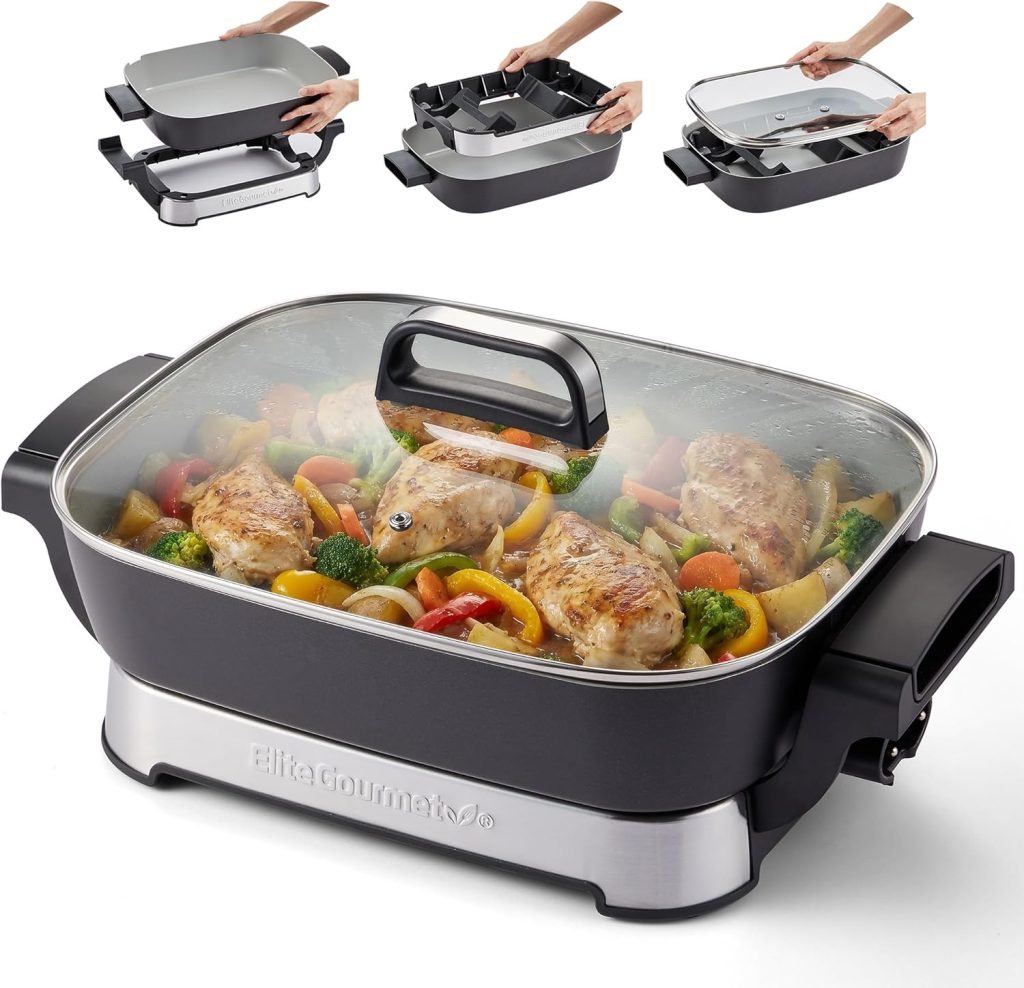
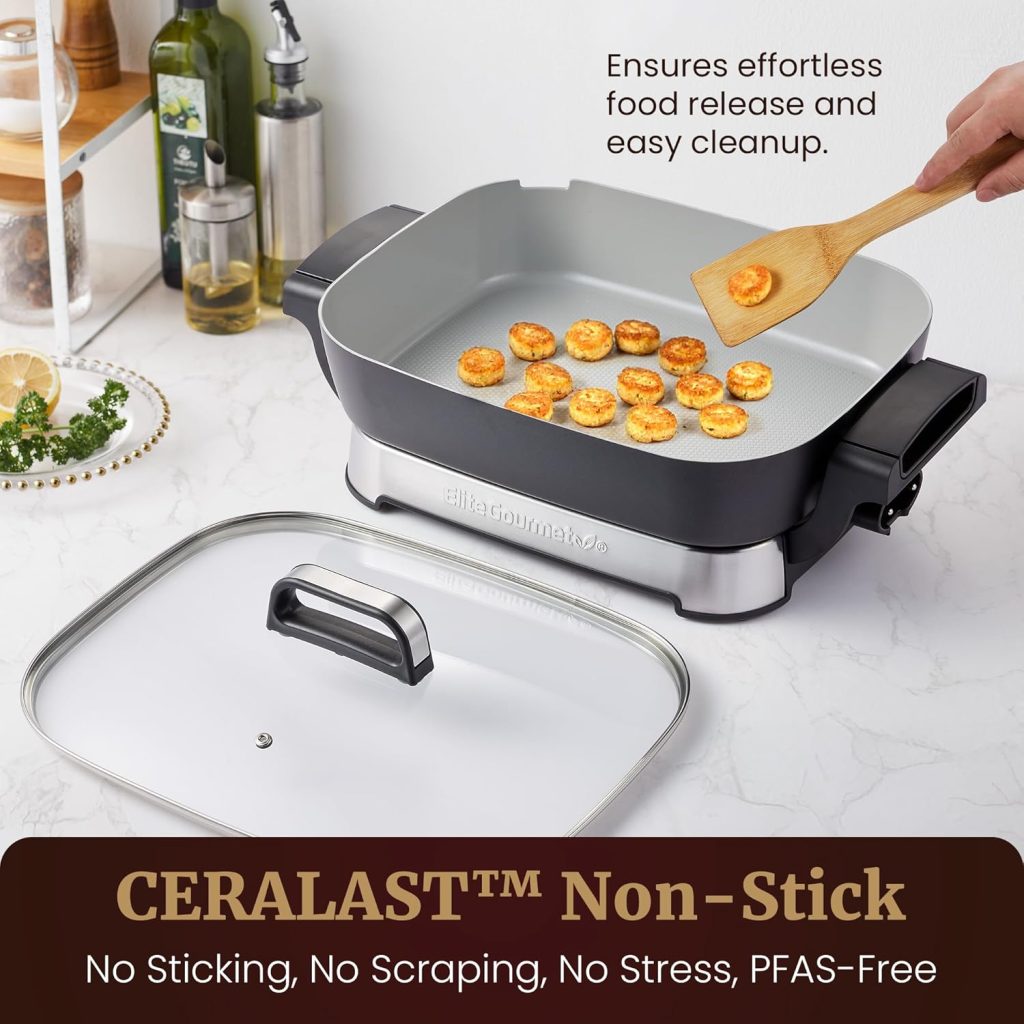
About Elite Gourmet Electric Skillet
Elite Gourmet makes affordable countertop cooking appliances. This electric skillet uses a built-in heating element and adjustable temperature control.
It removes the need for a stove and open flame. The enclosed heating system reduces gas-related risks.
Best for small kitchens, dorms, or people who want controlled surface heating.
Product Overview – Frying Pan
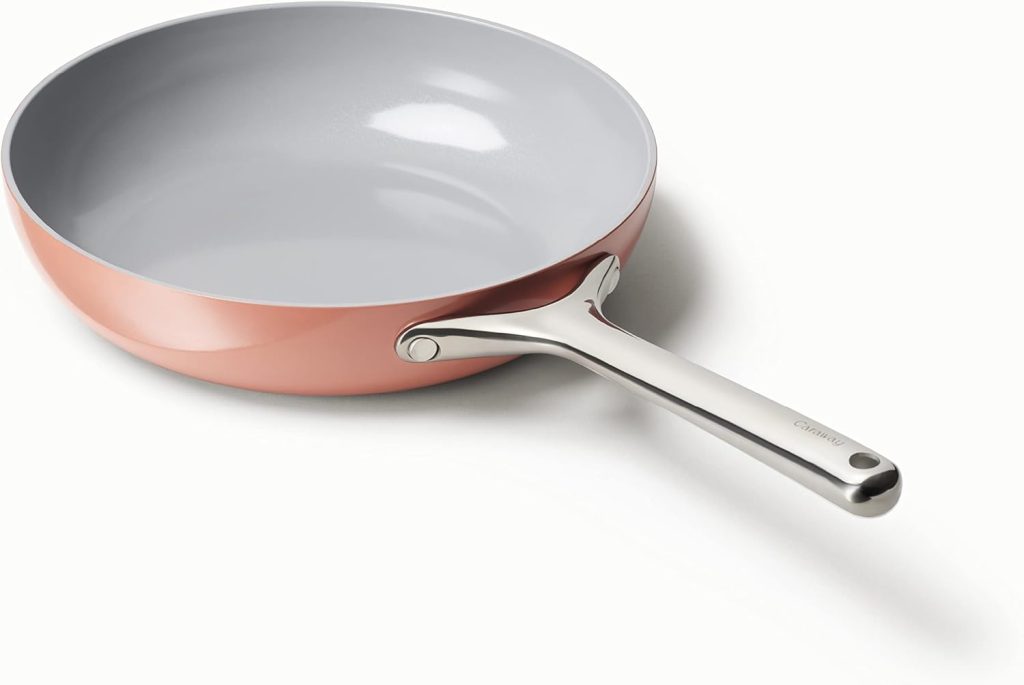
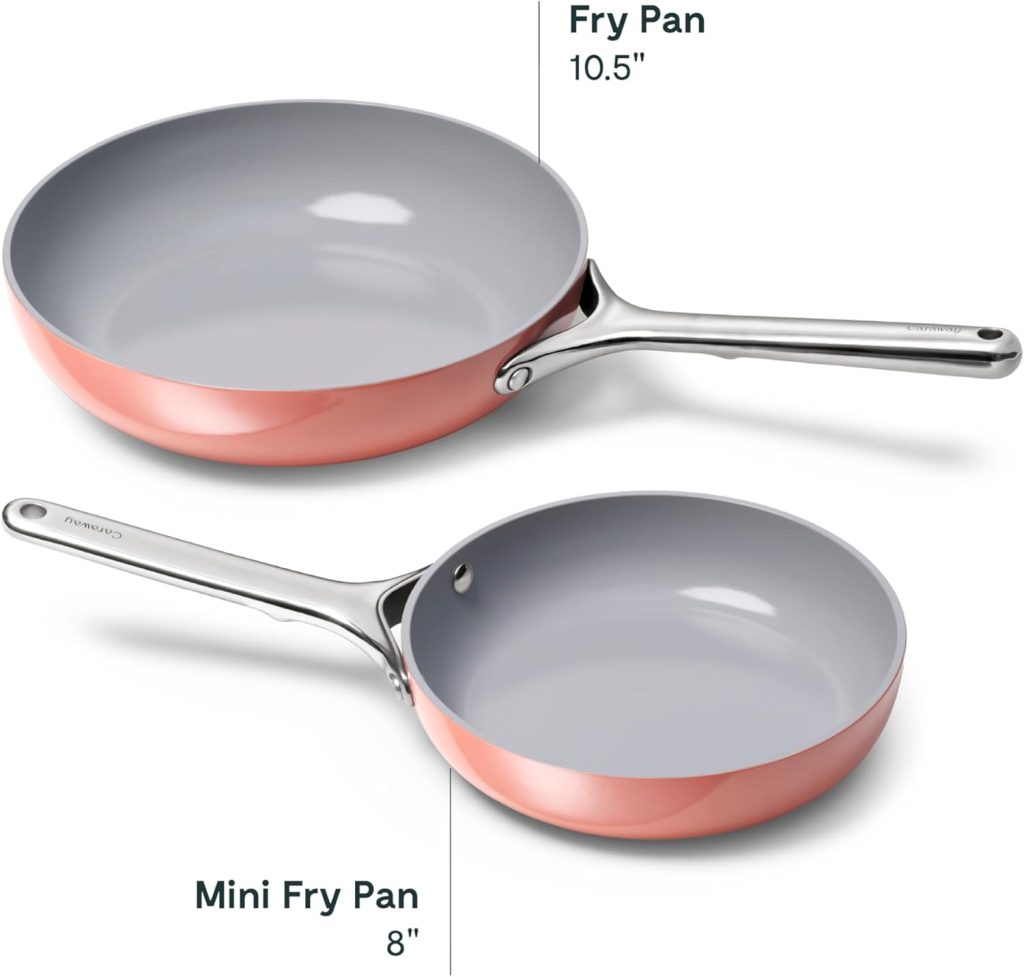
About Caraway Ceramic Frying Pan
Caraway produces ceramic-coated frying pans designed for stovetop cooking. It’s free from certain traditional nonstick chemicals and built for everyday cooking.
It depends on your stovetop gas, electric coil, or induction — for heat.
Best for people who prefer traditional cooking and quick heat adjustments.
Credit: Amazon
Check the latest price on Amazon
Feature-by-Feature Safety Comparison
Fire Risk
| Feature | Electric Skillet | Frying Pan |
|---|---|---|
| Open Flame | No | Yes (gas stove) |
| Grease Fire Risk | Low | Moderate (high heat oil) |
Electric skillets reduce flame exposure. Gas stoves with frying pans increase fire risk if oil overheats.
Burn Risk
| Feature | Electric Skillet | Frying Pan |
|---|---|---|
| Surface Heat | Entire base heats | Bottom surface heats |
| Handle Heat | Usually insulated | Can become hot |
| Stability | Wide base | Depends on pan balance |
Frying pans can have very hot handles if not insulated. Electric skillets stay stable due to wide bases.
Temperature Control
| Feature | Electric Skillet | Frying Pan |
|---|---|---|
| Overheating Risk | Lower with dial control | Higher if heat is too high |
| Quick Adjustment | Slower | Immediate response |
Electric skillets maintain steady temperature. Frying pans heat up faster and can overheat quickly if unattended.
Coating & Material Safety
| Feature | Electric Skillet | Frying Pan |
|---|---|---|
| Nonstick Coating | Common | Ceramic coating |
| Overheating Risk | Can damage coating | Can damage coating |
| Longevity | Depends on care | Depends on care |
Both are safe when not overheated. Very high heat can damage nonstick or ceramic coatings over time.
Real-World Safety Experience
From my experience:
- Electric skillets feel safer in small kitchens because there’s no open flame.
- Frying pans give better control, but you must watch the heat carefully.
- I’ve noticed frying pans can smoke quickly if left unattended.
- Electric skillets heat more gradually, which reduces sudden overheating.
However, both require supervision. Neither is completely “set and forget” for frying food.
Credit: Amazon
Check the latest price on Amazon
Pros & Cons (Side-by-Side)
Electric Skillet – Pros & Cons
| Pros | Cons |
|---|---|
| No open flame | Entire surface gets hot |
| Stable temperature | Electrical cord present |
| Wide stable base | Slower heat changes |
Frying Pan – Pros & Cons
| Pros | Cons |
|---|---|
| Fast heat control | Flame risk (gas) |
| Lightweight | Can overheat quickly |
| Traditional cooking feel | Handle may heat up |
Price vs Safety Value
| Aspect | Electric Skillet | Frying Pan |
|---|---|---|
| Long-Term Safety | Stable & controlled | Safe with attention |
| Maintenance | Electrical component care | Coating care needed |
| Best For | Beginners | Experienced cooks |
If safety and controlled heating are top priorities, an electric skillet may feel more reassuring. If you’re comfortable managing heat actively, a frying pan is equally safe.
Who Should Choose Which?
Choose an Electric Skillet if you…
- Want no open flame
- Prefer stable, controlled heating
- Cook in small spaces
Choose a Frying Pan if you…
- Want fast heat response
- Are comfortable with stovetop cooking
- Prefer lightweight cookware
Common Safety Concerns
- Grease Fires: Higher risk on stovetops with high heat.
- Electrical Risk: Use proper outlet and avoid water exposure with skillets.
- Coating Safety: Avoid overheating both types.
- Stability: Electric skillets are harder to tip.
Final Verdict
In terms of fire risk, electric skillets have a slight safety advantage because there is no open flame.
However, a high-quality frying pan used on controlled heat is equally safe in experienced hands. The safer choice depends more on how you cook than the appliance itself.
FAQs on Electric Skillet vs Frying Pan
Is an electric skillet safer than a frying pan?
It can be safer regarding open flames.
Can frying pans cause fires?
Yes, if oil overheats, especially on gas stoves.
Do electric skillets overheat?
Quality models regulate temperature well.
Which is better for beginners?
Electric skillets are often easier for beginners.
Affiliate Disclosure:
This article contains affiliate links. If you buy through these links, I may earn a small commission at no extra cost to you. I only recommend products I genuinely research and believe offer value.

“I believe great cooking starts with the right tools, trusted advice, and a little confidence in the kitchen.”
Hi, I’m Emma Carter. My love for cooking began in my grandmother’s kitchen, where I learned that every great meal starts with simple ingredients and the right cookware. Over the years, I’ve spent countless hours researching, testing, and comparing kitchen appliances, cookware, coffee makers, air fryers, and other everyday kitchen essentials.
Here at KiCook, my goal is to make your buying decisions easier with honest product reviews, practical buying guides, and easy-to-follow cooking tips. Whether you’re upgrading your kitchen or searching for the best appliance for your home, I focus on providing clear, reliable, and research-backed information you can trust.
When I’m not testing new kitchen gadgets or writing in-depth guides, you’ll usually find me trying new recipes, visiting local farmers’ markets, or enjoying a quiet cup of coffee while planning my next kitchen project.