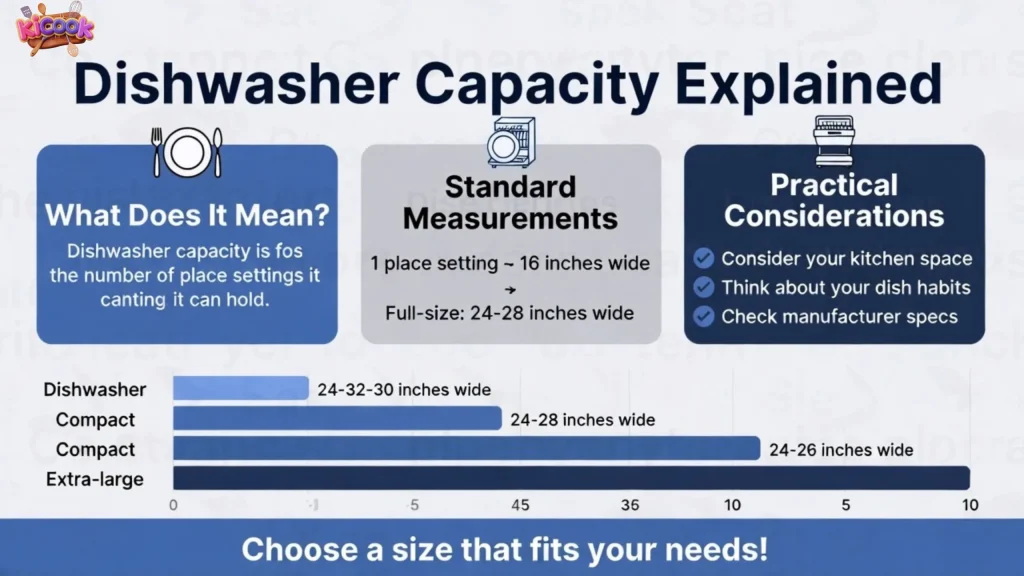
Dishwasher capacity explained: it refers to how many dishes, cups, and utensils a dishwasher can clean in one full cycle, usually measured in “place settings.”
A higher capacity means fewer wash cycles, but only if the size matches your space, habits, and household needs.
Dishwasher capacity became important to me after using different machines in real homes, not showrooms. I’ve lived with a full-size built-in dishwasher, helped family members use compact countertop models, and tested how quickly dishes pile up after normal meals. Over time, I learned that capacity numbers often confuse people more than they help.
Real User Pain Points
1. “The dishwasher looks big, but it fills up too fast”
Many users expect one load to handle a full day’s dishes but end up running it twice.
2. “My pots and pans don’t fit”
Even with enough space for plates, large cookware often causes problems.
3. “Small kitchen, no space for a full-size dishwasher”
Apartment dwellers and renters struggle to match capacity with limited space.
4. “I don’t understand place settings”
The term sounds technical and doesn’t reflect real-life dish usage.
5. “Running half-full loads feels wasteful”
People worry about water and energy use when the dishwasher isn’t full.
Understanding Why Dishwashers Fill Up Quickly
The issue
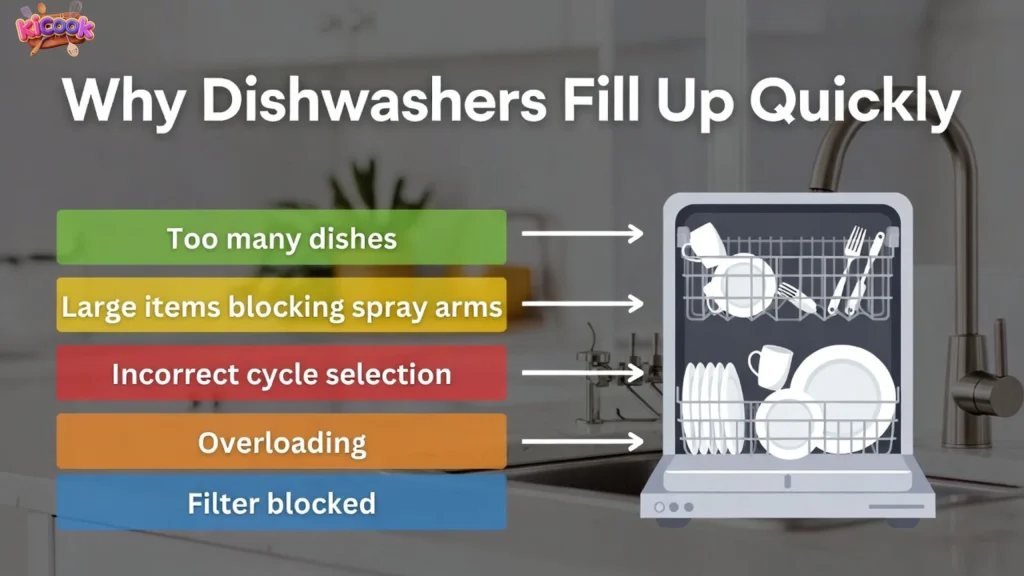
A 12–14 place setting dishwasher sounds large, but place settings assume flat plates, cups, and bowls stacked in a specific way. Real kitchens include mixing bowls, food containers, and odd-shaped items.
How it works in practice
In my experience, a family of four can fill a standard dishwasher after just two meals. Breakfast items alone rarely fill the racks efficiently.
Real example
I noticed that loading coffee mugs and cereal bowls uses more space than dinner plates, even though both count as one place setting.
Pots, Pans, and Real Capacity Limits
The issue
Capacity ratings don’t include bulky cookware.
Practical solution
Check rack height and adjustable tines, not just place setting numbers. Some dishwashers clean 12 place settings but struggle with one large frying pan.
Real observation
I often wash pans separately or by hand, which changed how I judged “enough capacity.”
Small Kitchens and Alternative Dishwasher Sizes
The issue
Many homes can’t fit a built-in dishwasher.
How smaller options help
Compact and countertop units usually hold 4–6 place settings, which works well for singles or couples. I’ve seen countertop models handle daily dishes comfortably when used once per day.
You can learn what these units are and where they fit best here: what is a countertop dishwasher
What Place Settings Really Mean
The issue
Most users don’t eat like the standard place setting diagram.
Clear explanation
One place setting usually includes:
- One dinner plate
- One small plate
- One bowl
- One cup
- One set of cutlery
That doesn’t include serving spoons, lids, or food containers.
Real-life tip
I mentally subtract 2 place settings if I plan to wash cookware in the same load.
Avoiding Waste With the Right Capacity
The issue
Running half loads feels inefficient.
What actually helps
Modern dishwashers often use less water than hand washing, even when not fully loaded. This comparison helped me feel comfortable running a cycle once dishes reached practical capacity: Dishwasher vs handwashing water usage
Country-Specific Context
USA
Homes often have larger kitchens, so 12–14 place setting dishwashers are common. Energy costs vary by state, so running fewer cycles matters.
UK
Smaller kitchens and flats make slimline or countertop dishwashers more practical. Noise levels also matter more in shared housing.
Canada
Cold water temperatures mean dishwashers often work harder to heat water. Capacity choices affect energy use over winter months.
Australia
Water efficiency is a major concern. Many households prefer dishwashers that balance capacity with lower water use per cycle.
Experience-Based Benefits
From my own use, choosing the right dishwasher capacity made daily routines easier. I stopped running extra cycles, spent less time rearranging racks, and felt less stressed after meals. The biggest improvement was knowing what could fit before loading, instead of forcing items and hoping for the best.
Supporting Quotes
“Most users overestimate how many place settings they actually use in one day.”
— Sarah Grant, Kitchen Appliance Consultant
“Dishwasher capacity should match lifestyle, not household size alone.”
— Mark Evans, Home Energy Advisor
“Smaller dishwashers often outperform expectations when loaded correctly.”
— Linda Moore, Appliance Repair Technician
Practical Tips
- Count your daily dishes for one full day before choosing capacity
- Measure cabinet width, depth, and door clearance
- Use adjustable racks to improve usable space
- Avoid stacking bowls too closely
- Clean the filter regularly to maintain performance
- Consider noise level if your kitchen is near living areas
FAQs for Dishwasher Capacity Explained
What does dishwasher capacity mean?
It means how many standard place settings a dishwasher can clean in one cycle.
Is a bigger dishwasher always better?
No. Too much capacity often leads to half-empty loads and wasted energy.
How many place settings do I need for two people?
Usually 6–8 place settings is enough for daily use.
Are countertop dishwashers practical for daily meals?
Yes, especially for singles or couples. Here’s how they work
Are countertop dishwashers worth it?
They are useful when space is limited and expectations are realistic
What about portable dishwashers?
They offer flexible capacity without permanent installation
Conclusion
Dishwasher capacity explained simply comes down to matching real habits with real space. Once I stopped focusing on numbers alone and paid attention to how dishes stack and how often I run cycles, choosing the right size became much easier. The right capacity saves time, reduces stress, and fits naturally into daily life.
According to the U.S. Department of Energy, modern dishwashers can use less water and energy than hand washing when used correctly, even at partial capacity.

“I believe great cooking starts with the right tools, trusted advice, and a little confidence in the kitchen.”
Hi, I’m Emma Carter. My love for cooking began in my grandmother’s kitchen, where I learned that every great meal starts with simple ingredients and the right cookware. Over the years, I’ve spent countless hours researching, testing, and comparing kitchen appliances, cookware, coffee makers, air fryers, and other everyday kitchen essentials.
Here at KiCook, my goal is to make your buying decisions easier with honest product reviews, practical buying guides, and easy-to-follow cooking tips. Whether you’re upgrading your kitchen or searching for the best appliance for your home, I focus on providing clear, reliable, and research-backed information you can trust.
When I’m not testing new kitchen gadgets or writing in-depth guides, you’ll usually find me trying new recipes, visiting local farmers’ markets, or enjoying a quiet cup of coffee while planning my next kitchen project.