
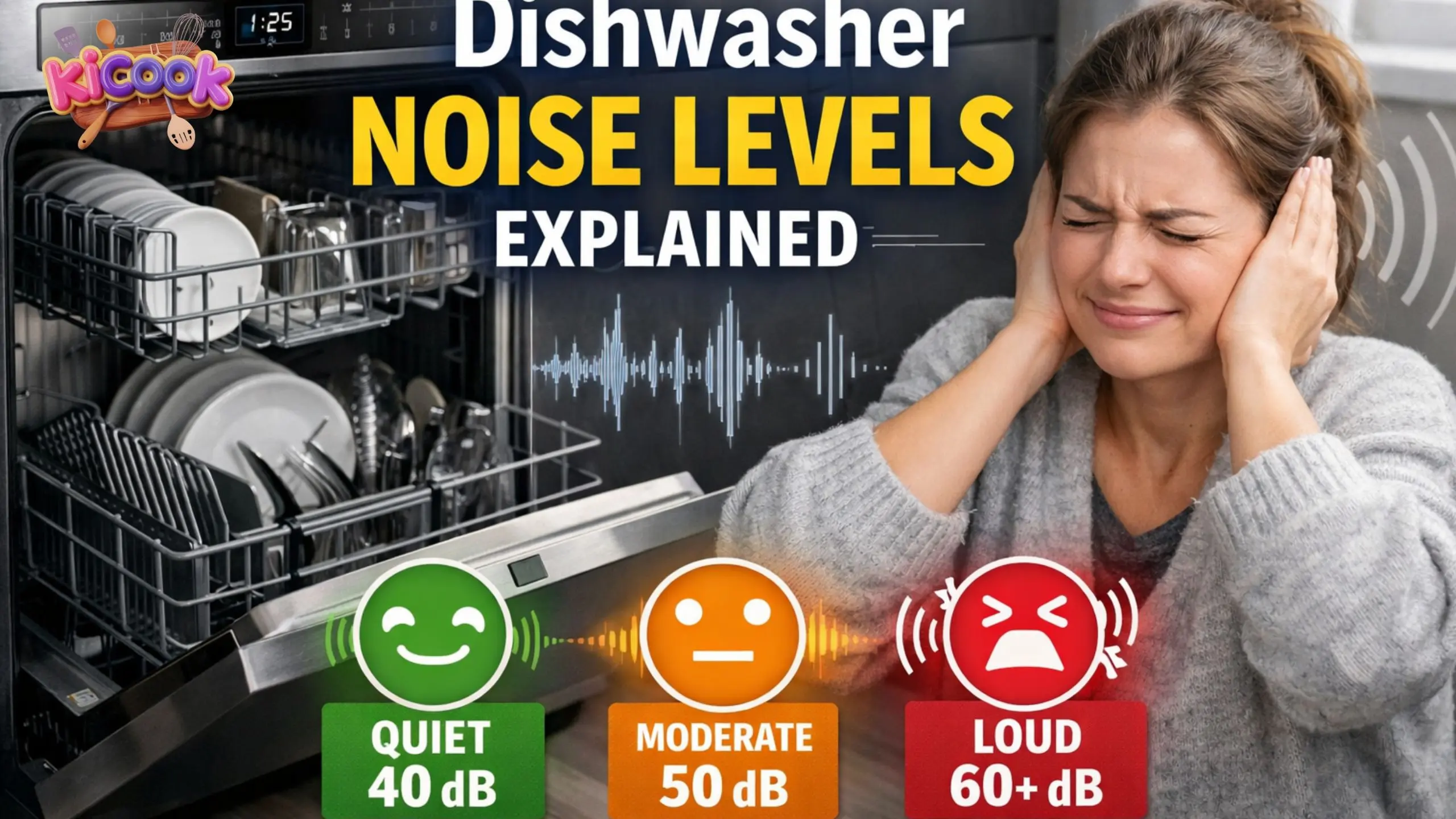
Most modern dishwashers operate between 38 and 60 decibels (dB). For a kitchen where you can comfortably hold a conversation or watch TV, I recommend choosing a model rated at 44 dB or lower.
My Experience with Kitchen Noise
I have spent the last decade testing home appliances and helping people design kitchens that actually work for their lifestyles. I remember living in a small apartment where my old dishwasher sounded like a jet engine taking off in the middle of my living room. I couldn’t hear my phone ring, and I certainly couldn’t have a peaceful dinner while it was running.
Since then, I have focused on the practical side of appliance sound. I’ve sat in quiet showrooms and noisy family kitchens, measuring decibels and watching how different brands handle vibration. My goal is to help you understand what those numbers on the sticker actually mean for your daily life, so you don’t end up with a “silent” machine that still keeps you awake at night.

Real User Pain Points
When I talk to homeowners, the frustration with dishwasher noise usually boils down to a few specific situations. These aren’t just technical specs; they are daily annoyances that affect how we use our homes.
- The “Open Concept” Struggle: Modern homes often combine the kitchen and living room. If the dishwasher is loud, it competes with the TV, music, or evening relaxation.
- The Midnight Wake-up Call: Many people prefer running their appliances at night to save on energy costs. A loud drain pump or a vibrating motor can easily be heard through bedroom walls.
- Interrupted Video Calls: With more of us working from home, a noisy wash cycle in the background of a Zoom call is a common professional headache.
- Vibration and Rattling: Sometimes the noise isn’t just the water; it’s the machine shaking the cabinetry or the floor, which can feel much louder than the decibel rating suggests.
- The Mystery Clunk: Users often worry that a sudden change in sound means the machine is breaking, leading to unnecessary stress and repair calls.
“Most people don’t realize that improper loading is the cause of half their noise complaints. A single spray arm hitting a tall plate can make a 40 dB machine sound like a 60 dB one.”
— Marcus Thorne, Appliance Repair Technician
Solving the Noise Problems
Understanding these pain points is the first step. Here is how we actually address them through better technology and smarter usage.
Solving the Open-Plan Noise Bleed
In an open-concept home, sound travels without barriers. To solve this, manufacturers have moved away from plastic tubs and toward stainless steel. Stainless steel absorbs sound vibrations much better than plastic.
When I look at high-end models like a Bosch dishwasher, I notice they use multiple layers of insulation (bitumen and cotton fiber) wrapped around the tub to trap sound before it leaves the cabinet.
Eliminating Nighttime Disturbances
The loudest part of a cycle is often the drain pump or the water hitting the door. Newer machines use inverter motors (brushless motors). These motors don’t have the friction of old-school versions, meaning they can vary their speed and run much more quietly.
If you are sensitive to noise at night, look for a machine with a “Night Mode” or “Eco Mode,” which slows down the water pressure to reduce the “sloshing” sound.
Managing Work-from-Home Distractions
If you need silence during the day, the type of dishwasher you choose matters. For those in smaller spaces or home offices, a full-sized unit might be overkill. I’ve often suggested looking into what is a countertop dishwasher for secondary spaces or smaller households.
These units are generally smaller and, because they sit on the counter, don’t vibrate through the floor joists as much as built-in models.
Stopping the Vibration and Rattling
Vibration is usually an installation issue. If a dishwasher isn’t perfectly level, the motor will struggle, and the tub will hit the sides of the cabinets. I always check that the leveling legs are properly adjusted and that the unit is secured to the underside of the counter. This simple fix can drop the perceived noise level by several decibels instantly.
“The difference between 50 dB and 40 dB sounds small on paper, but in a kitchen, it is the difference between a loud conversation and a whisper. It completely changes the atmosphere of the home.”
— Sarah Jenkins, Interior Designer
Country-Specific Context
The way we view dishwasher noise often depends on where we live and how our homes are built.
- USA: American kitchens are often very large and open to the rest of the house. This makes noise a top priority. The focus here is usually on high-capacity machines with massive insulation. Energy Star ratings are the standard for efficiency and noise quality.
- UK: In the UK, kitchens are frequently smaller and often located near the main living area or even under bedrooms in flat conversions. Space is at a premium, so integrated (hidden) dishwashers are popular. These benefit from an extra furniture door on the front, which acts as a secondary sound barrier.
- Canada: Canadian homeowners often face high energy costs in winter, leading many to run appliances at night. Noise ratings are a major selling point in the Canadian market, with a strong preference for European-style quiet technology.
- Australia: With many homes featuring hard flooring like tile or polished concrete, sound can echo significantly. I’ve noticed Australian consumers are increasingly interested in water-saving technology. When looking at dishwasher vs hand washing water usage, the efficiency of a quiet machine often outweighs the traditional method of washing by hand in the sink.
Experience-Based Benefits
Transitioning to a quieter dishwasher changed the way I use my kitchen. In the past, I would wait until I was leaving the house to start a load. Now, I can start it while I’m standing right next to it making coffee.
I’ve found that a machine rated at 42 dB is essentially “library quiet.” You can see the light on the floor (since many quiet models don’t have a loud “beep” at the end), but you can’t hear the water hitting the dishes. This has made my evening routine much more peaceful. I no longer have to turn up the volume on the television or wait for the “perfect time” to clean up after dinner. It simply happens in the background.
“When we moved to a quieter model, the biggest surprise was the lack of vibration. The whole floor used to hum; now we forget the machine is even on.”
— David Chen, Homeowner
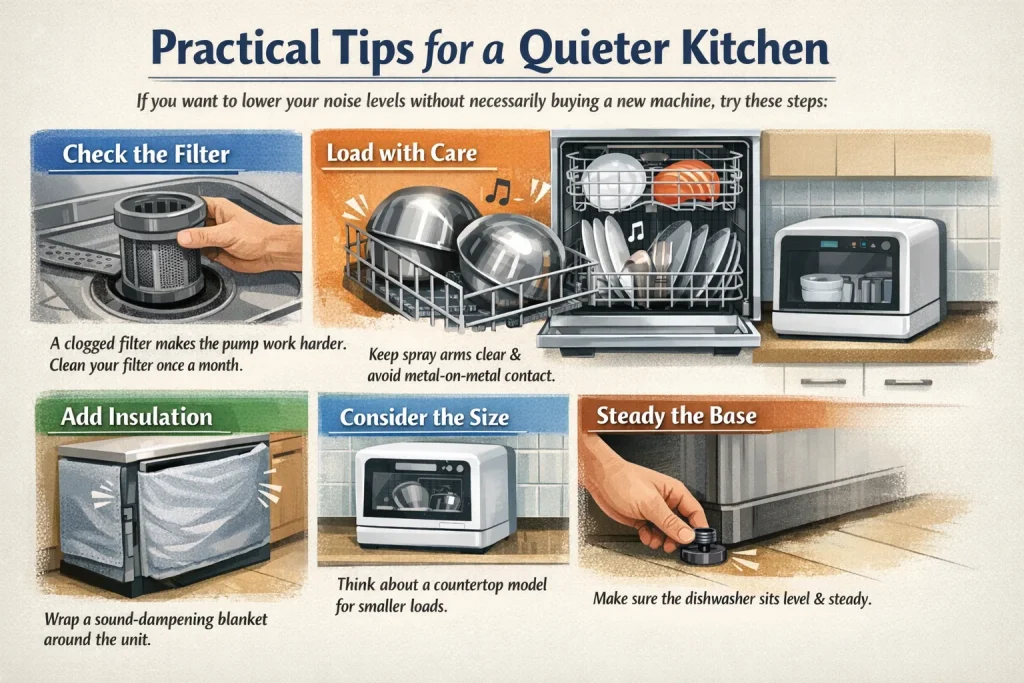
Practical Tips for a Quieter Kitchen
If you want to lower your noise levels without necessarily buying a new machine, try these steps:
- Check the Filter: A clogged filter makes the pump work harder, which creates a grinding or humming sound. Clean your filter once a month.
- Load with Care: Ensure that no items are touching the spray arms. Metal-on-metal contact (like two stainless steel bowls touching) creates a high-pitched rattle during the wash.
- Add Insulation: If you have a built-in unit, you can often buy a “blanket” of sound-dampening material to wrap around the top and sides before sliding it back into the cabinet.
- Consider the Size: If you live alone or have a tiny kitchen, you might ask, are countertop dishwashers worth it? Often, they are quieter for small loads because they don’t have the heavy-duty drainage systems of large built-in units.
- Steady the Base: Ensure the dishwasher’s feet are flat on the floor. If it wobbles when you push it, it will vibrate when it runs.
Frequently Asked Questions for Dishwasher Noise Levels Explained
What is the quietest decibel level for a dishwasher?
The quietest models on the market today are around 38 to 39 dB. At this level, the machine is almost impossible to hear unless you put your ear against the door.
Can I make my old dishwasher quieter?
While you can’t change the motor, you can reduce noise by adding insulation blankets, leveling the feet, and ensuring the drain hose is secured so it doesn’t rattle against the cabinets.
Is 50 dB loud for a dishwasher?
50 dB is roughly the sound of a normal conversation or a quiet office. It is noticeable in a quiet house but usually isn’t considered “annoying” unless you are sitting right next to it in a very quiet room.
How does a countertop dishwasher compare in noise?
If you’re wondering how does a countertop dishwasher work regarding noise, they are generally similar to mid-range built-in units (around 50-55 dB). However, because they are smaller, the “sloshing” sound is less intense.
Why does my dishwasher make a loud clicking sound?
This is usually the detergent dispenser opening or a spray arm hitting an oversized dish. If it’s a rhythmic clicking, check the spray arm for obstructions.
Does a lower decibel rating mean a better clean?
Not necessarily. Decibel ratings only measure sound. However, the high-end engineering required to make a machine quiet often goes hand-in-hand with better build quality and cleaning performance.
Conclusion
Understanding dishwasher noise levels is about more than just numbers; it’s about choosing an appliance that fits the rhythm of your home. If you have an open-plan living space or a young family, investing in a machine rated at 44 dB or lower is one of the best upgrades you can make for your peace of mind.
Whether you choose a premium built-in model or a compact countertop version, the goal is to let the machine do the work while you focus on your life. For more detailed information on appliance standards and consumer testing, you can visit Consumer Reports for independent reviews and data.

“I believe great cooking starts with the right tools, trusted advice, and a little confidence in the kitchen.”
Hi, I’m Emma Carter. My love for cooking began in my grandmother’s kitchen, where I learned that every great meal starts with simple ingredients and the right cookware. Over the years, I’ve spent countless hours researching, testing, and comparing kitchen appliances, cookware, coffee makers, air fryers, and other everyday kitchen essentials.
Here at KiCook, my goal is to make your buying decisions easier with honest product reviews, practical buying guides, and easy-to-follow cooking tips. Whether you’re upgrading your kitchen or searching for the best appliance for your home, I focus on providing clear, reliable, and research-backed information you can trust.
When I’m not testing new kitchen gadgets or writing in-depth guides, you’ll usually find me trying new recipes, visiting local farmers’ markets, or enjoying a quiet cup of coffee while planning my next kitchen project.