
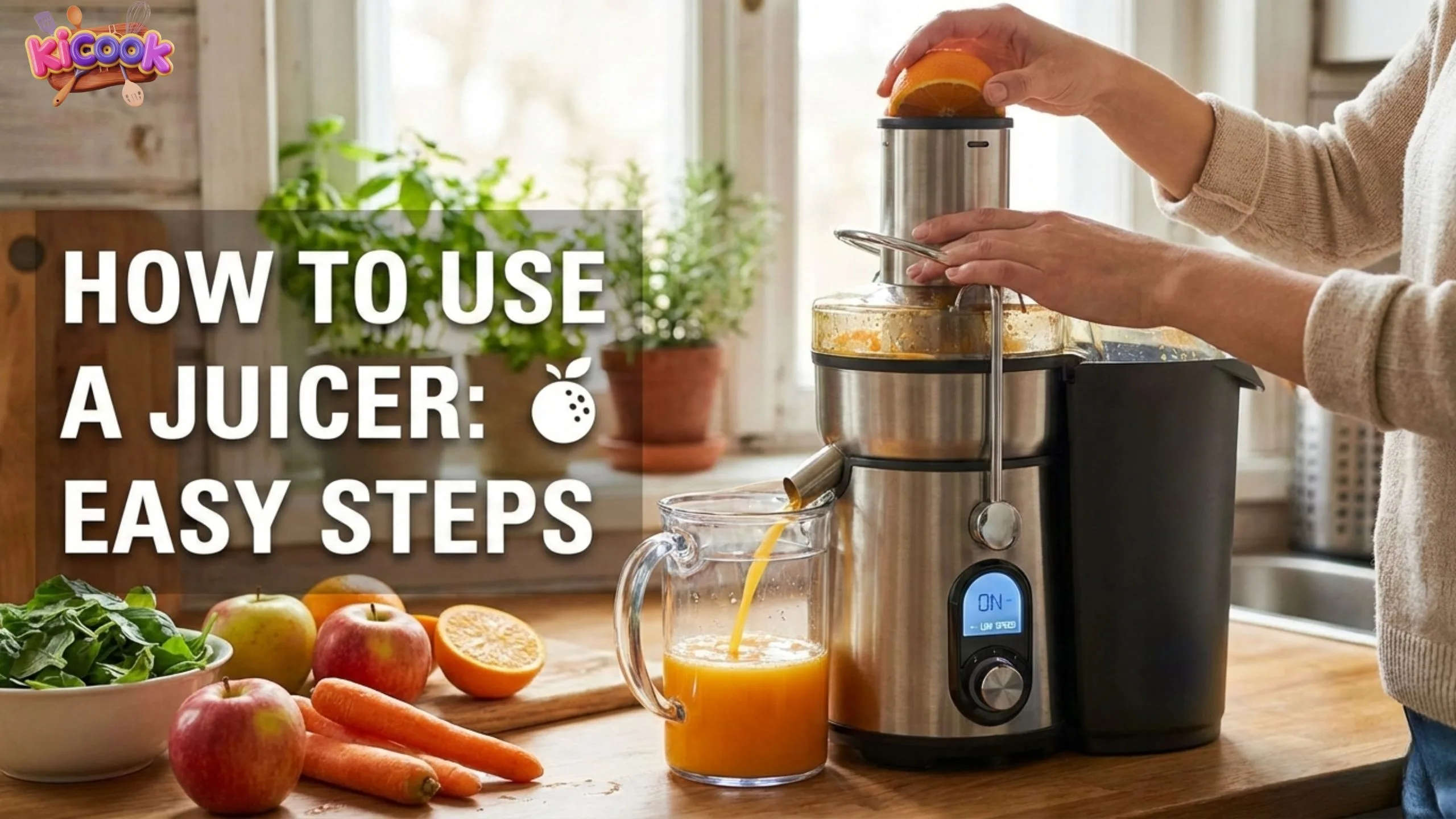
How to use a juicer? I use a juicer by washing the fruits or vegetables, cutting them into small pieces, placing them into the feed chute, and turning the machine on. The juice flows into the jug, and I drink it fresh or store it properly.
Why I Started Using a Juicer at Home
I started using a juicer because I wanted fresh juice without added sugar or chemicals. Store-bought juice often tastes flat and feels heavy. At home, I control everything.
Many people in the USA, UK, Canada, and London face the same pain points:
- Juice from stores is expensive
- Labels are confusing
- Added sugar hurts health goals
- Fresh produce goes to waste
Using a juicer helped me save money, reduce waste, and drink more fruits and vegetables every day.
What Is a Juicer and How It Works
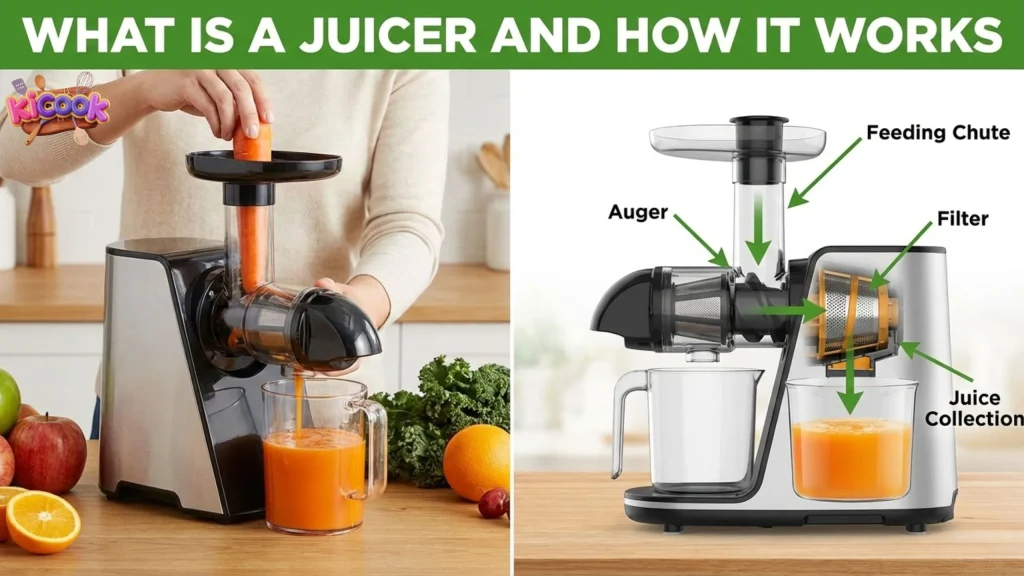
A juicer is a kitchen appliance that extracts juice from fruits and vegetables. It separates juice from pulp.
There are two main types:
- Centrifugal juicer – fast, good for hard fruits
- Masticating juicer (slow juicer) – slower, keeps more nutrients
Both work well if used the right way.
Types of Juicers I Have Used
Centrifugal Juicer
This type spins fast. I use it for apples, carrots, and beets. It is easy and quick but a bit noisy.
Masticating Juicer
This one crushes produce slowly. I prefer it for leafy greens, celery, and wheatgrass. Juice stays fresh longer.
If you are new, start with a simple centrifugal juicer.
“Fresh juice can be a helpful way to add more fruits and vegetables to your day.” – Dr. Michael Greger
What You Need Before Using a Juicer
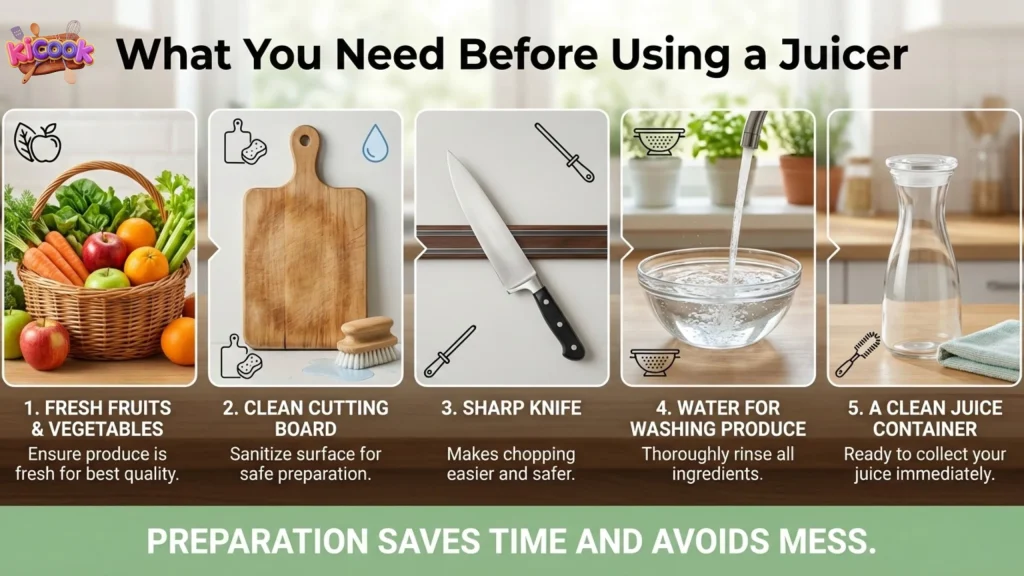
Before I start juicing, I always prepare these things:
- Fresh fruits and vegetables
- Clean cutting board
- Sharp knife
- Water for washing produce
- A clean juice container
Preparation saves time and avoids mess.
Step-by-Step: How I Use a Juicer
Step 1: Wash Everything Well
I wash fruits and vegetables under running water. Even if they have skin, I clean them well.
Step 2: Peel When Needed
I peel oranges, lemons, and pineapples. Apples and carrots are fine with skin.
Step 3: Cut Into Small Pieces
Large pieces can block the juicer. I cut produce to fit the feed chute.
Step 4: Assemble the Juicer
I lock all parts properly. This keeps the machine safe.
Step 5: Start Juicing
I turn on the juicer and add produce slowly. I never push too hard.
Step 6: Collect the Juice
Fresh juice flows into the jug. I stir it before drinking.
Best Fruits and Vegetables for Juicing
Here are my favorites:
- Apples
- Oranges
- Carrots
- Celery
- Beets
- Spinach
- Kale
- Cucumber
- Ginger
- Lemon
Mixing fruits and vegetables balances taste and nutrition.
Common Juicing Mistakes I Made (So You Don’t)
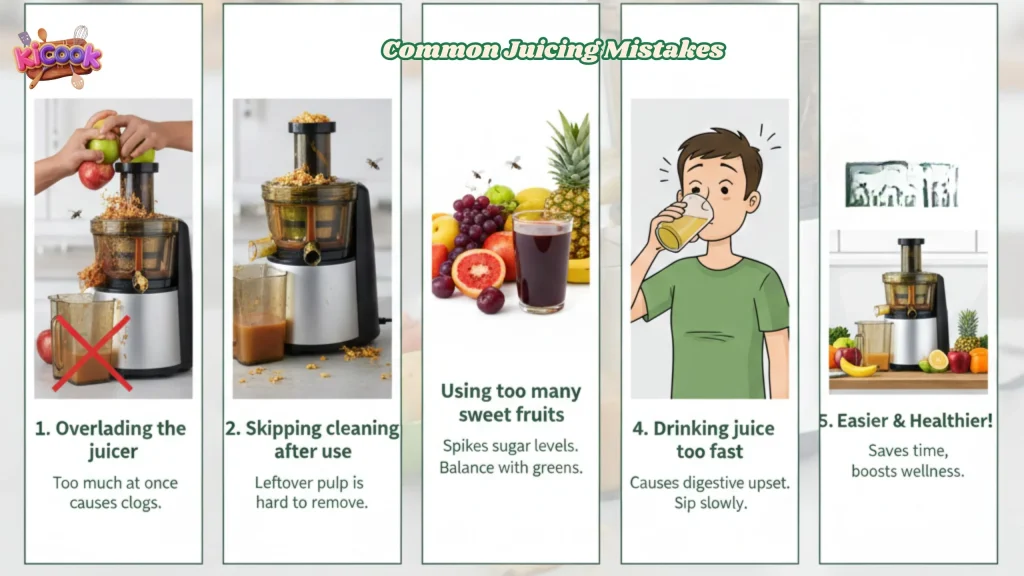
I learned these lessons the hard way:
- Overloading the juicer
- Skipping cleaning after use
- Using too many sweet fruits
- Drinking juice too fast
Fixing these made juicing easier and healthier.
Customer Pain Points and Simple Solutions
“My Juicer Gets Clogged”
This happens if pieces are too big. Cut smaller and juice slowly.
“Juice Tastes Bitter”
Too many greens cause this. Add apple or carrot.
“Cleaning Takes Too Long”
Rinse parts right after use. It saves time.
“Juicer Is Too Loud”
This is normal for fast models. Use it during daytime.
How Often I Drink Fresh Juice
I drink juice 3–4 times a week. I do not replace meals with juice. I use it as a healthy drink.
Balance matters.
Juice Storage Tips I Follow
Fresh juice is best right away. If I store it:
- I use an airtight glass bottle
- I fill it to the top
- I keep it in the fridge
- I drink it within 24 hours
Slow juicer juice lasts longer than fast juicer juice.
“Whole foods matter, but juice can support healthy habits.” – Harvard Health Publishing
Cleaning a Juicer the Easy Way
Cleaning scared me at first, but now it’s simple:
- Unplug the machine
- Rinse parts right away
- Use a soft brush
- Air dry everything
Clean tools last longer.

Safety Tips I Always Follow
- Never put fingers inside
- Unplug before cleaning
- Keep children away
- Read the user manual
Safety first, always.
Juicing vs Blending: My Honest View
Juicing removes fiber. Blending keeps fiber. I use both.
Juicing is good for quick nutrition. Smoothies are filling.
Health Benefits I Noticed
After regular juicing, I noticed:
- Better digestion
- More energy
- Improved hydration
- Less junk food cravings
Results depend on diet and lifestyle.
“Balance is key. Juice is a tool, not a cure.” – Registered Dietitian Maya Feller
Is Juicing Worth It in the USA, UK, and Canada?
Yes, especially with rising grocery prices. Buying seasonal produce and making juice at home costs less than bottled juice.
In London and big cities, fresh juice shops are costly. Home juicing saves money.
For food safety and produce handling, I recommend this guide from the CDC
Frequently Asked Questions
How to use a juicer for the first time?
Wash produce, cut it small, assemble the machine, and add ingredients slowly.
Can I juice every day?
Yes, but balance juice with whole foods.
Should I peel fruits before juicing?
Peel thick skins like orange or pineapple.
Is juicing good for weight loss?
Juice can support healthy eating, but it is not a magic fix.
Can I juice frozen fruits?
No, thaw them first.
Final Thoughts
Using a juicer changed how I enjoy fruits and vegetables. It helped me eat better without stress.
If you start slow, clean properly, and choose fresh produce, juicing becomes simple, affordable, and enjoyable.

“I believe great cooking starts with the right tools, trusted advice, and a little confidence in the kitchen.”
Hi, I’m Emma Carter. My love for cooking began in my grandmother’s kitchen, where I learned that every great meal starts with simple ingredients and the right cookware. Over the years, I’ve spent countless hours researching, testing, and comparing kitchen appliances, cookware, coffee makers, air fryers, and other everyday kitchen essentials.
Here at KiCook, my goal is to make your buying decisions easier with honest product reviews, practical buying guides, and easy-to-follow cooking tips. Whether you’re upgrading your kitchen or searching for the best appliance for your home, I focus on providing clear, reliable, and research-backed information you can trust.
When I’m not testing new kitchen gadgets or writing in-depth guides, you’ll usually find me trying new recipes, visiting local farmers’ markets, or enjoying a quiet cup of coffee while planning my next kitchen project.