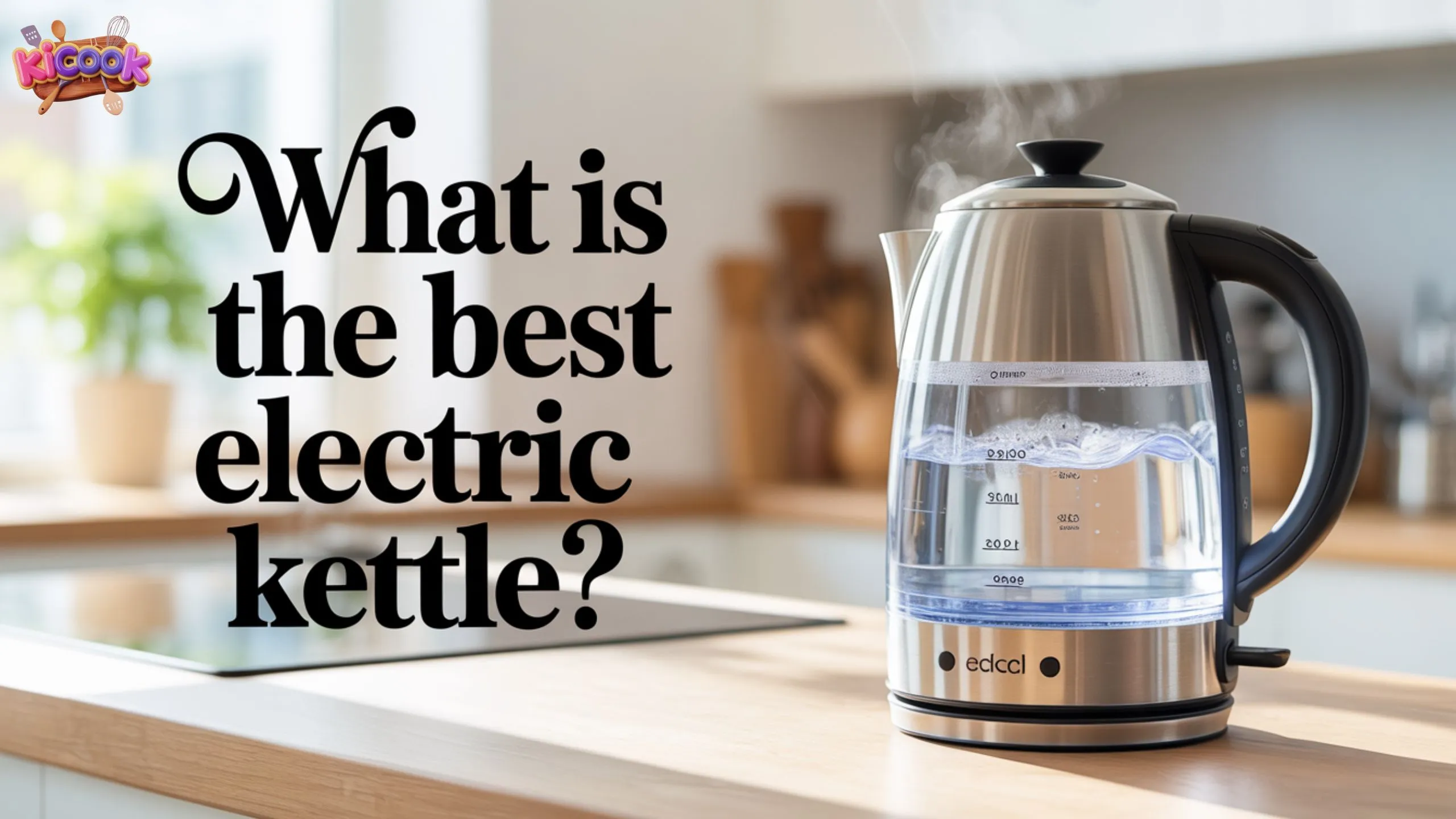
What is the best electric kettle? The best electric kettle for you balances speed, temperature control, design, and budget to match your daily habits. After testing many models, I believe the ideal one makes your routine simpler and more enjoyable.
For years, I used a cheap, noisy kettle that left a funny taste in my tea. It boiled slowly and looked awful on my counter. My search for something better sent me down a rabbit hole of features and brands. I bought, tested, and returned more kettles than I’d like to admit. Now, I want to save you that hassle. Let’s talk about what really matters in an electric kettle, focusing on your needs, not just flashy ads.
Your Pain Points (And How We Fix Them)
I know you’re probably frustrated. Maybe your current kettle takes forever to boil water for your morning coffee, making you late. Perhaps it’s made of plastic that smells weird or is a pain to clean. You might worry about safety with kids around or be tired of a cord that doesn’t retract. I’ve been there. This guide is here to solve those exact problems by giving you clear, honest information.
The Core Features That Actually Matter
1. Material & Build Quality: Glass, Stainless Steel, or Plastic?
The kettle’s material impacts taste, durability, and looks.
- Stainless Steel Kettles: These are durable, often cheaper, and heat quickly. Look for 304-grade stainless steel for a safer, rust-resistant interior. The downside? You can’t see the water level without opening the lid.
- Glass Kettles: My personal favorite for everyday use. They let you see the boil, don’t retain flavors, and look modern. Modern ones, like some Cosori or Cuisinart models, have sturdy bases and don’t feel fragile.
- Plastic Kettles: I generally avoid them unless they are BPA-free and from a trusted brand. They can scratch, retain smells, and there are often better options.
2. Capacity & Speed: How Much & How Fast?
Think about your household. A 1.7-liter kettle is great for families or making multiple cups of tea. A 1.0-liter model is perfect for one or two people and saves counter space.
Speed is about wattage. In the US and Canada (120V), most kettles are 1500 watts, boiling a liter in about 4-5 minutes. In the UK (230V), they can be 3000 watts, boiling in under 3 minutes! It’s a big difference.
3. Temperature Control: The Game-Changer for Tea & Coffee Lovers
If you drink green tea, French press coffee, or baby formula, this is essential. A variable temperature kettle (like the Breville Smart Kettle Pro or Fellow Stagg EKG) lets you set exact heats (160°F, 185°F, 212°F). This prevents bitter tea and unlocks flavor. It’s a premium feature but a worthy investment for enthusiasts.
4. Safety & Convenience Features
- Automatic Shut-Off: A non-negotiable feature that turns the kettle off when it boils or is lifted.
- Boil-Dry Protection: Shuts off if there’s no water inside.
- Cool-Touch Exterior & Handle: Vital for families.
- Cordless Design & Swivel Base: Standard now, but check cord length.
- Keep Warm Function: Holds your desired temperature for up to 30-60 minutes. Great for those who sip slowly.
5. Ease of Cleaning & Filter
Limescale is the enemy, especially if you have hard water. A removable, fine mesh filter catches mineral deposits. A wide opening is crucial for getting your hand in to clean. Some brands, like OXO, have clever spout designs to reduce scaling.
Top Picks for Different Needs (2026 Insights)
- Best Overall Value: The Cuisinart CPK-17 PerfecTemp is a star. It’s stainless steel, has six preset temperatures, a keep-warm function, and is very reliable. It’s widely loved in the US and Canada for good reason.
- Best for Serious Tea Drinkers: The Fellow Stagg EKG is beautiful, precise, and has a pour-control spout. It’s an investment, but for a daily ritual, it brings joy. In the UK, the Sage Smart Kettle is a similar, excellent option.
- Best Fast Boil (UK): The Russell Hobbs 3000W Textured Kettle is a powerhouse, boiling water for a full pot in moments. It’s a staple in British kitchens for its speed and durability.
- Best Budget Buy: The Hamilton Beach 1.7-Liter Kettle is simple, fast, and under $40. It does the job well without fuss.
A Note on Voltage & Warranty
If you’re buying in the US or Canada (120V), you cannot use a UK kettle (230V) without a heavy transformer, and vice-versa. Always check your local voltage. Also, look for a good warranty—two years is solid, five years is excellent and shows brand confidence.
Maintenance Is Key
Even the best kettle needs care. Descale regularly with a mix of equal parts white vinegar and water, boil, let sit, then rinse thoroughly. For daily cleaning, a mix of baking soda and lemon juice works wonders. This prolongs your kettle’s life and keeps your water tasting pure.
“The right kettle doesn’t just boil water; it honors the ingredient you’re about to steep.” – James Hoffmann, World Barista Champion
“Simplicity, safety, and speed are the three pillars of a great household kettle. Never compromise on the first two.” – Lisa Williams, Consumer Reports Test Engineer
“In my kitchen, a variable temperature kettle is as essential as a good knife. Precision transforms the ordinary.” – Meera Patel, Tea Sommelier
Frequently Asked Questions for What is the Best Electric Kettle
Are expensive kettles worth it?
It depends. If you need precise temperatures, a keep-warm function, or specific design, yes. If you just need fast boiling water, a mid-range model is perfect.
How do I stop limescale in my kettle?
Use filtered water if you can, and descale monthly with vinegar or citric acid. It’s a simple habit that makes a huge difference.
Can I leave water in my electric kettle overnight?
It’s best to empty it. Stagnant water can affect taste and, in some materials, promote corrosion over time.
What’s the advantage of a gooseneck kettle?
Primarily for pour-over coffee. It gives you incredible control over water flow and saturation, leading to a better brew.
Conclusion
Choosing your electric kettle is a personal decision. There’s no single “best” for everyone, but there is a perfect one for you. Think about your daily routine: Is speed your priority? Or is it the gentle steep of a white tea? Do you need a family-sized workhorse or a compact model for your office?
My advice is to pick one that solves your biggest pain point be it slow boiling, bad taste, or lack of control and fits your space and budget. A good kettle is a small appliance that you’ll use multiple times a day; it should feel like a helpful friend, not a source of frustration.
For more on energy efficiency of appliances, you can check the Energy Star website